IMPORTANT EVENTS – TOTALITARIANISM AND THE GREAT DEPRESSION 1861 – 1924
1861 Tsar Alexander II signs a decree abolishing serfdom in Russia.
1881 Terrorists assassinate Alexander; his successor, Alexander III, is more autocratic.
1903 Russian Marxists split into two groups, the Mensheviks and the Bolsheviks led by Lenin and his totalitarianism.
1904 Russia and Japan go to war.
1905 Russia is defeated by Japan; widespread discontent flares into open revolt against the tsar after petitioners are cut down on “Bloody Sunday”; the revolt is suppressed with difficulty.
1914 World War I begins.
1917 Heavy war losses and famine lead to a new revolt in Russia; the tsar abdicates and a provisional government takes over which is later led by Kerensky; Lenin, Trotsky and the Bolsheviks gain the support of the soviets and lead them to take over from the provisional government; Soviet Russia begins peace talks with Germany.
1918-1920 Civil war rages in Soviet Russia; the anti-Bolshevik forces are finally defeated by the Red Army under Trotsky.
1918 Russia signs the treaty of Brest-Litovsk making peace with Germany; the western powers sign an armistice; end of World War I.
1919 The Communist International, or Comintern, is founded at Moscow; the Versailles treaty heavily penalizes Germany and causes great bitterness among Germans; formation of the League of Nations, which excludes Soviet Russia.
1920 Italian socialist workers occupy many factories, leading industrialists to fear an immediate revolution and look for ways to prevent it.
1922 Mussolini’s fascists, financed by the industrialists, march on Rome, take over the government and begin a reign of terror against rebellious workers.
1923 Wild inflation ruins the German economy; Hitler and the Nazi party attempt to seize power in the Munich “Beer Hall Putsch” but are easily put down.
1924 Lenin dies; Stalin uses his position as general secretary of the Communist Party to become dictator of Russia; the first Labour government is formed in England.
IMPORTANT EVENTS – TOTALITARIANISM AND THE GREAT DEPRESSION 1926 – 1938
1926 English trade unions call a general strike but are forced to return to work after nine days.
1928 Stalin exiles Trotsky and consolidates his power, beginning the first Five Year Plan to industrialize Russia; Mussolini’s new constitution makes Italy a fascist dictatorship.
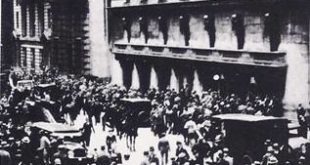
1929 The stock market crash marks beginning of the Great Depression in U. S.
1931 Spain becomes a republic when King Alfonso flees; Japanese troops invade Manchuria, causing war with China.
1932 The “Bonus Army” marches on Washington and is dispersed by troops under General MacArthur.
1933 Roosevelt becomes president and takes steps to solve the financial crisis of the great depression in America; Hitler is made chancellor of Germany and uses the Reichstag fire as an excuse to suppress communists and others; the Reichstag grants him dictatorial powers.
1934 Fascist riots in Paris follow the Stavisky scandal; Hitler wipes out opponents in the Nazi party in the “Blood Purge.”
1935 The U. S. Supreme Court declares the NRA unconstitutional; Italy invades Ethiopia.
1936 Spanish fascists led by General Franco revolt against the republic, starting the Civil War; Stalin wipes out the Old Bolsheviks in the Moscow purge trials; Roosevelt is reelected by a huge margin ; a Popular Front government is elected in France and begins sweeping reforms ; fascist Italy completes its conquest of Ethiopia and joins Germany in supporting Franco in Spain.
1937 Roosevelt’s attempt to enlarge the Supreme Court fails; Nazi Germany tests new methods of warfare in Spain, bombing the town of Guernica from the air; the French government frustrates plans for a fascist coup.
1938 Jews are arrested and murdered and their homes burned during the “Week of Broken Glass” in Germany; the French Popular Front collapses and the new government reverses many of the reforms it had enacted; the world moves rapidly toward a new world war.