Decline of the Roman empire came after the triumph of Christianity. Meanwhile, Julius Caesar’s heir and successor, Octavian, was but 33 years old, when he became sole ruler of the Roman Empire in B. C. 30. The Roman world had suffered a century of bloodshed, caused by the rival groups who wished to rule and the public realized, that only a great statesman, could solve Rome’s problems.
The Roman Senate conferred several titles and the name Augustus, upon this first emperor. As Augustus, he unified the Empire and initiated the Pax Romana, or some two hundred years of peace. That period of peace allowed a new religion to be introduced by Jesus of Nazareth, who was born while Augustus reigned.
Rome and the people of the Empire, were ready for the new religion and because of this timeliness, Christianity won its way, in less than four hundred years, to acceptance as the official religion of the Empire. Noteworthy is the work of the disciple Paul, whose zeal did much to spread the new faith throughout the eastern Mediterranean world.
Contrasted with the growth of Christianity, was the slow disintegration of the Empire that Augustus did so much, to integrate and bring to a golden age of achievement. By 476 A.D., so many barbarians had overrun the weakened state, that the long reign of emperors was ended.
Augustus and the Pax Romana
Augustus, a brilliant leader, initiated the Pax Romana.
The men who assassinated Caesar, may have expected to see the machinery of republican government begin functioning again, but Caesar realized that the Republic was dead and that Rome was ready for one-man rule. Accordingly, in his will, he named his adopted son Octavian as his successor.
Octavian was a youth of eighteen at school in Greece, when word reached him of his great-uncle’s death. He crossed into Italy and there learned that Caesar had adopted him and made him his heir. Octavian’s mother and others tried to persuade him that there was too much danger in accepting his inheritance, but he was too self-confident to heed them.
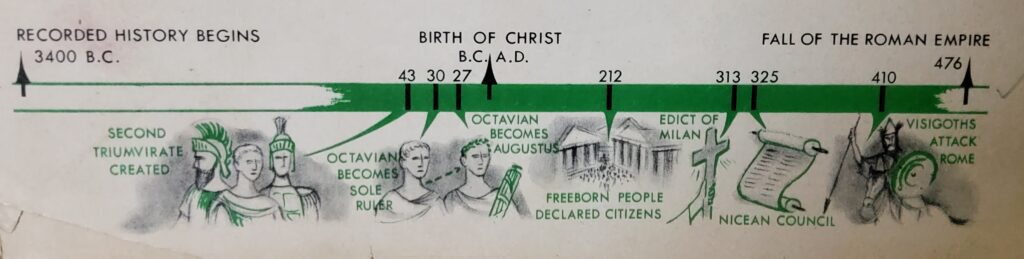
Octavian found Mark Antony, a rival and a so-called friend of Caesar’s, in control of Rome, so he appealed to Caesar’s soldiers, to uphold his uncle’s wishes. In this way, he raised a private army and with it challenged Antony. After some skirmishes and complicated negotiations, Antony and Octavian agreed to combine their forces with those of Lepidus, another Roman general, in B. C. 43. As the Second Triumvirate, they caused the assassination of more than 2,000 of their enemies (300 senators and 2,000 knights) and defeated armies in Asia Minor that had been raised by Brutus and Cassius, two of Caesar’s assassins.
Although the Triumvirate then divided the Roman world among themselves, within five years, Lepidus had been overthrown and Antony had joined Cleopatra, ruler of Egypt. Octavian defeated Antony in a naval battle at Actium in B. C. 31. Antony fled to Egypt. Octavian proceeded to take over the eastern provinces. When he reached Egypt and claimed that land, Cleopatra and Antony committed suicide. The whole Roman world was in Octavian’s hands.
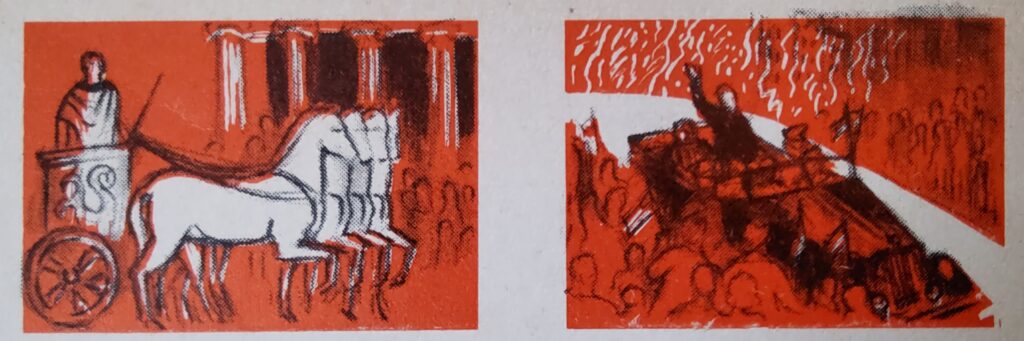
In B. C. 30, Octavian returned to Rome as sole ruler. He received a hero’s welcome, the saviour of the Roman Republic and the man who had restored peace, The outward forms of a republic were retained, but actually the Republic gave way to an empire in B. C. 30 and in more ways than one, Octavian became an emperor. Two hundred years of greatness followed. It was known as the Pax Romana or Roman peace.
Octavian allowed the Senate to keep control over about half the provinces and consulted it on important issues, but he filled it with his friends. He allowed it to fill high government offices, but he kept control over tax collecting and the armed forces. He kept the power of tribune, too, thus controlling laws passed by the Senate. In the end, real power lay in the fact that he was supreme leader of the army and the soldiers, owed their allegiance to him personally.
In January of B. C. 27, the Senate honoured Octavian with the title Augustus, the name by which he was called thereafter. Augustus proved to be an able and brilliant leader. During his reign, the Roman Empire prospered. Perhaps the best picture of his achievements, is given in a report which he prepared. Augustus tells us that more than three hundred enemy ships had been sunk by his naval forces. He lists more than a hundred public buildings and temples which he caused to be built or improved. He served almost forty years as a tribune of the people and was consul thirteen times. In addition, he was chief priest of the Roman state religion.
Augustus takes almost a page of his report to tell how he extended the frontiers of Rome on three continents and how he established twenty-eight colonies.
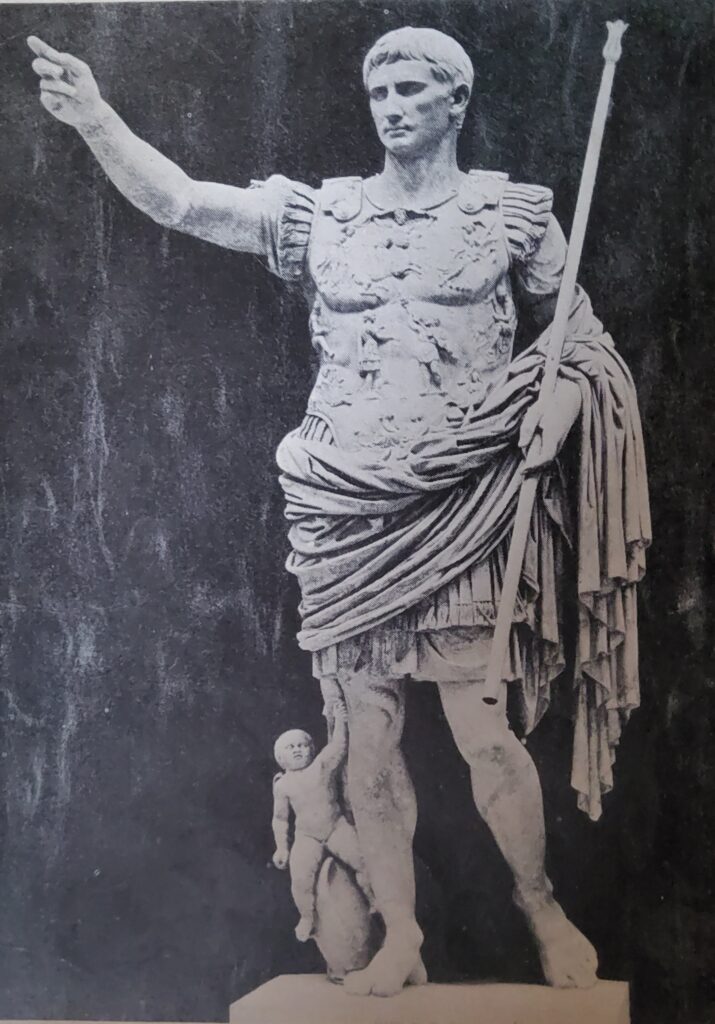
The empire was unified under the guidance of Augustus.
During the early years of his reign, Augustus realized that laws and procedures designed to control a city-state, were not adequate for a world empire. He worked closely with the Senate and together, they appointed governors of the provinces, increased the size of the army and protected the Roman frontiers.
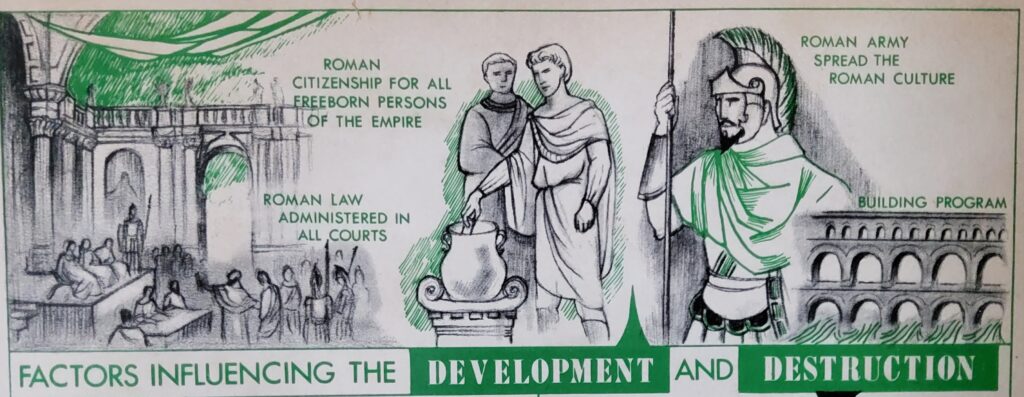
One of the big social advances made during the Empire period came in the gradual extension of Roman citizenship to the subject peoples. In 212 A. D., about two hundred years after the death of Augustus, this policy reached its high point. In that year, all freeborn persons of the Empire, were admitted to Roman citizenship. While this still excluded those born as slaves, many slaves were admitted to citizenship when their actions or services earned them respect and recognition. Thus, one law (the Roman) and one citizenship (the Roman), were important factors in uniting the Empire.
The army was a third unifying factor. Roman soldiers were recruited from every section of the Empire. When they came together, they exchanged knowledge of varied places and peoples. Often, when soldiers were released from service, they settled in Roman colonies and spread the ways of Rome.
A fourth factor in unifying the Empire, was the Roman enthusiasm for building. Wherever one went, he found Roman stadiums, Roman walls, Roman baths, Roman temples and Roman roads. The well-built roads linked the provinces to Rome and to one another. They made it easy for Roman law, education and customs, to reach the conquered peoples who were proud to belong to the Roman Empire. Roman influence was planted deeply throughout western Europe between the reign of Augustus and 476 A.D.
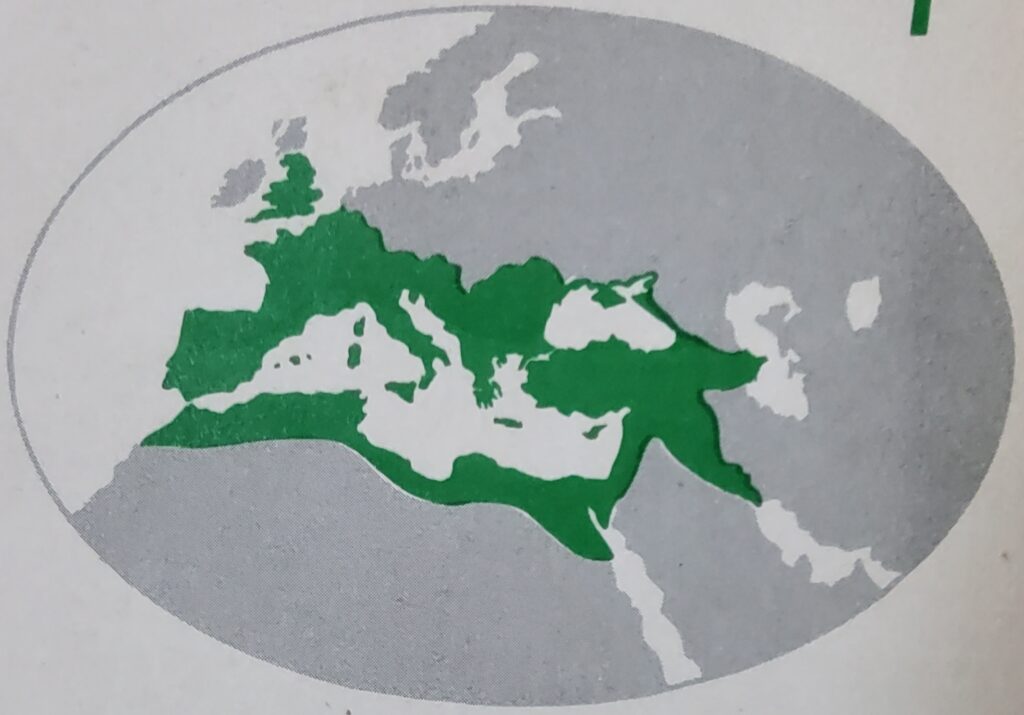
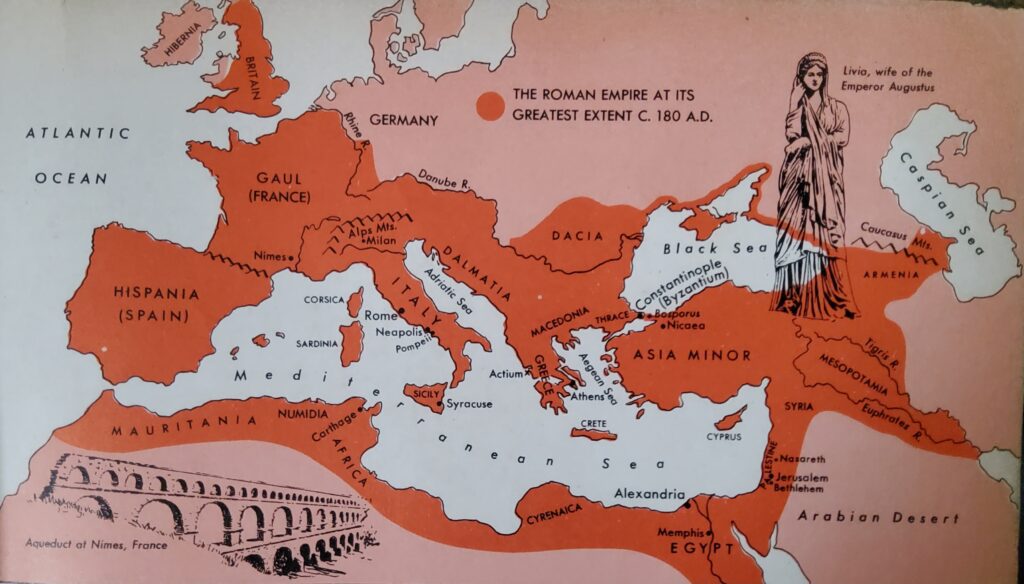
The Roman Empire at its greatest extent, reached about 3,000 miles from the Atlantic Ocean to Mesopotamia; and about 2,000 miles from northern Africa to the upper Rhine. Rome ruled an empire of a hundred million people. It was not an easy task to control so vast an empire. Even during the two hundred years of peace, the Pax Romana, there were small frontier wars. Gradually the Senate lost its power. The emperors relied either on their armies or on their councils of advisers or on both.
Factually, the administration of so vast an empire was extremely difficult, in 286 A. D. and the Emperor Diocletian decided to share the administrative responsibilities with a colleague. This plan was never fully developed, but the tendency toward division was continued with the creation of more than one hundred provinces, which in turn, were grouped in thirteen dioceses. The administrative head of each of these divisions was responsible to a superior, with final authority left to the emperor. This arrangement brought government closer to the people.
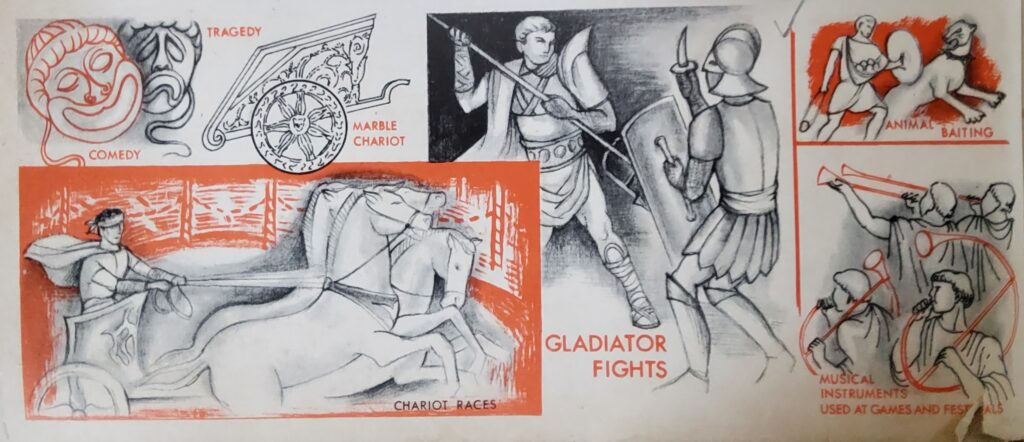
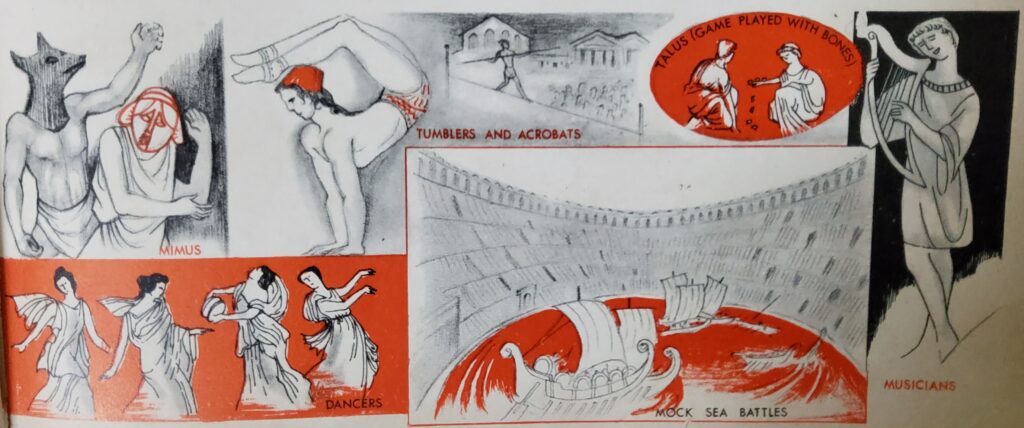
Against this background of imperial Caesars who ruled by armed might, Roman economic and social affairs seemed for a time, to be in a healthy state. As time went on, the government had to support a large portion of the city’s population. Hundreds of thousands of people were given bread, meat, oil, money and entertainment, by one emperor after another.
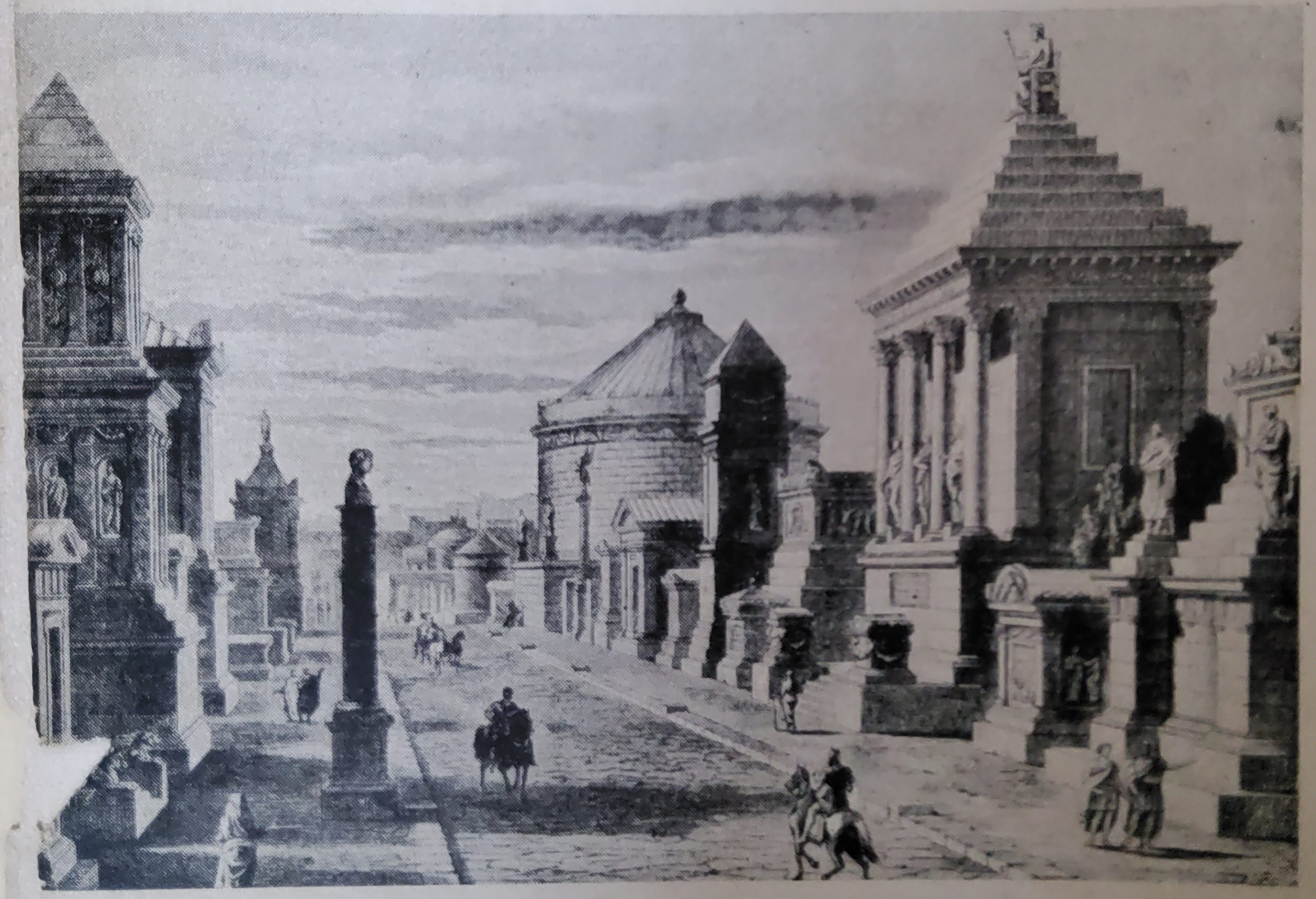
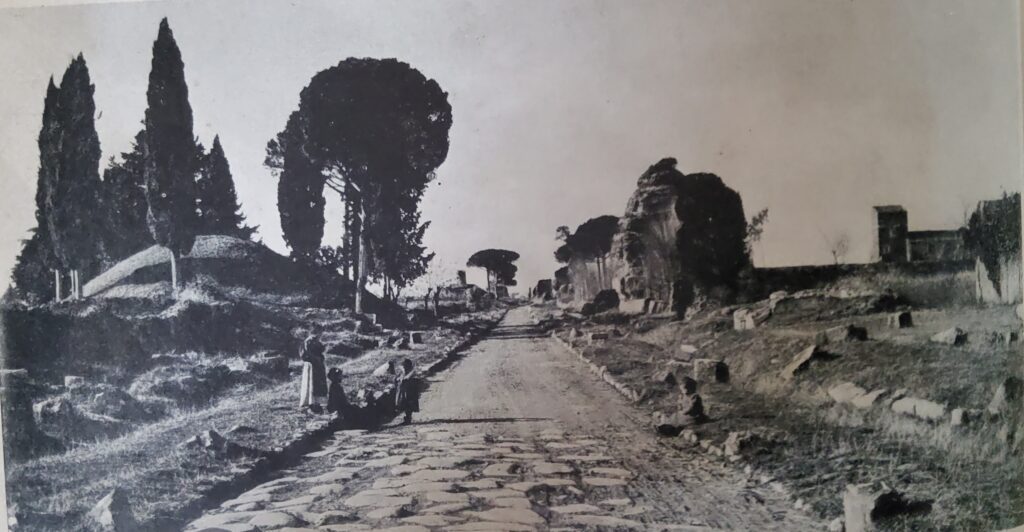
Like Athens, Rome enjoyed a Golden Age of achievement.
Much of Roman literature is not regarded as original as Greek literature, but there remains a considerable number of works which are still read with enjoyment. Roman literature reflects Roman life; it affords a medium through which Greek ideas reached later writers in Europe and America; it provides literary models and forms, which influence modern writing. It ranges from epics, odes, lyrics and narrative poems, to witty limericks. Roman plays, based largely on the Greek, are still read, though inferior in style and theme to the Greek plays. Geography, medicine and architecture were written by Roman writers, who also wrote travel books, gossipy accounts of the private lives of the emperors and sharp satires on Roman customs. Roman literature was, of course, written and copied by hand; only the wealthy could afford such books.
The so-called Golden Age, the most brilliant period in Roman literature, included the last years of the Republic and the reign of Augustus. It was during this period, that Virgil wrote the Aeneid, which contains the legendary story of the founding of Rome. This poem, like the epics of Homer, has had much influence upon poets of later times.
Horace, a friend of Virgil, was poet laureate of Rome. He was known for his lyrical odes and for satirical verse. Many Roman poets dwelt on the joys of country life and the virtues of quiet living. Some were humourous. Others described a riotous, uncontrolled ife.
Latin, the speech of the Romans, was the language of all cultivated men for hundreds of years. Today, scientists still use it in many ways — for instance, in classifying forms of animal and plant life. Latin is a melodious, dignified language which contains many borrowings from the Greek. Our own language has many words of Latin origin.
The Romantic languages, among which are Italian, French, Spanish and Portuguese, have a Latin base. The name Romance, is from the Latin Roma; the word language is from the Latin lingua. Romans who colonized the conquered countries, spoke the popular or vulgar Latin they had known at home, rather than the Latin of the classics, which is studied in school. Words and forms of pronunciation were then adapted into this popular Latin in the new homeland. Several varieties of popular Latin of this sort, ultimately developed into the separate ‘Romance’ languages.
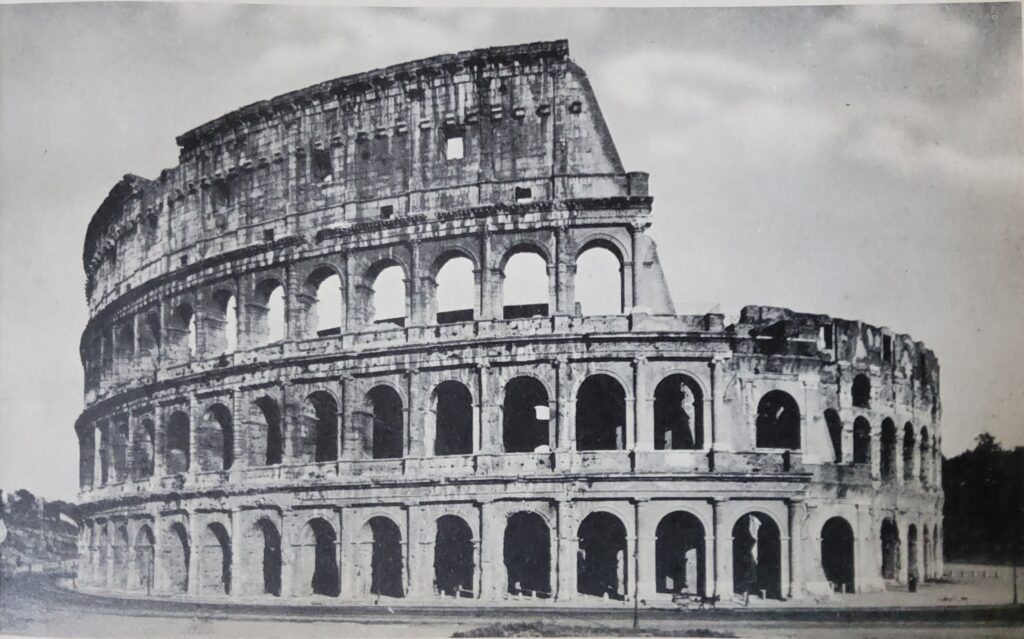
The Romans left their mark on world architecture. The early architects copied Greek models, but later architects, combined Greek and Roman elements into buildings, more spacious and ornate than Greek buildings.
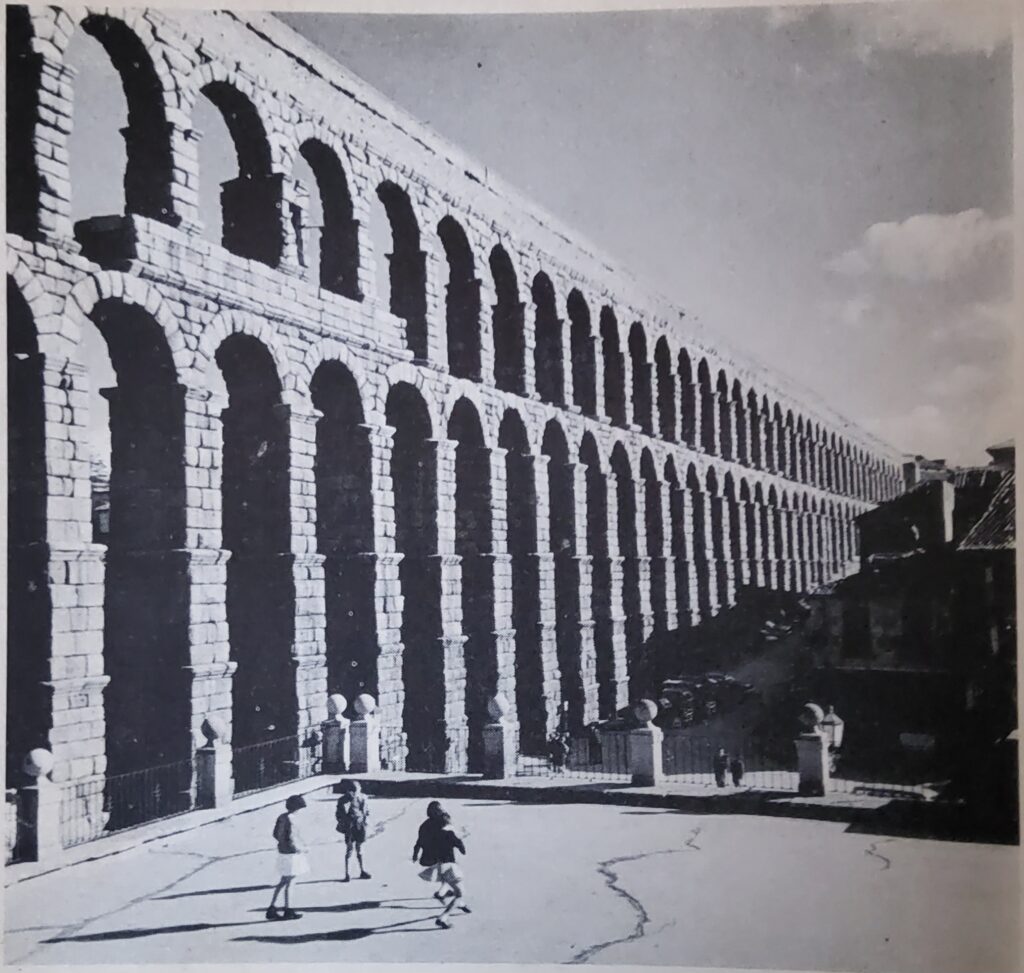
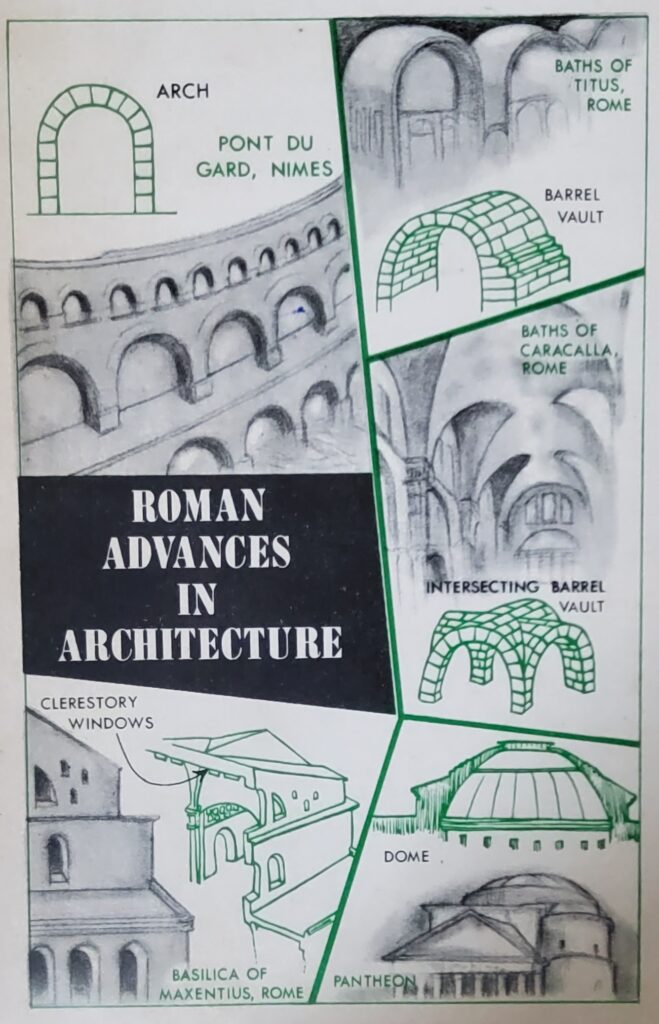
The post and lintel of the Greeks was replaced by the arch and vault. The arch was much used for door and window openings. The barrel vault was a new method of enclosing a space. It was a series of columns that formed a tunnel-like structure. To support the weight of the vaulted roof, strong masonry piers were built. Intersecting barrel vaults were likewise used in some large buildings.
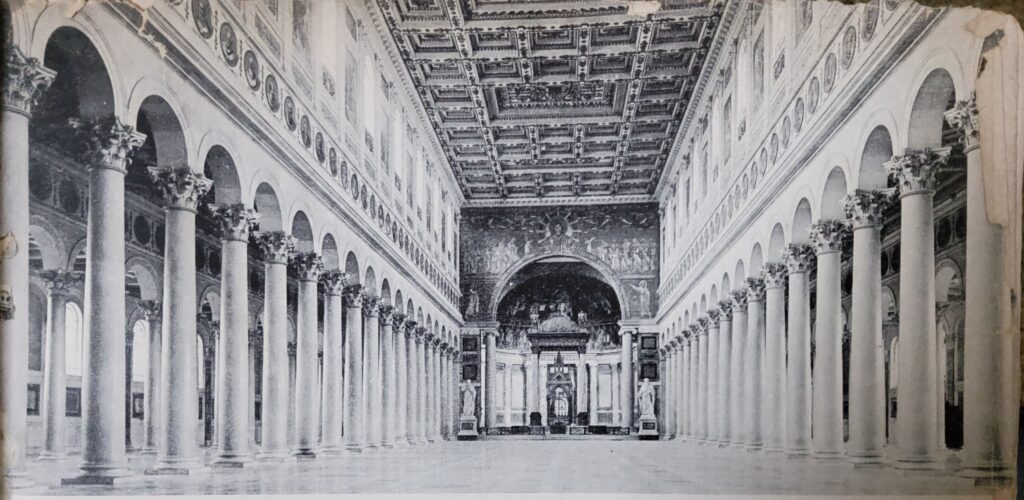
The Romans successfully built concrete domes, large enough to roof-over a good-sized space. Their weight was laid on the walls, with no sidewise thrust. Roman buildings were intended to last and to symbolize the imperial spirit. The basilica, for instance, had a large central section with clerestory windows; there were also side aisles. This plan was later used for cathedrals. The Romans gave us the triumphal arch, public baths, the basilica, the amphitheatre and the many-storied apartment house.
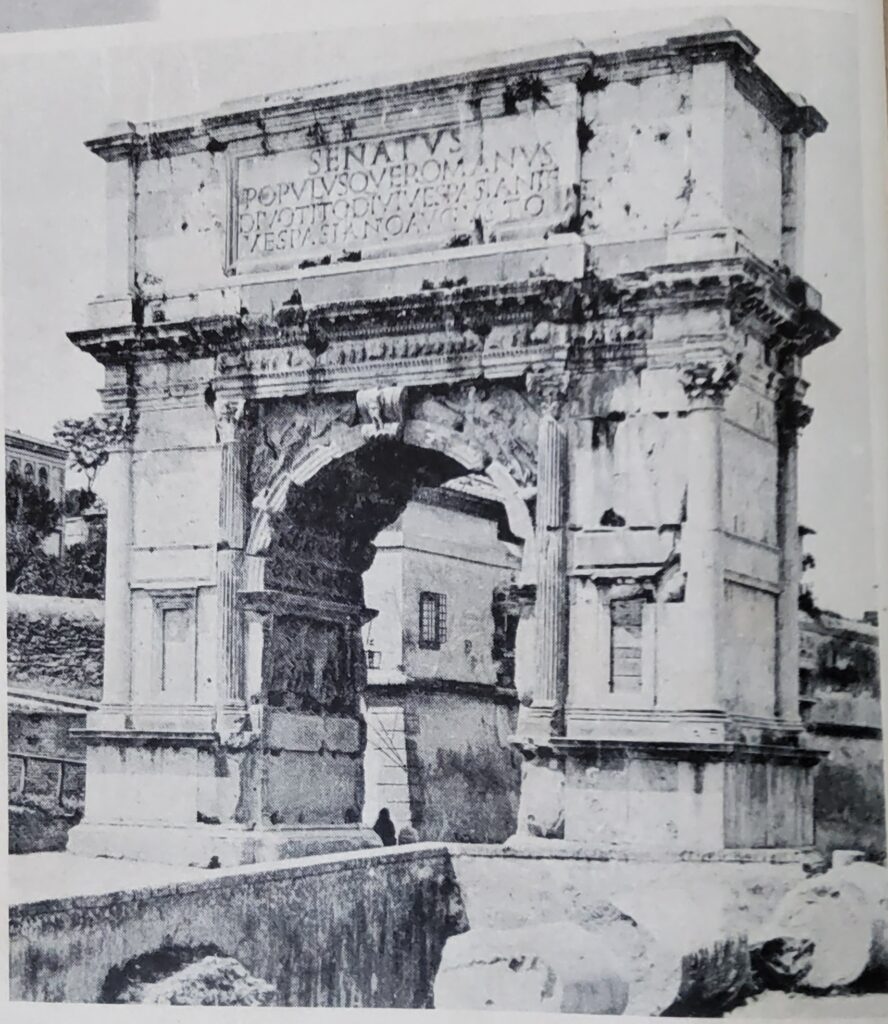
After the Romans conquered Greece, they brought thousands of pieces of art home with them. These greatly influenced Roman art, but in the field of sculpture particularly, the Romans added their own ideas. For one thing, they did excellent busts of individuals and put relief portraits of the emperors on Roman coins. They were the first to make equestrian statues and their work on triumphal arches was well done.
The Romans excelled in making mosaics. Frequently their walls or floors were of mosaics, especially in the lavish country houses. A word of praise should be added for the Roman engineers whose graceful bridges and aqueducts, still exist in various parts of Europe. They achieved lasting utility by placing a series of arches next to one another and using tiers of arches, to carry water channels across deep gorges.
THE TRIUMPH OF CHRISTIANITY
An ascendant Roman Empire witnessed the birth of an ascendant world religion.
At a time when the Rome of Augustus stood at a pinnacle of earthly power, a child was born in the faraway, relatively poor province of Judea, whose teachings when an adult, would change the religion of Rome and alter the whole course of Western history. That child was Jesus of Nazareth, born in the village of Bethlehem not far from Jerusalem.
Conquered by the Romans under Pompey, the Jews were a divided and unhappy people. Their prophets had taught them that when righteousness prevailed among them God would send a Messiah, a leader, who would lead them to create a new Israel and establish their freedom.
Chafing under the yoke of Rome and a Roman governor, many of them were hoping that the Messiah would soon appear. Now and then word came to Jerusalem that a carpenter down Nazareth way, a descendant of King David, was moving about the countryside preaching a new gospel. He and twelve apostles were traveling from village to village teaching His ideas and doing good among the common people. He was acquiring fame by healing the sick, reforming the sinning and telling His followers, that they should do the same.
Jesus’ fame spread so fast that within three years, when He came up to Jerusalem to attend a Jewish feast, He was welcomed by crowds of people. They hailed Him as the promised Messiah.
Jesus protested that He had been talking about a spiritual kingdom, not an earthly one. When the masses realized that He would not lead a movement to establish a Jewish state, they turned against Him. Those who opposed His teachings moved against Him too. He was betrayed by an apostle, condemned by the Jewish authorities, put in the hands of the Jewish authorities, put in the hands of the Roman authorities for execution and crucified as a criminal.
While some Jews did not accept Jesus as the Son of God, others did and some of those became missionaries, who spread His teachings throughout the Roman world. They called Jesus “the Christ,” from the Greek word christos, the annointed, the Messiah, the chosen one. He became known as Jesus the Christ, or Christ Jesus.
So long as Jesus was thought of only as a Messiah to the Jews, the new religion was preached largely to them. Then, about 37 A.D., Saul of Tarsus was converted to Christianity. He was Jewish, but a Roman citizen, brought up in Tarsus, a Hellenized city of Asia Minor. He lifted the new faith out of its Jewish setting, carried it to the gentiles and helped establish a universal Christian Church. Saul changed his name to Paul and made many missionary journeys to Macedonia, Greece and other parts of the Roman Empire, including Rome. He was executed in Rome about 67 A. D.
Besides preaching, Paul sent back letters of encouragement to the little churches (groups of converts) he left behind. Years later, some of these letters were included in the New Testament, a collection of writings that tells the story of Jesus and repeats His teachings. Jesus spoke Aramaic, a language related to Hebrew. The New Testament was written in Greek and Aramaic and then translated into other languages.
Christianity became the official religion of the Roman Empire.
Jesus’ teachings were quite unlike the beliefs held by those who embraced the official Roman religion. Indeed, the whole life of Jesus was very different from the sort of life a wealthy, influential Roman would have regarded as good. The Romans had spent generations becoming powerful and rich; they had come to think of their emperors as gods. Jesus taught that wealth might not be a blessing at all, that the lasting riches of life are the riches of the spirit. He urged all men to be unselfish, to avoid violence and to look after the welfare of others.
At one time a lawyer asked Jesus, “Master, which is the great commandment in the law?” The reply that Jesus gave him is regarded as summing up His basic teaching:
Thou shalt love the Lord thy God with all thy heart, and with all thy soul, and with all thy mind. This is the first and great commandment. And the second is like unto it: Thou shalt love thy neighbour as thyself. On these two commandments hang all the law and the prophets.
In spite of differences in basic thinking such as these, the Roman government would not have been concerned if the Christians had gone on taking part in the ceremonies of the state cult, respecting the emperor as a god and bowing before his image, but the Christians refused to take part in the ceremonies. “There is but one God,” they said, “and we will not share our loyalty to Him with an emperor or any other god.”
What was more, zealous Christians did not serve in the armed forces or accept political offices. They would not take part in social functions that they thought were degrading. Their attitudes made them traitors in the eyes of the Roman officials and brought persecution from some of the emperors.
In order to keep their religion alive and to remain unpunished, the Christians met in the tombs and catacombs which lay under parts of the city of Rome. It gradually became evident to the officials, that they could not destroy the new religion by force. In 311, the emperor Galerius issued an Edict of Toleration which made Christianity a legal religion in the East. Two years later, the emperor Constantine issued an order (later called the Edict of Milan), giving Christianity the same status as other faiths throughout the Empire. In 381, Theodosius the Great, proclaimed Christianity as the only state religion. Thus Christianity was born, gained acceptance and became the official religion of the Roman Empire, all within four hundred years.
Christianity was adopted by many people of different countries, different races and different languages. This resulted in different religious practices and beliefs. In order to unify the church, a council was called to meet at Nicaea, in Asia Minor, in 395. The leaders of the council drew up a declaration of faith, or a creed, in which the main beliefs of Christianity were stated. This, the Nicene Creed, is still used today.
Today, more than 1.4 billion people are followers of the Christian faith. These people dwell chiefly in Europe, North America and South America, though millions are found in the other continents. Christianity has become the dominant belief of the Western world.
THE ROMAN EMPIRE DECLINES
Internal decay and the barbarians caused the fall of the Roman Empire.
When he became emperor, Constantine decided to create a new centre of administration. He rebuilt the old Greek city of Byzantium, which was located on the banks of the Bosporus where Europe and Asia almost touch each other. He called it New Rome, but others called it Constantinople, the city of Constantine.
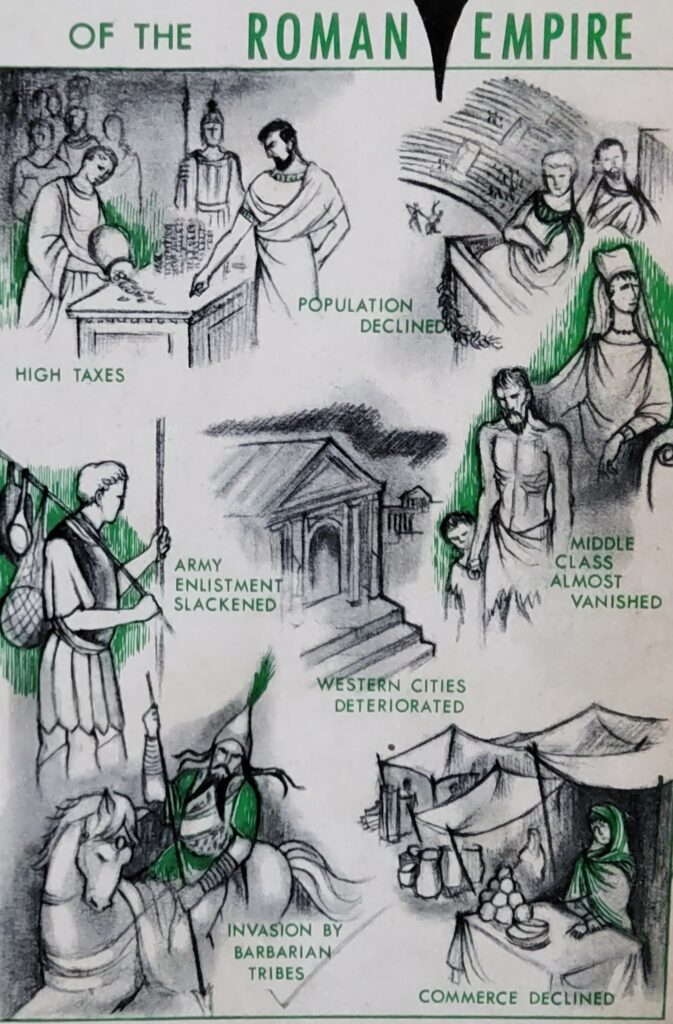
In this way, he was better able to protect the rich cities of the East from possible invasion, but he was too far from the centre of the Empire to control all parts of it well. Deterioration continued. The cost of supporting the army, the thousands of civil officials and the luxurious court life of the emperors, kept taxes exceedingly high. People were discontented, just as they are today, with the administrative cost of government.
The birth rate of the Empire was going down. It became more and more difficult to enlist soldiers. Landowners, taxed to the breaking point, often fled from their homes rather than face punishment for not paying their taxes. Lands in even the richest provinces became worthless with neglect. Commerce declined. The imperial government made laws, to fix wages and prices and to force shop workers and farm hands to stay at their jobs. These laws were deeply resented. The use of slave labour had a big part in weakening the economic structure.
Germanic peoples had been infiltrating the Empire for centuries, but in the fourth century, Europe was invaded by a group of fierce Huns out of Asia. The Huns terrified the Germans. The Germans, trying to escape, pressed upon the northern frontiers of the Roman Empire and were permitted to cross the Danube River and settle within the Empire. There, the group of Germans known as Visigoths (West Goths) were mistreated. They took up arms against the Romans. In the year 378, the Emperor Valens, using outgrown tactics, was defeated by the Visigoths in a battle fought not far from Constantinople. This defeat showed the weakened state of the Empire; it forecast the disasters that lay ahead. In 410, the Visigoths having moved westward into Italy, attacked the city of Rome. Later, they moved into southern France and Spain, where they founded a kingdom which lasted about 300 years.
These events acted as the signal for a general movement of the Germanic tribes. East and West Goths, Franks, Vandals, Lombards and others, occupied areas which had been parts of the Roman Empire. Resistance to them seemed to have collapsed. In 476 the outward evidences of Roman authority in the West disappeared, when the Germans of Italy put from power the last of the Roman emperors. The government was taken over by the barbarian leader Odoacer.
The events of the year 476 constitute what is frequently spoken of as the “fall” of the Roman Empire. The expression is not accurate. The “fall” was not a sudden thing, but was as we see, a slow decline. Rome and Italy had ceased to be the centre of the Roman Empire. Constantinople and the central government there, had largely gained the leadership which Rome had so long enjoyed. This Eastern Empire, embracing the Balkan Peninsula, Asia Minor and other parts of western Asia and Africa, while varying in extent from time to time and tending to become smaller, continued to flourish for many centuries.
The old order passed away, but not completely. The Roman legions no longer marched and Roman officials no longer ruled with “imperial sway” in lands which had once been part of the great Empire. Nevertheless, the centuries of Roman influence, expressed in language, in architecture and in laws, could not be erased by barbarians. Even today, the thoughtful traveller in Europe sees much to remind him of the days of Roman occupation.
Like the Greeks, the Romans made a deep impression upon the culture of the West.
With their armies, they conquered most of the ancient world. Everywhere they went, the Romans took their Greco-Roman civilization with them. Roman influence on law, government, marriage, family life and education, is still felt. Our language and that of many European countries, has absorbed much Latin.
Some historians state that half the knowledge of mankind, is recorded in some form of Latin. Roman literature influenced later writers in Italy, England, France, Spain and other nations. Roman architecture is still copied by modern builders. Roads and aqueducts built by Roman engineers still stand. The work of Romans in medicine, science, astronomy, agriculture and geography, while often incorrect in the light of modern knowledge, remains of interest. The Roman people absorbed the learning, the wisdom and the superstition of the ancient civilizations which came before their own and spread them throughout the Mediterranean world. Wherever their armies remained, Roman culture followed, took root and grew.
The three elements which, when interwoven, creates the pattern of Western civilization in the future – already existed in 476, the year we say ended the Roman Empire. These were the fused cultures of the Greeks and Romans, the growing Christian Church and the tribal organization of those German peoples, who overran the western part of the old Empire. The history of the next thousand years, is concerned with all three elements.

MARCUS AURELIUS (121 A. D. – 180 A. D.)
Can you imagine naming as your successor a blood son who seemed to represent everything you dislike in a man? That was the choice of Marcus Aurelius, the last of five “adopted” Roman emperors. By this act, he broke the practice begun by Julius Caesar of adopting as his heir, the man he thought was best qualified to be emperor.
Marcus Aurelius considered himself the servant of the Roman people. As a result, he was a model soldier-emperor. He spent much of his life in the armed camps of his legions, traveling along the troubled frontier and doing his best to protect Rome from invasion.
Marcus Aurelius appeared to embody Plato’s ideal of a “philosopher-king.” He steeped himself in the Greek classics, particularly the writings of the Stoics. A collection of his own writings, the Meditations, was a famous addition to the Stoic library. They reveal a man of courage who believed that war was evil, yet he persecuted Christians unmercifully, partly because they did not believe in emperor worship. According to him, the goal of life is tranquillity of spirit, rather than happiness.
LINKING THE PAST AND THE PRESENT
Though they lived in two different eras, we may compare the good will tours of former President Eisenhower with those of the Roman emperor Hadrian, who reigned from 117 to 138 A.D. Both men were eager to keep their lands at peace. Hadrian spent the better part of fifteen years visiting the Roman provinces, studying their problems and trying to improve conditions there. He made lavish use of Empire money to build temples, theaters, aqueducts and other public works, which the provinces needed.
After World War Il our government lavishly used billions of dollars to help other nations shut out communism and to build up their standards of living. In carrying out this program President Eisenhower visited many of the cooperating countries. One good-will tour took him to several European countries and across the Middle East to Afghanistan and India.
We read in this category, that man’s achievements during the long period from antiquity to the fall of the Roman Empire, laid the foundations of modern civilization. Fortunately, much of the record of man’s progress in literature, architecture and sculpture was never completely destroyed by the barbarians who crushed the Roman Empire. It is important to grasp the significance of these treasured contributions to our way of life.
During this long period of man’s ancient history, varied civilizations had their “ups and downs.” Most of them won some fame, experienced a decline and ultimately lost their political power. Repeatedly, the conquerors absorbed the civilization of the conquered.
Man accomplished many things between prehistoric times and the Middle Ages. The list is so long that we hope to compile it here, but most important to us, man invented writing and learned to keep records. In Egypt he developed a calendar, irrigation, elements of architecture and a belief in his own immortality. Farther east he developed the wheel, an alphabet, legal and moral codes and the belief in one God. Persia opened a university before 600 A. D; China made paper and printed from carved blocks. The Greeks studied man; they revealed what it means to be a citizen and to love freedom. The Romans achieved a system of law and government and preserved and spread Christlanity.