Religions militant, gives an account of the wars of religion, which we call the crusades. During the Middle Ages, the followers of two great present-day religions, Christianity and Islam, continued to spread the influence of these religions over vast territories and among many peoples. The story of the extension of these religions, will observe that ideas are dynamic — they embody a divine energy that influences the lives of people.
A person who is dedicated to his ideas wants others fo accept those ideas and thereby experience the advantages and satisfactions that he has experienced. Many individual Christians and Moslems gave their lives, to achieve this end.
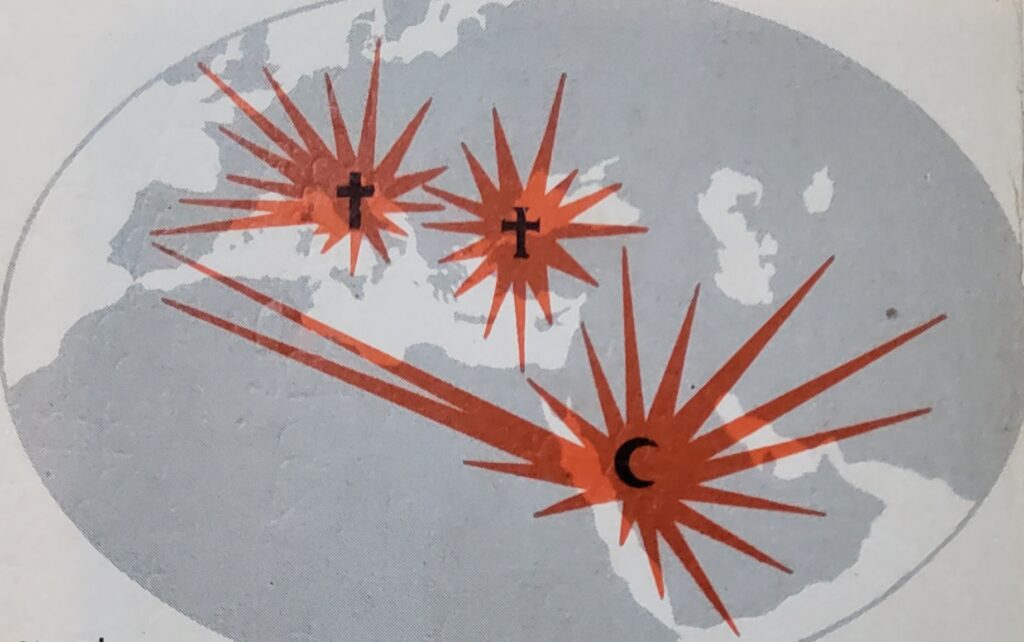
Amply demonstrating that men of sincerity and enthusiasm, can always find listeners. Barbarians with primitive ideas were converted to religions, which still hold the loyalties of their civilized descendants. Sometimes, the conversions were made by peaceful persuasion; sometimes forcibly by military conquest. In both cases, the missionaries took with them their former ways of living and created areas of culture that have continued to current day in Europe, Asia and Africa.
It was probably inevitable, that two groups of people with such differing sets of ideas, would ultimately clash. Hence, an account of the wars of religion, which we call the crusades.
CHRISTIANITY IN WESTERN EUROPE
Roman Catholicism became the main religion and dominant influence in western Europe.
After the Western Roman Empire ended, with Germanic peoples in control of its provinces, a new and vigorous Roman influence developed. Christian priests set about conquering those who had overcome the Roman Empire.
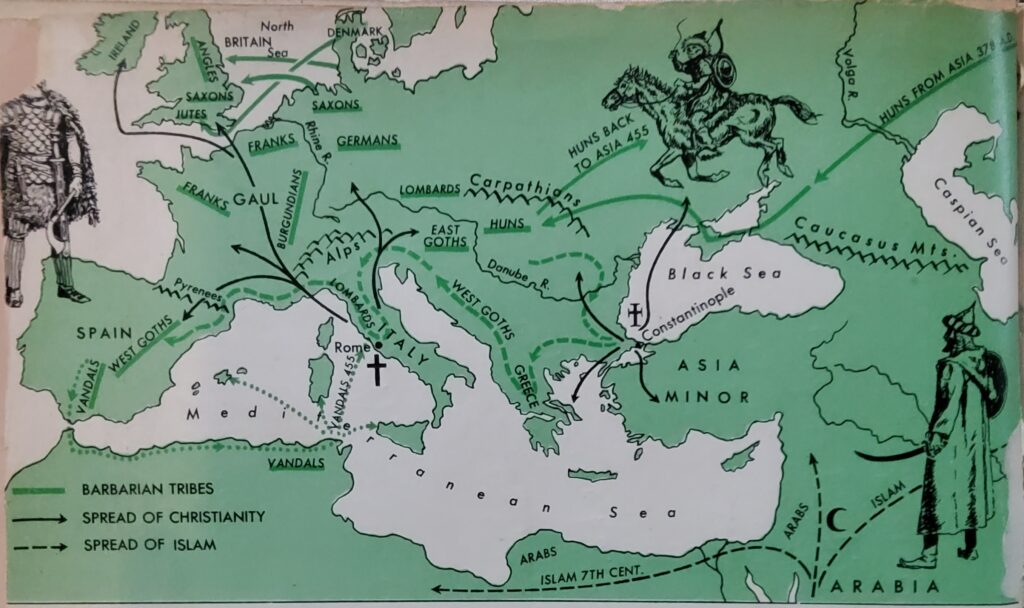
The first converts were made among tribes within the old empire boundaries, such as the Franks and Goths. Moving northward and eastward, the missionaries won over the Saxons, Bavarians, Angles, Jutes and Northmen through centuries of patient effort. Not only Germanic tribes, but western Slavic peoples such as the Poles, Czechs, Croats and invaders from Asia such as the Magyars, ultimately came into the Church. Since so many persons and such a vast territory thus came together in the bond of a common religion, the term Catholic Church, meaning universal, seemed appropriate.
During the period from 500 to 1500 A. D., which historians refer to as the Middle Ages, the Roman Catholic Church was the dominant religious force in Europe. Representatives of the Church baptized a man soon after birth, gave him any schooling he received, marned him, regulated the form of his family devotions and finally, buried him. In return it demanded that he support it, lead a supernatural life and do good to others.
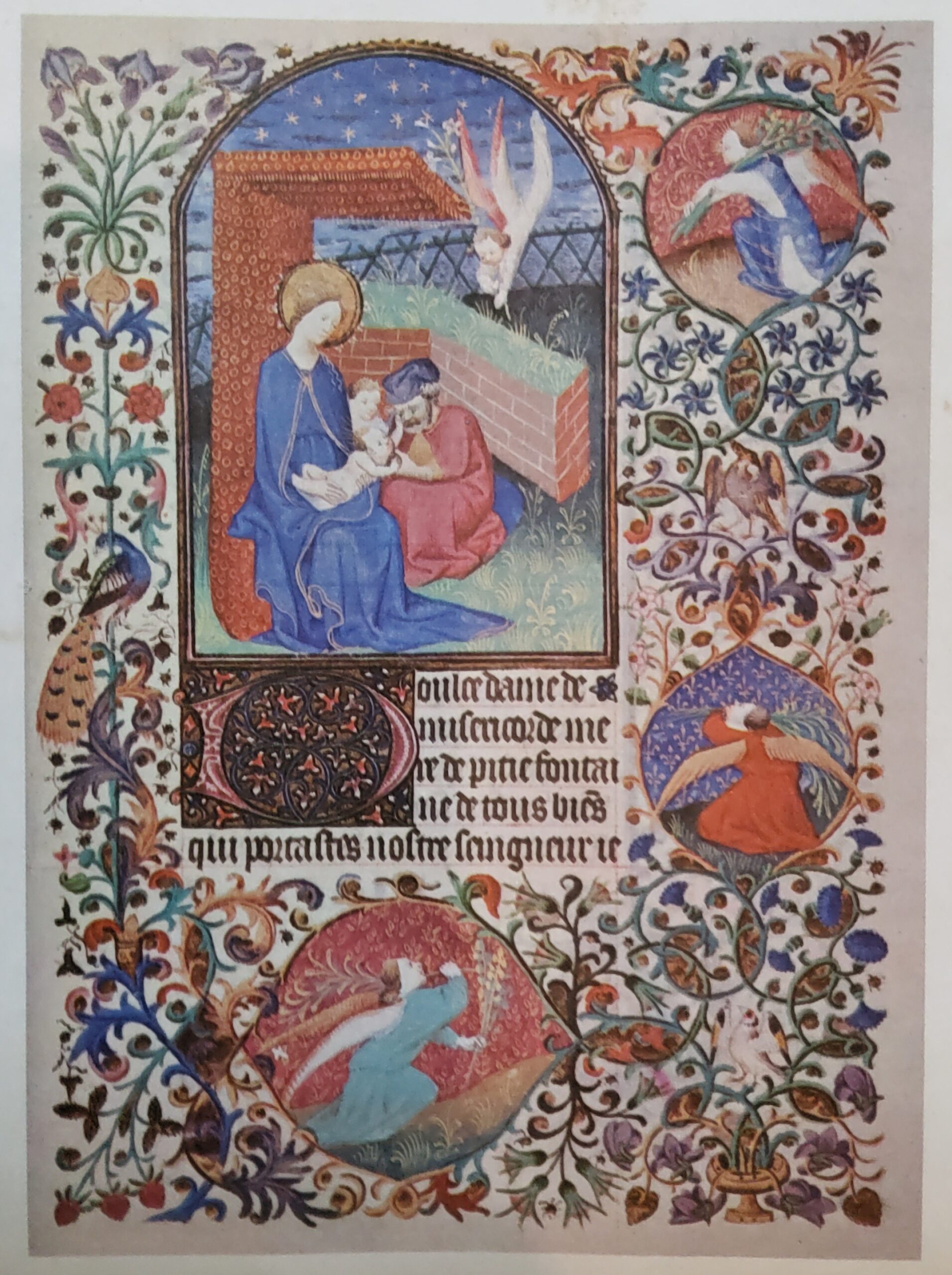
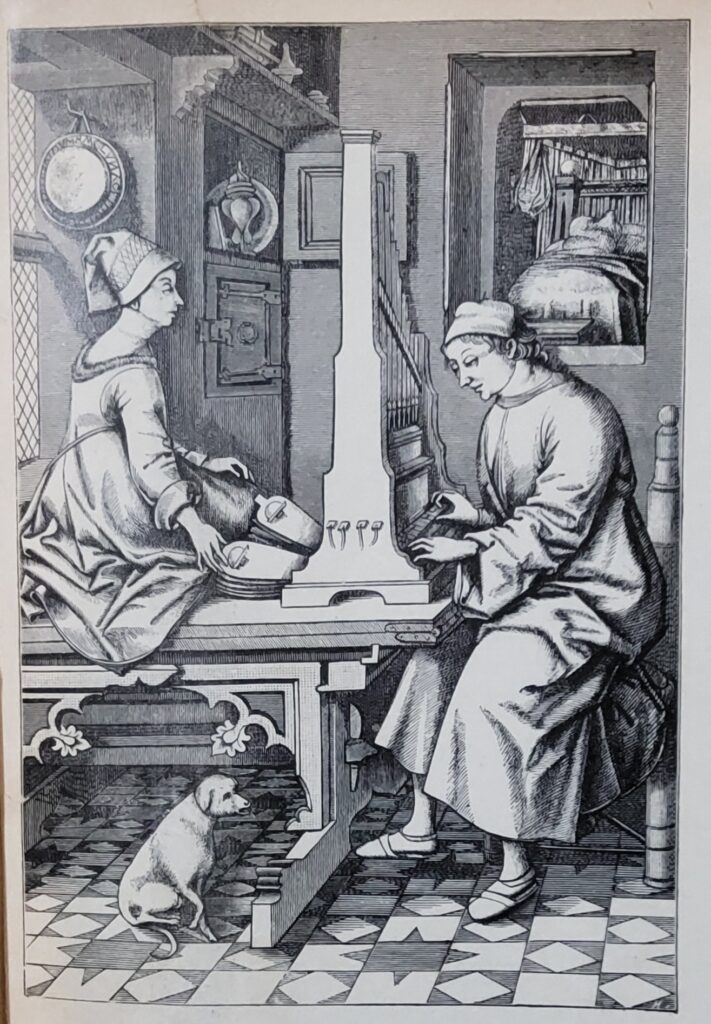
In addition to spiritual guidance, the Church provided recreation, entertainment and the enjoyment of beauty. At least once a week, it offered a quiet gathering place where one met his neighbours, both rich and poor. Inspired by their religious feelings, architects designed beautiful church structures. Masons, carpenters, craftsmen in glass and metals, brought all their skills to church construction. Painters and sculptors based their decorations on religious themes. Musicians devised suitable music for the impressive ceremonies. At a later date, the organ was developed. Suitable music was then composed for the organ and anthems were provided for church choirs.
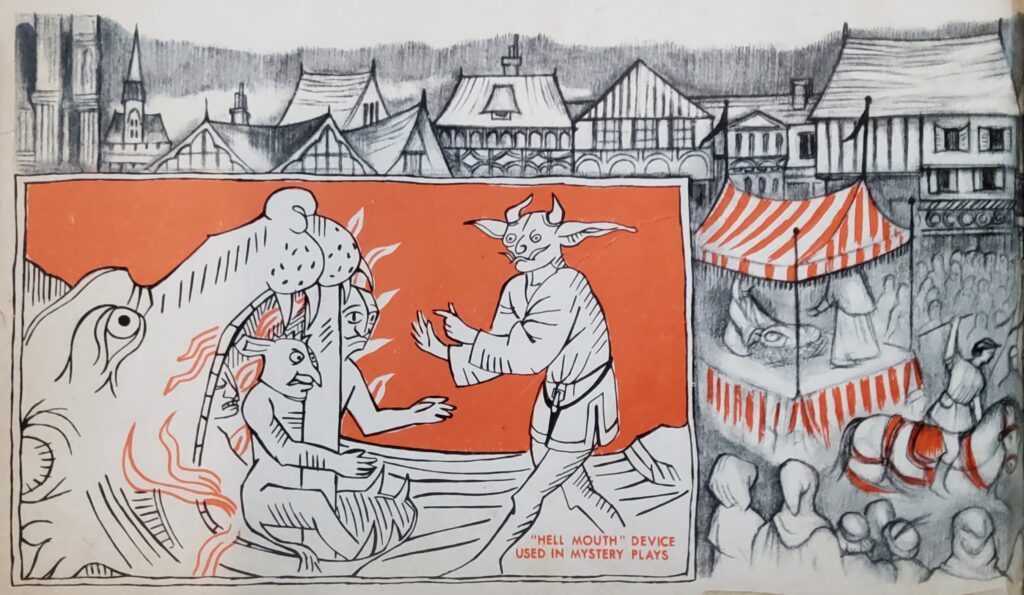
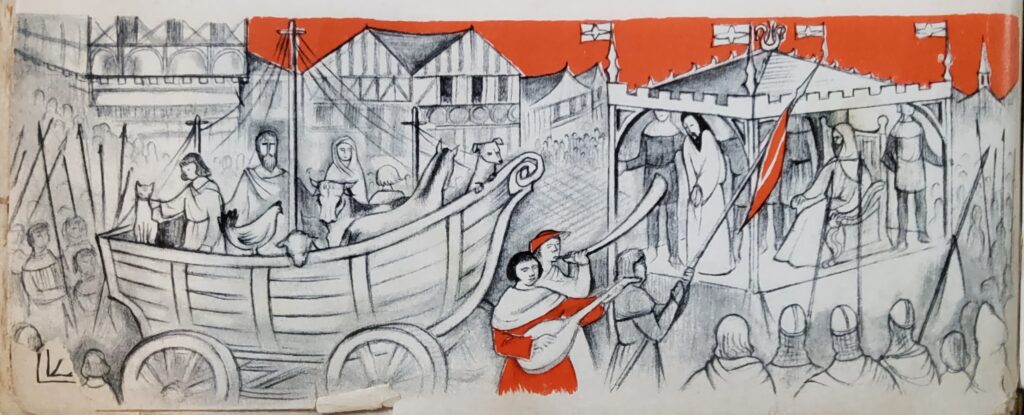
Western drama, like that of the Greeks centuries earlier, originated in religious services. Most people could not read, so the Church depended upon music, sculpture and then plays, to teach religious lessons. A priest could make a Bible story meaningful by training men and boys to act it out.
Gradually these dramatizations moved church to its steps, to the churchyard and finally to the market place. Sometimes plays were performed on a small stage set on wheels, called a “pageant.” Plays developed from Bible stories were called “mystery” plays. The title had a different meanIng then, to now!
The life of medieval man was integrated with the Church. Parades and processions were used in connection with certain days and events. The following is one writer’s account of a procession. It tells us much about the people’s interests and about the people themselves.
On Sunday .. . I saw the Great Procession from the Church of Our Lady at Antwerp, when the whole town of every craft and rank was assembled, each dressed in his best according to his rank. And all ranks and guilds had their signs, by which they might be known . . . great costly pole-candles were borne, and three long old Frankish trumpets of silver.
There were also in the German fashion, many pipers and drummers. All the instruments were loudly and noisily blown and beaten.
I saw the Procession pass along street, the people being arranged in rows, each man some distance from his neighbour, but the rows close behind the other. They were the Goldsmiths, the Painters, the Masons, the Broiderers, the Sculptors, the Joiners, the Carpenters, the Sailors the Fishermen, the Butchers, the Leatherers, the Clothmakers, the Bakers, the Tailors, the Cordwainers — indeed, workmen of all kind, and many craftsmen and dealers who work for their livelihood. Likewise the shopkeepers and merchants and their assistants of all kinds were there.
Monks and friars became important as Christian leaders and teachers.
Those men in the Church who were ordained to serve God and the Church, were called the clergy. There were two groups, the secular clergy and the regular clergy. The former included the bishops and others who managed Church business, but the parish priests made up the great body of secular clergy. There were two groups, the secular clergy and the regular clergy. The former included the bishops and others who managed Church business, but the parish priests made up the great body of the secular clergy. The priests administered the sacraments, heard confessions, visited the sick and supervised the parish.
The regular clergy, so-called because they lived bv a rule, regula, were monks and friars. The monks wished to retire from the active affairs of everyday life and devote themselves to the service of God. In a similar manner, women entered convents and became nuns.
Monasteries were organized first in Egypt in the earlier years of Christianity. By the year 1000, almost every community of any size in Europe, had either a monastery or a convent. Monks did not, in all cases, live out their lives in monasteries. Many became active missionaries. An example may be seen in the re-conversion of England by St. Augustine and his followers. Christianity had been introduced there in Roman times, but it was almost wiped out by the Anglo-Saxon invasions.
Ireland had never come under the religious or political influence of the Romans. Early In the fifth century a Christian Briton, know to us as St. Patrick, crossed to Ireland and converted many persons. Monasteries were set up from which zealous Irish monks went out to Scotland, Wales and northern England. Some even journeyed to the Continent, to christianize the Franks. Ireland escaped the Germanic invasions and between the fifth and ninth centuries, it became a centre of Christian culture. Irish monks, who were among the most learned men in western Europe, promoted learning and the copying of Greek and Latin manuscripts.
During this period, southern England was dominated by the pagan Angles and Saxons. Legend says that Pope Gregory saw some children on sale in the market place of Rome.
“Who are these children?” he asked. “They are Angles,” was the reply. “Not Angles, but angels,” said the pope.
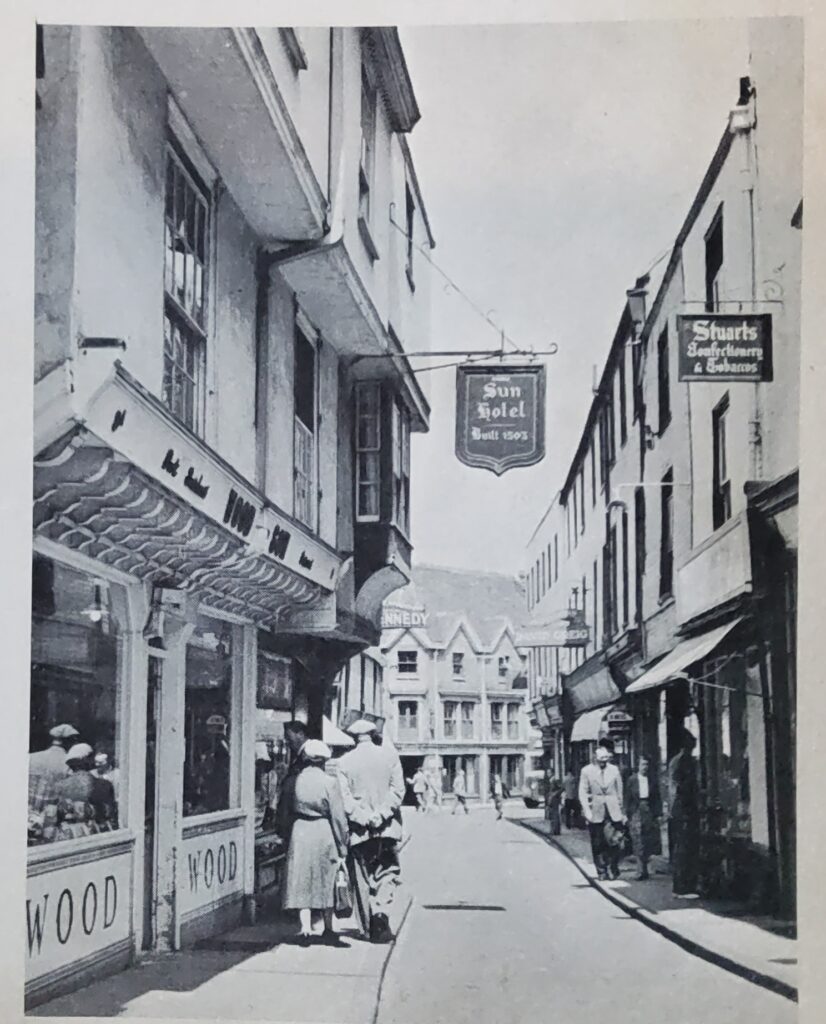
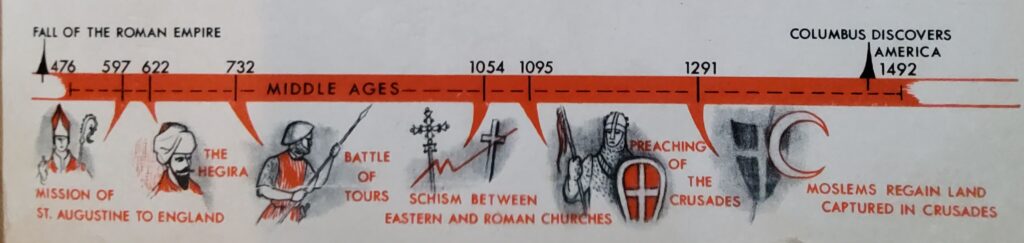
In 597, Pope Gregory sent Augustine to the small kingdom of Kent in Angleland (England). The king of Kent was converted, the first Anglo-Saxon ruler to accept Christianity officially. In time, Christianity was spread throughout England. Augustine became the first archbishop of Canterbury.
In the thirteenth century, two relgious orders of friars were formed. Franciscans and Dominicans. The term friar comes from the Latin frater, meaning brother. The men of these orders gave themselves to preaching, traveling from place to place and living on the charity of their listeners. These two orders and others founded later, did much to win followers to Roman Catholicism at a time when many secular churchmen were being criticized, for being too “worldly.”
Great churches were built as acts of devotion.
In the earliest days of the Christian Church, services had been held in pagan temples and Roman basilicas. The basilica was a public building used as a court of law or for other community affairs. Many of the early Roman churches were built in that style. The Roman arch and dome continued in use. This type of building, which we call Romanesque (Roman-like), tends to look heavy and solid with its massive walls, small doors and narrow windows.
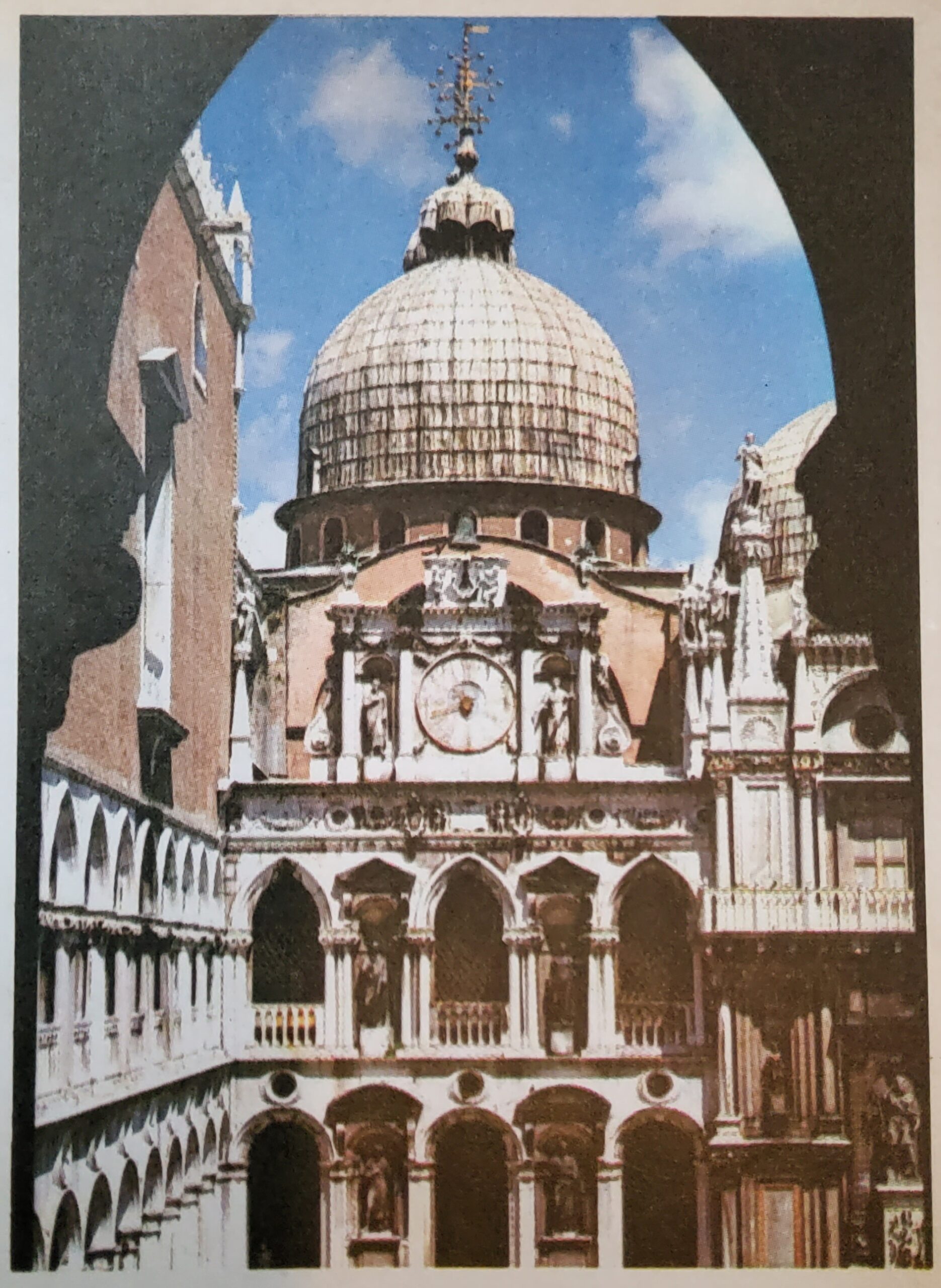
In Constantinople, the Romanesque style culminated in the magnificent church of Hagia Sophia (Divine Wisdom) built by the Emperor Justinian. Dedicated in 537, it became a model for church designers and was followed by the Venetians when they built the church of St. Marks.
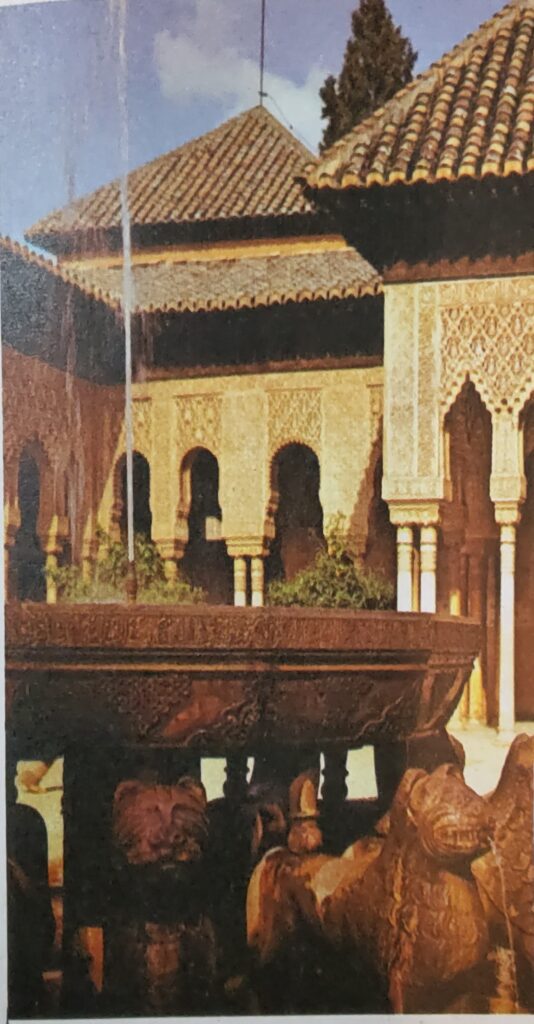
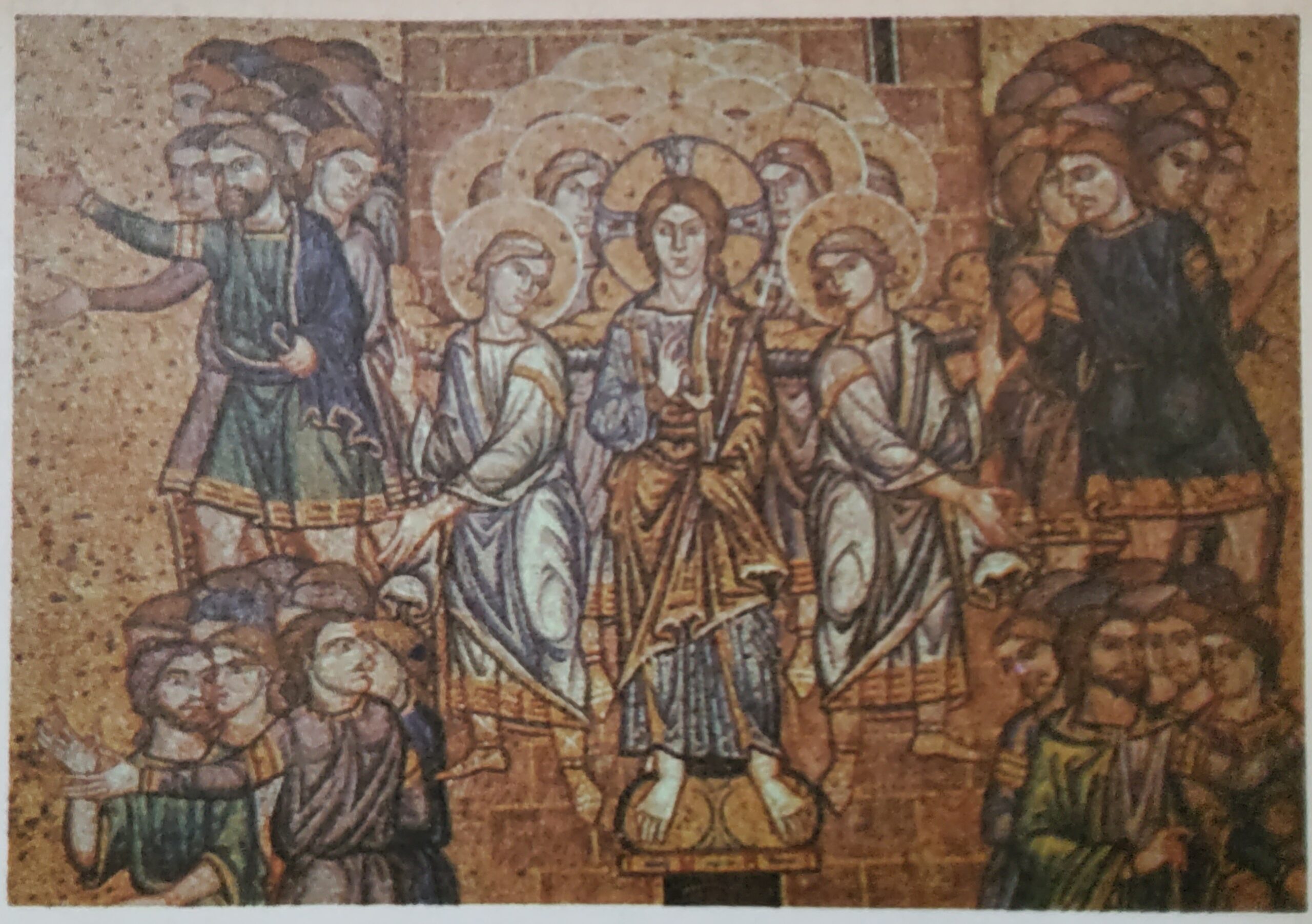
Some Romanesque churches made effective use of coloured marbles in the exterior and interior design. Churches were often decorated with mosaics: pictures made of bits of coloured glass embedded in cement, which glowed like jewels, when light fell upon them.
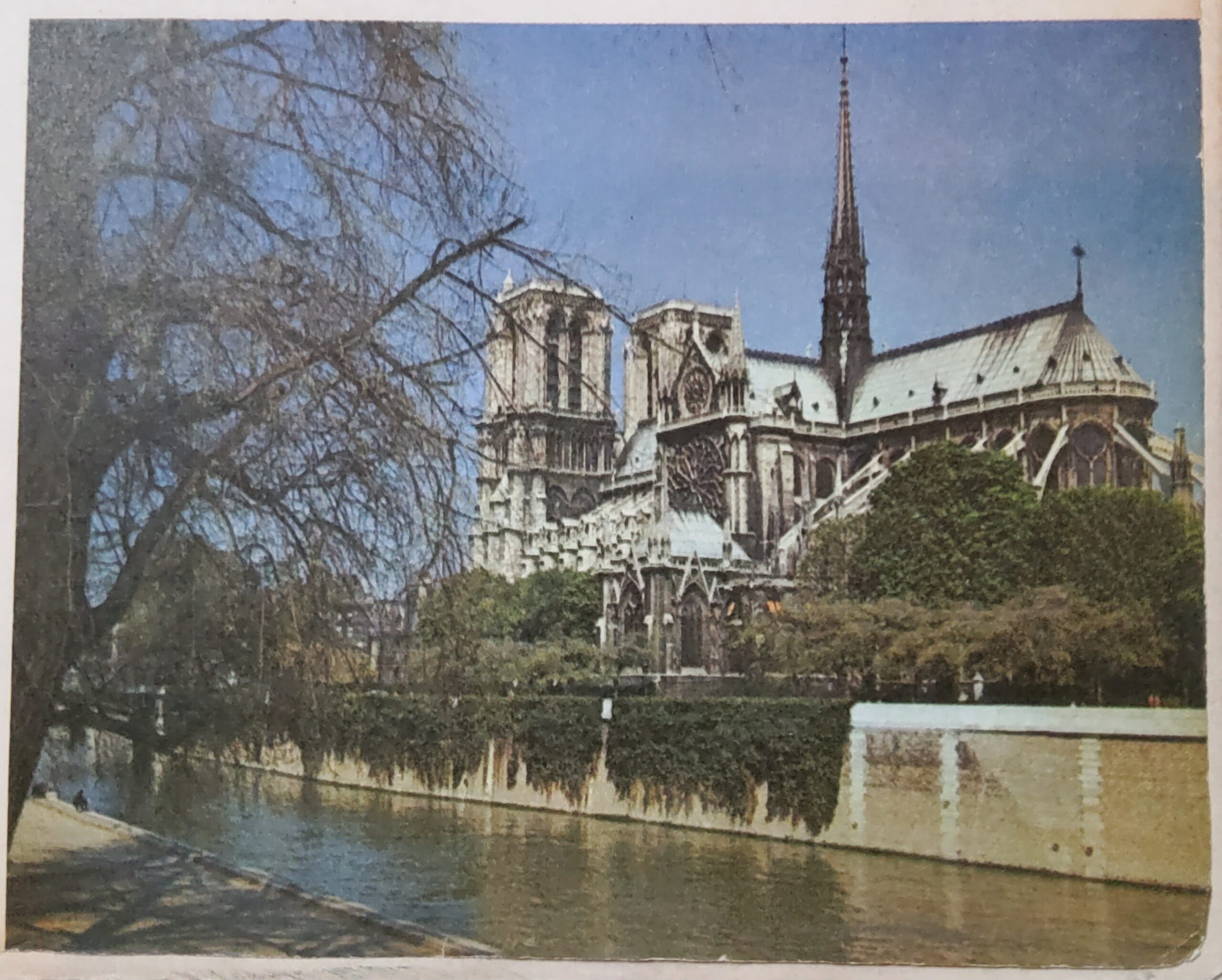
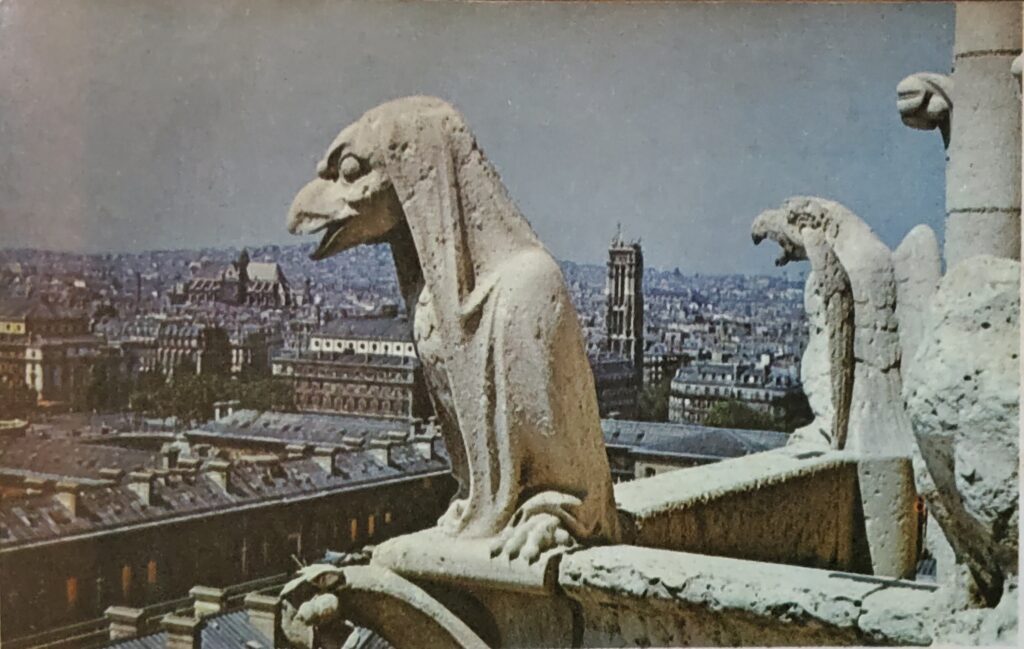
In order to support the thrust of a heavy stone roof, the builders of Romanesque churches used thick walls, resulting in small, deep-set windows. Some French architects of the twelfth century, decided that Christian churches could be made much more light, beautiful and inspiring, if the walls were filled with tall stained glass windows and the roofs and spires were raised to an imposing height.
The plan was a good one, but it left only narrow spaces between the windows for walls, insufficient to support the roofs of that period. This was indeed a serious problem inasmuch as builders of that day did not have the steel, aluminum, alloys of low weight and great strength, available today.
The problem was eventually solved by supporting the walls with masonry braces called flying buttresses. The architects also used vaultings of heavy timber as roof beams. Ironically, the name Gothic was given later to this beautiful style by Italians, who regarded it as barbaric.
Beautiful Gothic churches were built throughout western Europe, with several variations in style. The most elaborate, of course, were the cathedrals which still grace the Old World. A church is correctly called a cathedral when it is the seat, or headquarters church, of a bishop. Cathedral is the Latin word for the chair or throne of an official. The cathedral at Chartres, France, is considered by many, to be a masterpiece of Gothic style.
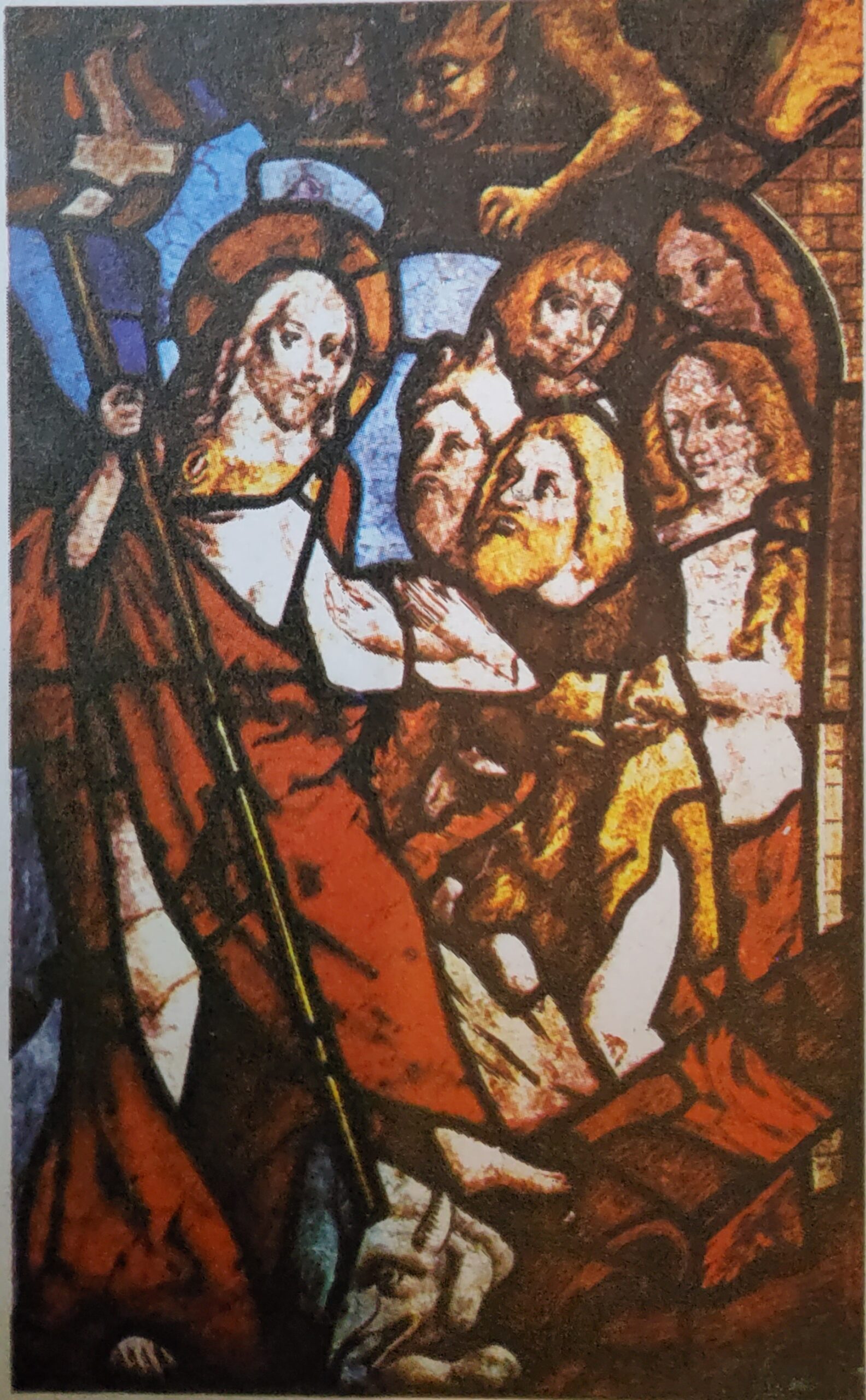
The stained glass windows that survived are cherished art treasures today. They are made up of many pieces of coloured glass, held together by strips of lead. They often form pictures like mosaics and represent Biblical scenes, saints or angels.
The medieval Church wielded both temporal and spiritual power.
Part of its temporal power lay in its organization, which was patterned to a degree after the political organization of the Roman Empire.
At the head of the Church was the pope. Below him were the archbishops and bishops who presided over the areas and provinces — called dioceses. The bishops superintended the activities of the parish priests. Such an organization of a church is called a hierarchy. It is like the structure of a government or of an army.
The Church received income from various sources — chiefly from its lands, but also from tithes collected on the people’s earnings, from fees collected in the Church courts and from freewill contributions by the devout.
The Church maintained courts to try those members who disobeyed its rules or denied its teachings. The trials were conducted according to the principles of canon law. Canon law had derived from the Scriptures, the writings of the early churchmen, the rules passed by church councils and the decrees of the popes.
The Theodosian Code, a collection of laws compiled under the Roman emperor Theodosius II, in the fifth century, provided that Christianity should be the only official religion in the Empire. The Code stated that all the teachings of the Church should be accepted; that Catholics who departed from the teaching of the Church were to be held guilty of heresy; that the government should punish heresy and other offences against the Church.
The clergy, because they served the Church, became a privileged class. They paid no taxes on property owned by the Church. They were freed from military service and other public responsibilities. If accused of crime, they must be tried in Church courts by other churchmen. Churchmen were also given the authority to protect a person who came to a convent, monastery, or church asking for protection, or sanctuary.
After the Empire fell apart, very few local governments were able to maintain order. The Church took over some of the functions of government. It protected orphans and widows, aided the poor, provided lodging for travelers, cared for the ill.
RELIGION IN THE EAST
A great schism, or division, occurred between Greek and Latin Christianity.
In the early period of Christianity, some bishops were known as patriarchs. They were the heads of churches supposedly established by the Apostles. This gave them greater prestige than other bishops enjoyed. At about the time that Constantine created a second capital in the Roman Empire, a “New Rome,” the head of the Church at Constantinople, was made a patriarch. This gave him a position in that region similar to the pope’s position, in Rome.
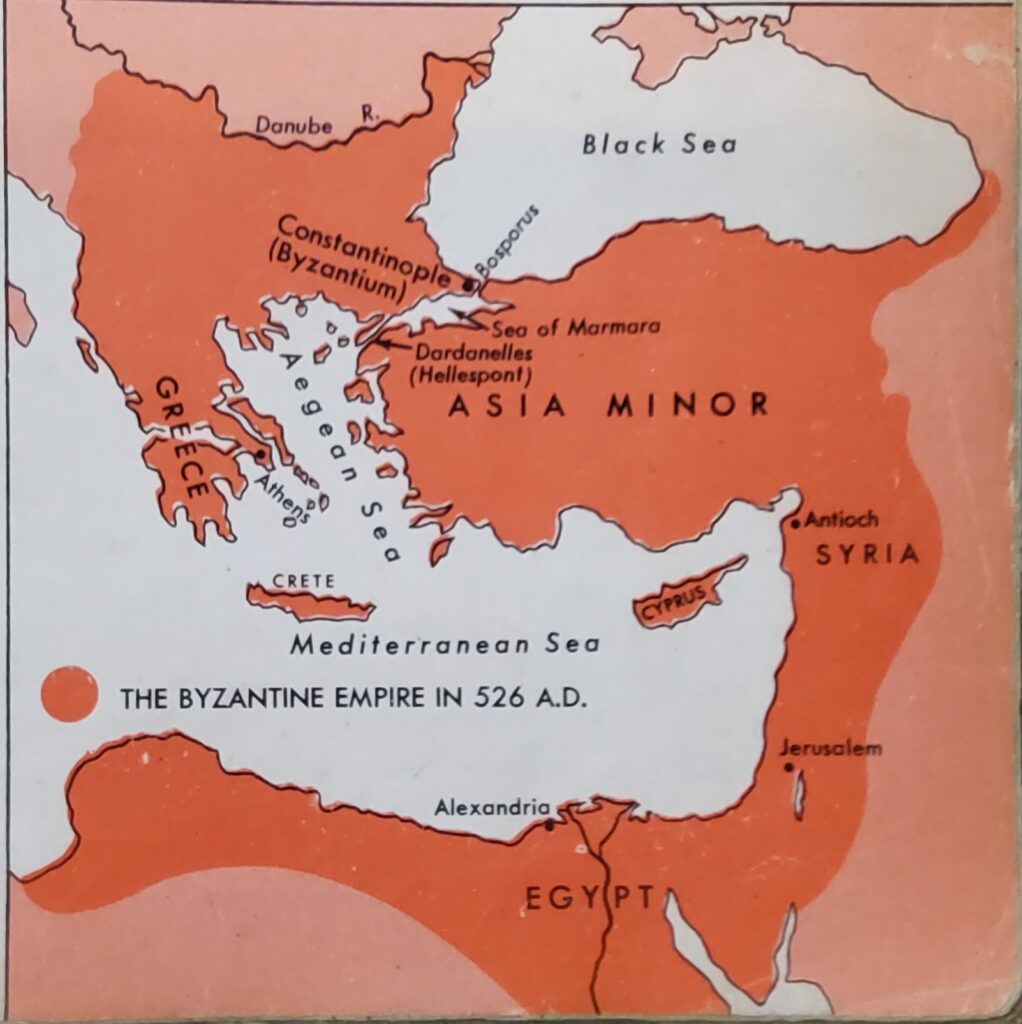
The new capital had been set up because the later Roman emperors faced administrative and military problems, they could not solve from one central headquarters. Lines of division soon followed that were drawn along boundaries of language and culture. Western Europe had been pretty well “Latinized.” In southeastern Europe and Asia Minor the Greek language, the Hellenistic culture and influences from the Orient, were strong. The empire and culture in the East ultimately were called “Byzantine” from Byzantium, the ancient Greek name of Constantinople.
For several centuries after the line of emperors at Rome had ended, there was communication between the popes at Rome and the Byzantine emperors at Constantinople. Each recognized the leading position of the other. The popes dealt with the emperors because the Eastern Church was a state church, or department of the government and the emperor appointed the patriarch.
The Eastern and Roman Churchez gradually drifted apart. There were disputes over doctrine and practices. The differences between the Greek and Latin languages and cultures impeded communication and promoted disunity, too. The final separation, or schism, came in 1054, when a representative from the pope quarreled violently with the patriarch.
Byzantine monks and missionaries were active in eastern Europe. Their first converts were among nearby Slavic tribes, the Bulgars and the Serbs. They adapted the Greek alphabet to the sounds of the Slavic languages and this alphabet, the Cyrillic, is still used in eastern Europe. Some of their most important converts were the Russians, for through them Byzantine influences were later spread over vast territories in Europe and Asia.
In government, the Byzantines believed in very strong, absolute rulers. The Church, under the control of the ruler, was often used as the instrument of his policies.
The medieval Jews maintained their ancient religion under adverse conditions.
In 70 A.D. the Jews rebelled against the Roman emperors. Jerusalem was destroyed and many of the Jews in Palestine were killed or scattered to other parts of the earth. In 212, Jews were granted Roman citizenship, but after Christianity became the official Roman religion, some Christians persecuted them for their refusal to accept Catholicism.
During medieval times many Jews lived in Europe, northern Africa and western Asia, but as Christianity became dominant, intolerant leaders persecuted them. In many countries Christians were forbidden to live among the Jews, thus forcing the latter to live in areas of their own called ghettos. Long before this, Jews in some countries could not own land, farm, join a labour guild, or enter most of the professions. These injustices caused many Jews to become merchants or moneylenders. Church laws which forbade Christians to lend money at interest did not, of course, apply to the Jews. For centuries, they were the bankers of Europe.
The political and financial policies of some kings resulted in the Jews of Europe being persecuted and then in being driven out of England (1290), France (1306), Spain (1492) and Portugal (1496). They fled to Poland, Turkey and other Moslem lands and to the Americas.
Here and there, the Jews were able to build synagogues and be instructed by learned rabbis. Their religious leaders continued to write commentaries on religion, philosophy and keep old traditions alive. Some of their finest hours occurred in Spain in the eighth and ninth centuries. Some of the best writing of the time in philosophy, medicine, science and mathematics, was accomplished by Spanish Jews in this period of comparative tolerance.
Islam, a new world religion, spread like a prairie fire.
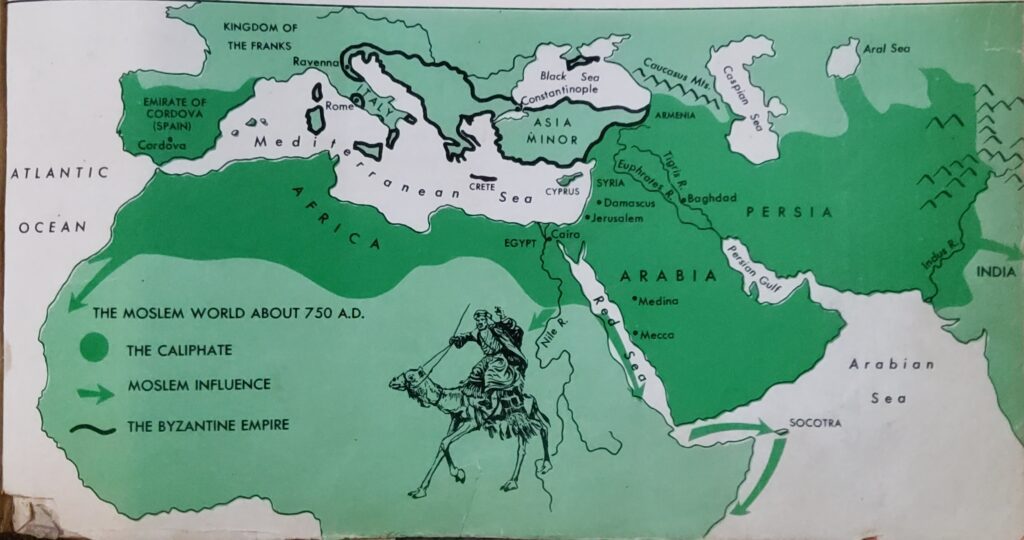
While Christianity was being established among the barbarian tribes of Europe, a new religion appeared in Arabia and made rapid growth in Asia, Africa and southern Europe, known as Islam.
The founder and prophet of Islam was Mohammed, a man born in Mecca. Left an orphan, Mohammed was brought up by an uncle. As a boy, his thinking was influenced by a monotheist who scolded him for worshiping idols. When Mohammed was about twenty, he began working for a woman who owned caravans and when twenty-five, he married her. This marriage gave him economic security and a satisfying social position.
In his journeys, Mohammed met Christians and Jews who influenced his thinking. He began to spend time in fasting and prayer. During these times, it is claimed, he received messages from the angel Gabriel which were later written down and became the basis for the Koran, the book of Moslem scripture.
The Koran has passages which are like parts of the Bible. Mohammed taught monotheism, where the Arabs had worshiped many gods. He taught that the faithful would be rewarded after death, the “infidels” (non-believers) punished.
Mohammed’s first teaching was done in Mecca, where he had lived all his life. Mecca was a trading centre near the Red Sea. Many Arabs thought of Mecca as a holy place, for in it was the Kaaba, a cube-shaped temple containing 360 idols and a sacred black stone which may have been a meteorite.
In the beginning of his ministry, Mohammed’s ideas were not received with great enthusiasm, another example to prove that “A prophet is not without honour, save in his own country.” In 622 he fled to Medina, where he was received as a leader with divine authority in spiritual affairs. This move is known as the Hegira (from the word hifra, meaning “the breaking of former ties”). It was so important to Mohammed that 622 A. D., is counted as year one in the Moslem calendar.
In 630 A. D., Mohammed returned to Mecca with an army. Mecca then accepted him and the city became the centre of Islam. When he died in 632 A. D., he had united the nomads of Arabia under his rule. Mohammed’s successors, who were called the caliphs (deputies), began a century of wars which led to amazingly rapid and extensive conquests. The Moslems were inspired by their belief that those who fell in battle for Islam, were immediately transported to Paradise. They also were inspired with the prospect of plunder and of winning much rich and fertile territory.
The zealous Moslems were led by capable generals. They were fortunate, too, in attacking other peoples when their guards were down. The Moslem triumph over the Persian Empire, for instance, was in part due to the fact that she had just made peace with the Byzantine Empire after centuries of exhausting wars. Furthermore, some of the Byzantine territories like Egypt and Syria had had religious disputes with the patriarch at Constantinople and were not very loyal to the Empire and its Church.
The Persian Empire was completely conquered. Then the Moslems took the provinces of the Byzantine Empire one by one. The Byzantine emperor, Leo III, managed to win a victory in 718 which saved Constantinople for him and kept the Moslems from advancimg into eastern Europe.
The Arabs swept across North Africa with little resistance. The Moslems of North Africa (called Moors) crossed the Straits of Gibraltar in 711 A. D., invading Spain and Portugal. They overcame the Visigoths, who had taken Spain from the Romans. Next, they crossed the Pyrenees and met the strongest of the Germanic peoples of the period, the Franks. Under a strong Christian leader, Charles Martel, whose name means “the “Hammer,” the Franks won a victory at Tours in 732. Islam was checked in its advance. The Moors withdrew to Spain and developed one of the best civilizations in Europe.
Their advance into Europe checked on both ends, at Constantinople and in France, the Moslems then directed their energies to conquering western India and to consolidating the areas over which they ruled. In 750 the Moslems transferred their capital to Baghdad.
The Moslems developed a distinctly different culture.
The Moslem invasions struck the Mediterranean world like a huge cyclone, overturning the cultures that had prevailed there. Henceforth, the influence of Europe and of Christianity would be largely confined to the northern shores of the Mediterranean for several hundred years. At the same time, the eastern and southern shores would be under the religious and political control of the Caliph of Baghdad, the most powerful ruler who had ever lived.
Most of the peoples in the conquered regions came to accept Islam and the use of the Arabic language. Moslem law replaced the Roman law; the Arabic language replaced the Greek and Latin languages.
The resulting culture was brilliant, but often superficial. The Arabs brought together inventions and discoveries they had encountered in their far-flung domains. After a relatively short period, Islam seemed to lose its creative force and fall behind western Europe, which continued to make more consistent progress.
From the Byzantines and Persians, the Arabs picked up what survived of the Greek and Hellenistic cultures. For example, they translated some of the writings of Aristotle and other philosophers. They brought Arabic numerals from India. The decimal system came into use. Some papermakers from China were captured in battle and the use of paper was disseminated.
For a time, many European scholars went to Cordova and other centres of Moslem culture for training in mathematics, astronomy, medicine, chemistry and other sciences.
In time, the Moslems quarreled among themselves and their empire fell apart; portions of it were invaded, but Islam remains today a great world religion with more than 400 million followers, most of them living in Asia and Africa. It is one of the most important influences in current world politics.
CRUSADES AGAINST THE MOSLEMS
Christendom launched a counterattack against Islam.
It was inevitable that the Christians would open a counter-offensive after the great period of Moslem conquests. Checked in their drive into western Europe, the Moslems continued to launch attacks from their bases in northern Africa. They raided Sicily, Sardinia and Corsica. They endapgered the mainland of Italy and the city of Rome. This Mediterranean menace persisted for a thousand years.
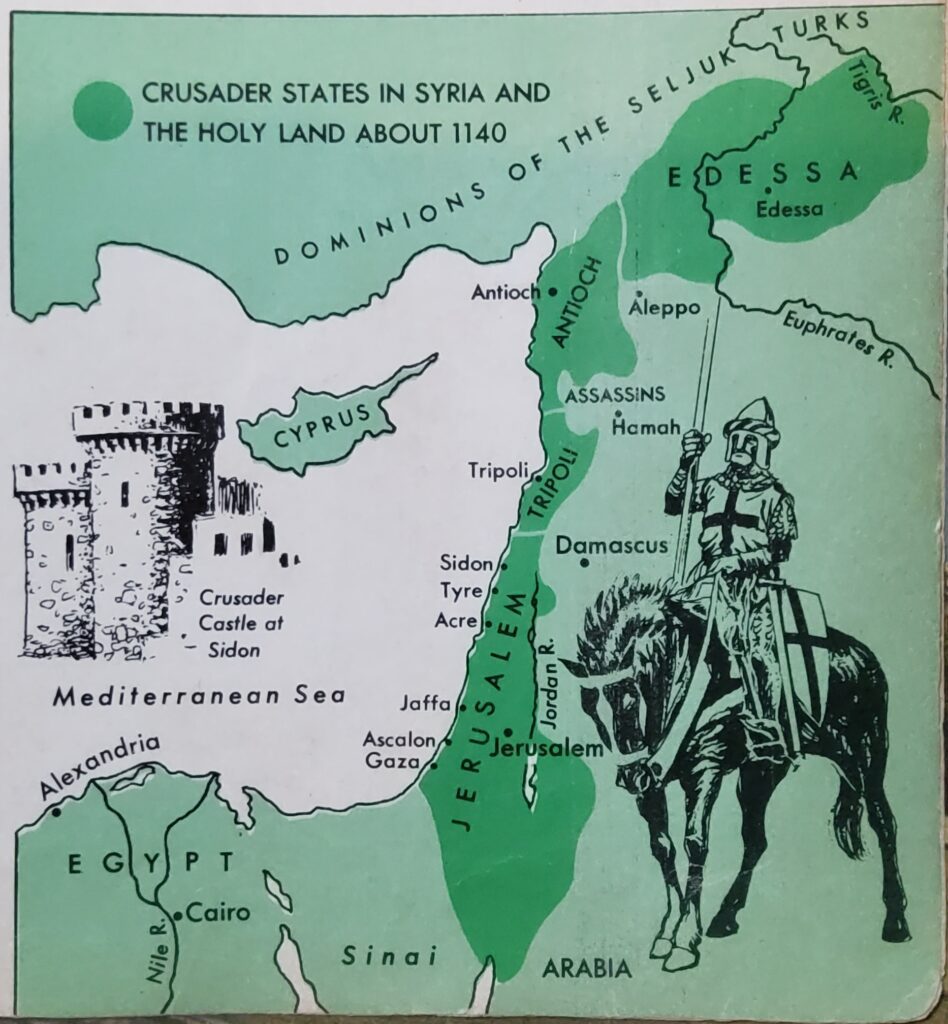
War broke out between Christians and Moslems as a result of outrages committed upon pilgrims to Jerusalem. It was a memorable experience for a Christian to make the long journey to Palestine, to visit places mentioned in the Bible and to worship in the churches of Jerusalem and Bethlehem. Christian pilgrims were not interfered with to any great extent,c until the eleventh century. Then, in 1071, nomads from central Asia, the Seljuk Turks, conquered the Holy Land. They also made war on the Eastern Empire.
The Seljuk Turks were a fierce, fanatical people who adopted Islam. They persecuted the Christians already in the Holy Land, killing some, selling others into slavery and charging very high fees, for visits to Christian shrines.
One of the pilgrims, Peter the Hermit, returned and told Pope Urban II of the atrocities. About that time, the emperor at Constantinople realized that the Turks were making serious inroads on the Eastern Empire and he asked the pope, if he would influence some Christian knights to come to his aid.
The possibility of the Turks taking Constantinople and attacking Europe was indeed a threat. If that should happen, the Church in Europe would have to fight for its very existence. The pope called for a council of German and French bishops and nobles at Clermont, France, in 1095.
There, in a stirring appeal, he urged his listeners to give up their petty wars with one another, to sell their lands, to march as a Christian army to reclaim Jerusalem. He promised forgiveness of sins to those who went with sincere hearts. The audience cried out, “It is God’s will; it is God’s will!” This spontaneous response, became their war cry.
Pope Urban urged that those who vowed to go on this holy crusade should wear the sign of the cross on their foreheads and on their breasts. Thus, one who “took the cross,” (the Latin word for which is crux) became a crusader.
The movement of crusaders into and out of the Holy Land rose and fell over a period of about two hundred years.
The men of the First Crusade took Jerusalem in 1099.
The pope’s call to arms found a response in the hearts of men throughout Europe. Thousands of men and women “took the cross” believing that they were serving God and His Christ; and would save their souls. Others had various motives. Many knights saw an opportunity to gain land in the East. Serfs thus escaped their lords and achieved freedom. Debtors went on crusades to have their debts cancelled and criminals to have their crimes forgotten.
In 1096, the first organized armies of fighting men began moving across Europe toward their meeting place, Constantinople. The crafty Byzantine emperor welcomed them and hurried them on their way. The crusaders had several encounters with Turks in Asia Minor, defeated one Turkish army and reached Jerusalem in 1099, after many had died of hardships, of fever and in battle.
After a siege of two months, the crusaders scaled the walls of Jerusalem and opened the gates. Then, crying, “It is God’s will,” the crusaders killed the Turks by the hundreds. They soon proceeded to set up a feudal system, with a king at Jerusalem. They divided the territory they had taken into four small Christian states and held them for some eighty-eight years. Some nobles built castles and continued to fight the Moslems. Some went off to win cities and territory for themselves. Others returned home.
Later crusades failed to keep the Holy Land under Christian control.
The time came when the Moslems began to reconquer the land taken by the First Crusade. A Second Crusade was organized, but when it reached the Holy Land it was defeated. The capture of Jerusalem in 1187 by Saladin, a distinguished Moslem, resulted in a Third Crusade. This ended in failure too, with Saladin allowing his Christian prisoners to go free, after they paid a ransom.
The Fourth Crusade was a shameful affair, contrary to the principles of crusading. Instead of proceeding to Jerusalem, the crusaders captured Constantinople and plundered the city. This shameful act made any healing of the rift between the East and the West seem impossible.
There were other crusading expeditions, mostly unsuccessful. The Christians held lands in the East for more than 150 years, but by 1291, the Moslems had regained all of them. By these military efforts they had delayed the Moslem invasions of Europe which came in the fourteenth century.
The crusades had far-reaching results on European culture and trade.
They widened the horizons of western Europe, where people had lived restricted lives. The thousands of persons who went on crusades saw cities in Italy and Asia far advanced over those of France, Germany and England. They came back with a desire to buy and use many Eastern products — foods, textiles, spices, sugar and rugs. The Mediterranean became an important avenue of trade again, as Italian merchants brought these goods to an active market.
Increased trade and commerce stimulated the growth of cities. The rise of such Italian cities as Genoa and Venice, was evident at once. The effects were soon noticeable in France and Germany, too.
There were important social and political consequences. Many knights were killed and serfs freed, thus weakening feudalism and manorialism. Other nobles returned impoverished and ready to make concessions to their subjects. This attitude resulted in many towns gaining self-rule and in drawing the craftsmen from manors, into the growing towns and cities.
The crusades, then, marked a phase in the passing of the feudal nobles and the appearance of strong kings and commercial cities, upon the scene of events.
LINKING THE PAST AND THE PRESENT
Millions of immigrants came to the United States in order to enjoy freedom of religion. As a result, in major cities can be found places of worship built by the believers in every major faith. The majority of these structures employ traditional forms of exterior and interior design, but interesting examples of modern architecture have gained acceptance. We can gain an insight into the architecture of many countries and historic periods by studying the church structures in our communities.
The order and form of religious services too, have been handed down for generations. Old books are cherished and read; old songs are sung. Religious practices, more than any other aspect of our lives, are usually identical with those of our ancestors. Whatever we believe, we often refer to it as the “faith of our fathers.”
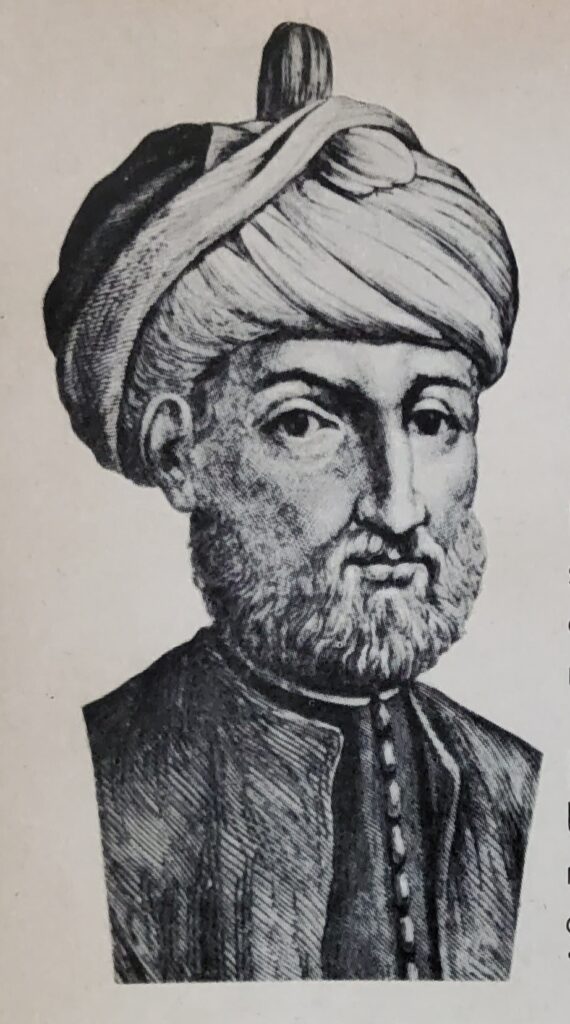
MOHAMMED (c. 570 – 632 A. D.)
All of the accounts of Mohammed were written by Moslems after his death, but he appears to have been an intense man, dark and bearded, with aquiline features and flaming eyes. He came to believe that God was revealing the truth to him and that he was God’s messenger or prophet. His name for God was Allah.
Mohammed was influenced, as all of us are, by his native land. A desert home is harsh, stark and except on an oasis, compels man to live very simply. The cloudless skies offer a burning sun by day and a brilliant disp ay of stars by night — dramatic natural contrasts that invite man to think and meditate on what life is all about.
Out of Mohammed’s meditation came a creed as stark and simple as his land. It attempts to answer all questions with a phrase: “There is no God but Allah, and Mohammed is His Prophet.” Heaven, said Mohammed, must be like an oasis. Here is a place of rest; of vegetation, cool shade and the priceless blessing of cool water. This is the gift of Allah to all who “submit to Him.”