Absolutism was sought, achieved, followed by the French Revolution, an Interlude; and peace plans were made for Europe. Both English and French history tell a similar story – of a people’s efforts to gain political rights and liberties. The story of the French RevolutionFrench Revolution differs in a number of ways, from the struggle for parliamentary freedom and the ways in which, the French studied and profited from the English experience.
The French struggle was against a more powerful monarchy, than the English had known in modern times. At the time, the English were gaining victories over their kings in the seventeenth century, French kings and their ministers were consolidating their power. In doing so, they lost sight of the welfare of their subjects and the people’s emotions errupted, in the bloody French Revolution of 1789. This event, like the American Revolution, paved the way for republican government, for freedom of speech and religion, for universal education.
The Americans of that day, just starting their new government, watched events in Europe with much interest. Through the experiences of the Americans, Frenchmen and Englishmen, political contributions of the highest importance were ultimately given to the world.
ABSOLUTISM SOUGHT
From 1500 A. D., French history has been marked by many wars.
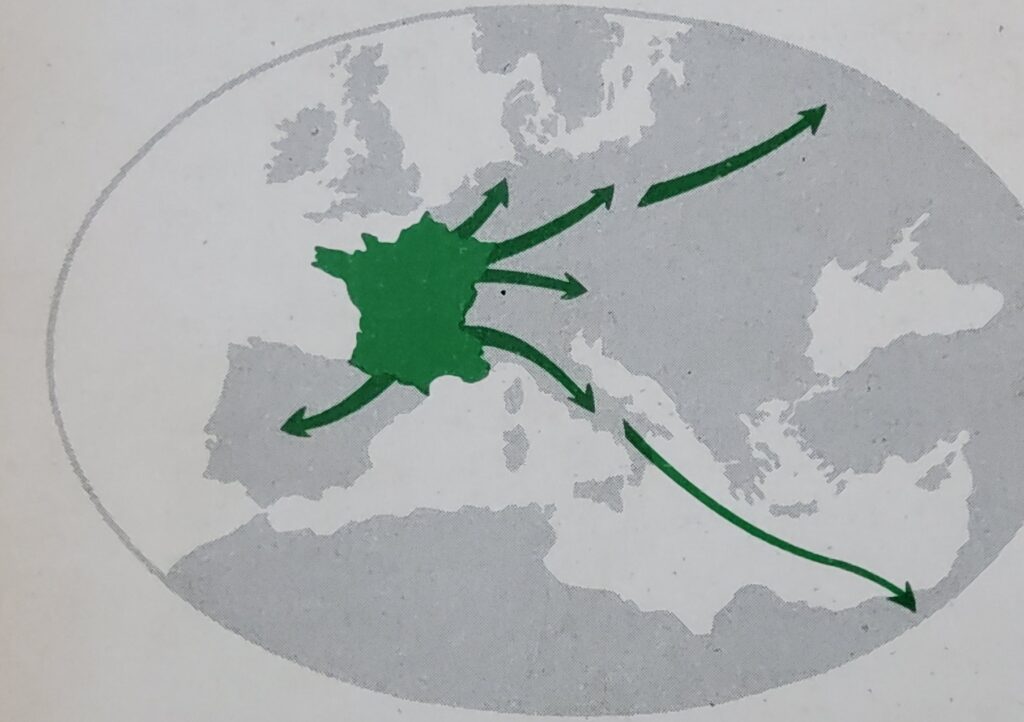
To a great extent, this has resulted from the geographical position of the country. If you examine a map of Europe, you can see that France is the keystone of the continent. She has coastlines on the Atlantic, the North Sea and the Mediterranean. Her neighbours include Spaniards, Italians, Germans, Belgians and Swiss. Across the English Channel are the British. France can hardly be isolated from events that affect her neighbours.
In the past, the Capetian kings faced two crises, related in nature. For a time it had seemed that the kings of England would also become kings of France. They were defeated and Joan of Arc gave the French – a great patriotic legend and nobility of purpose.
At about the close of the Hundred Years’ War, in 1461, Louis XI became king. He saw that the troubles of France had resulted as much from the divisions of his country as from the strength of the English. As far as possible, he kept the country at peace so that it could recover. He broke the power of many feudal nobles, to bring unity.
The successors of Louis XI foolishly attempted to control Italy. This led to trouble with the popes, with Venice and with Ferdinand, king of Aragon.
Francis I (1515 – 1547 A. D.), inherited these problems and in addition, faced the greater danger of Charles V, grandson and heir to both Ferdinand of Aragon and Emperor Maximilian I of Austria. The inheritances of that powerful prince, put a strong enemy on the eastern border of France. Repeated wars with Italy, brought France little profit.
Meanwhile, the religious teachings of John Calvin were influencing many Frenchmen. The Huguenots, or French Calvinists, became a very strong minority. They included many nobles and important businessmen; they came to control a number of towns and cities. The kings saw in this movement a new division of the nation and resisted. The religious wars continued for nearly forty years.
In 1589, Henry IV, a Huguenot, became king. He gave up the Huguenot faith, but guaranteed some religious toleration to the Huguenots by issuing the Edict of Nantes. Henry’s descendants, the Bourbon branch of the royal family, ruled France as long as there were French kings. They also came to occupy the thrones of other countries.
In the 1600’s French policy was determined for many years by two strong cardinals.
The first, Cardinal Richelieu, came to power as prime minister of France and as the adviser of Louis XIII, the son of Henry IV. He used his great ability for the accomplishment of two ends: strengthening the position of the king and extending the frontiers of France. He forbade the nobles to fortify their castles, unless these were essential to the defence of France. He would not let the Huguenots fortify their towns, thus eliminating the threat of their opposition to the king.
The officers of the army and navy received their appointments directly from the king. France was divided into administrative districts, governed by the king’s appointees. The power of the king, was thus extended into every corner of the kingdom.
Richelieu found an opportunity to extend the boundaries of France eastward, in the religious wars that broke out in Germany in 1618. He feared that a Catholic victory in this struggle, would increase the power of the Hapsburgs. For over a century, it had been the object of French policy to prevent this. Hence, he aided the German Protestants with money and military forces, although as a cardinal, he had no sympathy with their religious views.
Richelieu died in 1642 and his king, Louis XIII in the following year. The new king was a five-year-old child, Louis XIV, whose Hapsburg mother, Anne of Austria, became regent during his childhood.
The actual control of government was in the hands of the prime minister, Cardinal Mazarin, an Italian. By that time, Italians had been influential in France for over a hundred years and French kings had involved themselves, in Italian politics. Two members of the Medici family of Florence, had been queens of France. Even so, the Italians were not popular with Frenchmen, who believed them responsible for a horrible massacre of many Huguenots, which had occurred on Saint Bartholomew’s Day, in 1572.
Mazarin’s policies were constructive and in general, carried on the work of Richelieu. When he died, he put a strong kingdom into the hands of Louis XIV. Jean Baptiste Colbert, minister of finance, became one of the greatest managers of government finance in history. By tax reform and by the elimination of a great deal of graft, he actually increased the revenue of the government, while the taxpayer paid less.
Somewhat late, the French entered the race for colonial possessions.
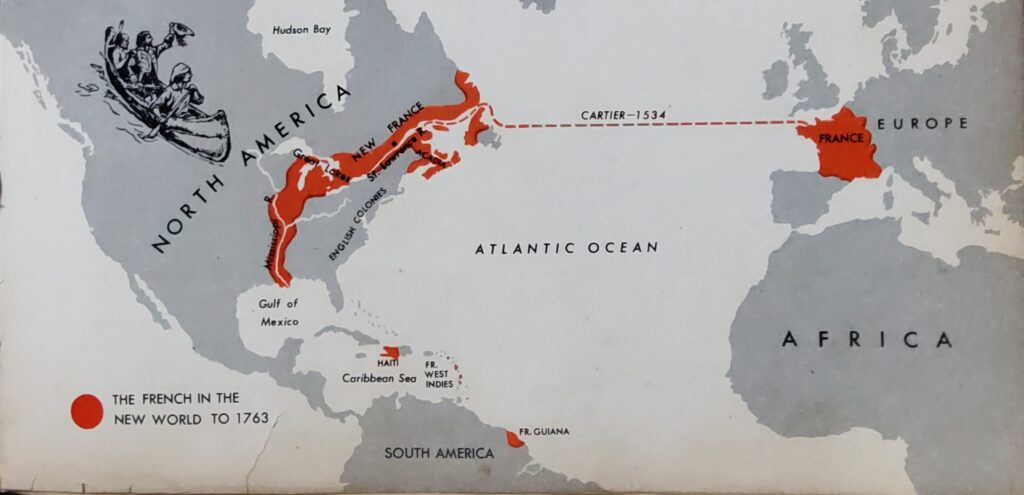
They established claims through the efforts of several noteworthy explorers, among them Cartier, Champlain, Marquette and Joliet. Settlements were established in Quebec and in Acadia, now called Nova Scotia. A remarkably strong position was established through control of the St. Lawrence River, the Great Lakes and the Mississippi Valley. The fur trade was developed in these northern colonies. War with Spain enabled France to gain islands in the West Indies. Colonies at Guadeloupe and Martinique, produced tobacco and sugar. Louis XIV seized the island of Santo Domingo, which includes the French-speaking Republic of Haiti at the present time.
The policy of France toward her colonies, was largely the work of Colbert. It reflected the ideas known as mercantilism. Spain and Portugal enforced similar policies. England established mercantalist policies to a lesser extent, but it aroused the resentment of her American colonies.
The fundamental idea of mercantilism, was that any colony existed for the benefit of the mother country. It should be carefully governed and supervised. It would buy the mother country’s products and produce goods needed by the mother country. Gold and silver were greatly desired: every effort should be made to hoard gold and keep it from flowing to other countries. The country should sell more than it bought so that a favourable balance of trade would be maintained. Competition was discouraged and such monopolies as the East India Company, were chartered by kings.
No country carried out this comprehensive economic program in every detail, but the French did much to regulate the economic, political and religious life of their colonists. They permitted little of the local self-government that developed under the English. The French language and culture left a permanent imprint in Quebec, in Louisiana and in some islands of the West Indies.
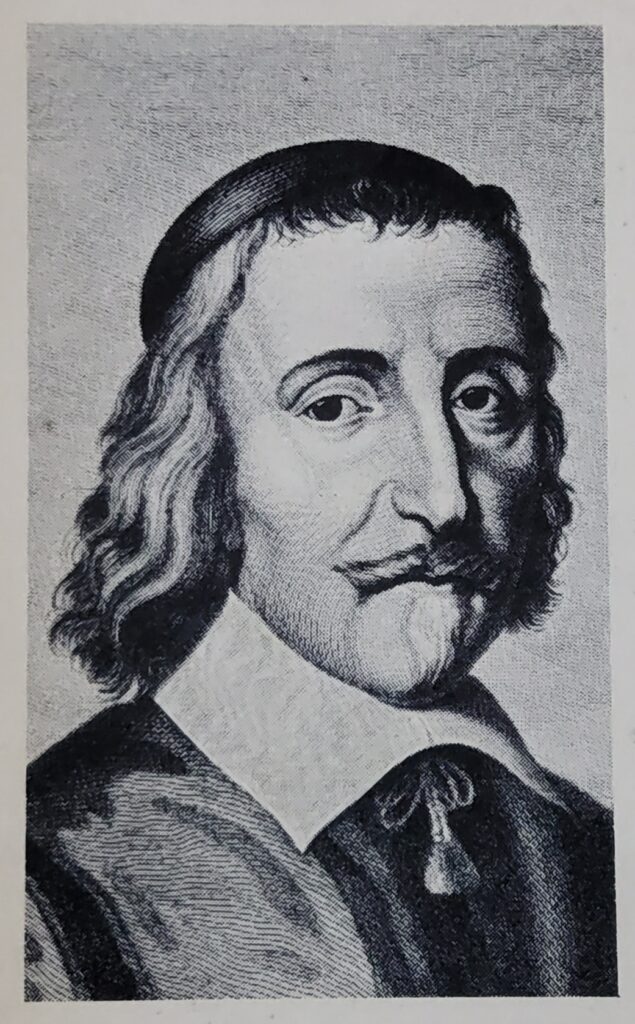
CARDINAL RICHELIEU — (1585-1642 A. D.)
Armand Jean du Plessis is known to all as Cardinal Richelieu — not so much as a churchman, but as a prime minister who virtually ruled France for more than eighteen years in the interests of his king. A well-educated scion of a noble family, du Plessis became a bishop at 22. He had his religious beliefs and loyalties, but his nationalist feelings seem to have been even stronger.
Louis XIII let Richelieu run the country the latter wanted to make France a strong nation. In foreign affairs he continued the feud with the Hapsburg emperors. When religious war broke out in Gerany between Catholics and Protestants, although he was a cardinal, Richelieu supported the Protestants in the hope of weakening the German emperor. In internal affairs, he made war upon the Huguenots because he believed they would become a divisive political power. He worked to break the nobles who had regained some of their feudal powers. He struck the Parlement of Paris, a court which assumed powers to check the royal authourity. Between them, the prime minister and the king bequeathed to Louis XIV (then a small child) the best-organized and most militarily effective government, in Europe.
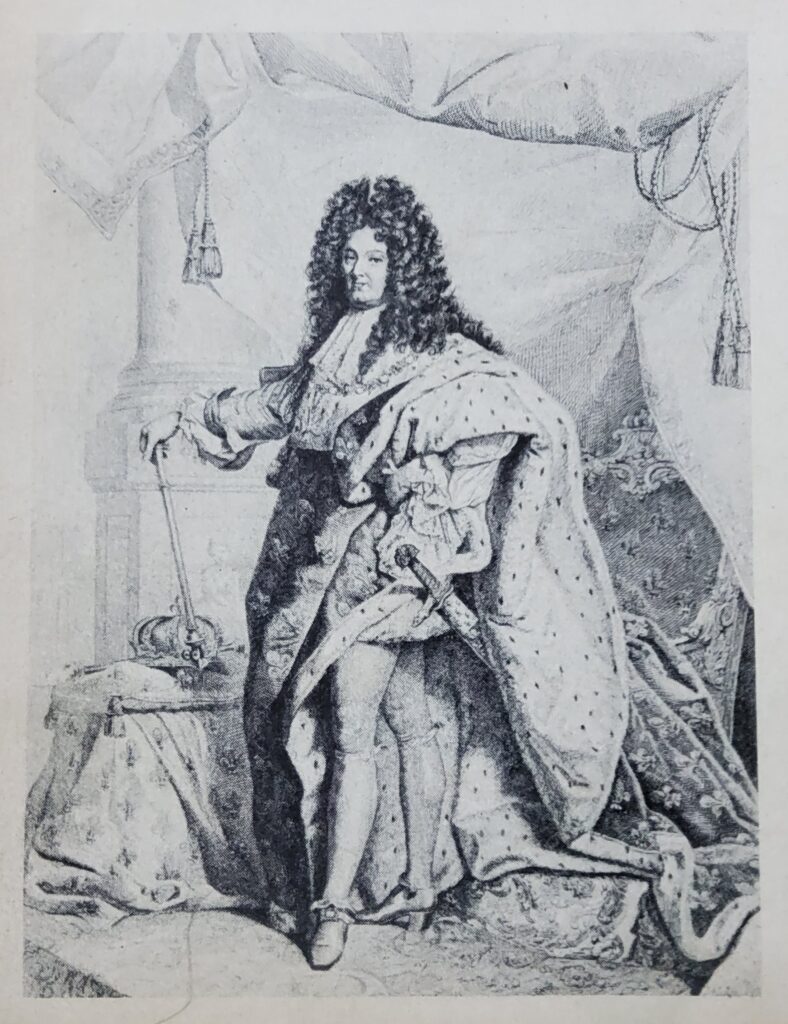
ABSOLUTISM ACHIEVED
The Sun King and his extravagances dazzled western Europe.
When Louis XIV grew to manhood and the pattern of his personality had developed, the power and magnificence of the French monarchy surpassed anything western Europe had known, since the days of ancient Rome. Louis’ courtiers called him “le Roi Soleil,” the Sun King. His reign has been called “Le Grand Siécle,” the Great Century. When he said, “I am the State,” he was stating a simple fact.
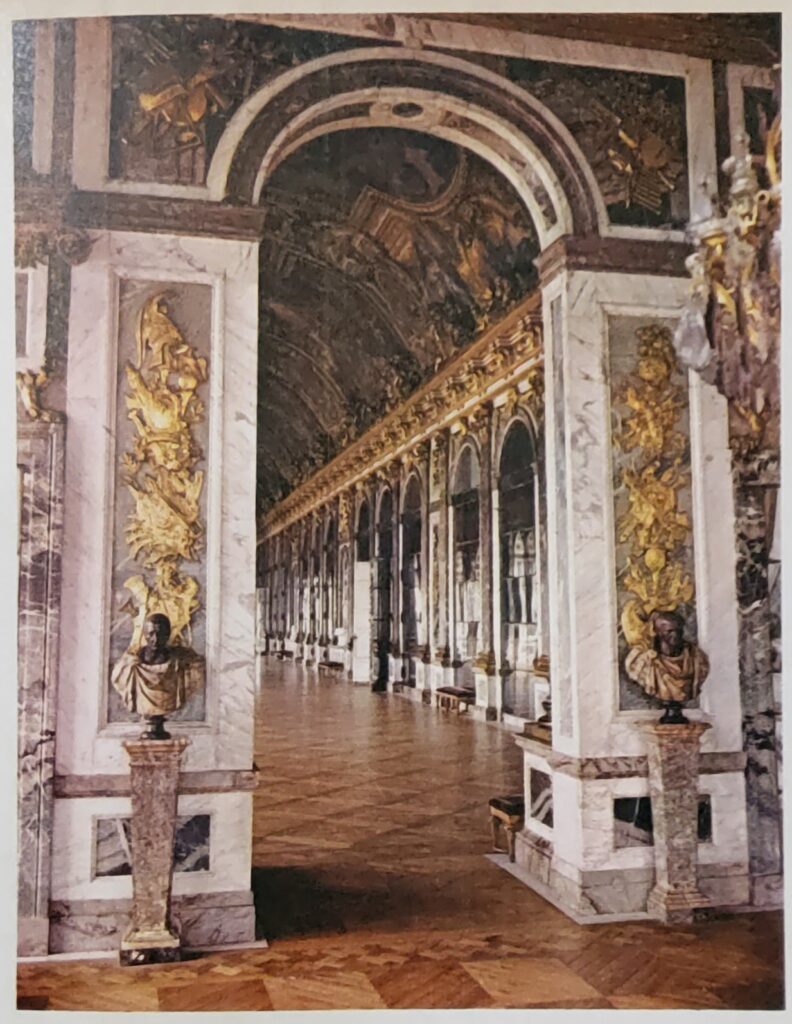
Louis decided to build a new palace. Much of Paris survived from the medieval period. It was dirty, crowded and the turbulent Parisians, were prone to riot. Louis selected a site at Versailles, a few miles out of the city. Among the architects was the brilliant Mansard, whose name is preserved in a type of roof called mansard. The cost of the building, the renowned formal gardens, tapestries, statuary, paintings and furnishings cannot be computed, but it must have been a staggering amount. The palace became the envy and admiration of other rulers and imitations were erected from Portugal to Russia, each as expensive as the local sovereign could afford.
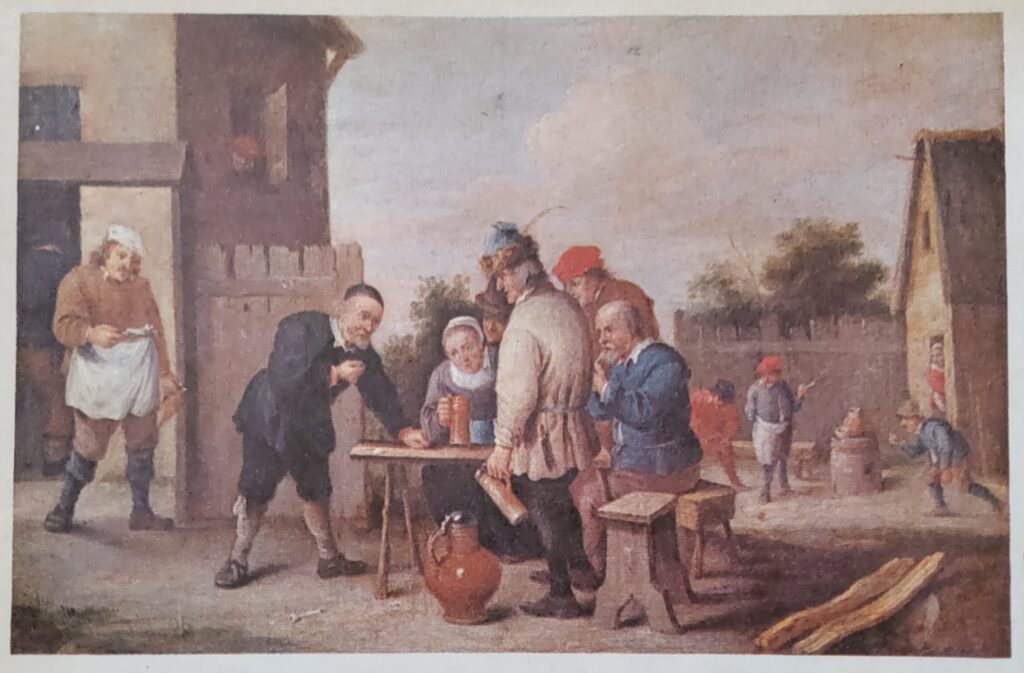
A throng of over 10,000 persons was usually present at Versailles, including the nobles, servants and hangers-on. The nobles had lost their feudal powers; now they were courtiers. They spent much of their time at the palace, enjoying the entertainment, ceremonials and “playing politics.” Through the king’s favour, they hoped to gain estates, offices, salaries and pensions, for France was the land of “privileged orders.” Of the total population of about 20 million, about 270,000 were members of the nobility and clergy, owned most of the land and paid almost no taxes. This period is called the “Ancien Régime.”
The king and members of the privileged class, patronized the arts. Louis surrounded himself with scholars, artists and writers, believing that their abilities and accomplishments, reflected glory upon him and his court. Molière delighted the court with brilliant comedies, which are still frequently produced. Corneille and Racine, turned to the classics for their inspiration. The philosopher Descartes, ranked with Newton as a founder of modern mathematics. Such painters as Fragonard, Boucher and Watteau, portrayed the gay life of court circles.
Between the extravagant nobles and the downtrodden masses a larger middle-class was appearing.
Merchants, traders, professional men, small landowners: these were the men, who had once favoured the king as the champion of law and order, against feudalism. Now they were becoming discontented with the expenses of the court, the restrictions placed upon them and the tax system.
Under Louis XIV, Louis XV and Louis XVI, there were in effect, two governments. The central government or principal governing authourity, was carried on by the king’s ministers and was largely supported by a general property tax, plus many smaller special taxes. Beside this central government, were the practices remaining from the old feudal governments of the local lords. Despite his loss of prestige and political power, many a duke and count, still received many of the fees, dues and services, which his ancestors had taken from their serfs and vassals.
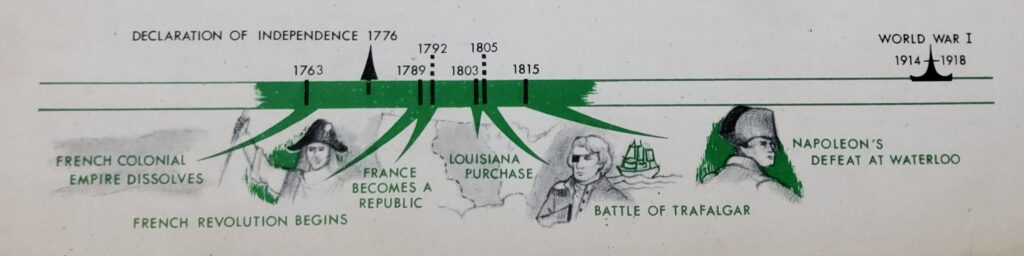
The reign of Louis XV was a dismal story of wars, that resulted in loss of the French colonial empire in 1763. The luxurious court life continued. The old king recognized his failures and had some understanding of the problems France was facing, but shrugged it off with the expression, “After me, the deluge.”
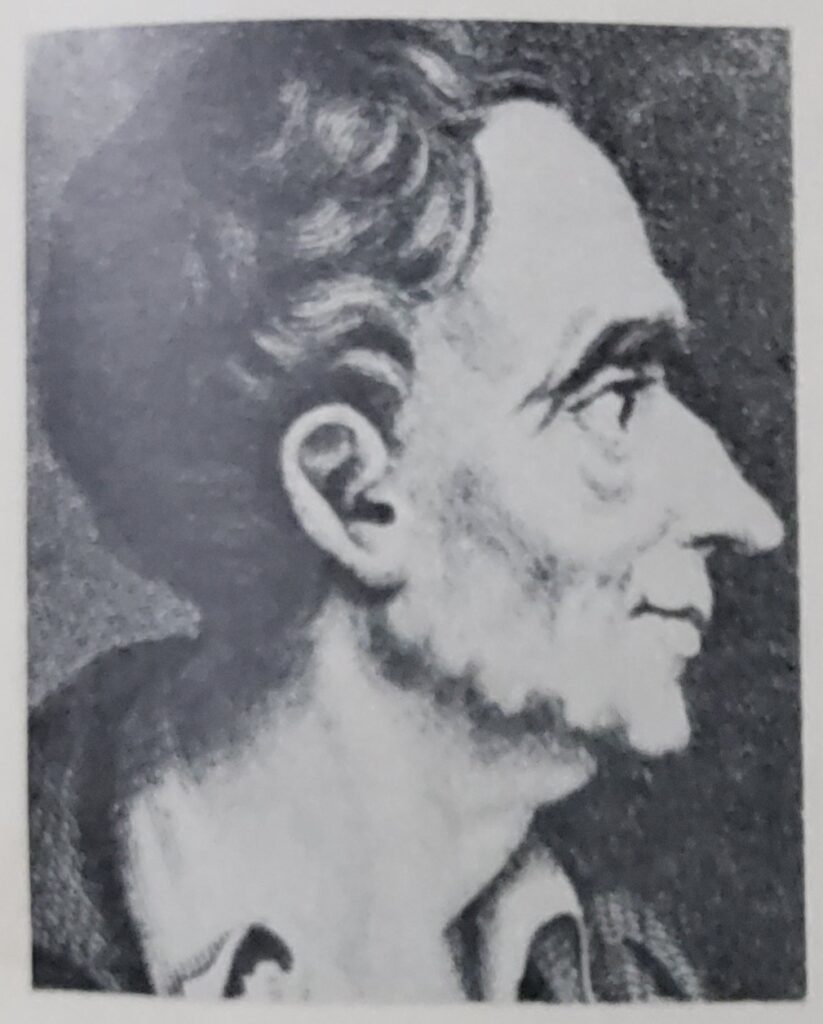
French writers criticized the evils of the monarchy.
Their books were of great value in pointing out the abuses in government and in shaping the thought of their countrymen. Their ideas also influenced thinking in England and the Americas.
The Spirit of Laws was among the influential books written by Montesquieu. He had travelled in many European countries, observing their ways of living and governing. He tried to relate human law to the laws of nature and to show that political institutions were related to such things as soil and climate. It is said that George Washington, when preparing to attend the Constitutional Convention at Philadelphia, “made himself familiar with the reasonings of Montesquieu.”
Montesquieu believed that the legisiative, executive and judicial divisions of government should be separate and distinct. Madison and Hamilton helped to popularize this view, when the United States Constitution was being planned. Montesquieu wrote:
In a free state, every man, as is supposed of a free agent, ought to be concerned in his own government; therefore the legislative should reside in the whole body of the people, or their representatives. ..
There is no liberty if the power of judging be not separated from the legislative and executive powers.
The enjoyment of liberty, and even its support and preservation, consists in every man’s being allowed to speak his thoughts and lay open his sentiments.
More popular than Montesquieu and more widely read in France, was Voltaire. This brilliant Frenchman possessed charm, wit and sharp intelligence. He spent two years in England, where he studied Shakespeare, Locke and Newton.
Believing the power of mind to be greater than brute force, in one of his many pamphlets Voltaire said:
Not long ago a distinguished company were discussing the trite and frivolous questions of who was the greatest man, Caesar, Alexander, Tamerlane, or Cromwell. Somebody answered that it was undoubtedly Isaac Newton. He was right, for if true greatness consists in having received from Heaven a powerful understanding, and in using it to enlighten oneself and all others, then such a one is Newton, who is hardly to be met with once in ten centuries and is in truth the greatest man… It is to him who masters our minds by the force of truth, not to those who enslave men by violence; it is to him who understands the universe, not to those who disfigure it – that we owe our reverence!
The last sentence indicates the great writer’s power with ideas. Benjamin Franklin greatly admired Voltaire and once carried his grandson to the aged philosopher for his blessing.
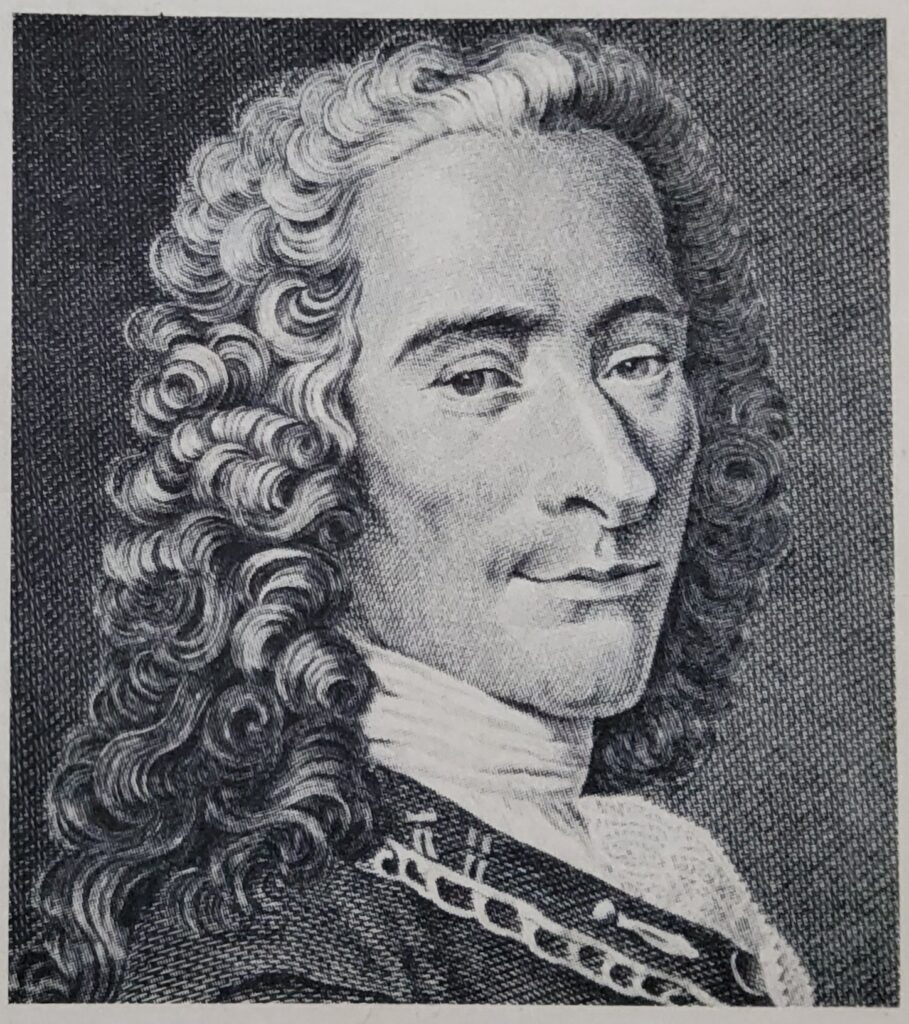
Rousseau, also became immensely popular in France, England and America. Rousseau had romantic ideas about people in other parts of the world, gained from books that were more fiction than fact. To him, the “good guys” were the primitive people, the Indians and frontiersmen. He pleaded for a “return to nature”, to the friendly, simple fare of unadorned country life. This was the solution he offered, for the evils and corruptions or deterioration of modern society.
Rousseau favoured public education, “under regulations prescribed by the government.” He wrote: “If children are brought up in common in the bosom of equality, if they are imbued with the laws of the State and the precepts of the General Will . . . we cannot doubt that they will cherish one another mutually as brothers.” French society was howevr far too divided at that time, to carry out such views of equality and of brotherhood. Rousseau knew this.
Rousseau believed that man’s relation to his government, resulted from a contract in which each party, the citizen and the government, had obligations and responsibilities to the other. The French government, he believed had failed.
Montesquieu, Voltaire and Rousseau, were among the leaders who paved the way for freedom in France. They looked to the future and became leaders in thought, in both France and in the world. Their message did not fall on deaf ears.
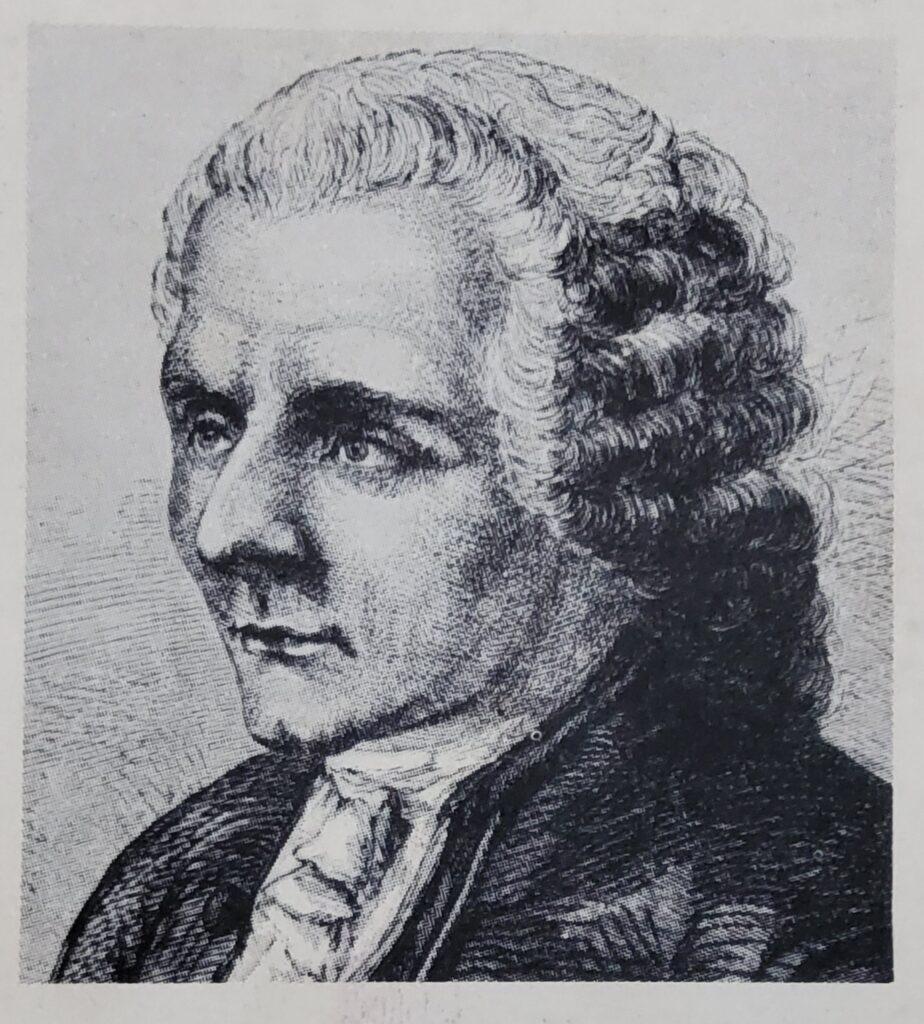
THE FRENCH REVOLUTION
Under Louis XVI the French supported the American Revolution.
Louis had become king at 19, upon the death of his grandfather, Louis XV. He and Marie Antoinette, a Hapsburg princess, had been married as children.
The American Revolution, which began soon after Louis XVI began to reign, was an event of tremendous importance to France. France took the side of the United States from mixed motives. There were idealists like Lafayette; there were liberals influenced by Montesquieu, Voltaire and Rousseau, who sympathized with the United States. There were some Frenchmen who hated liberty and freedom, but who saw an opportunity to strike a blow at the old enemy, England.
The war was costly to France and little of immediate value was gained, except that French soldiers and sailors who had served in America, returned to France with new ideas of freedom and republican government.
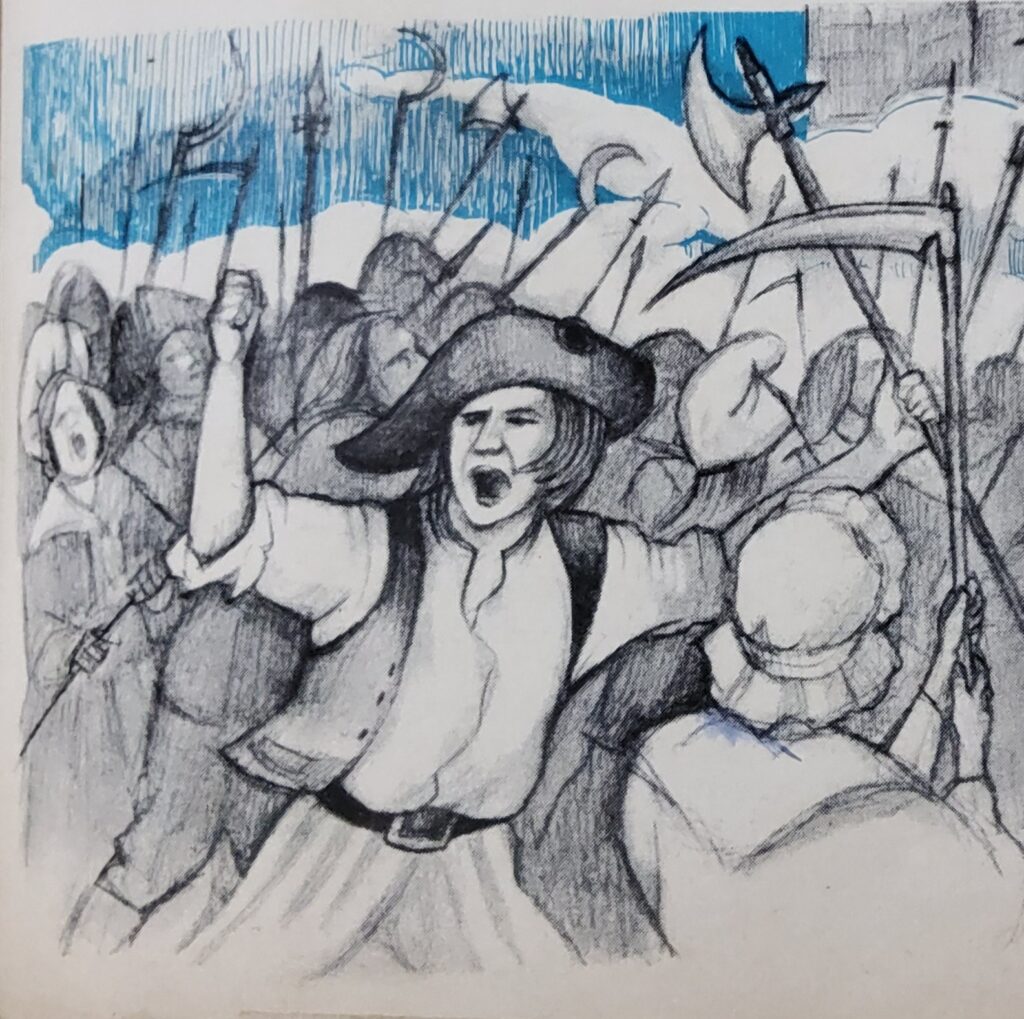
The financial condition became so bad that Louis XVI called the Estates-General together.
It convened at Versailles on May 5, 1789, for the first meeting in 175 years. Its purposes were expressed in cahiers, or lists of grievances that the people had drawn up for their representatives to use. The cahiers called for sweeping reforms, including a written constitution.
The three estates were the clergy, the frst estate; the nobility, the second estate; and the commons, the third estate. In the past, each “house” had met and voted separately, each having one vote. This arrangement would, of course, prevent the making of any fundamental reforms, since the first and second estates, would certainly vote them down.
On June 17, 1789, members of the third estate, representing a large majority of the French nation, declared themselves a “National Assembly.” Three days later, they took the famous “oath of the Tennis Court,” named after a building in Versailles, where they met. They declared that they would “come together . . . until the constitution of the kingdom shall be established.”
The king attempted to check this dangerous development; but the Assembly had found a fiery and eloquent leader in Count Mirabeau. He was a noble of liberal philosophy, a type not uncommon in times of upheaval. The king began to gather troops.
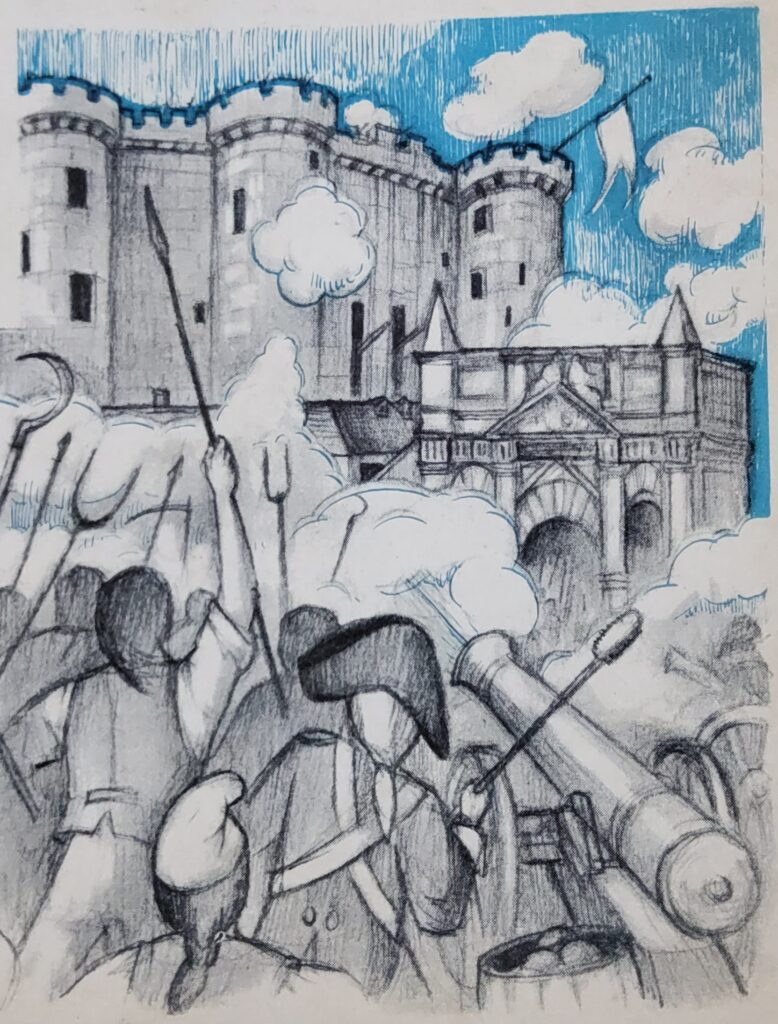
The threat of force was ill-advised. The excitable Paris mob, on July 14, 1789, stormed the ancient prison, the Bastille, which had been for many years a symbol of the power and oppression of the king. The prisoners therein were freed. Bastille Day became the French “Fourth of July,” the anniversary of national independence.
During one night in August of 1789, the Assembly, joined by nobles and clerics, abolished church tithes, feudal payments, serfdom, guilds, internal tariffs and many of the privileges of the clergy and the aristocracy. In the same month, it prepared the Declaration of the Rights of Man and the Citizen. This was a classic declaration of democratic principles. Certain of its ideas are similar to concepts in the Declaration of Independence and the United States Constitution. Here are excerpts:
Men are bom, and always continue, free and equal in respect of their rights. Civil , distinctions, therefore can be founded only on public utility… The law is an expression of the will of the community… No man ought to be molested on account of his opinions, not even on account of his religious opinions, provided his avowal of them does not disturb the public order established by the law.
The unrestrained communication of thoughts and opinions being one of the most precious rights of man, every citizen may speak, write, and publish freely, provided he is responsible for the abuse of this liberty, in cases determined by the law.
The National Assembly was in session from June of 1789, until the autumn of 1791. During that time, it passed more than 2,000 laws, thus revolutionizing France. By September of 1791, a constitution had been prepared which Louis XVI swore to uphold. His powers could be checked by the Legislative Assembly, which alone had the right to initiate and pass laws. Expenses of the king and his family were to be paid by the government. The upper middle-class was in control and most Frenchmen believed the revolution was over.
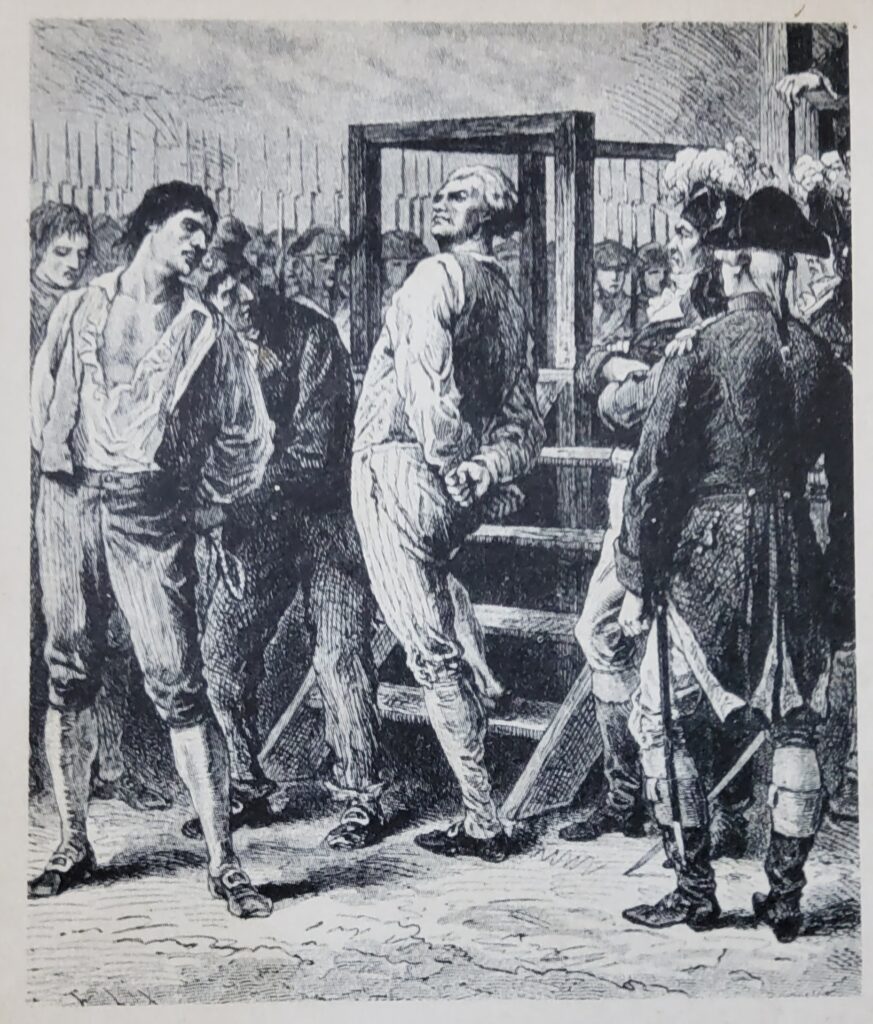
The revolution was transformed into a reign of terror.
Changes effected by the new laws and by the Legislative Assembly, were opposed by persons inside and outside France. Louis XVI did what he could to weaken the new government. So did part of the clergy. The workers of the cities were disgruntled because they had no real place in the government, which was run by landowners and businessmen. Radicals who distrusted the king and the constitution, worked for the overthrow of the Assembly. Exiled nobles who had taken refuge in other states, plotted its overthrow too.
The Hapsburg emperor of Austria was worried about the safety of his sister, the French queen. He and the king of Prussia, declared that the restoration of the French monarchy’s power, was of “common interest to all sovereigns of Europe.” Egged on by the radicals, the French declared war on Austria. Prussia soon came to Austria’s aid. By the summer of 1792, the dangers of the situation exploded. Riot and bloodshed spread over Paris. The revolutionaries suspended the monarchy, set up a dictatorship and called for a convention, to change the constitution.
The reign of terror which followed, brought butchery to nearly 2,000 suspected royalists in five days, Elections were held; the limited monarchy and the Assembly came to an end. On September 21, 1792, the National Convention voted to abolish royalty and establish a republic.
The National Convention remained in session from 1792 to 1795.
During that time the king was tried for treason and beheaded, more than 12,000 others were sentenced to death, mostly royalists. France’s aggression against other countries, threatened to upset the balance of power in Europe. This brought England, Spain, Holland and Sardinia, into a coalition or alliance with Austria and Prussia, to wage war on the French Republic.
By 1795, France was a tired country. England, Sardinia and Austria, remained at war with her. True, she-had a new constitution. Large estates had been divided into small farms and sold to peasants. The laws were more uniform than they had ever been. The metric system of weights and measures had been adopted. A public school system had been planned. Freedom of worship was guaranteed. Slavery in French colonies, had been abolished.
Everything that reminded the people of royalty had been discarded: titles, knee breeches, wigs, and powdered hair. Street names and the names of the months had been changed.
France, under the Constitution of 1795, became a republic with two legislative houses and an executive branch of five persons, known as the Directory. It proved to be a weak and corrupt government.
Troubles at home and abroad offered an excellent opportunity for some ambitious, capable man to make a brilliant career for himself. The man was not lacking. He was Napoleon Bonaparte.
AN INTERLUDE
Napoleon Bonaparte was added to the roster of military geniuses.
His story began on the island of Corsica, where he was born at Ajaccio, in 1769. The island was Italian in language and cultural tradition, having belonged to the Republic of Genoa, but it passed to French rule in the days of Louis XV.
The senior Bonaparte, was a poor lawyer who could not provide very well for his large family. Napoleon went on a scholarship to a French military school and became, in 1785, a lieutenant of artillery. His career prospects were not very good because he was considered somewhat irresponsible and furthermore, important commands in the army were reserved for French nobles.
He witnessed the events of the Revolution in Paris, where he was living in poverty. For a time he favoured the more radical leaders and policies. Finally, political influence and the shortage of trained officers —many of them had left France with other nobles — gave him employment. In 1796, he was given command of a French army in Italy. Napoleon crossed the Alps, crushed the Sardinians, Austrians and threatened Vienna. The Austrians were forced to accept the peace terms he dictated.
It is hard to explain Napoleon’s conspicuous success, except to say that some men have possessed a genius for war, as others have for government, music or painting. He understood the use of artillery and how to move his forces rapidly. His forces had high morale since they were fired with enthusiasm for the Revolution; and since Napoleon offered rapid promotion for merit.
For about fifteen years, there was only one important break in Napoleon’s chain of military victories. That was in 1798 when he led the French against Egypt, in an unsuccessful attempt to separate England from India. He won some land victories, but a British fleet under Horatio Nelson, smashed the French fleet at Aboukir, near the mouth of the Niie. Napoieon escaped and returned to France, leaving most of his army to surrender — a fact that was not published in France.
Affairs were going badly with the Directory. The people were discontented and France was again threatened with invasion. In November of 1799, Napoleon overthrew the Directory and set up a nominally republican government, which he ruled as dictator.
In 1802, Napoleon made peace with Austria and with England. In 1803, he sold the Louisiana Territory to the United States. By 1804, he had become so popular that he dared proclaim himself emperor. In a brilliant coronation ceremony, surrounded by European statesmen and attended by the pope, Napoleon took the crown of France from the pope, placed it upon his own head and then crowned his wife as Empress Josephine. Thus, at the age of thirty-five, Napoleon had made himself the French ruler.
After gaining dependencies for France, Napoleon made many changes at home.
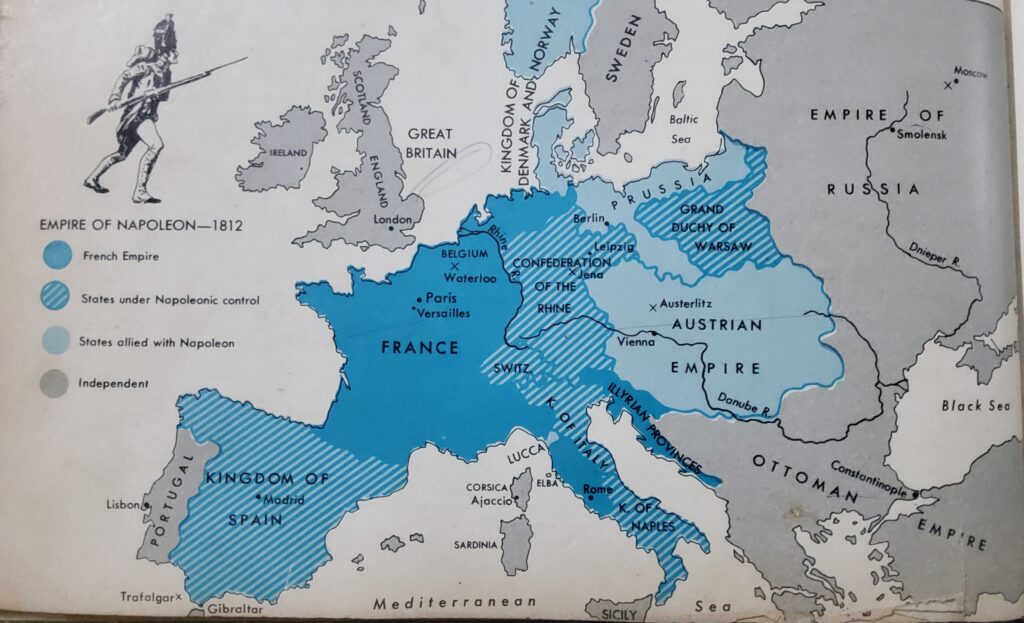
It is not necessary to enumerate all of his campaigns and battles. Again and again, his armies swept through Germany and Italy at will. In 1805, he crushed the Austrians at Austerlitz and destroyed the Holy Roman Empire. This battle is considered his most imposing victory. In 1806, he overcame the Prussians at Jena. In 1807, he won a victory over the Russians at Friedland. In 1808, he occupied Spain. The map shows the area of the French Empire in Europe in 1812 and its various “dependencies”
Napoleon treated his numerous brothers and sisters with a mixture of affection and contempt. They were all in awe of their formidable old mother, Letitia, who was not impressed by their “success.” The family supplied kings for Naples, Spain, Holland and Westphalia. One Bonaparte became a cardinal of the Roman Catholic Church. Napoleon divorced the Empress Josephine, who had helped him at the beginning of his career. Then he married Marie Louise, a Hapsburg princess of Austria, the niece of Marie Antoinette.
Napoleon was a capable civil administrator. In the intervals between his wars, he devoted his great energies to the problems of government. In 1801, he and the pope agreed in a concordat that France should not return the Church properties seized during the Revolution. The pope agreed that the French government could pay the clergy, but he reserved the right to appoint bishops who were acceptable to the French government and who, in turn, appointed the priests. Freedom of religion, as provided for earlier, was retained.
In 1808, Napoleon established a system of public schools. All were under the control of the government, which also provided for the training of teachers. This centralized educational system has continued in France.
Napoleon appointed a commission of lawyers to redraft the laws of France. This, the Code of Napoleon, made all Frenchmen equal before the law. It extended to every citizen, the right to choose his occupation and his religion. It influenced legal procedures in Germany, Holland, Belgium, Italy and parts of Canada. In America, the laws of Louisiana are derived from it.
In his policy of public works, he built many roads, bridges, docks and ports. Like the Caesars, Napoleon celebrated his victories, by building a huge triumphal arch in Paris.
Napoleon moved relentlessly toward his downfall.
History affords many examples of military leaders who enjoyed a period of spectacular success and then passed swiftly into oblivion. Their careers prove that those who succeed by the sword, may also perish by the sword. Napoleon’s ultimate failure was brought about chiefly by England.
Napoleon’s most relentless enemy was England, with its naval power. His early designs in Egypt were frustrated by the superior English fleet and he could never mount amphibious operations against the British Isles, nor even a place like Sicily. After he had prepared an invasion army at Boulogne in 1805, he received word that his fleet had been, destroyed by Nelson at Trafalgar. Even though he turned his army and won a smashing victory over the Austrians at Austerlitz, it did not wipe out the disaster at sea.
The British set up a naval blockade, which shut-off trade and commerce with other parts of the world. In reprisal, Napoleon prohibited trade with the British, by the regions under his control. This is called his “Continental System.” The United States was caught between the two contending forces and the trade that was so important to growing economic life, suffered greatly.
In 1812, Napoleon decided to invade Russia because the czar had not kept his promise, to discontinue trade with England. Some 500,000 men were assembled, an enormous army for those times. They were not all Frenchmen, but were drawn from the various countries that France controlled. This Grand Army began its advance toward the city of Moscow.
In his masterful novel, War and Peace, the Russian novelist Tolstoy, describes the taking of Moscow by the French:
Moscow was without its inhabitants, and the soldiers were sucked up in her, like water into sand, as they flowed away irresistibly in all directions, from the Kremlin, which they had entered first… .
Soldiers had no sooner succeeded in securing quarters than they ran along the street to look at the town, and or. hearing that everything had been abandoned, hurried off where objects of value could be carried off for nothing. The officers followed to check the soldiers, and were involuntarily lured into doing the same. In Carriage Row shops had been abandoned stocked with carriages, and the generals flocked thither to choose coaches and carriages fer themselves. The few inhabitants who had stayed on invited the officers into their houses, hoping thereby to secure themselves against being robbed. Wealth there was in abundance: there seemed no end to it… . And Moscow absorbed them further and further into herself. Just as when water flows over dry land, water and dry land alike disappear and are lost in mud, so when the hungry army entered the wealthy, deserted city, the army and the wealth of the city both perished; and fires and marauding bands sprang up where they had been.
Napoleon had hoped that the capture of Moscow, would bring the czar to terms. For some time, he waited for negotiations, but at last he gave up and began a winter retreat. The supply lines were long and not well maintained. The country had been wasted and burned. The winter was extremely hard on the soldiers and in the end, it cost the French more than 400,000 lives.
Napoleon rebuilt his army and again crossed the Rhine, but his enemies combined against him and defeated him near Leipzig in Germany. In 1814, they occupied Paris. Napoleon gave up his throne and was sent in exile to Elba, a little island off the coast of Italy. The Bourbon family was restored: Louis XVIII became king.
In 1815, Napoleon escaped from Elba, returned to France and captured Paris. Again he led his army against his enemies, but in June of 1815, he was defeated by the English and Prussians at Waterloo. It was there, that the British “Iron Duke” of Wellington, won immortal fame.
This was Napoleon’s last battle. The allies sent him off to the rocky island of St. Helena, in the South Atlantic. There he lived in lonely exile until his death in 1821. Few men in history have attained such heights of glory; few have tasted such defeat.
PEACE PLANS FOR EUROPE
Napoleon’s conquerors tried to turn back the calendar to 1789.
In his efforts to recreate the old Roman Empire with its capital in Paris, Napoleon had involved in war nearly every country in Europe. After he was sent to Elba, a peace conference, known as the Congress of Vienna, met to establish a lasting peace for Europe. Among the important nations at the meeting were Great Britain, Russia, Prussia, France and Austria. Prince Metternich, Austrian foreign minister and host to the conference, became the most influential policy maker at the congress. Also influential was Talleyrand, an old diplomat who had once been a bishop. He represented Louis XVIII of France.
Most of the major decisions of this conference were made in small committees and in small groups, at the many social affairs arranged by the Austrians for their guests. It was interrupted by Napoleon’s escape from Elba, but it resumed after his defeat at Waterloo and his banishment to St. Helena. The general policy was to return to the old order and to restore the old ruling families to their thrones, with the major powers receiving compensation for their losses. With little but scorn for the liberal progress Europe was beginning to experience, the Congress of Vienna redrew the map of Europe.
France was not severely punished. Its borders were left, about where they had been in 1789, but some territorial changes were made in the hope of discouraging any future attempt on her part, to establish an empire on the Continent. On the north, the Austrian Netherlands (Belgium) was merged with Holland, forming the kingdom of the Netherlands. In return for giving up her part of the Netherlands, Austria received Lombardy in Italy, the area surrounding Venice and part of the Adriatic coast. Prussia was strengthened by the grant of territories in the Rhineland and part of Saxony. The freedom of Switzerland was guaranteed. Finland and about two thirds of Poland, were given to Russia. The Holy Roman Empire was not restored, but the thirty-eight states set up by Napoleon, were formed into a confederation of German states.
Great Britain, who with Russia and Prussia had brought about Napoleon’s defeat, received her reward. She retained colonies and naval bases she had captured, among them the Cape of Good Hope, Trinidad, part of Guiana, Ceylon, Malta and the Ionian Islands. These gains made Britain the greatest imperial power of the time.
The victorious powers spent time in planning to make their work last.
The czar, Alexander I, proposed a Holy Alliance among the Christian rulers of Europe. He proposed that they “act toward each other as Christian brothers and towards their subjects as fathers of families.” Most of the rulers signed the agreement.
The practical-minded ministers of Austria and England advanced a plan known as the Quadruple Alliance. The “Big Four” were Great Britain, Austria, Prussia and Russia. When France was admitted, it became the Quintuple Alliance. With the exception of Great Britain, the member states were opposed to liberal government such as had been tried in France. They ignored the hope of many Europeans, that the peace treaty would recognize the growth of nationalism and the right of all peoples to rule themselves, without interference from outsiders. (Great Britain soon withdrew from the alliance.)
Peace had been restored for the time being, but many serious problems remained unsolved. Sharp conflicts of conservatism and liberalism, monarchy and democracy, idealism and nationalism, were soon to follow. As one statesman put it, “Every nation for itself, and God for us all”.
LINKING THE PAST AND THE PRESENT
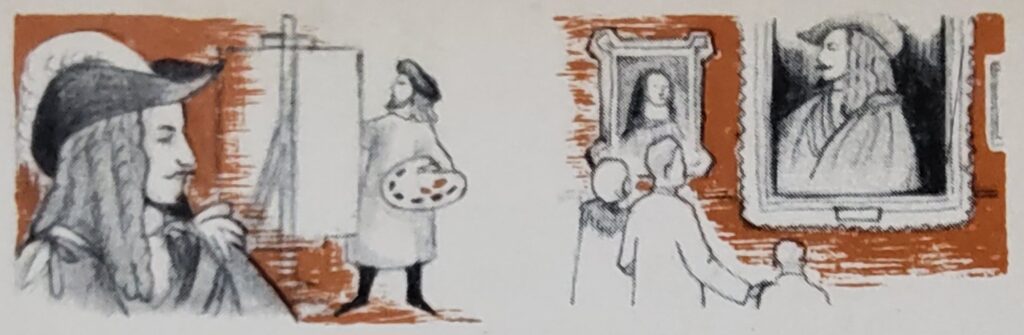
Today’s Frenchman is abundantly surrounded with visible evidences of his country’s history — the palace at Versailles and much of the art in the Louvre. The Arch of Triumph, commemorates Napoleon’s victories. The flag overhead and the national celebration of Bastille Day, keep alive the tradition of the French Revolution. The Eiffel Tower, is a symbol of the materials and techniques of the industrial era. The daily newspaper, chronicles happenings in the once vast French colonial empire.
lt is not easy to pinpoint intangible institutions, but the rich and complex life of France is a composite of the achievements in the region from the days of the Romans to the present.