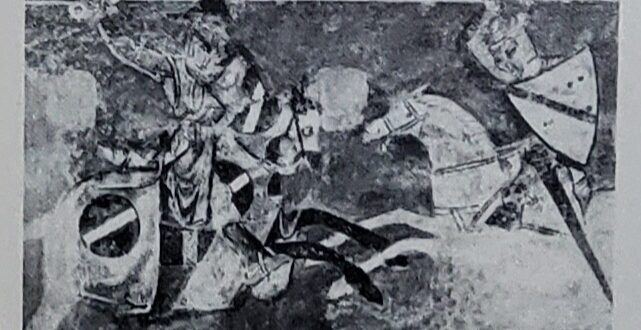
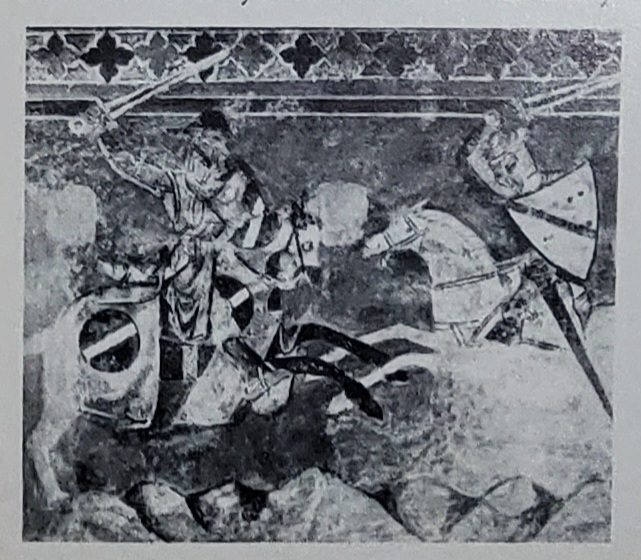
Richard I, the Lion Heart, fails to capture Jerusalem from the Saracens.
The birth of the New Byzantium
The first decade of the thirteenth century was a critical period for civiization. In the West, the Europeans, in the tradition of their barbarian ancestors, sacked the world’s greatest city; while in the East, the Mongol chieftan Temujin held a congress to lay plans for the conquest of the world, adopting the terrible name of Genghis Khan, “lord of the world.”
In the 1260s, Genghis Khan”s successors conquered Sung China and in 1242, the Christian states of Russia had come under Mongol sway. Two centuries earlier, the Russian princes had been converted to Orthodox Christianity in the reign of Grand Prince (later Saint) Vladimir of Kiev (980 -1015), who married the sister of the Emperor Basil II. Kiev became the metropolitan see of Russia and under Grand Prince Yaroslav (1019 – 54), enjoyed a golden age whose brilliance reflected the splendours of Byzantium. Yaroslav’s son married the daughter of Harold of England and one of his daughters, became Queen of France.
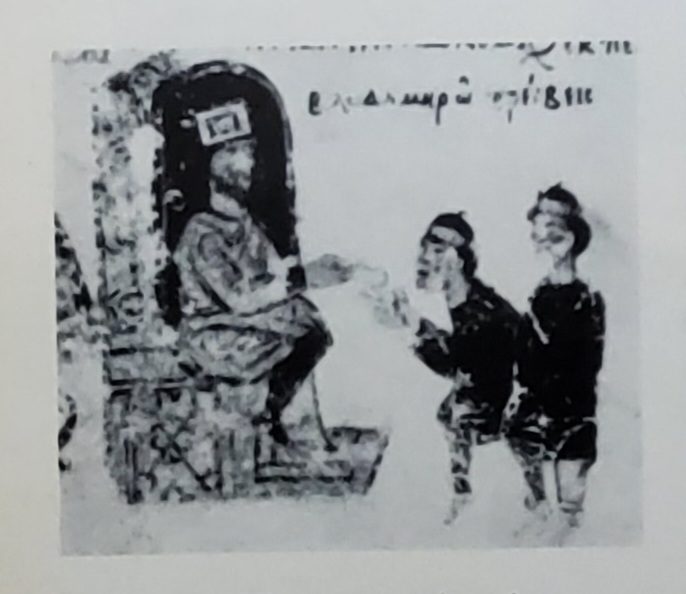
After Yaroslav, however, the advances of the Turkish Cuman tribes on the Russians’ southern frontier and the treaties between Byzantium and Venice, severely weakened the trading position of Kiev. The descendants of Yaroslav were to establish a number of principalities, but the grand prince, first of Kiev then of Vladimir, for a variety of reasons retained a more than theoretical ascendancy. The major principalities were Kiev itself, Novgorod in the north and the principality of Suzdal. During the eleventh and twelfth centuries, Russian society stabilized into the recognizable divisions of the aristocracy, the merchant class whose richer members were able to join the ranks of the aristocracy and finally the peasants. This increasingly well-articulated social structure, in which the ecclesiastical hierarchy played an important part, produced conflicts of interest between the states, conflicts that often reinforced the dynastic policies of the princes.
Meanwhile, the chroniclers inveighed against the internecine wars between the Christian rulers and urged them to unite against the pagan enemies on their frontiers, such as the Cumans or the powerful state of the Volga Bulgars. The opening of new trade routes to the north and the gradual emergence of different distinguishable nationalities — the Great Russians in the north, the White Russians in the west and the Ukrainians around the lands of Kiev —further emphasized the differences among the principalities.
In the mid-twelfth century, the declining state of Kiev was overrun by the armies of the prince of Suzdal, who sacked the city, retained his own capital of Vladimir and took over the old Kievan claims to supremacy. Henceforth, the grand princes of Vladimir, later called Muscovy, were to maintain their claim to the leadership of Russia.
The merchants — a new power
In Novgorod, although the theoretical supremacy of the princes of Vladimir was recognized, the effective rule lay with the merchant aristocracy. Novgorod was the natural entrepôt of the intersecting trade routes from the altic to Asia and from the north, down the river system of European Russia to Kiev.
Furthermore, it was largely isolated from the depredations of the Asian nomads by the states to the south and by its own wild hinterland stretching to the White Sea – a land too sparsely inhabited to raise a political threat, but one nevertheless rich in walrus ivory and furs. The merchant oligarchy was further stimulated in its independence by connections with the German merchants of the Hanseatic League.
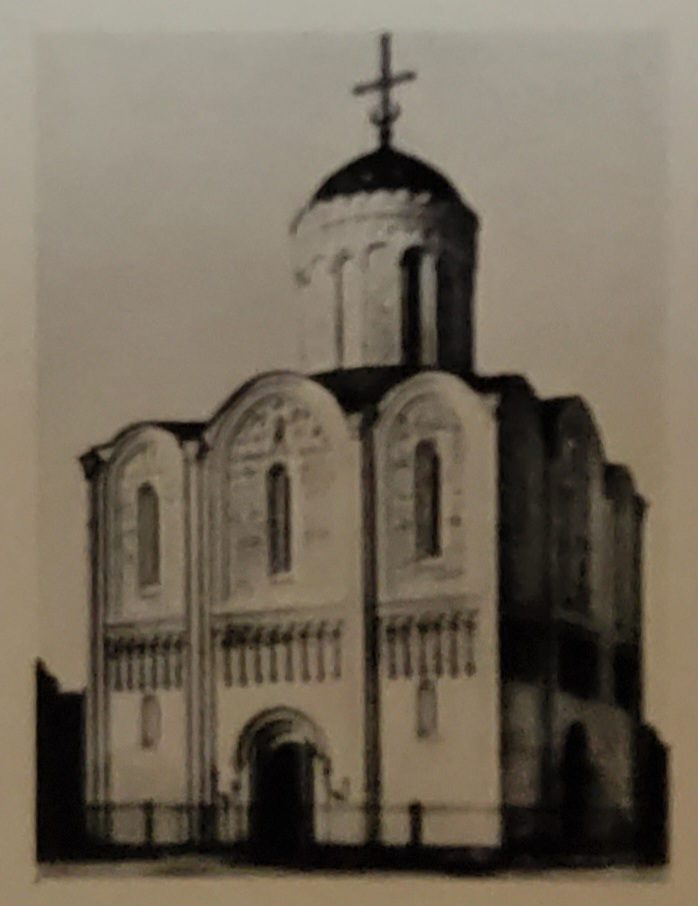
The great and growing wealth of the Italian cities and above ail those inveterate rivals, Venice and Genoa, was based on their exploitation of the riches of Byzantium. Throughout Europe, the power of the cities was growing. London was a flourishing trading centre in the twelfth century, but more significant was the ascendancy that the German merchants of the Hanseatic League established in the Baltic and the growth of the trading activities and wool industry of the Flemish cities. The commercial life of Europe now came to be a major aspect of the life of the Continent, polarized around two centres to the north and the south. Trade routes between them met at the great fairs of the towns of Champagne.
With this commercial wealth and power, went a political drive by the governing oligarchies of the towns to rid themselves of the interference of their aristocratic overlords. In Italy the towns won a notable victory. The Emperor Frederick Barbarossa’s ambitions led him into conflict with the Pope, who excommunicated him and provoked the determined opposition of the north Italian towns, eventually even those with imperialist sympathies. The imperial army was defeated by the Lombard League and Barbarossa came to terms with the Pope and met the demands of the cities. His son, Henry VI, maintained and extended his father’s imperial aims, conquering the Norman kingdom of Sicily and defeating the papal allies. After Henry’s premature death in 1197 and the temporary successes of his son, Frederick II, no future Emperor was ever again to exercise effective authority over the communes of north Italy.
New kings, old struggles
In 1187, the forces of the kingdom of Jerusalem were crushed in the Battle of Hattim, by the armies of the dashing and brilliant Saladin. The city was lost and the kingdom itself reduced to a coastal strip. For one last glorious moment, Christendom witnessed the armies of the Emperor and the kings of England and France, embarking on a crusade to recover the cradle of their faith. The aging Emperor, Frederick Barbarossa, set out with a magnificent and well-disciplined army, which rightly struck fear into Saladin. However, differences between Barbarossa and the Byzantine Emperor, soon became apparent and the German threat finally was dissipated when Barbarossa died on the campaign.
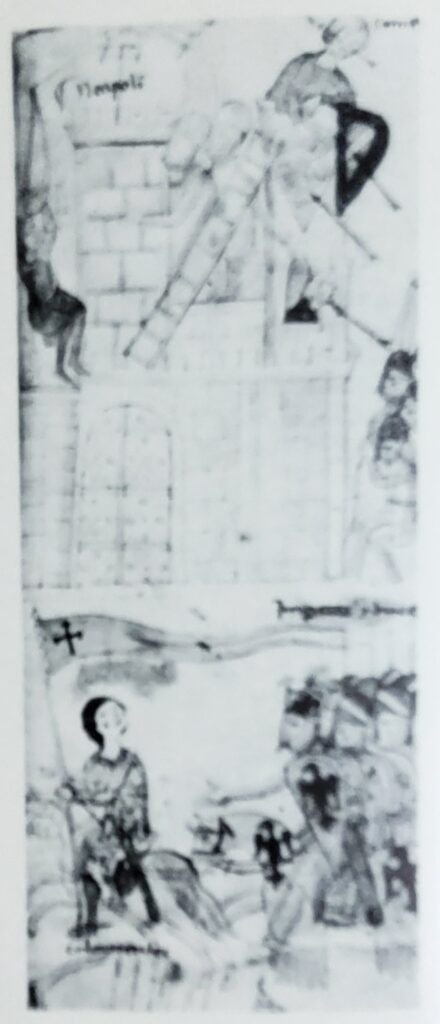
In 1191, Richard I, the Lion Heart of England, arrived with his army at the besieged town of Acre, where his bitter rival Philip Augustus of France had been encamped for some months. Vitalized by the reinforcements and heartened by the inspired generalship of Richard, the Christian armies won a series of victories that seemed to bring them within reach of Jerusalem, but Richard was forced by the military realities of the situation and by political affairs at home, to return to Europe.
Richard spent very little time in his kingdom and showed none of the abilities of his father, Henry II, as a ruler. His far more talented brother John, was also unhealthily ambitious and during Richard’s absence on crusade intrigued for the throne. Finally, troubles at home were compounded by threats abroad. Philip Augustus of France, who laid the foundations of his country’s greatness in the later Middle Ages, was determined to recover the Angevin lands in France. He had exploited both the conflict between Henry II of England and his sons; and John’s disloyalty to Richard, to good effect. Yet in five years, Richard won back almost all Philip’s gains and confirmed England’s presence in France with the building of the mighty fortress of Château Gaillard in Normandy. The art of military fortification had advanced considerably during the twelfth century and Richard was perhaps the greatest military architect of his age.
With his death in 1199 and the growing discontent of the English barons with fighting the dynastic wars of the Angevins abroad, the kingdom was greatly imperiled. Compared to the disaster on the Bosphorus in the same year, the capture of Château Gaillard by the French in 1204 was of marginal significance in European affairs, yet it precipitated the loss of most of the English possessions in northern France to the French king.
Chivalry in the West
Richard I’s defects as a man and as a ruler, have been forgiven him by posterity for the aura of military glamour that surrounds his name. In these terms, his career was the fitting conclusion to a century in which the concept of knightly chivalry began to emerge from the bloody business of self-interested Warfare. In the face of the slowly developing sophistication of society at large, the turbulent nobility of Europe whose scope for private Warfare was in any case being limited as the feudal monarchies grew in power – began to accept the idea of rules to govern warfare. More and more, they channeled their aggressive urges into the causes of their sovereign, into the religious crusade, or into the military sport of the tournament.
At first, tournaments had been little more than wars to the death between friends, so to speak. In theory the vanquished were taken prisoner, but the weapons and conduct of the fight were genuine and men were often killed. Those who were captured could expect to pay heavy ransoms and the world of the tournament provided the opportunity for many a landless younger son to make his fortune. William the Marshal, the elder statesman of John’s England, was the prime example; but even before his death, the institutions were changing. Royal authority saw itself threatened by these violent gatherings of its vassals and the wealthy landowner, was less and less willing to chance his fortune to this military lottery. Furthermore, such old-world piracy hardly accorded with the new aura surrounding the chivalry of the institution of knighthood.
The idea of the Christian warrior in the service of the just war was partly inspired by the ideals that continued to cling to the crusade. Still more important were the romantic legends surrounding that greatest of all Christian warriors, the Celtic hero King Arthur.
Profits in the East
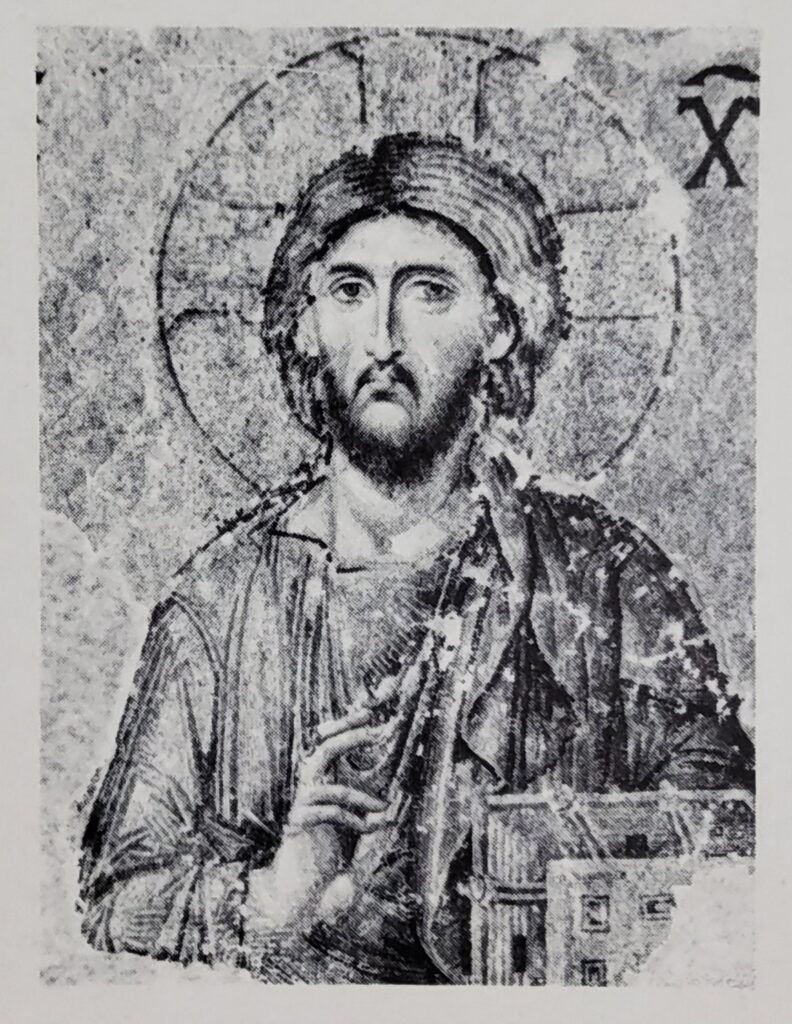
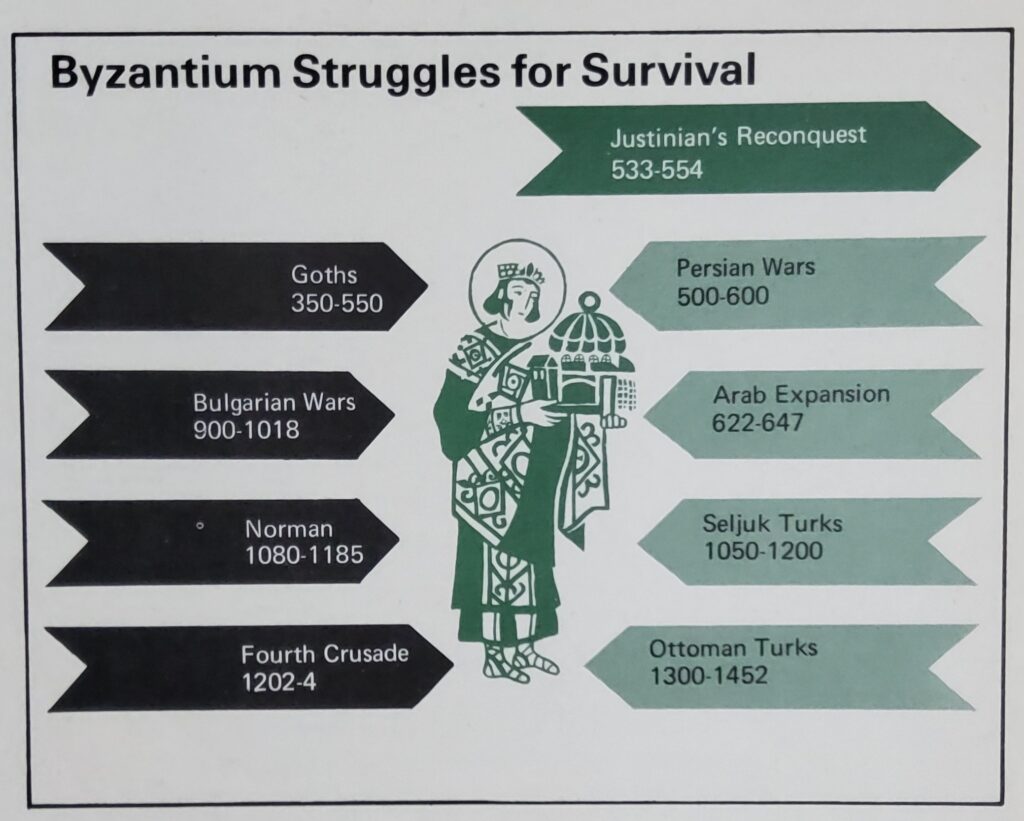
The Byzantine Empire was restored to an aggressive posture by Alexius I (d. 1118), who had not only recovered much of Anatolia from the Seljuk Turks after the disaster of his predecessor at Manzikert, but had also contained the ambitions of the first crusaders and restored the finances of the Empire. His successor, John II, successfully held the position; but Byzantium was embattled against strong and determined enemies. The Turkish victory at Myriocephalum in 1176 over the Emperor Manuel I, although it involved them in heavy losses, put an end to all hopes of a Byzantine recovery in Anatolia. At the moment, however, the real threat lay in Europe. Successive Norman rulers of Sicily had attempted to conquer the Christian Empire in the East and in 1195, the Emperor Henry VI, had prepared an expedition, which only his death prevented. Quite apart from these military threats was the running sore of Venetian trading privileges within the Empire.
These privileges had been granted by Alexius I, in his alliance with Venice against the Normans. They gave the merchants of Venice an even more privileged position in Constantinople than the Greek traders themselves. The Empire lost the carrying trade of its own merchandise and the revenue of the former tolls. The attempts of the Emperors to break loose (in 1171 Manuel I had all Venetians imprisoned and their goods impounded) only provokcd a determined counterattack; and the Fourth Crusade has been called the greatest commercial coup of all time.
Despite the declining political situation from the middle of the century, Byzantine art and letters enjoyed a remarkable florishing during this period, inciuding a marked revival in classical Greek scholarship and literature, which paralleled the brilliance of the twelfth-century “renaissance” in Europe.
Seeds of Autocracy
A rapid survey of twelfth-century society impresses us first with its vitality and second, with the clear signs of new institutions in embryo. The town evolved systems of internal government and inter-city federations, but the guilds and the Hanseatic League later developed protective and monopolistic tendencies, which hampered rather than directed growth.
Chivalry, an excellent means for the taming and civilizing of aggression, soon became a meaningless game and even in the realm of the intellect, the same process can be observed. Vitality and restless inquiry were gradually institutionalized. The statutes drawn up by a papal legate for the University of Paris in 1215, heralded an age when the great centres of intellectual activity, once so free, not only gained powers for governing their own members, but also became more easily subject to the control of outside authorities.
The old universal institutions of empire and papacy were challenged not only by the emergence of new, more tightly knit political units, but also by powerful “lobbies” for the interests of separate social groups. In the event of conflict with Church or king, such institutionalization made the target of official displeasure easier to identify.


