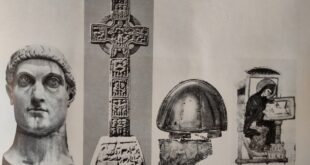
This age is not meant to imply that fires were burning continually from 312 to 1204. Yet fires there were: fires lit by zealous men that consumed the ancient gods, ancient cultures and eventually men themselves.
The rise of Christianity to its position as the official Church of Constantine’s Empire was accompanied by fires in which the temples and other treasures of ancient cultures were destroyed for example, the library at Alexandria. Then the Islamic fires from the desert seemed to consume the gardens of late antiquity, where vases and statues had survived from the age old Hellenism. At the dawn of our own age, in 1204, the crusaders plundered and set fire to Constantinople and destroyed, for the time being at least, the Empire of the Romans. The Byzantine Empire and in particular Constantinople itself, with its glittering palaces, its baths, its art treasures and its luxury, was coveted as much by the tenth-century Ottonian Germans as by the Franks the Latin Christians of 1204.
The fires of faith, the bright lights of destruction, the explosions of fanaticism, the everlasting wars and feuds that filled this era was there even one year when there reigned a peace comparable to the pax romana that Augustus had envisaged or the pax mongolica that the great Mongolian khans created at the height of their power? All the undoubted devastation should not make us forget that the fires of faith brought life as well as destruction. The contents of this category demonstrate that the dynamic forces that created the western world had their origin in these troubled centuries and that the foundations of European culture, up to the present day were laid over a thousand years ago.
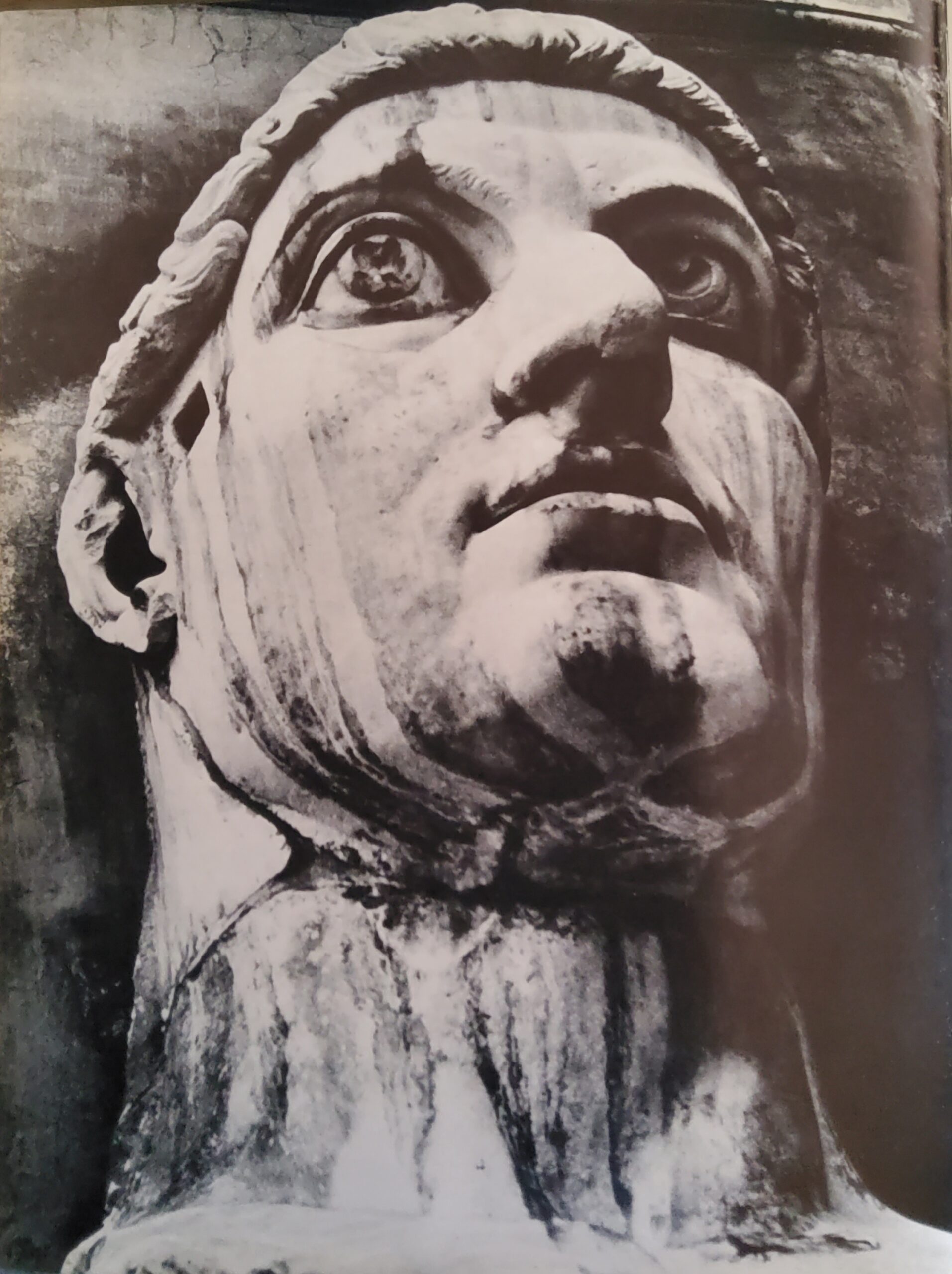
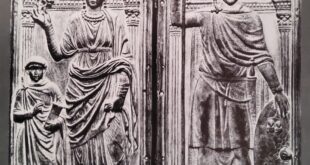
We know both a great deal and very little, about Constantine, to whom the Church owed its rise to power. Until 1969 the princes of the Roman Catholic Church – the Eminences, Excellencies, Cardinals and Bishops bore the official titles of the higher bureaucracy of Constantine’s Empire. The liturgical vestments of the clergy are still based on the robes of office of the imperial official. We know a great deal about Constantine, his life, his policy and all that this selfstyled “thirteenth apostle” did for the Church. Yet we know little about the inner workings of his life. He was no doubt pious in his own way, like men who, since the earliest days of humanity, have waited in fear and hope for a sign from the Holy One.
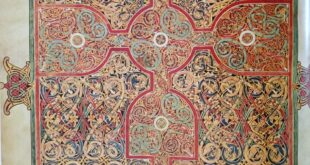
St. Patrick’s Celtic mission signified the beginning of a specifically European Middle Ages, with the activity of highly individual and highly individualistic monks and missionaries who travelled from island to island, farther and farther northwards and then conquered the continent of central Europe and northern Italy, in one great movement. Europe was becoming Celtic. In contrast to the centralism and uniformity of Rome, “Celtic” Europe was blessed with a multiplicity of highly independent personalities. These men from the British Isles thirsted after freedom; they had lively intellects and were fired with curiosity.
One, Pelagius, became the great opponent of St. Augustine and the heresy of Pelagianism was considered a great danger by Rome, for more than a thousand years. Pelagius saw man as a creature destined by God to freedom and reason, to shouldering the responsibility for what he did with his own life.
Carolingian civilization and the culture created by Charlemagne, his sons and his grandsons, which provided a broad and secure basis for European civilizaion up to the eighteenth century, would have been unthinkable without the gifted clerics from the British isles. These clerics were the first clercs or intellectuals; they provided the officials and the school teachers for the whole of the European continent.
The Europe that was coming into being underwent, a number of major invasions. The battle against the Huns on Campus Mauriacus near Troyes in 451 and the Battle of Lechfeld in 955, have a great similarity, indeed a close affinity, in that they were not, either of them, simply battles in which the West repelled the East as they have too often been considered. On the contrary, these two great battles showed the extent to which East and West were interwoven. The frontiers were blurred: there were Eastern and Western troops, leaders and politicians in both camps.
The Rule of St. Benedict: possibly nothing has contributed more to the inner peace of Europe and the formation of an inwardly stable race of men than the Benedictine Order. Moderation, a wise balance between physical and mental activity, a renunciation of fanaticism in any form, including cxaggerated asceticism: those were the maxims followed in the Benedictine monasteries that spread civilization throughout Europe in the “Benedictine centuries”. The humanity of the Benedictines made an irreplaceable contribution to the turbulent, constantly warring Europe of their day.
Mohammed’s Hegira or emigration from Mecca to Medina marked the beginning of the rise of Islam. A new world was created, a self-contained hemisphere reaching from Baghdad to Cordoba and even Toledo. For too long people saw only the “scourge of Allah” over the East; today we see the “sun of Allah” instead. Arabian doctors, technicians, philosophers, scientists and poets and consequently Jewish ones too – since the Jews were at the courts of the Arabian princes – created a civilization oriented towards Hellenistic antiquity in the Near East, without which European civilization at the height of the Middle Ages would have been unthinkable. The learned “disputation”, the art of dialogue and verbal combat, was an offspring of the “world of the three rings” in the glittering Arabian civilization of the Spanish peninsula. Those three lights of the Christian Middle Ages, Albert the Great, Thomas Aquinas and Dante, were the spiritual inheritors of this Arabic-Hellenistic intellectual civilization.
The year 800 was a particularly important milestone, with the Carolingian Renaissance in the West paralleled by the Japanese Renaissance in the Far East. The political unity of Europe in Charlemagne’s Empire was short-lived, but the social, religious and cultural foundations laid with the help of men from Spain, northern Italy and above all the British Isles, lasted until the French Revolution and Napoleon, who considered himself a new Charlemagne.
What Charlemagne achieved for the Continent, Alfred the Great achieved for England. This truly great man, who won London from the Danes in 886, was the real founder of the English nation. Alfred also created the English navy as a political tool. He founded English literature, in the continuity of a tradition from Latin antiquity. The “scholar” and the essentially English type of education with its “open” tradition derived from ancient humanism (witness Thomas More and even J. H. Newman), were both offsprings of the erudition encouraged by Alfred the Great. Alfred himself translated into English Boethius’ On the Consolation of Philosophy, which sought to offer mankind a via media, a “middle path” and a means of self-assertion between life and early death.
After the Battle of Hastings in 1066, Anglo-Saxon England was linked, through the Normans, to the Continent. An Anglo-French “western hemisphere” was created by the extensive possessions of the English kings in France. French was Richard Coeur de Lion’s language and the language spoken at the English court, until the late Middle Ages.
In the “dark ages” of the tenth century, when the Continent was being invaded by Normans, Arabs and Magyars – and Rome seemed likely to collapse under the “pornocracy” of patrician families who used dagger and poison in their fight for the papal throne, Otto I brought about a unification of the ravaged German territories.
The kings and emperors of Otto’s time became the great instruments of a reformation in Rome; and the monks of Cluny became their most powerful allies. With the unfortunate Henry IV began a two-hundred-year-long battle, in which emperors and popes deposed and execrated each other. The battles over investiture that took place in Germany and Italy in the time of Henry IV and Henry V were destined to be repeated in England and France in the thirteenth and fourteenth centuries. From the protracted conflicts between emperors, kings and popes there developed on the one hand the world state (which then subjugated “its” Church once again) and on the other hand, the imperial Church of the Pope. The papacy ultimately defeated the emperors and the Pope was proclaimed “true Emperor, lord over all kings and princes – and commander of the earth.” It was not until the Second Vatican Council that the ideology, political aims and claims to power of the papacy were challenged as unBiblical, mainly by theologians from countries that lay at the heart of the old Holy Roman Empire.
The twelfth century brought to Western Europe a flowering of culture to a degree unknown since the days of classical antiquity. Cities were constructed (chiefly at first in Italy), universities were founded and the Gothic style was born. France, or to be more exact, the small area around Paris under the direct rule of the French kings and Provence, in the south, the cradle of courtly love – with its own language, a civilization focused on women and love that fostered a refined, cultured existence — became the cultural centre of Europe, attracting students and teachers from all over the Continent.
This Latinized Europe of the West was however, preparing for an explosive confrontation with the East. Nowadays we can define the “East” not only as Byzantium the political civilization of the East Roman Empire, its intelligentsia, its bureaucracy and its education, but also as Byzantium’s close allies, the Islamic princes with their lands in Outremer, the Holy Land. The Emperor in Constantinople sent his hearty congratulations to Saladin for his conquest of Jerusalem, the Holy City of Jews, Christians and Moslems. The “Franks” (the name by which western Europeans had been known for hundreds of years in the Middle and Far East), with their crusades, must be considered just as much a continuation of the Viking voyages, as a prologue to the colonial expansion of western Europe.
Europe in the year 1200 knew little of events in other continents. Buddha existed in the West only in the legend of Baalaam and Josaphat, disguised as a Christian saint. China, India and Japan were very remote. The conception of a wider world existed only in visions, dreams and legends. Nevertheless, southwest Europe was already assembling the force that in the thirteenth and fourteenth centuries was to send Franciscan monks to Africa, Asia, China and deep into Mongolia.
This then was Europe and the world as it was forged in the fires of faith marking the tumultuous millennium that stretched from Constantine’s vision on the road to Rome to the destruction of his city on the Bosphorus by errant crusaders.