Southern France, the cult of courtly love, takes root and flourishes. In the glories of its new cathedral, the town of Chartres provided the fullest single expression of vigour and inspiration of twelfth-century Europe. The school of Chartres itself had been in the forefront of the revival of Neoplatonist philosophy that marked the intellectual ferment of that glorious century. Like other important centres, it had been receptive to the intellectual stimulus provided by that century’s full discovery of Greco-Arab learning.
The Glory of Chartres
Chartres also symbolized the cultural and political hegemony that northern France was to exercise throughout Europe during the thirteenth century and after. This hegemony was prepared for in the work of the great Abbot Suger – churchman, statesman and inspired patron of the arts, whose church of the Abbey of St. Denis provided both a fitting shrine for the French monarchy and the seminal building of the Gothic Age.
Paris, as the home both of the kings of France who were to come into their own during the thirteenth century and of the great new university, was to dominate Europe in the coming generations. Yet during the twelfth century itself, national leadership was located in the south, the home of the rich Provencal culture. Before turning to Provence, let us first look at the other strangely “un-European” society which had sprung up in Outremer, the lands “over the sea”, in the Holy Land.
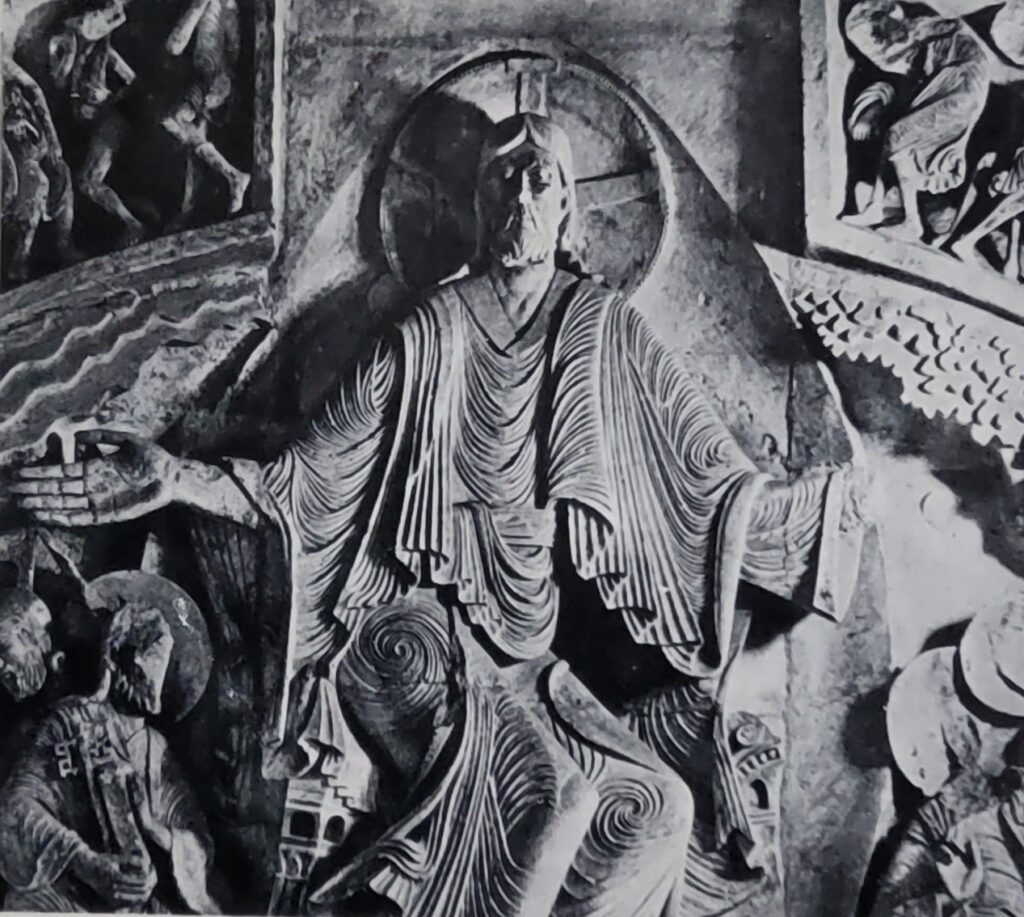
Outremer, Heir to the Crusades
The fruits of the First Crusade had been the city of Jerusalem itself and several Christian principalities, representing roughly the modern states of Israel, Lebanon and parts of modern Turkey and Syria. Despite the mixed motives behind the crusading movement, popular religious sentiment had been strong. Throughout the first half of the twelfth century, the newly founded Frankish kingdoms in Outremer and the crusading orders of knights, the Templars and the Hospitalers, received occasional reinforcements in the shape of militant pilgrims from Europe, anxious to defend the gains of Christendom in the Holy Land. The recapture of the inland northern county of Edessa by the sultan Zangi in 1144, sounded the death knell however, of the Christian states in the Middle East. By the end of the century, they had been reduced to a thin coastal strip. Thanks to the stirring oratory of St. Bernard, two mighty armies under the command of the aging German king Conrad III and the pious but inexperienced Louis VII of France, set out on the ill-fated Second Crusade of 1147.
From the outset, the venture was weakened by divided councils, while animosity and distrust soon developed between the Westerners and the Byzantines. For Byzantine survival and thus ultimately for the survival of the Christian cause in the East, Moslem disunity was crucial. Yet few things could be better calculated to unify Islam than the concerted attack of powerful Christian armies. The situation grew still worse, when as was the case, the objectives were ill-defined and ill-coordinated. Reluctant to assist his Christian allies for such reasons, the Emperor Manuel was dismayed at the ease with which the unruly crusading armies pillaged the Byzantine lands, through which they passed.
When the Germans finally met the Infidel, however, they were easily defeated and dispersed. When King Louis of France, with his beautiful and headstrong wife Eleanor, arrived at Antioch, he was urged to strike at Aleppo, the seat of power of the sultan Nur ed Din. The plan was sound, but Louis was suspicious of the very close liaison between Eleanor and her uncle, the Count Raymond, who had suggested the strategy to him. Anxious to visit Jerusalem, Louis instead left Antioch for the Holy City. From Jerusalem the Christians attacked Damascus, a potential ally against their main enemy, Nur ed Din. In fact, the army was forced to abandon the siege and the crusade, which did nothing but demonstrate the vulnerability of the western crusading effort.
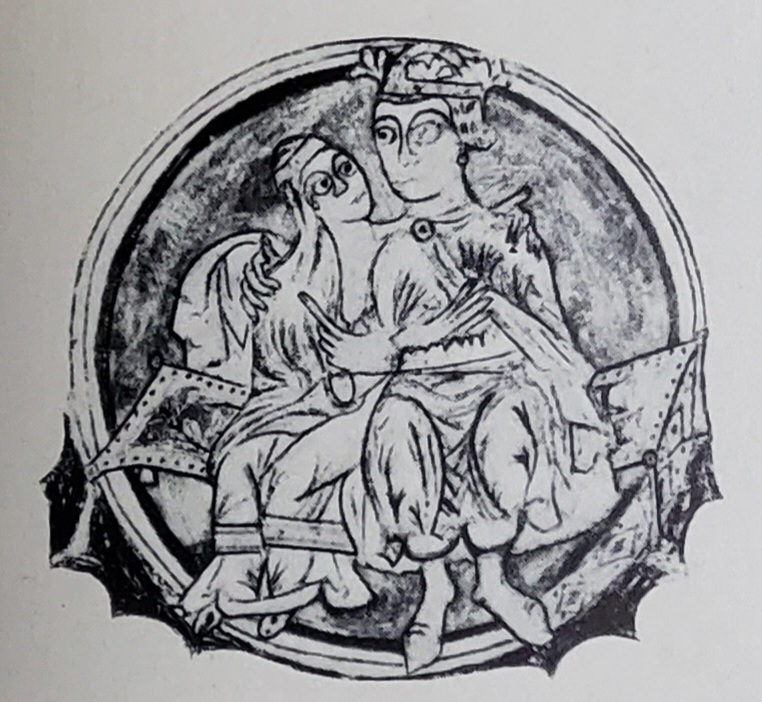
To the Provençal ladies of Queen Eleanor’s train, the semi-Oriental court of Antioch must have been a magical world and the soldiers were often reluctant, to quit the ease and comfort of these rich cities for the battlefield. Still, they could not accept the ease with which their cousins had adapted themselves to the mores of the East. The astonished northerners found themselves in a supposedly Christian and crusading society, yet one where even the pleasures of the harem were not unknown and where princes often conducted diplomatic negotiations in Arabic. For their part, of course, the second-generation crusaders were living in a political environment that made the simple equation of Christian versus Infidel, an impossible recipe for continued survival. Inevitably, as the rival civilizations of Islam and Christianity came to know one another at first hand, they discovered that the religious-political tags that made them enemies, could not obscure the fact that they were all men.
We have touched on the eagerness of Christian scholars in Spain to learn from Islam, but in the Norman kingdom of southern Italy, an even greater degree of cultural miscegenation made itself apparent. In Outremer the fusion was complete; they were of course, potential enemies, as the kings of France and England were enemies; and both sides found it advantageous when calling up help from outside to emphasize the element of the religious war. Yet, if Outremer shocked the northern crusaders, the vibrant and revolutionary principles of the culture of southern France threatened them — and it was closer to home.

The Culture of Provence
The political rivalry between the kings at Paris and their many powerful vassals was long-standing. The most serious threat was posed by the virtually autonomous dukes of Aquitaine and the counts of Toulouse. Southern France was also a separate area linguistically and it was culturally separate, with a virtually unbroken tradition stretching back to Roman Provence. Moreover, there was close contact with the Arab World and as the twelfth century progressed, the separatism of the south was reinforced by the rapid spread of the Albigensian religious heresy.
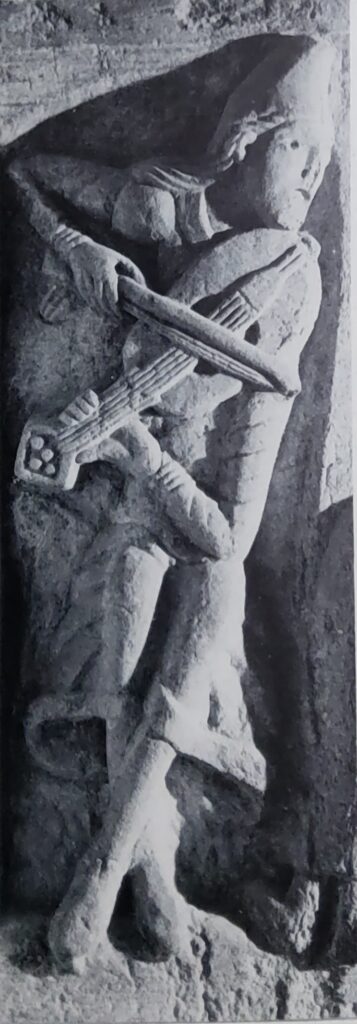
The heralds and agents of this new civilization were the troubadours. Their verses, probably influenced by Arabic models, survive from the eleventh century; the earliest troubadour known to us by name is Duke William of Aquitaine (1071 – 1126). The most distinctive features of Provençal culture, when compared with that of other European regions, are the active participation of a cultured aristocracy and the development of a specific court culture, as opposed to a Church culture. Vernacular lyric poetry may be said to have been born in Provence during this period; forms that were invented by the Provençal poets continued to be used down to the Renaissance and indeed beyond. More important however, than the forms, was the subject matter.
Until then, the main subject of court poetry had been the heroic deeds of great emperors and warriors — of Charlemagne and Roland or, in the far north, the mythological hero, Beowulf, The poetry of the troubadours instead dealt with love between man and woman; and a unique and revolutionary love at that. Suddenly woman became an object of respect in the male society of the Middle Ages. The cult of courtly love was the cult of woman, which in religious terms, was paralIeled by the equally sudden appearance of the cult of the Virgin during the twelfth-century; Chartres itself was the first great church to be dedicated to the Virgin.
As the thirteenth century progressed, the two cults approached and sometimes merged into one another. In a characteristic medieval musical form, the polyphonic motet, a piece based on a fragment of plainsong from an antiphon to the Virgin, might use the text of a French love song in the upper part.
Furthermore, at a time when marriage was explicitly a matter of dynastic policy and brides were regarded as counters on the diplomatic chess board and wives as pieces of property, the notion of love was certainly not connected with the marital state. To some extent the cult was a game and known to be a game, for ironically, the objective of the poets, who were almost exclusively men and usually landless younger sons, was to win a rich and landed wife and thus join the system, they were supposed to be fighting.
In some ways, the cult of courtly Love, was an ideal rationalization of a society centered upon the castle of a great lord, thronged by landless adventurers and presided over during the lord’s many absences, by the great lady. The game was taken to extraordinary lengths; for example, at the court of Eleanor of Aquitaine. First at Angers then at Poitiers, Eleanor held courts of love, presided over by the ladies. The cult even had its own bible or legal code in the shape of the Code of Love in thirty-one articles. Written for Eleanor’s daughter by her chaplain, the Code of Love was regarded by the orthodox members of the old society as one of the most subversive, as it was certainly one of the most influential, books of the time.
We have seen Eleanor on crusade with her husband, Louis VII of France. The crusade, attended by many great ladies and their troubadours, was itself something of a romantic episode. Yet, angered by his wife’s infidelity and disturbed by her inability to produce sons, the French king finally yielded to the urgings of St. Bernard, to rid himself of this “she devil” and sought a dissolution of the marriage. The Pope, himself persuaded by Bernard, granted the dispensation. For Eleanor — who said of her husband “I thought to have married a king, but found I am wed to a monk” — the event could only be considered as a “happy release.” The divorce however, had disastrous consequences for France and the history of Western Europe. Five years later, she married Henry Plantagenet, heir to England and the duchy of Normandy.

Heresy and Separation
We have already touched on the impact of the Catharist heresy in Europe; by 1167, it had reached such proportions that the Cathari (their name comes from the Greek word meaning “pure”) held their own ecclesiastical council. Sixty years later, the whole rich flowering of Provençal culture, was obliterated in the bloody and vindictive Albigensian crusade, launched with the Church’s blessing and conducted by soldiers and adventurers from the north. The Cathars, like many reforming sects, held that the Church had been corrupted by its involvement in the world, ever since its adoption by Constantine in the fourth century. Only their own pure and simple living, they held, came close to that of the primitive Church. To the rebellious and aristocratic society of the south, it had a double appeal, both as the religious equivalent of that society’s political separatism and as a truly aristocratic religion. The small elite of the Catharist Perfecti, for instance, exerted a deep fascination on the aristocratic ladies who dominated Provençal society. Indeed many of these ladies publicly embraced Catharism.
The Cathars proclaimed the wickedness as well as the irrelevance of war and even of the crusades. The Church was thus obliged to produce apologists of its own, who advanced the argument of the just war. Yet the crusades had in their favour, the facts that they hastened the Christianization of the worst excesses of the martial element in feudal society and fostered the evolution of the concept of Christian chivalry. After the twelfth century, warfare was as bloody and brutal as ever, but the concept that war was subject to the laws of God and civilized behaviour had arisen and the code of knightly chivalry had been born.