Modern World 1815 – 1945 A.D.
Industrial Revolution, nationalism, imperialism, WWI, Great Depression, totalitarianism & WWII. How science and industry changed the world.
West Dominates the World (1763 – 1899 A. D.)
3
Nations of Latin America ‐ this subject includes the Latin American independence, international relations and life in Latin America, during this period. The revolt of the Spanish colonists in Central and South America, was in some ways similar to the United States Revolution, which partly inspired it. It is important to understand the differences in background and motives, which led the southern neighbours in political and economic directions, unlike to those taken by American democracy in the 1800’s. The story of nineteenth-century Latin America is an unhappy one: of political disunity, economic weakness and interference by foreigners. It is important …
Read More »
West Dominates the World (1763 – 1899 A. D.)
23
Growth of democracy in America includes – the foundation of a great nation, American Foreign Policy, American territorial expansion, effects of the frontier on America, the war between the States and growth of American industry. The history of the United States has been followed with amazement by those who live in other parts of the world. Its rapid growth in area, in population and in the production of goods and services, has been unequalled. The statistics of the American material way of life, have become standards by which other nations may measure their progress, or goals which they seek to …
Read More »
West Dominates the World (1763 – 1899 A. D.)
58
Orient and Occident: India, “Pearl” of the British, the partition of China and the Westernization of Japan. China, Japan and India developed a distinctive culture. They were proud of their achievements and were satisfied to remain far removed from the developments in the west. Therefore, it is not strange that the Orient resisted the forceful penetration of their cultures by Western influences, nor that they resented the superior attitude of Occidentals. It is important to observe the different ways in which each country reacted to Western influences. The philosophy of each region, determined what aspects of the West would be …
Read More »
West Dominates the World (1763 – 1899 A. D.)
128
Imperial Russia: The land, the people, autocracy, Pan-Slavism, Alexander II, limited reform and the background for later revolutions. Russia’s relationship to European history was undoubtedly affected by the geographical fact that she has been more Asian, than European. Most of the world’s largest country is a vast plain broken by the Ural Mountains. The larger part which includes Siberia, is in Asia and looks away from western Europe. Russia’s government and her part in international affairs during the nineteenth century, saw the major powers of Europe blocking Russia’s attempts to gain a warm-water port and access to the Mediterranean. Autocratic …
Read More »
West Dominates the World (1763 – 1899 A. D.)
135
Nationalism and Union in Germany and Italy include: Metternich and European affairs, Bismarck and European affairs and the struggle to unite Italy. Histories of Germany and of Italy were long intertwined as components of the Holy Roman Empire; when Napoleon broke up the Empire, central Europe was left a patchwork of small states, each with its own government, tarifs and traditions. Austria and France wished to perpetuate this weakness for their own selfish ends and that made central Europe a battleground. Two remarkable men of the nineteenth century ended this disunity and altered the balance of power in Europe. Their …
Read More »
West Dominates the World (1763 – 1899 A. D.)
149
Democratic reform in England and France: British political reforms of the 1800, England’s relations with Ireland and the Bourbon rule in France, reviews developments in England and France between 1815 and 1900. In 1815 the Congress of Vienna wrote a peace treaty, which it was hoped, would prevent wars of conquest such as those engineered by Napoleon. As England and France tackled their domestic problems, arose the opportunity to contrast two methods of attaining the same objective: the establishment of more rights and freedom for the individual. Following their tradition, the British relied upon action by Parliament after debate. The …
Read More »
Western Imperialism Influences Many Parts of the World
502
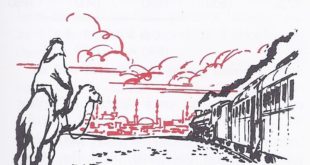
Slowly the train had puffed over the heights of the Lebanon Mountains. Now, at last, it was coasting down the eastern slope. Hasan Ali, an Arab trader, gazed ahead down onto the broad Syrian plains far below. Already in the growing light of early morning he could make out some of the tall minarets of the 300 mosques in Damascus. Hasan Ali had first looked on the ancient city many years before when he was a boy. He and his father had joined the great caravan which yearly wound its way from Damascus across the Arabian Desert to Mecca, the …
Read More »
Western Imperialism Influences Many Parts of the World
1,906
On a January evening in 1896, a famous British statesman, Joseph Chamberlain, attended a banquet in honour of an Englishman about to go to Australia as a colonial governor. Chamberlain was called upon to make an after dinner speech. What he said that wintry evening years ago explains what people at that time meant by the “British Empire” and points to the changes which he hoped would take place in the future. Here is part of what Chamberlain said: I have heard it said that we [English] never had a colonial policy, that we have simply blundered into all the …
Read More »
Western Imperialism Influences Many Parts of the World
671
In July 1858 a small fleet of American warships steamed into Tokyo Bay in Japan. The commander, Commodore Matthew C. Perry, had served during the War of 1812 and the war between the United States and Mexico (1846-1848). Perry’s voyage into Japanese waters did not mean that Japan and the United States were at war. Instead, Perry was bound on a peaceful mission, although it was expected that a show of force would help him to accomplish his purpose. For years American and European ship captains had tried to enter Japanese ports to trade and obtain supplies, but without success, …
Read More »
Western Imperialism Influences Many Parts of the World
615
In 1871 there occurred one of the strangest meetings in history. The place was Ujiji on Lake Tanganyika in the heart of Africa. The men who met were David Livingstone, a Scottish missionary who was also a doctor, and Henry M. Stanley, a newspaperman. Livingstone had come to Africa about thirty years before. Anxious to spread Christianity and civilization among the Africans, in this unknown and mysterious continent, he had undertaken long trips into the interior. For several years, however, Livingstone had not been heard from, so the New York Herald sent Stanley, a roving reporter, to look for him. …
Read More »
Science and Industry Change the Western World
304
It was the evening of December 17, 1903, when Bishop Wright in his home at Dayton, Ohio received the following telegram: SUCCESS. FOUR FLIGHTS THURSDAY MORNING ALL AGAINST TWENTY ONE MILE WIND. STARTED FROM LEVEL WITH ENGINE POWER ALONE. AVERAGE SPEED THROUGH AIR THIRTY-ONE MILES. LONGEST FLIGHT FIFTY NINE SECONDS. INFORM PRESS. HOME CHRISTMAS. ORVILLE WRIGHT This telegram tells simply and directly the story of the first successful motor-powered flights in an airplane. In these days, when planes make regularly scheduled flights across oceans and jet-powered planes exceed the speed of sound, we take air travel for granted. At the …
Read More »
Science and Industry Change the Western World
2,889
We remember how Rip Van Winkle, the famous character in Irving’s Sketch Book, fell asleep for 20 years. When poor old Rip stumbled back to his village, he was startled by the changes which he found. The people he talked with and the places he visited were strange. His former home was in ruins and his friends and nagging wife were dead. What was more, he discovered that a war had taken place and America was now an independent nation. If some imaginary native of Great Britain had returned to his home after slumbering from 1750 to 1850, he would …
Read More »
Science and Industry Change the Western World
841
“Repair this model, if you please.” These words were spoken to James Watt, an instrument maker at the University of Glasgow, Scotland, in 1764. The model showed how a steam engine worked, but what a steam engine! The original engine of which this miniature working model was a copy, was heavy and clumsy. Worse than that, it was extremely wasteful of the steam that ran it and therefore of the coal that was burned to generate the steam. Such steam engines, built by an English blacksmith named Newcomen, had been used for 40 years, but only in mines to pump …
Read More »
Peoples in Western Europe and America Strive for Freedom and National Unity
1,370
On May 11, 1860 an almost incredible military campaign began with the landing of Guiseppe Garibaldi on the western tip of Sicily. Garibaldi was a handsome, dashing, reckless warrior patriot. With him were a thousand devoted followers, clad in red shirts. Maybe red shirts were easier to shoot at than green or gray, but for every bullet, they attracted a recruit from the ranks of the enemy. The island of Sicily was one of the two parts of the Kingdom of the Two Sicilies. The other “Sicily” was the southern third of the peninsula of Italy. The capital of the …
Read More »
Peoples in Western Europe and America Strive for Freedom and National Unity
382
The Austrian city of Vienna in 1814 would have dazzled even a Hollywood director. Emperors and empresses, kings and queens, dukes and duchesses — members of ruling families who hoped to recover thrones or to increase their lands — were there. So were leading statesmen from practically every country in Europe. For the so-called Congress of Vienna was meeting to make peace, now that Napoleon had finally been defeated. The Congress was going to set the world right again. The old city was overcrowded. Hotel rates soared and homeowners rented their houses at unheard of prices. Laundresses grew wealthy and …
Read More »
Peoples in Western Europe and America Strive for Freedom and National Unity
1,000
The year is 1789; the place, Versailles, France. Several hundred delegates representing the people of France sit sullenly in the palace hall. When an officer of the King orders them to leave the hall and return to their proper meeting place, one delegate rises to his full height and thunders, “Tell your master that we are here by the will of the people, and that only bayonets can drive us forth” A meeting of representatives of the French people? Defiance to the commands of the powerful king of France? In view of what you have read earlier about royal authority …
Read More »
Peoples in Western Europe and America Strive for Freedom and National Unity
375
Even though you are familiar with the story of the American Revolution, perhaps you do not realize that only nine short days at Christmas time in 1776 changed the course of the English colonies’ fight for freedom. Within that short space of time, General Washington’s ragged, dwindling army captured the hired German troops at Trenton, New Jersey and routed a British force at nearby Princeton. The United States, Latin America, and Canada won control over their own affairs. To win such surprising victories and to keep the American Revolution from collapsing took the devoted leadership and military skill of General …
Read More »
Peoples in Western Europe and America Strive for Freedom and National Unity
403
Freedom! Liberty! Here are words which most Americans have heard all their lives. Freedom is the subject of the Declaration of Independence and of the Bill of Rights in our Constitution. Our patriotic songs refer to America as “sweet land of liberty” and “the land of the free and the home of the brave.” Just what do we mean by freedom or liberty? We mean several things, for there is more than one kind of freedom. First, there is personal freedom — the right of the individual to go where he wants, to choose his occupation, to say and write …
Read More »
World War 2 and its Aftermath 1934 – 1944
472
Even before the Korean War, the United Nations had proved that it could take effective action to control serious conflicts. It first took such action in the conflict over Palestine. During World War I, the British had ousted the Turks from Palestine. When the war was over, the League of Nations placed that land under the authority of Britain. The British then issued the famous Balfour Declaration, which promised the Jewish people that Palestine would someday become their homeland, but the Arabs of Palestine and the surrounding countries strongly objected to this and year after year passed without the British …
Read More »
World War 2 and its Aftermath 1934 – 1944
853
Although the cold war was the most important fact in the politics of the post-war world, few persons could have foreseen that it would lead to fighting in the small, remote country of Korea. Yet, as small and remote as it was, Korea had a strategic location. It was near three large powers — Russia, China and Japan — and the Japanese said it “points like a dagger at the heart of our country.” The Japanese won control of Korea in the Russo-Japanese War and by 1905 they ruled it as part of their empire. During World War II, the …
Read More »
World War 2 and its Aftermath 1934 – 1944
283
Like Gandhi and Nehru in India, one of China’s greatest leaders, Dr. Sun Yat-Sen, learned from the West as well as the East. Born in 1867 of a Christian family, he received most of his education in Hawaii; while an exile, he lived in Europe, America and Japan. Although Dr. Sun had been educated to be a surgeon, he soon gave up the practice of medicine to lead his people against their Manchu rulers. The Chinese were successful in overthrowing the Manchus and in 1912 they proclaimed their country a republic. Dr. Sun, who became known as the “father of …
Read More »
World War 2 and its Aftermath 1934 – 1944
421
Even before the end of World War II, it was clear that Asia and Africa would soon be shaken by a great movement for independence. Everywhere the colonial peoples wanted to be free of the rule of other countries. The British, who controlled more colonies than any other nation, knew that they faced the break-up of their empire. Churchill was opposed to giving up any of Britain’s power. In 1942, he said, “I haven’t become the king’s first minister to preside over the liquidation of the British Empire.” A number of Englishmen shared his view, including some members of the …
Read More »
Totalitarianism and the Great Depression 1861 - 1938
467
So at last, in the Pacific as in Europe, the guns were silent; the nations that had brought so much death and destruction to the world had been defeated, but victory alone was not enough. Governments had to be set up for the defeated nations, the destruction of war had to be repaired, hungry people had to be fed, industry and commerce had to be set in motion. Even more important, a way had to be found to keep war out of the world, to settle disputes between nations by peaceful means rather than by violence. The League of Nations, …
Read More »
World War 2 and its Aftermath 1934 – 1944
298
On June 25, 1940, the Japanese war minister said, “The present international situation is developing in a manner advantageous to Japan’s national policy. We should not miss the present opportunity. . . Japan’s national policy was scarcely a secret. It had already linked itself by treaty to the aggressor nations of Germany and Italy – for several years it had been fighting an undeclared war against China. Although Chinese guerrilla forces were fighting back the Japanese controlled most of the Chinese railroads and held such cities as Peiping, Shanghai and Canton. They planned to establish something they called the “Greater …
Read More »
World War 2 and its Aftermath 1934 – 1944
417
Now the people of Europe began to hear a new sound, a sound that would haunt them throughout the years of war — the wail and shriek of air-raid sirens. At night, the lights of Europe went out and the “blackout” made familiar streets strange places of darkness. Street lamps were left unlit and windows were covered with heavy draperies. Any stray gleam of light might help guide enemy bombers to their targets. Hurrying about their wartime duties, the people of Britain and France began to wonder. They had not wanted war and yet war had come. Why? What had …
Read More »