Modern World 1815 – 1945 A.D.
Industrial Revolution, nationalism, imperialism, WWI, Great Depression, totalitarianism & WWII. How science and industry changed the world.
Imperialism and World War 1 1841-1920
199
DURING THE war, three great empires — the Russian, the Austro-Hungarian and the German –had vanished forever. Then, by the Treaty of Sévres, a fourth empire, the Ottoman, was quietly put to death. Turkey was confined to Asia Minor and became a republic. Of its former possessions, the League of Nations assigned Syria and Lebanon to France and Palestine and Iraq to Great Britain. Trans-Jordan and Saudi Arabia, which had fought the Turks under an adventurous British colonel named T. E. Lawrence, became independent kingdoms. In Europe, there were seven new states: Finland, Estonia, Latvia, Lithuania, Poland, Czechoslovakia and Yugoslavia. …
Read More »
Imperialism and World War 1 1841-1920
289
IN THE closing weeks of the war, the Austro-Hungarian Empire came apart. Its subject peoples proclaimed their independence, through “national councils” set up in Paris and London. On November 12, 1918, the last of the Hapsburg emperors, Charles I, abdicated and the next day Austria became a republic. Hungary became a republic a week later. Yugoslavia and Czechoslovakia also came into existence and Rumania helped itself to the slice of Hapsburg territory called Transylvania. Before any peace conference could meet, the empire’s former subjects had redrawn the map to suit themselves and the Allies formally recognized the new nations. THE …
Read More »
Imperialism and World War 1 1841-1920
363
FEW AMERICANS noticed the advertisement that appeared in the New York newspapers on May 1, 1915. Signed by the Imperial German Embassy in Washington, it reminded Americans that Germany was at war with Britain. It warned that British ships in the water near the British Isles were “liable to destruction,” and that “travelers sailing in the war zone on ships of Great Britain or her allies do so at their own risk.” That same day, the British steamship Lusitania sailed from New York and among the 1,250 passengers were 188 Americans. On May 6, when the Lusitania was off the …
Read More »
Imperialism and World War 1 1841-1920
574
Germany’s generals had for some time expected that they would have to fight both France and Russia, and Count Alfred von Schlieffen had devised a battle plan that took this into consideration. The Schlieffen Plan was a good one and it might well have brought the war to an early end — if General Helmut von Moltke, who succeeded Schlieffen as the German commander, had followed it. The plan called for the German army to be divided into an eastern force and a western force. Russia, vast and with few good roads or railroads, would need more time than France …
Read More »
Imperialism and World War 1 1841-1920
269
JUNE 28, 1914, was the Feast of Saint Vitus, an important holiday in Sarajevo, the capital of Bosnia. The city was decorated with flags displaying the two-headed eagle of the Austro-Hungarian Empire and a blazing sun shone down on the throngs of people in the streets. A small procession of four automobiles moved slowly along, making its way toward the city hall. In the second car, wearing a military helmet covered with green feathers, sat the old emperor’s heir Archduke Francis Ferdinand. He was Paying a state visit to this province of the empire he would one day inherit. Beside …
Read More »
Imperialism and World War 1 1841-1920
316
ALREADY HEMMED in on two sides by France and Russia, the Germans were dismayed to see Great Britain join their rivals. They feared that they would be surrounded by unfriendly powers and they decided to test the Entente Cordiale. They were anxious to find out how strong it was and how far Great Britain would go in backing up its new ally. The place they chose for the showdown was Morocco, where the French, now with the approval of the British, were policing large areas and taking over territory and rights. So, in March of 1905, a German warship suddenly …
Read More »
Imperialism and World War 1 1841-1920
261
AS THE year 1899 drew to a close, Europeans and Americans began to wonder when, exactly, the nineteenth century would end and the twentieth century begin. Most people thought that this would take place at midnight of December 31, 1899, but historians disagreed. They pointed out that the first hundred years after the birth of Christ had ended with the final seconds of the year 100. Therefore, they said, the twentieth century would not begin until January 1, 1901. As they toasted the new century that New Year’s Day most people in Europe and America were satisfied and hopeful. Life …
Read More »
Imperialism and World War 1 1841-1920
238
THE UNITED STATES entered the race for colonies last of all the powers, at the end of the nineteenth century. Long before then, however, Americans were accustomed to taking over territory; they had, in fact, built their country westward from the Atlantic by settling lands they had bought or seized. In the Mexican War of 1845-48 they had taken a huge tract of land from Mexico by force. Many Americans, including Abraham Lincoln believed that the Mexican War was simply an invasion of a weak country by its powerful, land hungry neighbour. Others maintained that the move was justified by …
Read More »
Industrial Revolution and Nationalism 1702 - 1906
489
THE MIDDLE EAST where Europe, Asia and Africa meet had long been known as one of the great crossroads of the world. Most of its people were Moslems, but among them were many Christians and Jews. They spoke languages as different as Arabic and Latin, Slavic and Turkish. They had little in common except that they were all subjects of the Ottoman sultan in Constantinople. The Ottoman Empire — so called after its early founder, Othman — was the last of several empires to rule over a large part of Islam. Unlike the earlier empires, it was dominated not by …
Read More »
Imperialism and World War 1 1841-1920
258
Africa, the second largest continent in the world, extends south from the Mediterranean Sea four thousand miles. Along its north coast is a strip of land known to Europeans since ancient times. South of this strip lie mountains and deserts. The Sahara, an empty “sea” of sand and rock, crosses the continent in a belt several hundreds of miles wide; it is hot and dry, vast and rugged. Europeans knew very little about the lands beyond it. Almost all they knew of Africa were the coasts, which they could reach by sea. As late as the time of the American …
Read More »
Imperialism and World War 1 1841-1920
876
The date was July 8, 1853; the place, Yedo, a sprawling collection of wooden houses overlooking an arm of the Pacific Ocean. Yedo, later known as Tokyo, was the chief city of the Japanese islands, off the east coast of Asia. It was larger than London or Paris, but since Japan had been out of touch with the rest of the world for centuries, few foreigners knew it. Yedo was also the residence of an official called the shogun, who theoretically governed the country in the name of the emperor. As they stared out at the bay that day, the …
Read More »
Imperialism and World War 1 1841-1920
727
China, that immense portion of East Asia bounded by the chilly Amur River and the hot jungles of Indo-China, by the Pacific Ocean and the Himalaya Mountains, was the most populous country on earth. For thousands of years, China had had a highly developed civilization. Its people thought of their land as the world itself; to them, it was the Middle Kingdom between the upper region, heaven and the lower region, hell, which was made up of all other lands. They considered foreigners nothing but barbarians. Only a few Europeans had entered China since the Middle Ages and the Chinese …
Read More »
Imperialism and World War 1 1841-1920
460
In 1856, Great Britain was at war with Russia in the Black Sea area and with the Chinese emperor in south China. Many British troops had been withdrawn from India to fight on these battlefronts. As a result, nine-tenths of the 200,000-man army guarding Great Britain’s largest and richest possession, the subcontinent of India in south-central Asia, consisted of native soldiers called sepoys. At the time, the British were putting a new type of rifle into service in the Indian Army. To load it, a rifleman had to insert each cartridge separately and the cartridges were covered with grease. In …
Read More »
Imperialism and World War 1 1841-1920
593
While the peoples of the West were concerned with the problems that grew out of industrialization, their governments were taking part in one of the greatest land grabs in history. By the end of the nineteenth century they had brought within their grasp most of the earth’s land surface and half its inhabitants. This development created new empires and enlarged old ones, it was called imperialism. Imperialism came about in many ways, from armed invasions to polite talks that led native rulers to place their countries under the protection of an imperialist power. It took many forms, from colonies which …
Read More »
Imperialism and World War 1 1841-1920
461
WHILE INDUSTRY was transforming the United States, the same thing was happening in Western Europe. The change was most noticeable in Germany, because Germany was not unified until 1870, it started to become industrial much later than Great Britain and France, but it soon began to catch up with its neighbours. Within a few decades it was producing more than they were of several key commodities, including the most important one of all, steel. Like the American government, the German government imposed tariffs on foreign manufactures and encouraged its national industry in other ways. The results were much the same …
Read More »
Imperialism and World War 1 1841-1920
494
VETERANS or the Union Army, returning to their home towns in New England or the Middle Atlantic states after the war were surprised at what they saw. They had grown up in towns where most of the people lived by farming, while the rest sold things to farmers or worked in local workshops. Perhaps a mill and a factory had stood on the bank of the town’s river. The farms, stores and workshops remained, but now there were many new brick buildings used for factories, mills and warehouses. American industry, concentrated in the river valleys and ocean ports of the …
Read More »
Imperialism and World War 1 1841-1920
352
ON NOVEMBER 16, 1869, the sun rose over the eastern end of the Mediterranean Sea and shone on the blue water. The squat buildings of Port Said, on the shore of Egypt, glowed against the clear sky. A new town, Port Said had begun to rise only ten years before from the barren plain that joins Africa to Asia. In the man-made harbour were crowded eighty ships. Some were warships, others merchantmen, but all were strung with brightly-coloured pennants. On board were distinguished visitors, among them the emperor of Austria-Hungary, the crown prince of Prussia, the prince of Holland and …
Read More »
Industrial Revolution and Nationalism 1702 - 1906
402
IN EUROPE and North America, nationalism generally led to the creation of larger states and the centralization of power. In the Austrian Empire, however, nationalism had the opposite effect; it led to the break-up of the empire and the creation of a large number of small states. The reason was that the Austrian Empire was made up of people of different nationalities, each with its own language and customs. Although the German-speaking Austrians were only about one-fifth of the total population, the ruling family, the Hapsburgs, was Austrian and Austrians held most of the important government positions. The German-speaking people …
Read More »
Industrial Revolution and Nationalism 1702 - 1906
1,724
ITALY HAD long been divided into small states. All their governments, except that of the Kingdom of Sardinia, were unpopular and continued to rule largely because they were supported by Austria. Italians had a special reason for wanting freedom and unification. They could remember that once the Roman Empire had ruled the world and that later Italy had been the home of free republics. For three hundred years Italy had been invaded and plundered again and again. The last of the invaders was Austria and before the Italians could form one nation they would have to free themselves from the …
Read More »
Industrial Revolution and Nationalism 1702 - 1906
860
DESPITE THE development of democracy in some parts of the world, several of the most important nations established in the nineteenth century went in a different direction and among them was Germany. In the early part of the century, the Germans lived in a number of small states and two large ones Prussia and Austria. France was at least partly responsible for this, for it had long been her policy to keep the Germans weak and divided. Napoleon, too, had followed this policy when they came under his rule, but he had given some of them practical governments and a …
Read More »
Industrial Revolution and Nationalism 1702 - 1906
398
DURING THE years when Napoleon and Spain were at war, Spain’s American colonies began their long fight to win independence from the mother country. Some of the earliest revolts were quickly defeated. The leaders were executed, but their deeds were remembered. In the early 1800’s, the leader of an unsuccessful revolt in Bolivia said, as he faced death: “I die; but the torch which I have lighted no one will be able to extinguish.” Francisco Miranda won fame for his unsuccessful revolt in Venezuela in 1811 and 1812. In Mexico, an old priest named Miguel Hidalgo, who wanted freedom for …
Read More »
Industrial Revolution and Nationalism 1702 - 1906
284
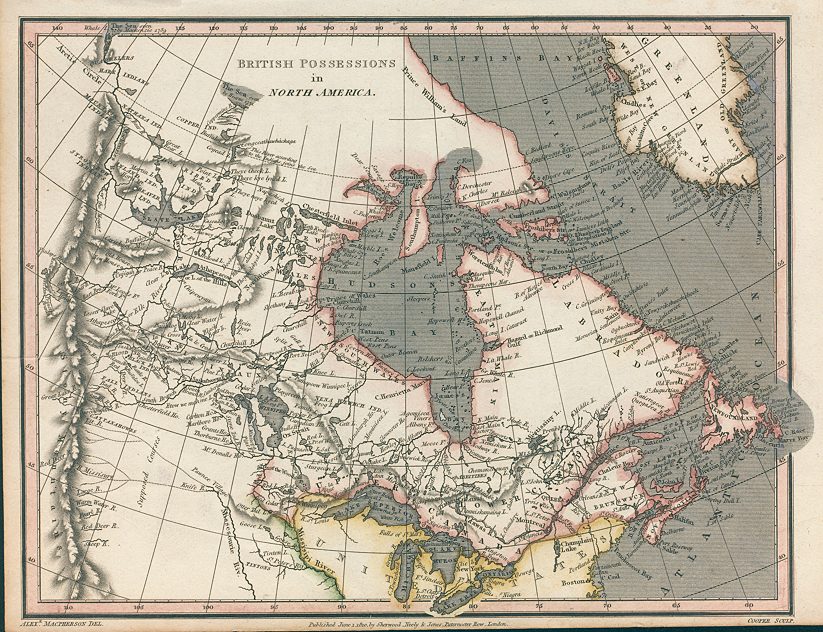
DEMOCRACY IN the Scandinavian countries, Belgium, Holland and Switzerland followed the pattern of the three large democracies. Everywhere during this period there was a trend toward constitutional government, elected law-making bodies, cabinet ministers with responsibility to the people, liberty, personal rights and voting rights for all men in the lower classes. In Canada, the most difficult problem was nationalism. At the time of the Civil War in the United States, Canada consisted of a number of British provinces, most of which were independent of each other. The oldest of these was the province of Quebec in the Saint Lawrence valley. …
Read More »
Industrial Revolution and Nationalism 1702 - 1906
360
IN DECEMBER of 1848, the French elected Louis-Napoleon Bonaparte as president of the Second French Republic. What he stood for was not very clear, but to most Frenchmen that did not seem important. He was the nephew of the great Napoleon and the very sound of his name stirred them like a battle-cry. Since the defeat of the first Napoleon in 1815, there had been little in French politics to capture the imagination. As the years passed, the French looked back on the Napoleonic era as the time of their greatest glory. The writer Victor Hugo wrote poems about Napoleon. …
Read More »
Industrial Revolution and Nationalism 1702 - 1906
489
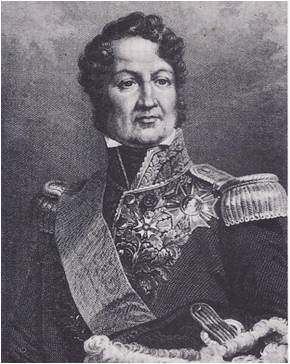
LOUIS PHILIPPE always spoke of himself humbly as the “citizen king.” Although he was dignified, friendly and tried to do things that would make him popular, his government could not satisfy the needs of the people. The reason was that only one out of every thirty Frenchmen had the right to vote. The Chamber of Deputies represented only the nobles and the rich upper crust of the middle class and often it did not even debate questions that were of importance to the great majority of the people. Many Frenchmen did not like the new king. The republicans were opposed …
Read More »
Industrial Revolution and Nationalism 1702 - 1906
289
AFTER THE fall of Napoleon, Louis XVIII came to the throne of France. Although his powers were limited, by following a middle-of-the-road policy he was able to rule peacefully until his death in 1824. His brother, Charles X, then became king and soon began using his influence to undo as much of the French Revolution as possible. He was able to have laws passed which required the government to pay large sums of money every year to the nobles whose land had been taken from them during the revolution. The Catholic Church was strengthened and once again priests began teaching …
Read More »