Industrial Revolution and Nationalism 1702 – 1906
INDUSTRIAL REVOLUTION EVENTS AND THE RISE OF NATIONALISM 1702 – 1848
1702 Newcomen invents the first practical steam engine, used to pump out mines.
1733 Kay’s fly shuttle is the first major improvement in weaving.
1769 Watt perfects his steam engine, which finds wide use in manufacturing.
1784 Cartwright invents a power loom which revolutionizes the production of textiles and helps the growth of the factory system.
1789 The United States adopts a constitution which gives greater power to the federal government was during the industrial revolution.
1793 Whitney’s cotton gin makes the raising of cotton profitable and the use of slaves spreads in the South.
1794 Federal troops put down the “Whiskey Rebellion” in Pennsylvania.
1798 The Federalists try to put down the Democrats and pass the Alien and Sedition Acts was an industrial revolution.
1801 The Federalists are defeated when Jefferson becomes President and repeals the Sedition Acts.
1806-1822 Revolts gain independence from Spain for most South American countries.
1807 Fulton develops the first practical steamboat, a big event in the industrial revolution
1814 Stephenson invents the first practical steam locomotive.
1823 The Monroe Doctrine warns Europe against intervening in the Latin American countries during the industrial revolution.
1825 The Decembrist revolt by young Russian army officers is easily suppressed by the tsar.
1829 Jackson becomes U.S. President and extends democracy.
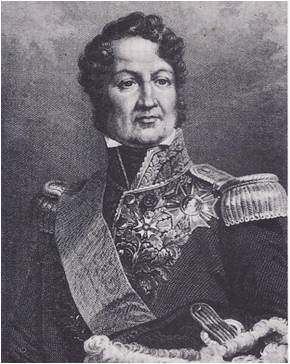
1830 A revolution in France overthrows Charles and brings Louis Philippe to the throne.
1831 Mazzini founds Young Italy, a revolutionary society.
1832 The Reform Act in England ends many abuses in the system of elections.
1833 England outlaws slavery in its colonies.
1847 The Ten Hour Act in England limits the hours of work for women and children.
1848 Louis Philippe flees when revolution breaks out in Paris; revolts in Austria, Germany and Italy are put down; Louis Napoleon becomes president of France.
EVENTS IN THE INDUSTRIAL REVOLUTION AND THE RISE OF NATIONALISM 1850 – 1906
1850 The Compromise of 1850 in the US. fails to do away with slavery as an issue between the North and the South.
1851 Louis Napoleon overturns the French Republic and names himself emperor.
1854 The Kansas-Nebraska act marks the break between North and South.
1857 The Dred Scott decision encourages the slaveowners.
1859 John Brown seizes an armory at Harpers Ferry and calls for a slave uprising; his hanging for treason enrages many in the North.
1860 Lincoln is elected President; South Carolina secedes from the Union, followed by the other Southern states.
1861 Formation of the kingdom of Italy; Alexander ends serfdom in Russia; the South fires on Fort Sumter, starting the Civil War; a Union defeat at Bull Run ends hopes for a quick victory.
1862 France invades Mexico and puts it under a puppet emperor.
1863 The tide turns when the South is defeated at Gettysburg and Vicksburg.
1864 Sherman begins his march from Atlanta to the sea.
1865 General Lee’s surrender at Appomattox ends the Civil War.
1866 Prussia easily defeats Austria, paving the way for German unification.
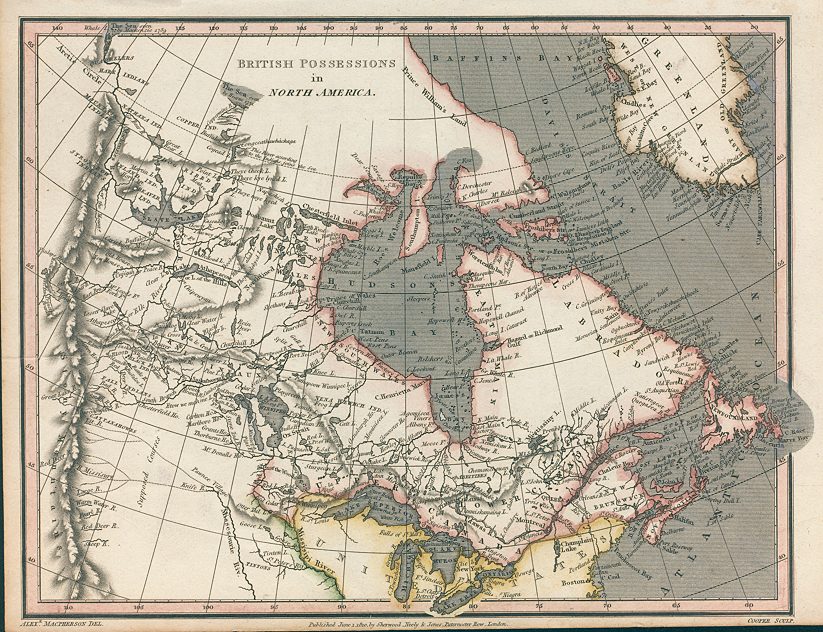
1867 Bismarck forms the North German Confederation, led by Prussia; the Austrian Empire becomes Austria-Hungary; England passes the British North America act, granting Canada dominion status.
1870 Prussia defeats France; Napoleon III abdicates and flees.
1871 The German Empire is formed with William of Prussia as emperor; Parisians revolt and form the Commune but are suppressed; the Third French Republic is formed.
1881 Revolutionaries assassinate Tsar Alexander of Russia.
1884 The Reform act in Great Britain extends the right to vote to all adult males.
1894 Dreyfus, a Jewish officer in the French army, is falsely accused and convicted of selling secrets.
1906 After widespread agitation, Dreyfus is freed.
Industrial Revolution and Nationalism 1702 - 1906
488
FEAR HUNG over the Yorkshire countryside in northern England. It was the spring of 1812, a spring the people would long remember. Hardly a night passed without some frightened countryman hearing the tramp of marching feet or the sound of gunfire. Sometimes shouts rang out and flames lit up the sky as some building was mysteriously set on fire. The most frightening sound of all was a gentle tapping on a cottage door in the dead of night. The man who heard it knew what it meant — a visit from members of a secret society of mill workers. Why …
Read More »
Industrial Revolution and Nationalism 1702 - 1906
551
IT TOOK the work of many inventors to bring about the changes of the Industrial Revolution, but the man recognized as the greatest inventor of the age was James Watt, whose name is linked with the steam engine. Actually the steam engine was invented and used in coal mines long before Watt was born. What he invented was a greatly improved type of steam engine which was practical enough to make steam power available to factories for the first time. As a result of his invention, many large power-driven factories soon sprang into being, some of them employing hundreds of …
Read More »
Industrial Revolution and Nationalism 1702 - 1906
2,572
THE ENGLISH regarded themselves as a free people — but they did not seem to believe in freedom for others. Many of them were engaged in the African slave trade. They shipped manufactured goods from England to America, carried slaves across the Atlantic to the West Indies and brought cargoes of sugar and cotton back to England. It was against the law to ship slaves home to England, yet there seemed to be no law to prevent ordinary Englishmen from being treated as slaves by their own countrymen. The government did nothing to protect them from being kidnapped and forced …
Read More »
Industrial Revolution and Nationalism 1702 - 1906
238
WHILE THE Industrial Revolution was transforming England and creating a new kind of society, the continent of Europe seemed to be going backward instead of forward. After Napoleon’s defeat in 1815, the monarchs and aristocrats brought back the principle of “legitimacy.” Legitimacy meant that only kings, aristocrats and the established church had the right to rule and that the people must obey them without question. The American and French revolutions had been fought to overthrow the principle of legitimacy. The idea behind these revolutions was that governments were created by the people. As the Declaration of Independence put it, all …
Read More »
Industrial Revolution and Nationalism 1702 - 1906
573
THE AMERICAN REVOLUTION created a republic of thirteen states, the first large republic in history. The nation was to be ruled, not by a single man or group of men, but by the people themselves. The whole world watched the American experiment. After all, fighting a revolution and setting up a republic was one thing; making it work was another. Would the people have enough intelligence and strength of will to obey laws they had made themselves? The monarchs and aristocrats of Europe smiled, sure that they knew the answer. Why, the very idea of a republic was a joke! …
Read More »
Industrial Revolution and Nationalism 1702 - 1906
713
ALTHOUGH THE Federalists continued as a party for some years after their defeat in 1801, they would never again be strong enough to threaten American democracy. Jefferson’s party remained the only strong party in the country during and after Jefferson’s two terms in office as President. Still many citizens were not satisfied. They felt that they should have the right to vote even though they were poor and did not own property. Some of them won the right to vote by moving westward, into one of the new western states. All the new states gave every white man the right …
Read More »
Industrial Revolution and Nationalism 1702 - 1906
415
BEFORE ELI Whitney invented the cotton gin, Southern plantation owners were beginning to wonder if they should not give up their slaves. There was a good market for cotton; the English were buying all the cotton they could get to make into cloth in their new factories. It took too long to separate raw cotton from the seed and raising cotton simply did not pay. If the plantation owners stopped raising cotton, they would really have no need for slaves. Then after the invention of the cotton gin, raising cotton began to pay — and pay well! Cotton became the …
Read More »
Industrial Revolution and Nationalism 1702 - 1906
342
AS THE Presidential elections of 1860 drew near, the Democratic party was as hopelessly divided as the nation. The Southern Democrats broke away from the party and nominated John C. Brekinridge of Kentucky as their candidate. He demanded that Congress pass laws protecting slavery in all the American territories, whether the people of the territories wanted slavery or not. Democrats from the northern and border states nominated Stephen A. Douglas, who promised to allow each new state in the West to decide the slavery question tor itself by popular vote. With the Democrats divided, the Republicans were almost certain to …
Read More »
Industrial Revolution and Nationalism 1702 - 1906
427
BY 1789, the first year of the French Revolution, England had traveled further along the road that would one day lead to democracy than had any other country in Europe. She had a law-making body called the Parliament which was more powerful than the king. She had a two-party system which gave the voters a choice of ideas as well as a choice of candidates. Members of the conservative party, who were called Tories, were chiefly nobles, wealthy landowners and people who strongly supported the Church of England. The Whigs, as members of the liberal party were called, consisted mainly …
Read More »
Industrial Revolution and Nationalism 1702 - 1906
289
AFTER THE fall of Napoleon, Louis XVIII came to the throne of France. Although his powers were limited, by following a middle-of-the-road policy he was able to rule peacefully until his death in 1824. His brother, Charles X, then became king and soon began using his influence to undo as much of the French Revolution as possible. He was able to have laws passed which required the government to pay large sums of money every year to the nobles whose land had been taken from them during the revolution. The Catholic Church was strengthened and once again priests began teaching …
Read More »
Industrial Revolution and Nationalism 1702 - 1906
489
LOUIS PHILIPPE always spoke of himself humbly as the “citizen king.” Although he was dignified, friendly and tried to do things that would make him popular, his government could not satisfy the needs of the people. The reason was that only one out of every thirty Frenchmen had the right to vote. The Chamber of Deputies represented only the nobles and the rich upper crust of the middle class and often it did not even debate questions that were of importance to the great majority of the people. Many Frenchmen did not like the new king. The republicans were opposed …
Read More »
Industrial Revolution and Nationalism 1702 - 1906
360
IN DECEMBER of 1848, the French elected Louis-Napoleon Bonaparte as president of the Second French Republic. What he stood for was not very clear, but to most Frenchmen that did not seem important. He was the nephew of the great Napoleon and the very sound of his name stirred them like a battle-cry. Since the defeat of the first Napoleon in 1815, there had been little in French politics to capture the imagination. As the years passed, the French looked back on the Napoleonic era as the time of their greatest glory. The writer Victor Hugo wrote poems about Napoleon. …
Read More »
Industrial Revolution and Nationalism 1702 - 1906
284
DEMOCRACY IN the Scandinavian countries, Belgium, Holland and Switzerland followed the pattern of the three large democracies. Everywhere during this period there was a trend toward constitutional government, elected law-making bodies, cabinet ministers with responsibility to the people, liberty, personal rights and voting rights for all men in the lower classes. In Canada, the most difficult problem was nationalism. At the time of the Civil War in the United States, Canada consisted of a number of British provinces, most of which were independent of each other. The oldest of these was the province of Quebec in the Saint Lawrence valley. …
Read More »
Industrial Revolution and Nationalism 1702 - 1906
398
DURING THE years when Napoleon and Spain were at war, Spain’s American colonies began their long fight to win independence from the mother country. Some of the earliest revolts were quickly defeated. The leaders were executed, but their deeds were remembered. In the early 1800’s, the leader of an unsuccessful revolt in Bolivia said, as he faced death: “I die; but the torch which I have lighted no one will be able to extinguish.” Francisco Miranda won fame for his unsuccessful revolt in Venezuela in 1811 and 1812. In Mexico, an old priest named Miguel Hidalgo, who wanted freedom for …
Read More »
Industrial Revolution and Nationalism 1702 - 1906
860
DESPITE THE development of democracy in some parts of the world, several of the most important nations established in the nineteenth century went in a different direction and among them was Germany. In the early part of the century, the Germans lived in a number of small states and two large ones Prussia and Austria. France was at least partly responsible for this, for it had long been her policy to keep the Germans weak and divided. Napoleon, too, had followed this policy when they came under his rule, but he had given some of them practical governments and a …
Read More »
Industrial Revolution and Nationalism 1702 - 1906
1,724
ITALY HAD long been divided into small states. All their governments, except that of the Kingdom of Sardinia, were unpopular and continued to rule largely because they were supported by Austria. Italians had a special reason for wanting freedom and unification. They could remember that once the Roman Empire had ruled the world and that later Italy had been the home of free republics. For three hundred years Italy had been invaded and plundered again and again. The last of the invaders was Austria and before the Italians could form one nation they would have to free themselves from the …
Read More »
Industrial Revolution and Nationalism 1702 - 1906
402
IN EUROPE and North America, nationalism generally led to the creation of larger states and the centralization of power. In the Austrian Empire, however, nationalism had the opposite effect; it led to the break-up of the empire and the creation of a large number of small states. The reason was that the Austrian Empire was made up of people of different nationalities, each with its own language and customs. Although the German-speaking Austrians were only about one-fifth of the total population, the ruling family, the Hapsburgs, was Austrian and Austrians held most of the important government positions. The German-speaking people …
Read More »
Industrial Revolution and Nationalism 1702 - 1906
489
THE MIDDLE EAST where Europe, Asia and Africa meet had long been known as one of the great crossroads of the world. Most of its people were Moslems, but among them were many Christians and Jews. They spoke languages as different as Arabic and Latin, Slavic and Turkish. They had little in common except that they were all subjects of the Ottoman sultan in Constantinople. The Ottoman Empire — so called after its early founder, Othman — was the last of several empires to rule over a large part of Islam. Unlike the earlier empires, it was dominated not by …
Read More »