Topics
- Early Civilizations 400,000 B.C – 648 B.C.
- Ancient Greece 3000 B.C. – 323 B.C.
- Ancient Rome 1000 B.C – 476 A.D.
- Early Christianity and Byzantium 6 B.C. – 1453 A.D.
- East in the Middle Ages 214 B.C. – 1644 A.D.
- West in the Middle Ages 481 A.D. – 1485 A.D.
- Renaissance 1277 A.D.- 1603 A.D.
- Reformation and Exploration 1415 A.D. – 1634 A.D.
- Age of Great Kings and Enlightenment 1469 A.D. – 1762 A.D.
- Age of Revolution 1765 A.D. – 1815 A.D.
- Industrial Revolution and Nationalism 1702 A.D. – 1906 A.D.
- Imperialism and World War 1 1841 A.D. – 1920 A.D.
- Totalitarianism and the Great Depression 1861 A.D. – 1938 A.D.
- World War 2 and its Aftermath 1934 A.D. – 1944 A.D.
- Modern Age 1946 A.D. – 1965 A.D.

The City of Caesar 80 B. C. – 44 B. C.
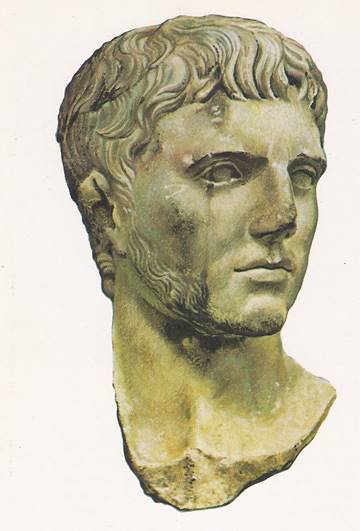
THE story of Rome in the years after Sulla’s death was the story of a partnership of power. It was
The Second Triumvirate 43 B. C. – 30 B. C.
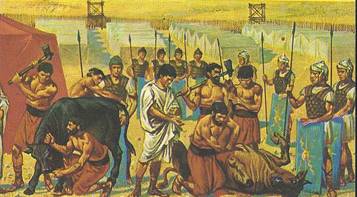
AS THE news of Caesar’s death spread through Rome, sorrow, anger and fear took hold of the city. On March
The City of Augustus 29 B. C. – A. D. 14
IN 29 B.C. the gates of war were closed. Rome was at peace. Senators and the people of the mob-men

The Emperor’s City A. D. 14 to A. D. 117
GREAT power had allowed Augustus to do great good for Rome and its provinces. The same power in the hands

The City of the World A. D. 117 – A. D. 138
ROME was no longer just a city — it was a world. In the reign of Hadrian, the blaring trumpets

The City Where Money Ruled A.D. 54 – A.D. 192
“IT is impossible to find peace and quiet in this city!” Seneca, in Nero’s Rome for a visit, was not

The End of the City A. D. 192 – A. D. 476
ON ROME’S first day, Romulus took a bronze plow and drew a magic circle around seven of the hills that

The First Palm Sunday A.D. 29
IT WAS the Sunday before Passover. The soft greens of spring and patches of wild flowers brightened the hills above
The Life of Jesus Christ (B. C. 6 to 29 A. D.)
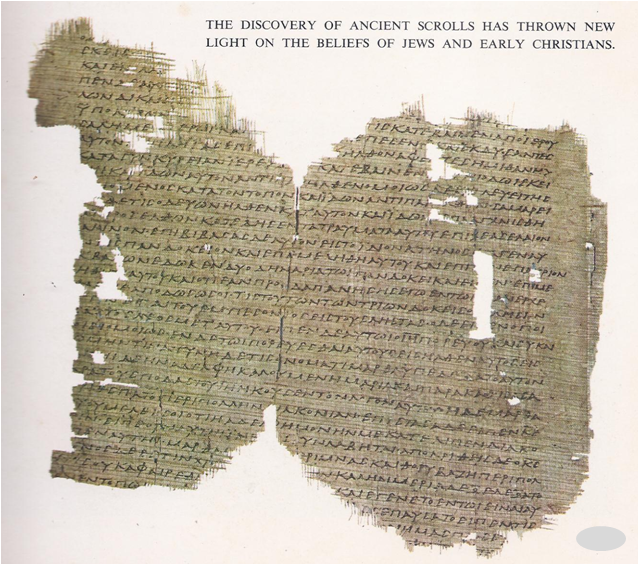
ALL THAT is known about Jesus of Nazareth appears in the first four books of the New Testament. These books,

The Resurrection and the Faithful Few 29 – 35 A. D.
JESUS lived and died a Jew. Like the ancient Hebrew teachers, he urged people to love God and to love

Paul of Tarsus 35 – 64 A. D.
THERE was one man who had more to do with the future of the Christian church than even the apostles

Rome and the Christian Church 64 -180 A. D.
TRUMPETS sounded the fire alarm in Rome on the night of July 18, in the year 64. It seemed that

The Growing Church 100 – 500 A. D.
AT THE beginning of the second century, the Christian Church was a loosely organized group of independent local churches. There

Great Church Fathers 340 – 430 A. D.
IT WAS about the middle of Lent in Antioch, reported Jerome, when “a deep-seated fever fell upon my weakened body,

The New Capital: Constantinople 306 – 532 A. D.
EMPEROR Constantine’s decision to build a new capital for the Roman Empire in the East did not come as a

The Great Justinian 532-565 A. D.
THE STREETS of Constantinople were thronged that Tuesday morning in January of 532. Public buildings were closed. Shops on the Street of

Byzantine Glory 610 – 1057 A. D.
The period from 610 to 717 was one of the darkest in Byzantine history. During that time, the edges of

The Church and the Empire 527-1261 A.D.
CHRISTIANITY, as the official religion of Byzantium‚ was under the control of the government. The emperor was the head of

The Fall of Byzantium 992 – 1453 A. D.
THE LONG struggle between the churches of the East and the West was only one of the many serious problems

Byzantium and Russia B. C. 400 – 1240 A. D.
THE BEGINNINGS of Russian history date back to the centuries when Byzantium was at the height of its glory. A

Arabia, Mother of Religions B. C. 3000 – 570 A. D
ARABIA, the big, boot-shaped peninsula off the northeast corner of Africa, is one of the hottest and driest regions on

Mohammed, Prophet of Allah A. D. 571 – 632
IN THE year 571, in Mecca, a boy was born in a humble household of the Quraysh. No one knows

The Holy Book of Allah A. D. 632-732
Mohammed sometimes dictated his thoughts to his secretary, Zayd, but when he spoke in public no one wrote down what

Cracks in the Wall of Islam A.D. 656-750
THE FIRST three caliphs — Abu Bakr, Omar and Othman — had all known — Mohammed well. In 656, Othman,

The Abbasids: Glory and Decay 750 -1258 A. D.
UNDER THE Omayyads, who ruled from 661 to 750, Islam had grown into a mighty empire. Arabic had become its