Topics
- Early Civilizations 400,000 B.C – 648 B.C.
- Ancient Greece 3000 B.C. – 323 B.C.
- Ancient Rome 1000 B.C – 476 A.D.
- Early Christianity and Byzantium 6 B.C. – 1453 A.D.
- East in the Middle Ages 214 B.C. – 1644 A.D.
- West in the Middle Ages 481 A.D. – 1485 A.D.
- Renaissance 1277 A.D.- 1603 A.D.
- Reformation and Exploration 1415 A.D. – 1634 A.D.
- Age of Great Kings and Enlightenment 1469 A.D. – 1762 A.D.
- Age of Revolution 1765 A.D. – 1815 A.D.
- Industrial Revolution and Nationalism 1702 A.D. – 1906 A.D.
- Imperialism and World War 1 1841 A.D. – 1920 A.D.
- Totalitarianism and the Great Depression 1861 A.D. – 1938 A.D.
- World War 2 and its Aftermath 1934 A.D. – 1944 A.D.
- Modern Age 1946 A.D. – 1965 A.D.

Rival Caliphs and Amirs in the West A.D. 750-1492
IN 750, when the first Abbasid caliph ordered a wholesale massacre of the family that had ruled before him, hardly

Christian Knights and Mongol Horsemen A. D. 099-1404
THROUGHOUT THE eleventh century, the divided Arab Empire became weaker in all its parts. Meanwhile, the Christian lands to the
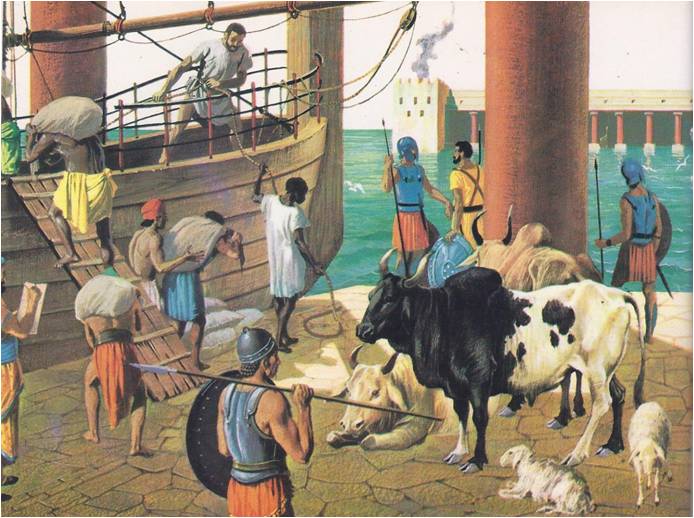
The City of Dido 264 B. C. – 129 B. C.
In 264 B. C., the people of Rome met in a noisy session of their assembly. The question before them

Seljuks and Mamelukes A.D. 950-1517
LIKE THEIR relatives the Mongols, the Turks began as wandering herdsmen in Central Asia. Their first contact with Islam was

The Ottomans, the Last Great Islamic Power A.D. 1299-1922
ACCORDING to their tradition, the Ottoman Turks once belonged to the same Central Asian tribe as the Seljuk Turks. Their

Islam the Civilizer A. D. 622-1406
IF Islam had never existed, the Christian countries of the world would probably be less advanced and certainly less varied,
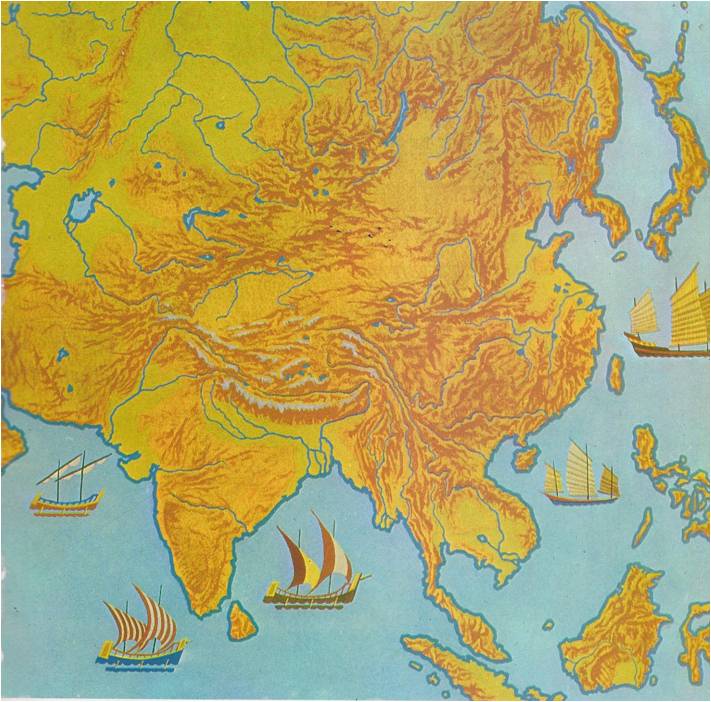
India: A Thousand Years of History A. D. 1 – 710
UNTIL 1947, when the Moslem state of Pakistan was carved out of its western and eastern corners, the entire triangle

The Coming of Islam A.D. 711 – 1526
IN 711‚ when other Moslem forces were invading distant Spain, Arab soldiers fought their way to the mouth of the

The Moguls Take Over A.D. 1504-1605
THE name “Mogul” comes from the Arabic word for “Mongol.” Babur, the founder of the Mogul dynasty, was probably descended

Akbar – The Height of Mogul Power A.D. 1605-1707
Akbar died and the hope of a peaceful, prosperous India died with him. None of his successors was nearly so

The Coming of the Europeans 1498 – 1707 A. D.
MORE than two centuries before Aurungzeb’s death and even before the coming of Babur, a new kind of invader had

China under the Han 206 B. C. – A. D. 221
THE vast East Asian land of China is named after its first family of emperors, the Ch’in. The Ch’in brought

The Six Dynasties: Turmoil and Change A.D. 220-589
THE three states into which China had split were soon split up themselves into even smaller divisions. For three and

The Sui and T’ang Restore the Empire A.D. 589-979
IN 589, a warlord named Sui Wen Ti conquered the last dynasty in the south and so became emperor of

The Sung Dynasty: Barbarians Threaten the Empire A. D. 960 – 1279
DURING THE turbulent Five Dynasties and Ten Kingdoms era, the main outside threat to China came, as usual, from the

The Coming of the Mongols A.D.1135-1368
IN 1135, Hangchow became the capital of the Southern Sung. Thereafter, the Sung kept an uneasy peace with their unwelcome

The Ming Dynasty Restores the Old Order A.D. 1368-1644
THE MEN who took over from the Mongols came to be known as Hung-wu, or “Vast Military Power.” Hung-wu named

Japan, the “Source of the Sun” 3000 B.C.-A.D. 400
THE Japanese islands — four large ones and many smaller ones — rise out of the Pacific Ocean to the

Becoming a Nation B.C. 660 – 587 A. D.
DRAWING ON nature for inspiration, the Japanese invented a number of gods and goddesses. They took it for granted that

Borrowing From China A. D. 587 – 838
PRINCE SHOTOKU was pleased to see his fellow aristocrats take to his chosen faith so enthusiastically. He wanted them to

Japan’s Change and Slow Growth A.D. 838-1150
BETWEEN THE ninth and twelfth centuries, Japan developed at a slower pace. It was as if the people knew that

The Warrior’s Take Over A. D. 1150 – 1336
BY THE middle of the twelfth century, Kyoto was no longer the real center of power in Japan. The old

Two and a Half Centuries of Unrest in Japan A.D. 1336-1573
Go-Daigo had found refuge in a place in the mountains called Yoshino. Japan now had two emperors, one in Kyoto

The End and the Beginning 378- 752
THE FIRST SIGN of the approaching Roman army was a thin column of dust. It rose like smoke from behind

Charles, Called the Great 771 – 814
IT WAS COLD INSIDE the great cathedral of St. Peter in Rome on Christmas day, in the year 800. The