B.C. - Ancient Empires
929
Many answers have been given to this question. To most people it is undoubtedly the record of past events, but a moment’s reflection will show that it is not a record of everything that has happened, whether the subject be the history of mankind as a whole, or of a nation, a city, a religion or institution. History, as it is recorded by chroniclers or presented by historians, inevitably involves the selection of certain events as being especially significant among all that happened within a specific area of the past. Selection also implies criteria of interpretation by which events are …
Read More »
B.C. - Ancient Empires
1,386
On the long road to civilization, the emergence of the national state –particularly in the context of the world in which we live — is of paramount importance in 3000 BC. Although other countries, in particular Mesopotamia, modern day Iraq, developed some of the arts of civilization earlier, Egypt was the first country to draw itself together with a national identity. The documents that survive from the period 3000 BC are few and therefore it is all the more remarkable that we know as much as we do about the unification of Upper and Lower Egypt. The invention of writing …
Read More »
B.C. - Ancient Empires
825
Early culture, between 3000 to 1750 BC, in Mesopotamia, the land between the rivers, another civilization is already far advanced. The ancient Egyptians can be said to have been the first ancient people to create a national state. Another ancient people, however, can claim priority over the Egyptians in the invention of some of the arts of civilization and in the development of urban life. These were the inhabitants of the early culture of ancient Mesopotamia, now called Iraq, the land through which the Tigris and Euphrates, the Twin Rivers, flow. In the southern part of this land the inhabitants …
Read More »
B.C. - Ancient Empires
1,367
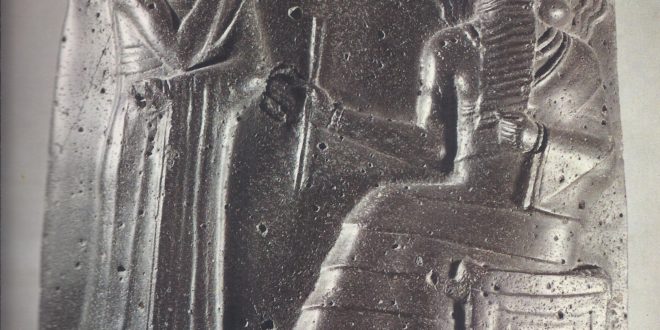
As the political state evolved, the problem of its administration evolved too. The territory ruled over by Hammurabi of Babylon was composed not simply of two adjacent areas with similar characteristics — as in Narmer’s Egypt — but of former independent states with very different traditions. Hammurabi had extended his territory by conquest, but as overlord he proved a conscientious ruler, dedicated to reform, and possibly the greatest tribute paid to him by his subjects was the comment, preserved in the chronicles of the country: “He established justice in the land.” Inscribed on a stone, the memorial of his justice …
Read More »
B.C. - Ancient Empires
702
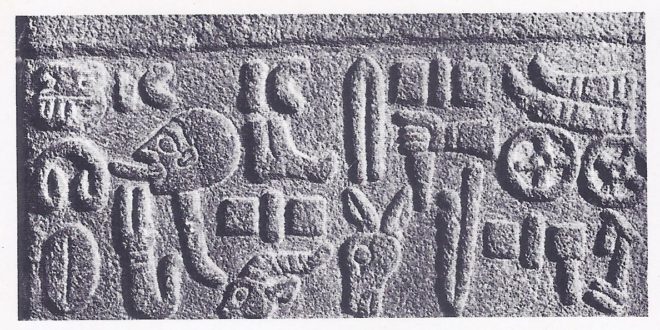
Hittites, a new power, arises in the Near East and Babylon is eclipsed. The Babylonian kings who followed Hammurabi were unable to hold the wide territories that he had won. New enemies challenged the supremacy of Babylon in Mesopotamia; the south broke away and a new kingdom came into being, the dynasty of the Sea Land, with its centre in the marshy region around the head of the Persian Gulf. The Babylonian army was more than once defeated by the Cassites, a mountain people from the region now known as Kurdistan. In the northwest, the Mari region regained independence. From …
Read More »
B.C. - Ancient Empires
698
By 2000 B.C. Crete, and its out post the island of Santorin, was the home of a remarkable, flourishing civilization. Known as Minoan, after the legendary King Minos, this civilization ranks with Mesopotamia and Egypt as one of the great centres of human development and progress. The Cretans were great seafarers and traders, they soon carried their civilization to other islands of the Aegean and to the Greek mainland. Archaeology has shown us that round about 1700 palaces in Knossos and Phaistos, the two chief towns of Crete, were destroyed by fire. They were rebuilt, however, and a bright new chapter …
Read More »
B.C. - Ancient Empires
997
We have seen that after the fall of Babylon in 1530 B. C. and the collapse of the Amorite kingdoms of the Euphrates area and North Syria, new peoples of different races entered the area and a new pattern of settlement developed. In the sixteenth and fifteenth centuries, the focus of our interest leaves the valley of the Two Rivers and is concentrated rather on Syria and Palestine and in particular on the new kingdoms which, with a population now partly Semitic (or “Canaanite,” the Biblical writers’ term) and partly Hurrian and often with an Indo-European aristocracy, were emerging as …
Read More »
B.C. - Ancient Empires
2,533
Aryan peoples from the North descended into India, radically affecting the native civilization, round about between 1750 to 1400 B.C. Some four thousand years ago in India, around the Indus Valley at Mohenjo-daro and farther north at Harappa, a civilization flourished rivaling those of Egypt and Mesopotamia. Streets were laid out at right angles, brick houses existed and an elaborate drainage system was installed. Writing had also been invented. Pottery was produced and there were certainly trading contacts with Mesopotamia. They were not simply invaders — though archaeology has produced evidence of fighting at Mohenjo-daro — but settlers. The Aryan …
Read More »
B.C. - Ancient Empires
456
Palestine was possessed by Egypt. In the year 1887 an Egyptian peasant, digging in the ruins of an ancient city on the banks of the Nile, came across some baked clay tablets impressed with cuneiform writing. In due course these tablets came into the hands of dealers and eventually their importance realized. The city had once been the capital of Egypt, for a brief time in the early fourteenth century B.C. and the tablets had come from the record office of the palace; they were letters, part of the files of the Foreign office, the correspondence of the potentates and …
Read More »
B.C. - Ancient Empires
577
The Hebrews were a nomadic people, some of whom settled in Egypt. They had their own God — Yahweh or Jehovah — and in this respect they differed little from the people around them. Yet the Israelites, led by Moses, were convinced that their God had promised them a land of their own and that they must leave Egypt and go to Palestine. Their God was essentially a god of battle and as such, invaluable as long as they were on the march. What would happen once they settled down? Inevitably there were attempts to worship local gods also, but …
Read More »
B.C. - Ancient Empires
420
Although the Exodus of the “children of Israel” from Egypt is rightly to be regarded as one of the greatest milestones in human history, in the context of the age in which they lived it must have seemed a very small, even trivial event. The Egyptians themselves would have regarded it as just one more tiresome episode in a constantly recurring situation. For centuries the bedouin tribesmen of Sinai and south Palestine had been permitted from time to time to bring their flocks to the fringes of the fertile Delta in search of pasture; whenever there was famine on the …
Read More »
B.C. - Ancient Empires
1,069
For several years the Sea Peoples from the north had been drawing closer and closer to Egypt. Syria and Libya fell to them and under the leadership of Mernera of Libya they began to prepare for an assault on Egypt itself. Merneptah, son of Ramses II, decided to take the initiative and attack first. His strategy was justfied by his resounding victory, but the Sea Peoples learned a lesson and devised a new tactic. They began to infiltrate the country in families and groups. Unknown to the Egyptian administration, a new onslaught of Sea Peoples was about to occur. Happily …
Read More »
B.C. - Ancient Empires
464
The vacuum left in Western Asia by the passage of the Sea Peoples was soon filled. New peoples infiltrated into the devastated areas and settled there. Some cities like Alalakh and Ugarit were never rebuilt; others rose again from their ashes. Tribes of Phrygians from Europe and their kin, the Mushki or Moschoi, divided the Anatolian plateau between them, but remnants of the Hittite peoples still continued to survive under their rule. Others, remaining outside the Phrygian orbit, retained their old traditions in the cities of southeastern Anatolia, the Taurus mountains and the plains of North Syria. Here they built …
Read More »
B.C. - Ancient Empires
442
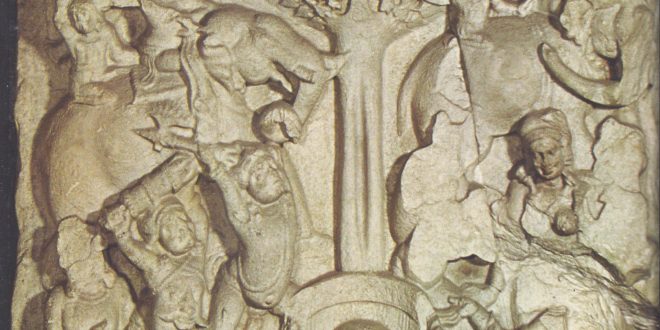
The Buddha as he came to be known, was a young man, Gautama, who followed the usual pursuits of someone of his class. He hunted, played games, feasted and had many friends. He also inspired great personal devotion, which was to stand him in good stead later. Growing discontented with his life and determined to find enlightenment, he renounced his wealth and left Kapilavastu in order to lead an ascetic life, but Gautama found that this kind of existence, practiced in isolation, did not satisfy him. He believed that compassion for his fellow men should find practical expression. He returned …
Read More »
B.C. - Ancient Empires
802
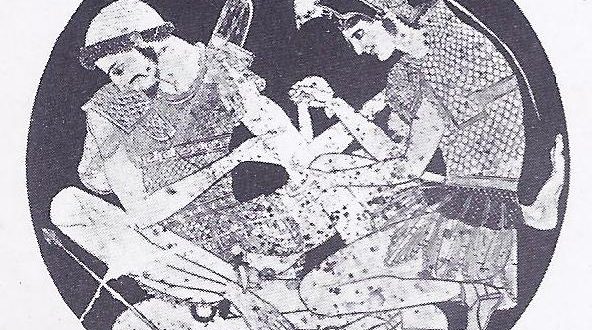
With the collapse of Crete, the Mediterranean focus moves to Greece. The destruction of Knossos in 1450 B.C. precipitated the end of a brilliant period in Cretan civilization. The focus of power, subsequently lay on the Greek mainland, in the great fortress-cities of Mycenae and Tiryns. These cities were remembered in Homeric legend, in the poems of the Iliad and the Odyssey. Confirmation as fact of what scholars had credited merely as legend was provided by the excavation of the site of Homer’s “Mycenae rich in gold” by the German merchant-turned-archaeologist, Heinrich Schliemann, in 1876. His discoveries there brought to …
Read More »
B.C. - Ancient Empires
633
A victorious Athens was thanks to Themistocles, whose farsighted proposal that the Athenians should fight the Persians at sea rather than land, paved the way for the defeat of King Xerxes. Greece was threatened by the advance of the Persians, but even in the face of such a threat, the Greeks were unable to unite as a nation. The basis of Greek life was the “polis” or city-state and the concept of nationhood was completely foreign to this system. Eventually, however, a Hellenic league of Greek cities was formed, led by Athens and Sparta. In 480 the Persians were defeated …
Read More »
B.C. - Ancient Empires
619
Classical Greece was a period during which the finest products of Greek civilization were achieved, has been defined as beginning after the victory over the Persians. Its end is marked by the appearance of Macedonian soldiers in Greece and the capitulation of the Greek cities to their semi-Greek conquerors from the north. This was the first stage in the vast program of military expansion under the Macedonian king, Alexander, which ended with his death. Macedonian expansion changed the whole face of the East: in the West events were less momentous, though in the same year as the battle of Salamis …
Read More »
B.C. - Ancient Empires
1,140
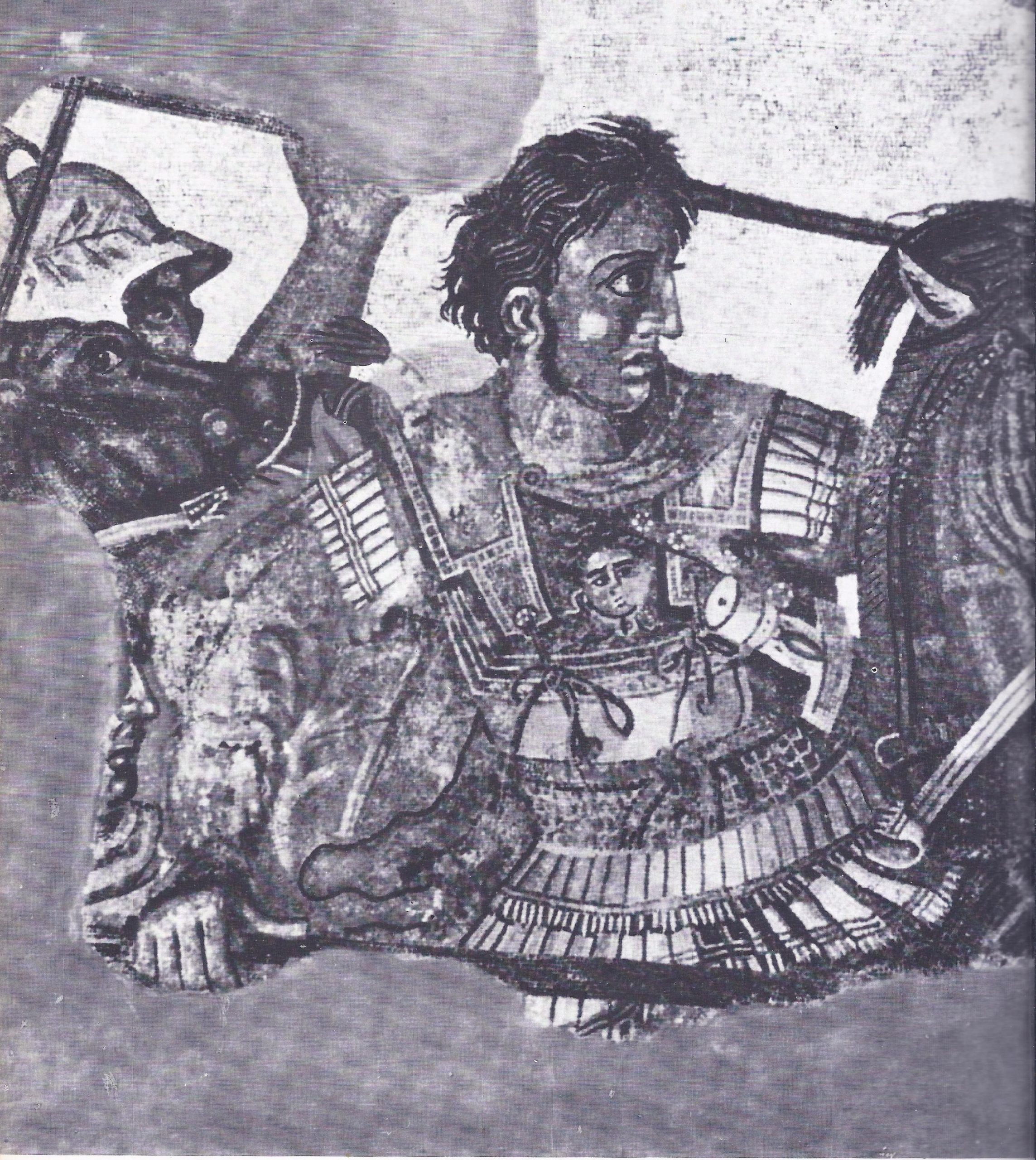
Alexander the Great succeeded to the throne upon the assassination of Philip of Macedonia, in northern Greece. This succession, both as king and as leader to the League of Corinth, was his twenty-year-old son Alexander. In addition to the throne, young Alexander inherited his father’s mission to take revenge on the Persians on their own ground. The fulfilling of that mission and its consequences constitute one of the most glittering pages in the history of the ancient world. Alexander may not have wanted to fuse the traditions of East and West in the empire he created, but he gave Hellenism …
Read More »
B.C. - Ancient Empires
493
The Chinese grew a new empire in the east, after the death of Alexander the Great. The empire of Cyrus and Xerxes was vast. The empire left by Alexander on his death was even larger and it did not outlast its founder. The most obvious reasons for its immediate breakup were the lack of overall homogeneity, the variety of individual characteristics and political traditions in the area it covered and the Virtual impossibility of establishing a strong central authority to hold it together. The theme of empire is a recurrent one throughout this volume: Xerxes, Alexander, Hannibal, Shih-huang-ti and lastly …
Read More »
B.C. - Ancient Empires
700
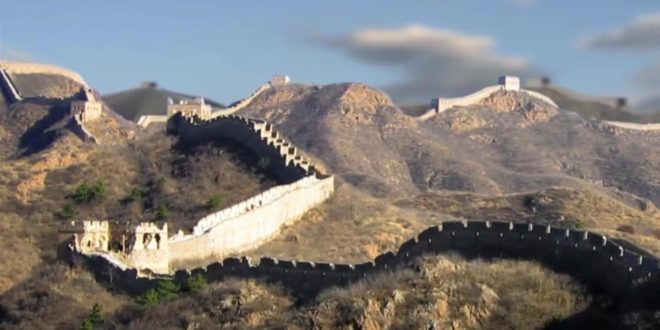
The Great Wall of China is probably the world’s most stupendous monument to human ingenuity, human industry and purportedly is the only one of man’s works that could be seen from the moon. Finding his country a patchwork of desperate states, Shih-huang-ti, the first Emperor of China, imposed upon it unity and coherence. Centralized administration demanded swift communications, so a vast network of roads and canals was thrown across the country. Weights and measures were standardized and the same writing script introduced throughout the land. Unity, however, was of little use without security and to protect his new empire from …
Read More »
B.C. - Ancient Empires
536
The Great Wall of China did not always keep the invader out, but it did help to establish the geographical identity of the Chinese empire. The exact delineation of the boundaries of the empire gave its administration a positive geographical basis. Rome, similarly, can be traced by the vicissitudes of her rise – from small city-state to mistress of the Mediterranean world and Europe. The ultimate extension of Rome’s power gave her a vast empire and as with the empire of Shih-huangti, her territory was given a positive limit by permanent frontiers. The Great Wall of China has a smaller …
Read More »
B.C. - Ancient Empires
499
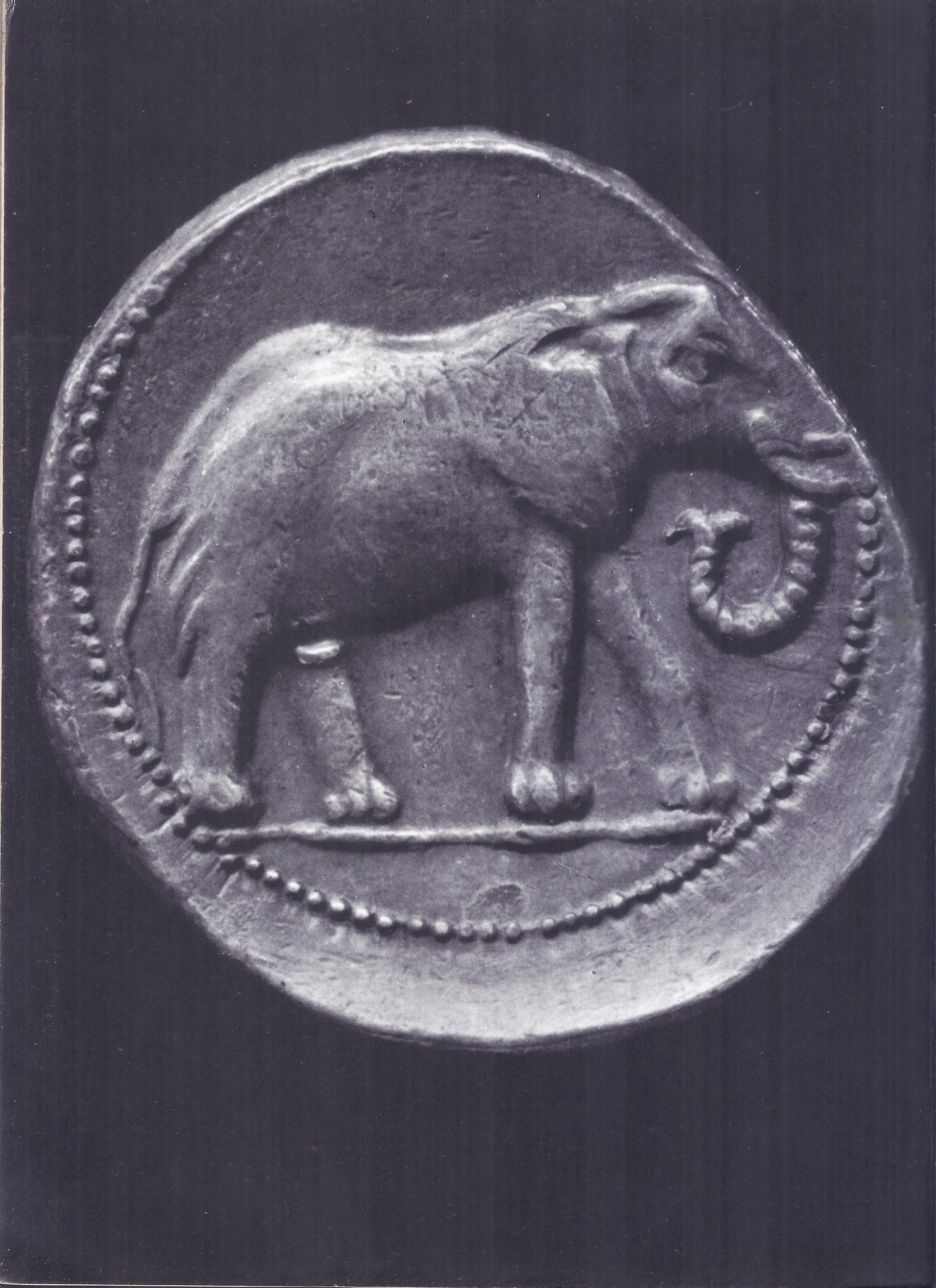
Hannibal alone, would have dared embark on such a venture. Two powers confronted each other to dispute mastery of the Mediterranean — Rome and Carthage. The Carthaginians were interested in colonial expansion as an extension of their trading interests, but were prepared to protect those interests if necessary. Rome’s view was essentially different. In fact, some Romans believed that the fates of the two nations were inextricably linked and that they were doomed to a duel to the death. Carthage’s sphere of influence extended over a great deal of the western Mediterranean, so Rome had to become a naval power …
Read More »
B.C. - Ancient Empires
666
Slaves could be imported to Italy when and where they were needed. The demand for labour was immediate and there was a much faster and more predictable solution to such a demand, than encouraging population growth or attracting the movement of free workers. The expansion of Carthage was brought to a grinding halt when the genius of the Roman general Scipio enabled the Romans to defeat the Carthaginians decisively on their own ground, at Zama in North Africa. Hannibal lived out the rest of his life in haunted exile, forever planning to challenge the might of Rome again, whether on …
Read More »
B.C. - Ancient Empires
871
As Rome’s armies marched victorious across the known world and her fleets patrolled the Mediterranean, hundreds and thousands of slaves were shipped back to Italy as cheap and expendable labour for the vast estates of the rich. Many worked in chain gangs under the lash of brutal taskmasters or were sent as shepherds to the milder parts of the country. Others were put into gladiatorial establishments, where a cruel and bloody death was an almost certain fate. In such conditions revolt seemed inevitable and after an unsuccessful attempt in Sicily in 135 B.C., a new revolt, under the leadership of …
Read More »
B.C. - Ancient Empires
326
The happy judgment of the historian Polybius on the strength of the Roman constitution, because of its mixture of popular, oligarchic and monarchical elements, might certainly appear as an optimistic theorization after the revolt of Spartacus. The Roman state had been shaken by a bitter and violent social disturbance that had only been resolved by two individuals whose power, though technically constitutional, was far too great for the Senate to feel comfortable. Crassus, the multimillionaire and Pompey, the popular general — had succeeded where the regularly appointed consuls had failed and the “extraordinary commands” with which they had been vested …
Read More »