
Age of Revolution 1765 A.D. – 1815 A.D.









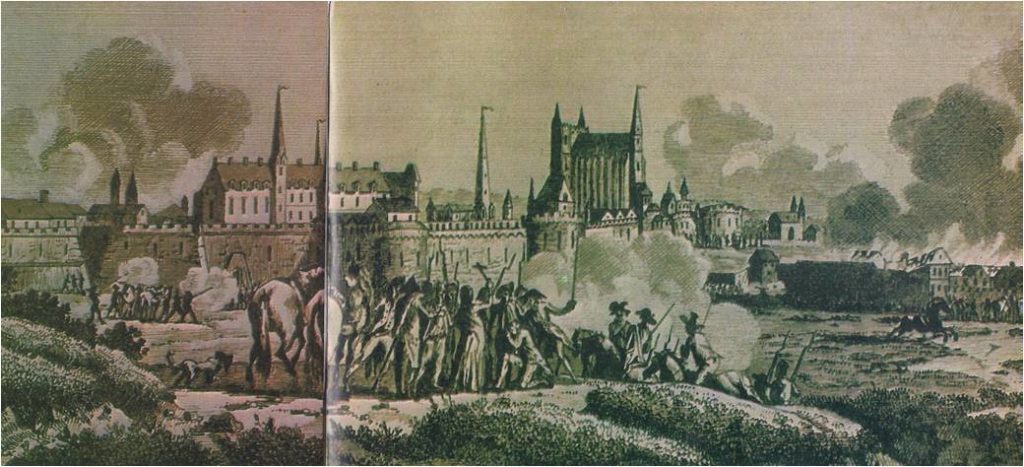


There had been few serious misunderstandings between the colonies and the mother country before the French and Indian War, but that was mainly because England had allowed the colonies to do pretty much as they pleased. They had been free to set up their own governments, make their own laws, have their own armed forces, print their own paper money and manage most of their local affairs as they saw fit.
England’s American colonies had enjoyed far more freedom and independence than had any of the colonies of France or Spain. Not that England planned it that way. She had merely neglected the colonies for well over a hundred years. At first she had neglected them because they were small and far away and did not seem very important. Later she had neglected them because she was busy fighting one war after another with her most serious rivals, France and Spain.
England had finally brought that struggle to an end with the great victory in the French and Indian War. It was the kind of victory she had been trying to win for seventy years. She won Florida from Spain and Canada and the wilderness east of the Mississippi from France. On the other side of the world, England had won French possessions in India as well. Her powerful navy ruled the seas and she was the strongest nation on earth.
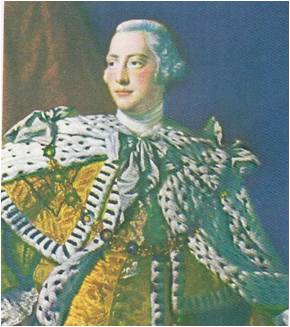
At the same time, the war had left England with many problems. She was deeply in debt, yet she had to support a large navy to protect her vast empire. To provide business for her many new factories, she had to find ways of increasing her trade with the colonies. England could no longer afford to neglect her American colonies. She had to tighten her grip on them and treat them in a businesslike way, so that their strength and wealth would be of greater benefit to her.
The war had brought about changes in the American colonies, too. It had left them with a large number of trained colonial soldiers with war experience. The peace treaty had removed the threat of French armies along their borders and they no longer had a strong need for British protection. They felt that they had at last reached the point where they could take care of themselves. They wanted more freedom, not less; fewer controls, not more. Thus England began tightening her grip at the very time the colonies were searching for ways to loosen some of their ties with the mother country.
England already had laws requiring the colonies to do most of their trading with the mother country. To discourage trade with other countries, high taxes had been placed on goods imported from foreign lands. These laws had never been strictly enforced and for many years the colonists had been able to avoid high import taxes by smuggling in whatever they wanted to buy from foreign countries. Smuggling had become a standard practice and many of the most respected businessmen in the colonies — men like John Hancock — had made their fortunes in this way.
Now, to enforce her trade laws and prevent smuggling, England encouraged her officers to use Writs of Assistance. The writs were papers which allowed British officials to enter ships, warehouses and other buildings in search of smuggled goods. A young Boston lawyer named James Otis won fame by carrying the fight against such writs to the courts. He pointed out in his speech to the jury that Writs of Assistance could be used to enter and search private homes. This denied the colonists one of their most precious rights as Englishmen, the right to live undisturbed in their own homes. Although Otis lost the case, he continued fighting for the rights of colonial Englishmen.
England’s enforcement of the trade laws brought heavy losses to John Hancock and thousands of other smugglers. Many of them had to give up smuggling altogether. Some became so bitter toward England that they joined radical groups and did what they could to encourage rebellion against the mother country.

