West Dominates the World (1763 – 1899 A. D.)
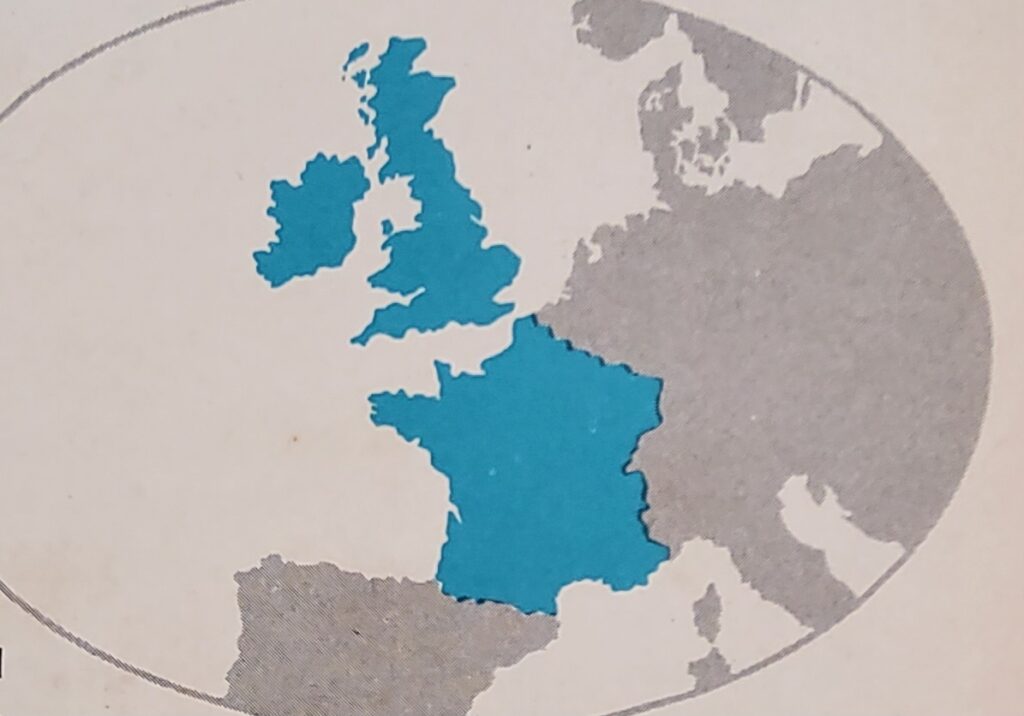
Democratic reform in England and France: British political reforms of the 1800, England’s relations with Ireland and the Bourbon rule in France, reviews developments in England and France between 1815 and 1900. In 1815 the Congress of Vienna wrote a peace treaty, which it was hoped, would prevent wars of conquest such as those engineered by Napoleon.
As England and France tackled their domestic problems, arose the opportunity to contrast two methods of attaining the same objective: the establishment of more rights and freedom for the individual. Following their tradition, the British relied upon action by Parliament after debate. The French, made their nation a laboratory of political experiment, with the result that changes in government were sometimes brought about by violence, rather than by reason.
Both countries inherited from the past, social classes and class-consciousness, that have continued to present day. History recounts the steps through which the middle class and then the labouring class, gained the right to vote — greater political democracy. At the same time, the movements for better wages and working conditions were resulting in greater economic democracy. By 1900, these movements were well advanced in England and France, in comparison with the political and economic progress in other European countries.
BRITISH POLITICAL REFORMS OF THE 1800’S
In 1815 the British enjoyed civil liberties, but were governed by aristocrats.
Since 1689, parliamentary government had been secure and steady. The Bill of Rights assured Englishmen of more civil liberties than were enjoyed by any other people in Europe. In spite of this progress, England was far from being a democracy. In those days, votes were openly bought and bribery was common. Voting was not a right; it was a privilege and a privilege reserved to property owners, to taxpayers and to members of the Anglican Church. In all of Great Britain and Ireland, only about five per cent of the adult males (and no women), were eligible to vote.
The government was controlled by the House of Lords, by wealthy landowners and by a few rich industrialists. The army, the navy, the Church and even the universities, were in good measure controlled by this small group of aristocrats.
This situation was due, in part, to the archaic representation in Parliament. The shift of population from country to city over the years, had left some sparsely settled country districts with representatives in Parliament, while mushrooming industrial cities like Leeds and Birmingham had no representatives at all. These sparsely settled areas that had representatives, were known as “rotten boroughs.” They were almost always owned and controlled by wealthy aristocrats, who selected the candidates for office and forced their tenants to vote for them.
City and farm workers suffered from low wages and bad living conditions.
Between 1770 and 1820, industry grew with amazing rapidity. Only factories could supply the military needs of the Napoleonic wars. Many farm workers moved to the cities to work in the factories, while many others joined the army and navy. Food became scarce because of the shortage of farmers. With the coming of peace in 1815, inflation set in and prices reached new heights.
England could have imported food, but wealthy landowners in Parliament knew that if this were done, prices would drop. This powerful group passed the Corn Laws, which imposed a high tariff on grain; therefore it was not practical to import it.
Living conditions in the cities were even worse than on the farms. Most of the cities were without sewage systems and were badly lit. Housing was inadequate. Almost no provision was made for educating the poor. At best, only one English child out of four received a moderate amount of education. During the early years of the Industrial Revolution, wages for factory workers were so low, that entire families worked from twelve to sixteen hours a day, in order to live. Even children of five and six were sometimes chained, half-naked, to machines and forced to work almost as slaves. Women were hitched like horses to carts in coal mines and on their hands and knees, pulled the heavy carts of coal to the surface of the mines. Paupers and orphans, dependent upon the Church, were “rented” to factory owners.
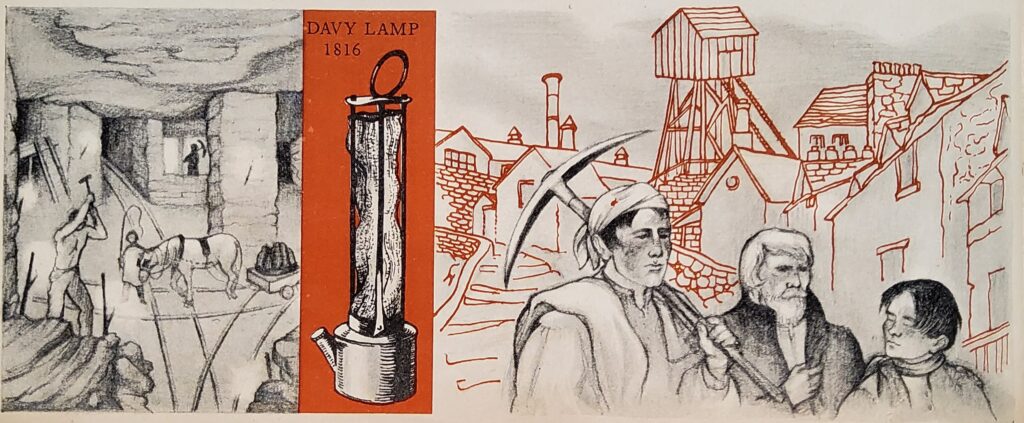
The Tory party introduced reforms in the penal laws which greatly modified their severity.
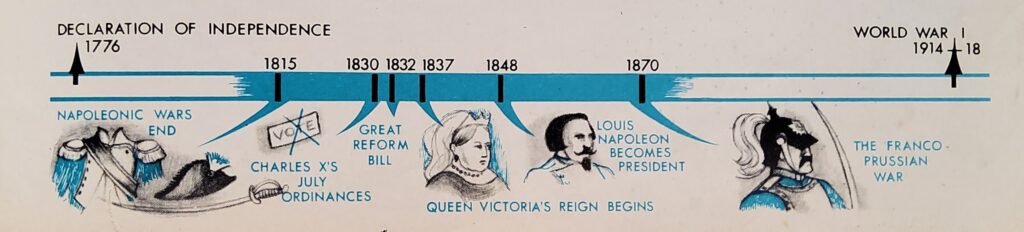
In 1823, many of the laws governing crime were made more humane and reasonable. Imprisonment was substituted for the death sentence, in more than a hundred offenses. This step was followed two years later with laws that permitted workingmen to form labour unions. In 1828, restrictions against dissenters were repealed; in 1829, the Catholic Emancipation Act permitted Roman Catholics to vote and to hold certain political offices. These were steps forward, but these reforms which had been made through the leadership of Sir Robert Peel, a leading statesman of the time, were considered inadequate and the Tories were swept from office.
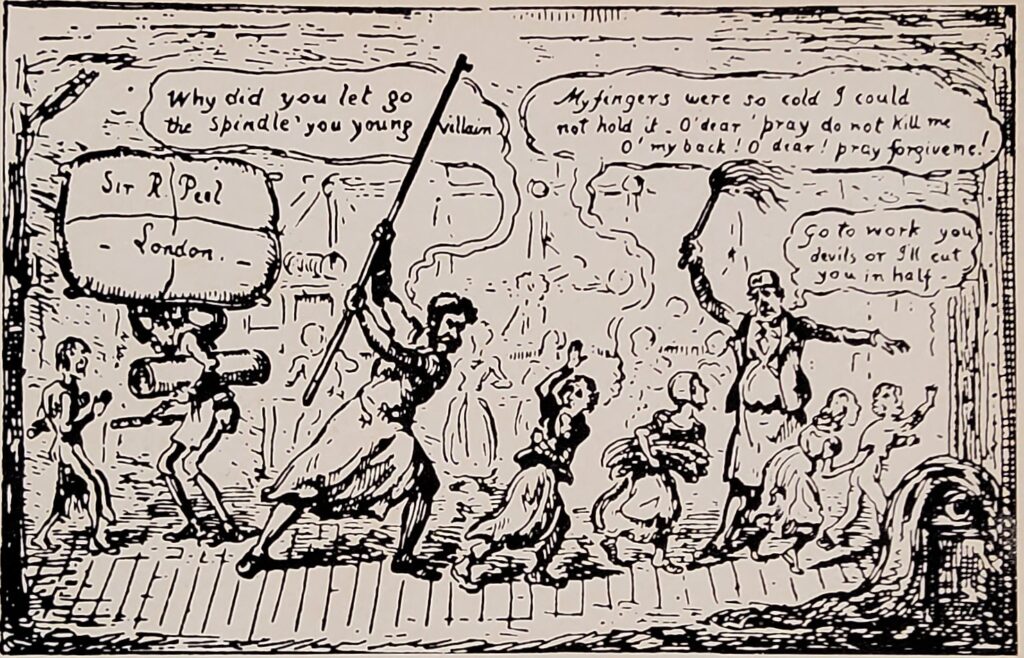
The new Whig government, headed by Earl Grey, offered the Great Reform Bill.
Although the bill was hotly discussed, as passed in 1832: (1) it abolished “rotten boroughs” and provided for a fairer distribution of seats in the House of Commons, to be based largely on population distribution; (2) permitted more representatives from Ireland and Scotland; (3) reduced property requirements for voting which increased the number of eligible voters from about 430,000 to 650,000. Roughly fifteen percent of the male adults in England, now had the right to vote. It also meant that many middle-class citizens had the vote, including factory owners and businessmen. The Whigs, who worked for these reforms, came to be called Liberals. Tories came to be thought of as the Conservatives.
Having won a series of reforms, the Liberal leaders kept steadily at work. In 1833, slavery was abolished in the overseas dominions of the British Empire. In 1834, laws for the relief of paupers were passed and in 1835, steps were taken to relieve the bad conditions in prisons. A Municipal Corporations Act, provided that cities be ruled by elected officials responsible to the taxpayers, instead of by small groups of men (“corporations”) who had gained their positions by inheritance or by appointment. At one session, Parliament voted the amazing amount of $150,000 for the support and advancement of public education!
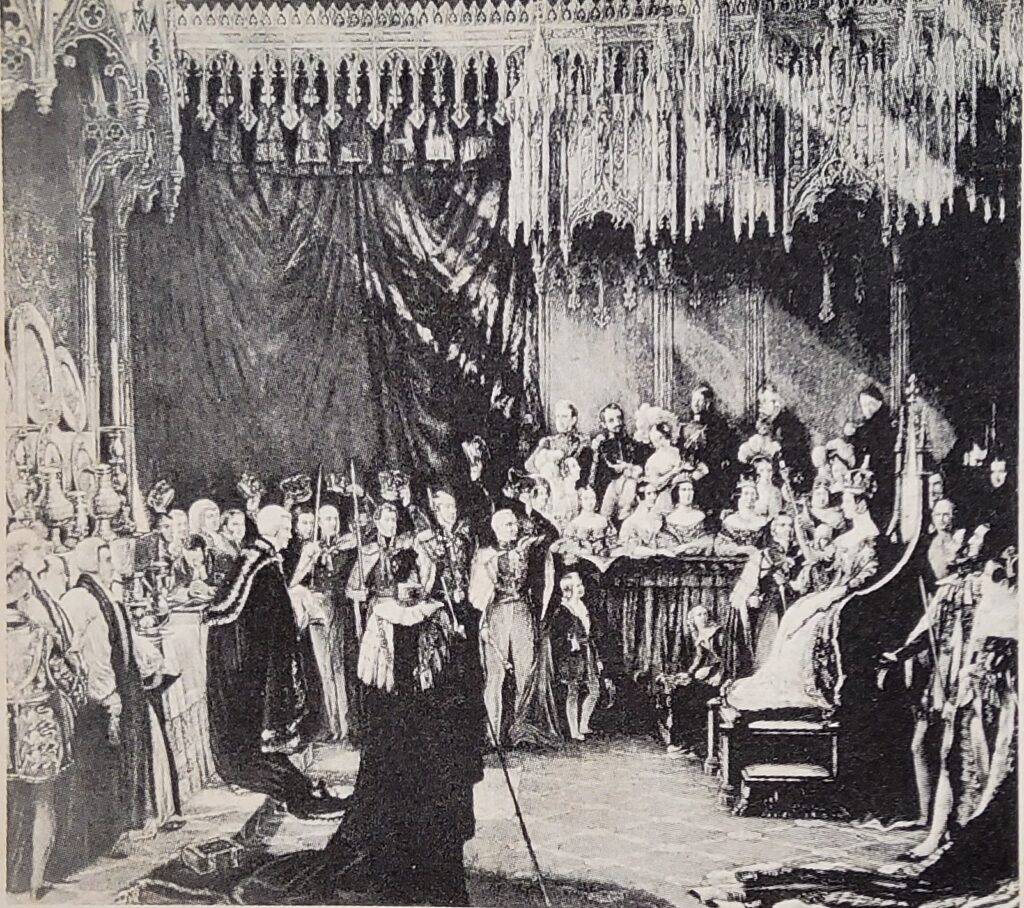
The orderly political revolution continued during the reign of Queen Victoria, who came to the throne in 1837.
Having the good fortune to be advised by such ministers as William Gladstone and Benjamin Disraeli, Queen Victoria witnessed much political, social and economic progress. By 1842, children under ten years of age and women, could not be employed in mines. An additional ten-hour law, forbade women and children to work more than ten hours daily, in textile miles. In 1846, Peel lowered living costs by getting the Corn Laws repealed.
Industrial workers and farmers, clamoured for suffrage. Finally, under Disraeli’s leadership, a bill was passed in 1867, that added about a million new voters, most of them factory workers. A bill passed under the leadership of Gladstone in 1884, gave the vote to some two million farm workers, but it was not until 1928, that women won the right to vote.
The Education Act of 1870, laid the foundation for a system of tax-supported schools. Ten years later, education for young children was made compulsory. These measures paid off by reducing illiteracy; from 24 to 1 per cent, in a period of thirty years.
These reforms made England one of the leading democracies in the world.
Her power and prestige led other nations to study her system and adopt such features as met their purposes. Today, the government is headed by a King who reigns but does not govern. The royal family is to Englishmen, a symbol of Britain’s long history and the unity of the British Commonwealth. The executive work of government, is carried on by the ministers who make up the Cabinet. The House of Lords has little power, so England is actually ruled by the House of Commons.
While making reforms at home, the British were building up the world’s greatest empire. Although they had gained much of the empire by 1800, it was after that date, that they extensively colonized Canada, Australia, New Zealand and vast portions of Africa. By 1877, Queen Victoria was enabled, through Disraeli’s influence, to add Empress of Indi,a to her titles and by 1900, governed about 400 million people and had colonies on every continent. She could truly say, “The sun never sets on the British flag.”
The British celebrated the sixtieth anniversary of Queen Victoria’s reign in 1897, with a “Diamond jubilee.” Kings, princes and diplomatic representatives from all over the world, came to honour the Queen and to review with her, a century of progress, industrial growth and territorial expansion. Everyone acknowledged that Britain had reached the heights of pride and power. Yet, surveying the Jubilee procession which extended six miles from Buckingham Palace to St. Paul’s Cathedral, Rudyard Kipling, sounded a note of caution in his famous “Recessional.” He warned the nation to be humble, despite its greater power. Did he anticipate that in less than two decades, the nation would be put to the test?
ENGLAND’S RELATIONS WITH IRELAND
Twelfth century onwards, the British sought complete control of Ireland.
The Irish had just as stoutly resisted that control. The Irish differed from the English in language, religion and general culture. For a long time, there was an unhappy relationship between rulers and ruled, because the English chose to ignore these differences.
The Anglican Church, misleadingly named the “Church of Ireland,” had been established in Catholic Ireland and was maintained by taxes exacted from the Irish. It was 1898 before Parliament disestablished the Irish Anglican Church — making it unnecessary for non-members to support the Church by paying tithes.
Through English invasions and conquests, much Irish land had come into the possession of absentee English landlords. Many of these wealthy men lived in London or Dublin and employed persons to supervise their holdings for them. High rents were demanded of their Irish tenants. When crops failed and tenants found it impossible to pay their rent, evictions followed and there was much suffering. This was especially true during the potato famine, of the late 1840s. Despite relief measures, many thousands of persons died of starvation; and hundreds of thousands migrated to the United States.
In 1879, under the leadership of Charles Stewart Parnell, the Irish formed a Land League which undertook to bring about reform. The League insisted upon the “three F’s”; fair rents, fixed tenure and free sale. Fair rents, would be based upon the value of the land; fixed tenure, would insure that tenants could not be evicted so long as they paid their rent; free sales, would include payment to a tenant, when he left a farm, for improvements he had made during his occupancy. Parliament passed an act in 1881, that granted these demands. Later acts, made it possible for Irish peasants to buy the land, which they had tilled as tenants.
Though concessions had been made, the Irish continued to long for home rule.
By the Act of Union in 1800, Parliament abolished the Irish legislature and permitted the Irish to send representatives to the Parliament in London. The representatives were to be Protestant. This situation was partly corrected by the Catholic Emancipation Act in 1829, which permitted Roman Catholics to sit in Parliament.
William Gladstone, prime minister and leader of the Liberal party, tried again and again to persuade Parliament to grant home rule to Ireland, but he was unsuccessful. By the time it was granted in 1914, the controversy had become so bitter, that the Irish held out for Ireland to be an independent nation.
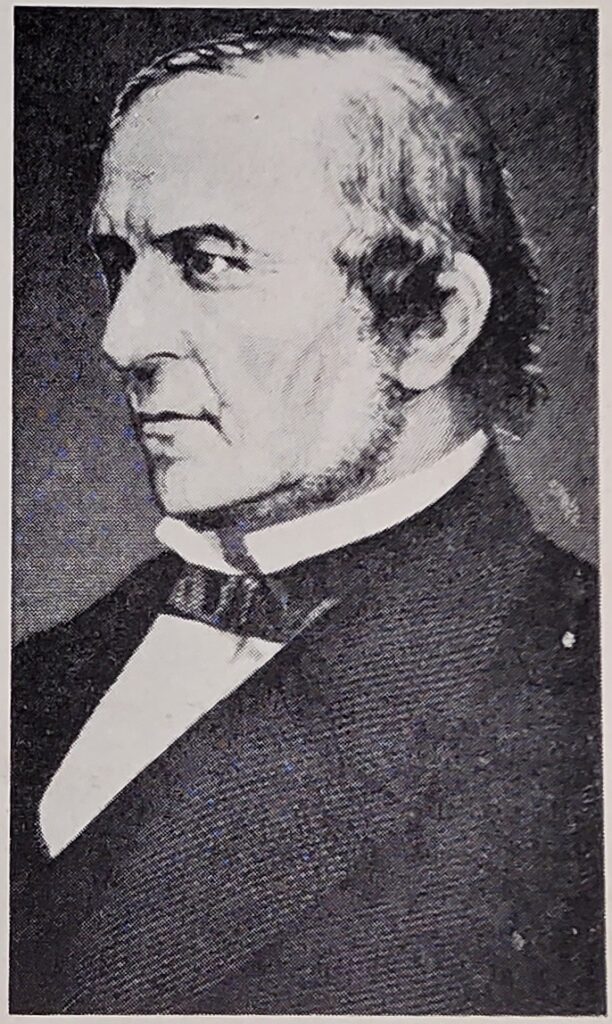
WILLIAM E. GLADSTONE — ( 1809 – 1898)
When William Gladstone entered Parliament in 1832, he was already known as a wealthy young man who had been a brilliant student at Oxtord. He was a Tory, a believer in the Anglican Church and the aristocratic system, then in effect in England. Before long, his viewpoint changed and he became a liberal, favouring political, economic and social reform.
Gladstone was a member of the English Parliament for more than sixty years and held the office of prime minister four times. He secured the passage of the Reform Bill of 1884, which gave the vote to farm workers and he worked for the improvement of conditions in Ireland. His great popularity among the people was the result of his fine character and complete sincerity. It was evident that his policies increased democratic principles and promoted the prosperity of the country. In the rough-and-tumble of parliamentary debate, he had to contend with the wit and withering sarcasm of the Conservative leader, Disraeli. The queen favoured the courtier, Disraeli, the voters generally favoured Gladstone.
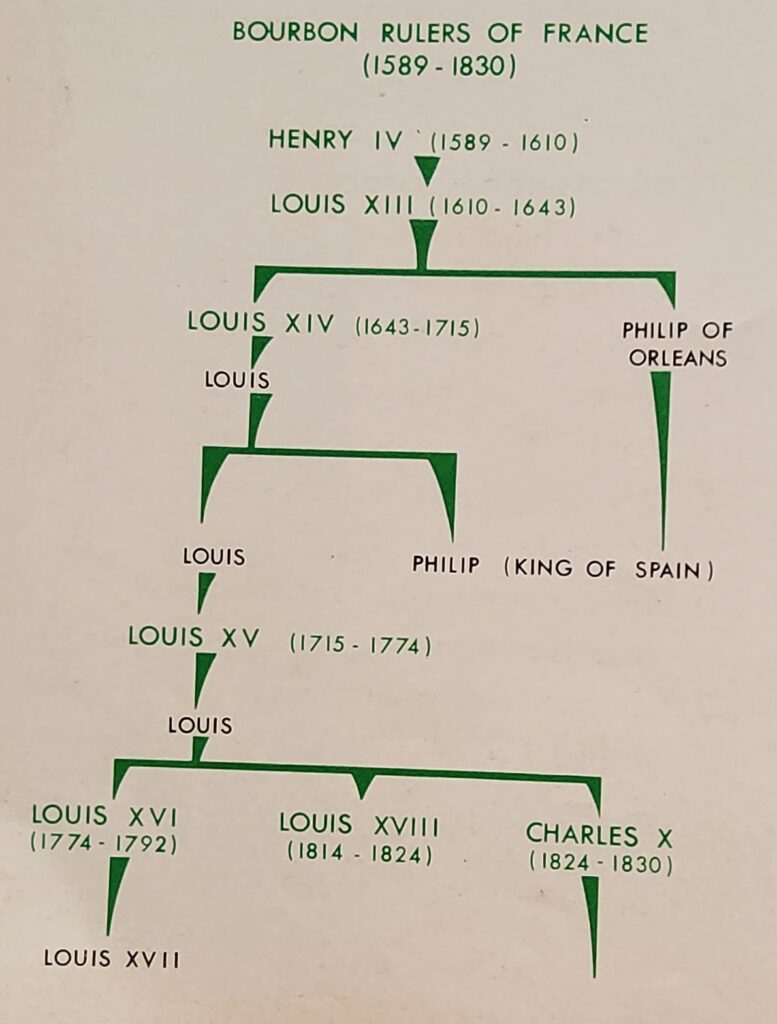
BOURBON RULE IN FRANCE
The French Revolution influenced French politics from 1789 to present day.
It divided the people into two groups: those who wished to return to the older way of life, as it had existed under Bourbon rule and those who wished to further the gains, won during the Revolution. The nobles wanted the old way of life and repossession of the family estates, that had been taken from them during the Revolution. The peasants, having gained the ownership of land during the Revolution, now regarded themselves as proprietors.
The Revolution had attacked the Roman Catholic Church. Marriage, charity and education, had been taken out of the hands of the Church and placed under the control of the civil government. In the years that followed the death of Napoleon, many French clergymen felt that the Church would prosper best under monarchy; therefore, the Church often opposed liberal changes.
On the other hand, members of the increasingly prosperous middle-class wanted some changes. As the Industrial Revolution spread into France, this group of people became wealthier, controlled more property, paid more taxes and demanded more voice in the government. The factory workers and labourers, also supported liberalism; indeed, in their support they were often radical. Many teachers, writers, artists and scientists, also favoured liberal changes.
Louis XVIII ruled cautiously and constitutionally.
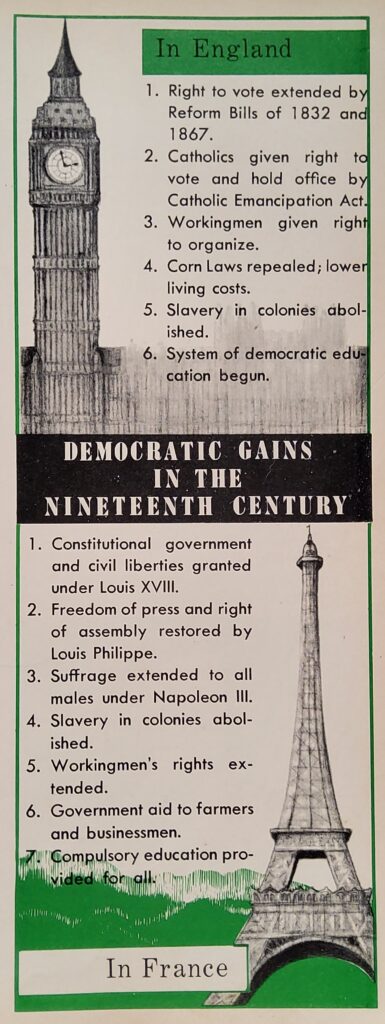
Louis XVIII’s reign began, when the House of Bourbon was restored after Napoleon’s defeat. Louis had spent nearly twenty years in exile after the execution of his brother Louis XVI and he had profited by the experience. He gave the people a charter, which made all citizens equal before the law, recognized freedom of religion, recognized freedom of the press and promised freedom, from arbitrary arrest. Under the charter, the king retained the power to dismiss public officials and to propose laws. The French parliament, consisting of a Chamber of Peers and a Chamber of Deputies, in theory represented the people. This plan of government would seem to show, that the French considered the British government of the time, a good model to follow.
Unlike his brother Louis XVIII, Charles X had not learned from experience and his folly led to his exile.
His program was planned to destroy all that had been gained since 1789. He abolished divorce, restored the control of public charities to the Church and made severe laws against those who attacked the Roman Catholic faith. In July of 1830, he published some royal decrees known as the “July Ordinances.” These decrees took from the middle-class the right to vote, ended freedom of the press, the right of assembly and dissolved the Chamber of Deputies, which incidentally, had not met since the last election of its members.
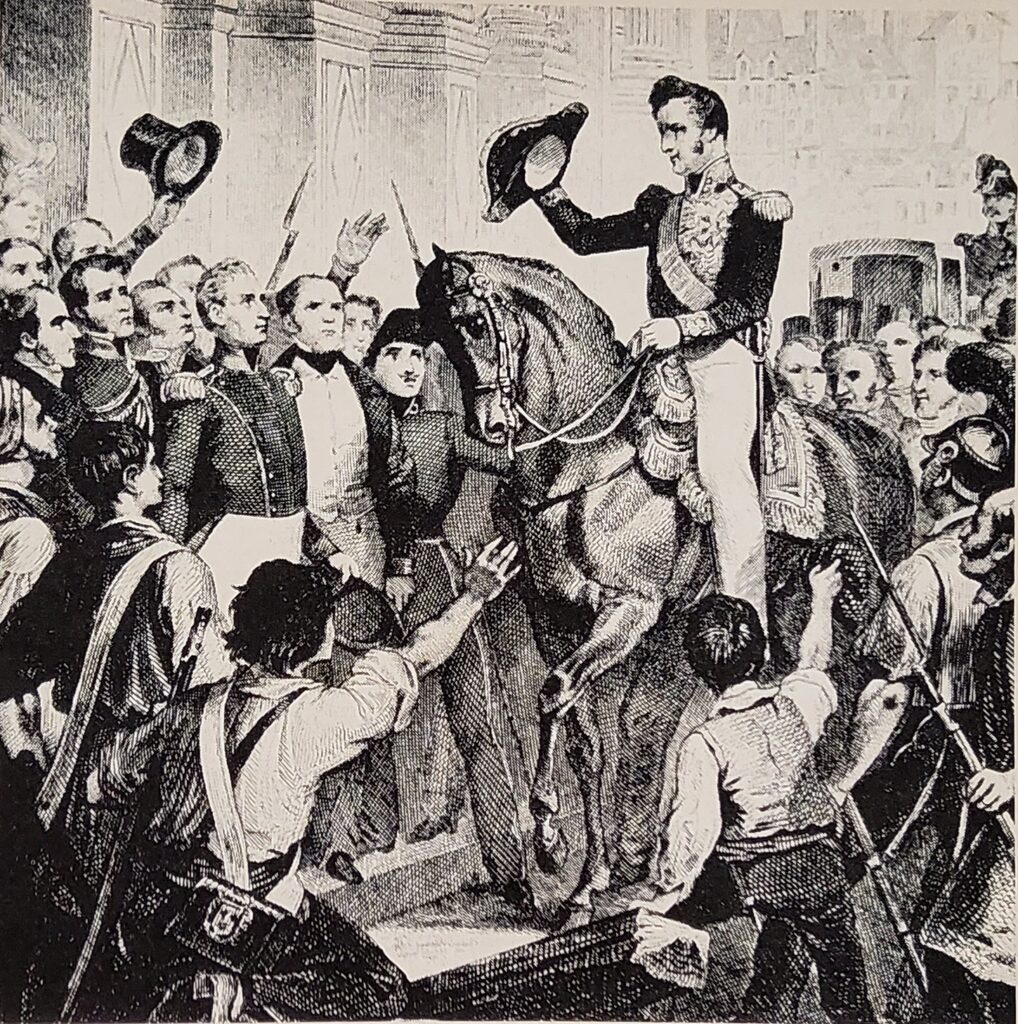
The king’s ordinances led to riots in Paris. The people flew the tricolor flag of the Revolution, sang the “Marseillaise,” made barricades in the streets and defied the government. Charles X fled to England for safety. The “July Revolution” succeeded in its immediate aims, but there was disagreement among the successful rebels. The working class wanted a democratic republic modelled after that of the United States. The wealthier middle-class, wanted a monarchy. They supported Louis Philippe, the Duke of Orléans, who though a Bourbon, favoured constitutional government. He became king in 1830.
Louis Philippe ruled as a “Citizen King” keeping to a minimum the glamour we associate with kings
He lived simply and walked the streets like a prosperous businessman or bourgeois. He lost no time in restoring freedom of the press and the right of assembly. The privilege of voting was given to about 200,000 men, all of them from the comparatively wealthy middle-class which had favoured him as king. In effect, this act substituted the middle-class, for the nobles of an earlier time.
The king aligned himself up with his industrial friends and began enforcing rules against the trade unions. The working classes were forced to labour long hours under bad conditions. They organized a workingman’s party to work toward government ownership of factories and distribution of profits “to each according to his need.”
Besides making the working class his enemy, the “bourgeois king” stirred the Bonapartists to opposition. Recalling the days when Napoleon and France were supreme in Europe, they set about reviving Napoleon’s reputation and the empire he had established. They accepted his nephew, Prince Louis Napoleon Bonaparte, as their leader.
Although peace and prosperity generally prevailed, opposition grew among those left out of the king’s scheme of things. Afraid of the opposition, he resorted to more repression and to bribing politicians with money or offices. Finally, when the government prohibited a banquet of liberals scheduled for Washington’s birthday, riots occurred and on February 23, 1848, some of the citizens were killed. In the days that followed, King Louis Philippe, like Charles X, fled for safety to England.
The events in France started a chain reaction. It is said that when the news reached Czar Nicholas I, he said, “Gentlemen, saddle your horses. The French are in revolution again.” Most of Europe was smouldering with discontent, over the system of Metternich and the Congress of Vienna. The many uprisings and changes that took place, established 1848 as a year of revolutions.
France tried a second empire under a lesser Napoleon.
It started out as the Second French Republic, after the revolution of 1848. The National Assembly of France, wrote a new constitution that provided for universal manhood suffrage, a president and a legislature. The National Assembly, also abolished Negro slavery in the French colonies and forbade the death sentence in political cases. It restored freedom of the press, then censored it and parliamentary debates, were kept out of the newspapers.
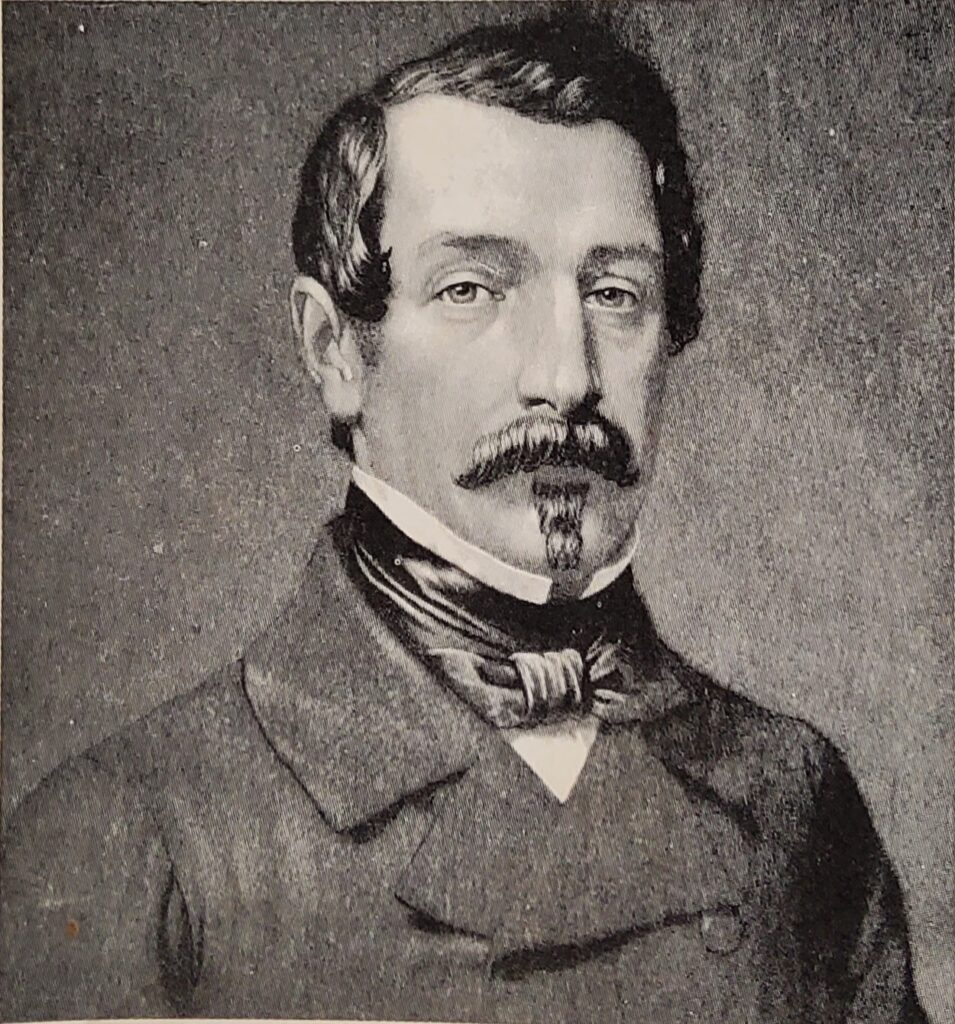
Prince Louis Napoleon Bonaparte, became the first president in 1848. He soon followed the example of his uncle and took the title of emperor, putting down all protests by force, when necessary. As Emperor Napoleon III, he ruled France from 1852 to 1870. The new constitution which he prepared, gave the people little power in the government, but he did his utmost to win support from all classes.
The Roman Catholic Church was given increased power over education. Napoleon appealed to the working class by new laws, which recognized workingmen’s trade unions and extended workman’s insurance to cover industrial accidents. While he provided many holidays, cheap bread and government sponsored public works to appeal to the poor people, he was also careful to promote business and capitalism. Capital accumulated, corporations and large industries were developed and within twenty years, industrial production had doubled. Miles of railroad were built and the Suez Canal was started.
Napoleon III’s foreign policy first brought glory, then disaster to France.
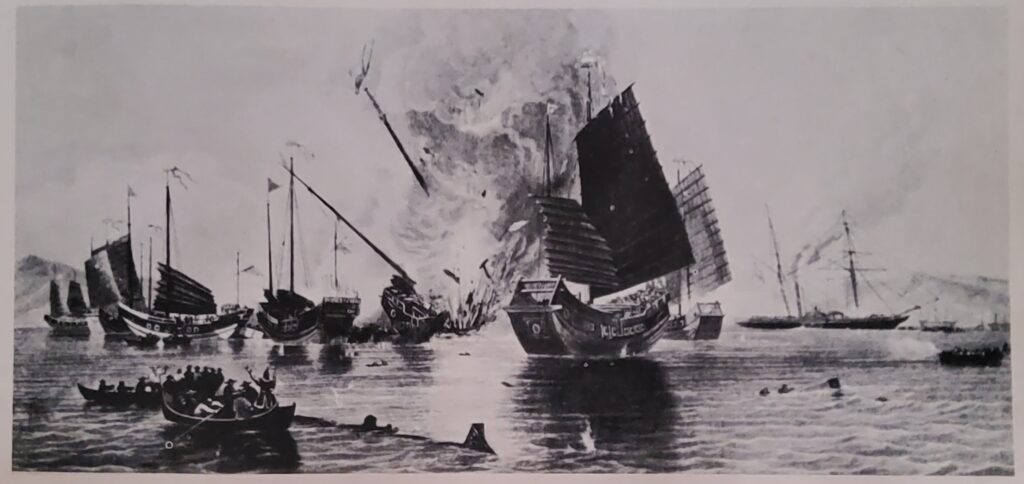
For ten years or more, Napoleon III’s foreign policy, seemed to be as successful as his domestic policy. Imitating as he did the policies of his uncle, his aim was to bring glory to France and to Louis Napoleon. Embarking France on a program of imperialism, he completed the annexation of Algeria in North Africa and encouraged the building of trading posts in Indo-China. He co-operated with England in waging a successful war with China, made trade agreements with the Chinese and laid the foundation for French control of Indo-China.
Another opportunity to add glory to his name came nearer home. In the Crimean War, the emperor sided with England against Russia. The treaty which ended the war in 1856, was negotiated at Paris, with the emperor enjoying the role of host to the assembled diplomats.
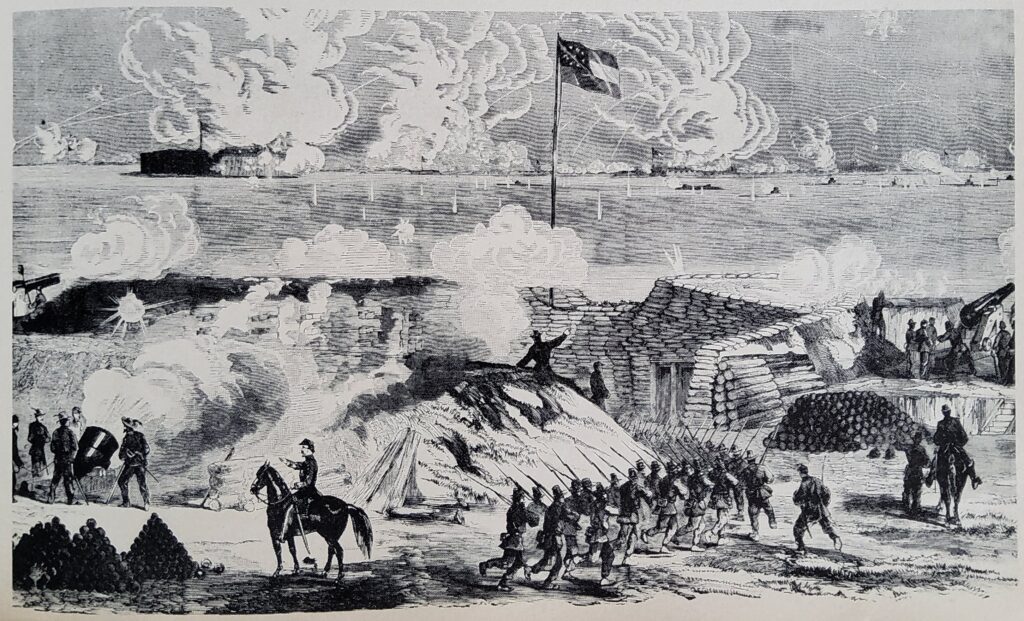
Among Napoleon III’s most unwise schemes, was an expensive attempt to gain a foothold in America. During the War Between the States, he took advantage of the preoccupation of the American government by setting up, as puppet ruler of Mexico, a member of the Hapsburg family named Maximilian. This action violated the Monroe Doctrine, but at the time the American government, was unable to take action. When the War between the States was ended, Napoleon III had to withdraw his troops from Mexico. Some forty-thousand troops had been involved in this adventure. The government of Maximilian speedily collapsed and Maximilian himself, was captured and shot by Mexican patriots.
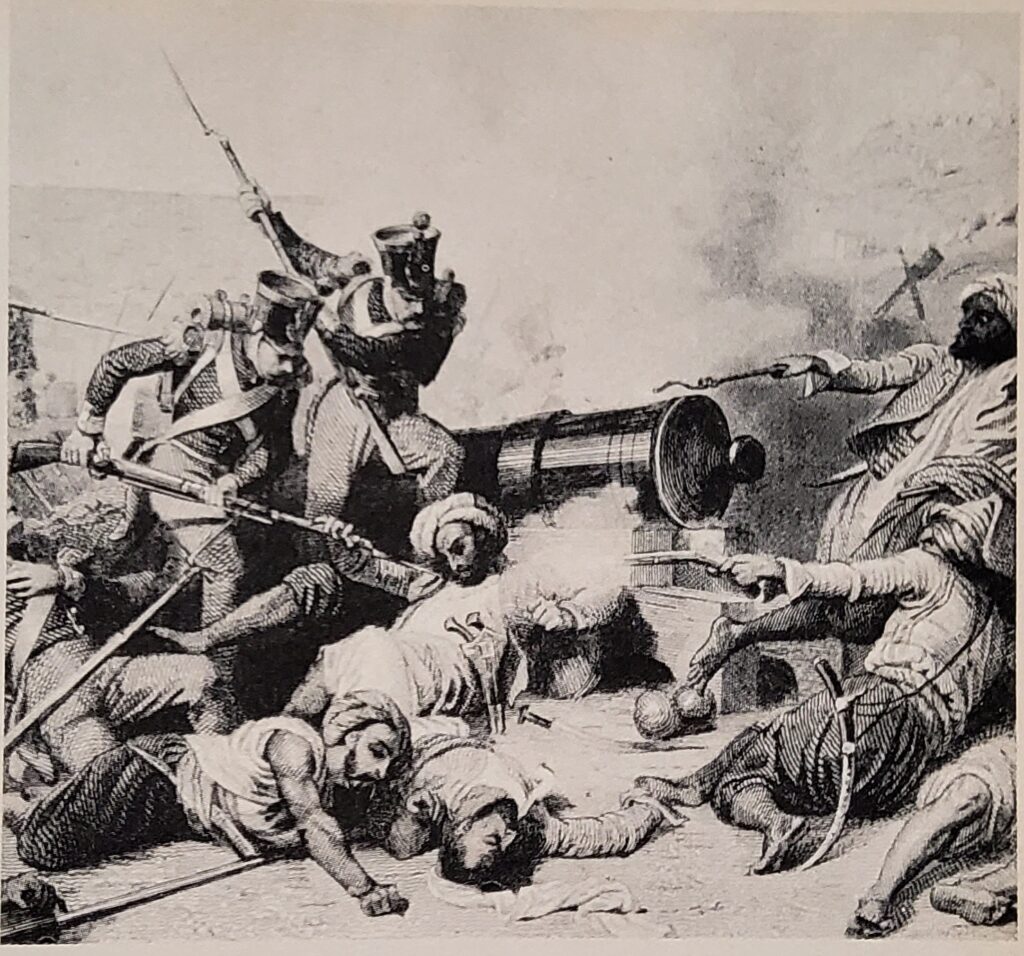
Finally, Napoleon III let Germany’s Bismarck hoodwink him into a situation, which brought on a war with Prussia. The Franco-Prussian War of 1870 was a brief one, but completely disastrous for the French. The emperor himself was taken prisoner and his empire collapsed. Though the city of Paris resisted valiantly, it was forced to surrender to the enemy. France was forced to give up Alsace and Lorraine and to pay Germany, what was then considered the large sum of about one billion dollars.
The Third Republic was born in a time of defeat, disgrace and dissension.
Loss of the war with Prussia had brought a new conflict inside France. The National Assembly, which elected to make peace with Germany, was largely royalist. It met at Versailles. Paris was in the hands of a Commune, made up chiefly of left-wing elements which had opposed peace with Germany. The Assembly favoured a return to monarchy, but the Commune wanted a republican form of government. Its members favoured government control of prices, wages and working conditions.
In 1871, the Parisians revolted and the Assembly ordered French troops to seize the city. Two months of violent civil war followed. The Commune was finally suppressed. By 1875, the disputes between monarchists and republicans in the National Assembly, had calmed down enough for that body to pass the laws, which became the constitution of the Third Republic. They provided for a president, to be elected by a joint session of the members of the Senate and the Chamber of Deputies, every seven years. Members of the Chamber of Deputies, were to be elected by nationwide popular vote; senators were to be elected by the voters in the various districts. The French followed the English, in establishing a cabinet of ministers to carry on the government.
The French devoted themselves to colonial and industrial expansion.
They made protectorates of Madagascar and Tunisia; they explored parts of the Congo. They expanded their holdings in Indo-China, until that possession was larger than the mother country. At home, the government paid off the indemnity imposed by Germany. Many miles of railroad were built and harbours were improved. Three international expositions were held in Paris, to promote science, invention and to encourage trade and commerce.
The government also attacked various social problems. For example, it established a system of compulsory educaton for all elementary children and placed it in the hands of the civil authorities. Between 1890 and 1900, the Parliament voted to reduce the working day to ten hours. It regulated the employment of children and of women. Laws were passed to safeguard miners. Other laws provided free medical services for workingmen and their families.
By 1900, the majority of the French people had a controlling voice in the government of France. With Englishmen and Americans, they shared the enjoyment of civil liberties. These liberties in France had come as a result of the Revolution of 1789 and had been attended by intermittent disorders for almost a century. Nonetheless, by 1900, France was a democracy as well as a leading power on the continent of Europe. Her overseas dominions were second only to those of Great Britain. Frenchmen regarded their nation as Europe’s greatest and their culture as the world’s best.
LINKING THE PAST AND THE PRESENT
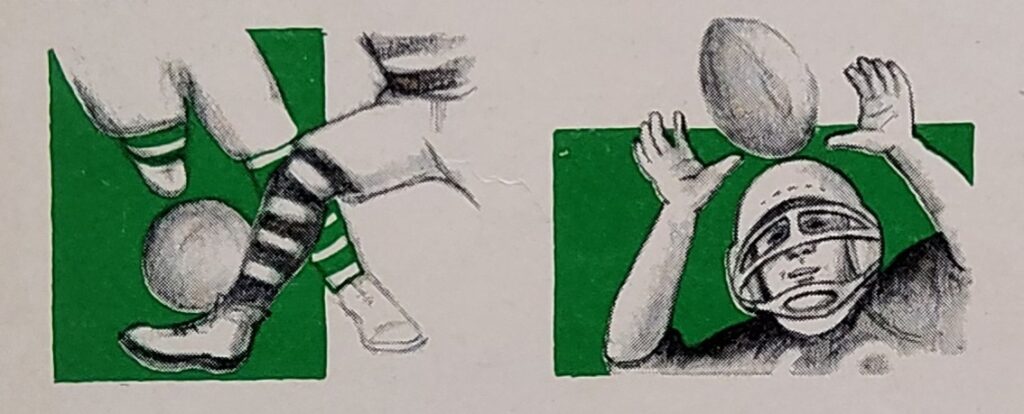
In 1823, a game of football was in progress on the playing field of the old public school at Rugby. All at once, something happened that startled everyone. Most Englishmen follow the rules in whatever they do. In this situation, the rules said that the ball should be kicked toward the goal, but with what has been called a “fine disregard for the rules,” a boy named Ellis carried the ball.
This startling innovation became popular, and the new game — renamed “football” — was brought to the United States. Within fifty years after its invention “traditional rivalries” had arisen between American colleges, which provide millions with football thrills each colourful autumn.