West Dominates the World (1763 – 1899 A. D.)
Orient and Occident: India, “Pearl” of the British, the partition of China and the Westernization of Japan. China, Japan and India developed a distinctive culture. They were proud of their achievements and were satisfied to remain far removed from the developments in the west. Therefore, it is not strange that the Orient resisted the forceful penetration of their cultures by Western influences, nor that they resented the superior attitude of Occidentals.
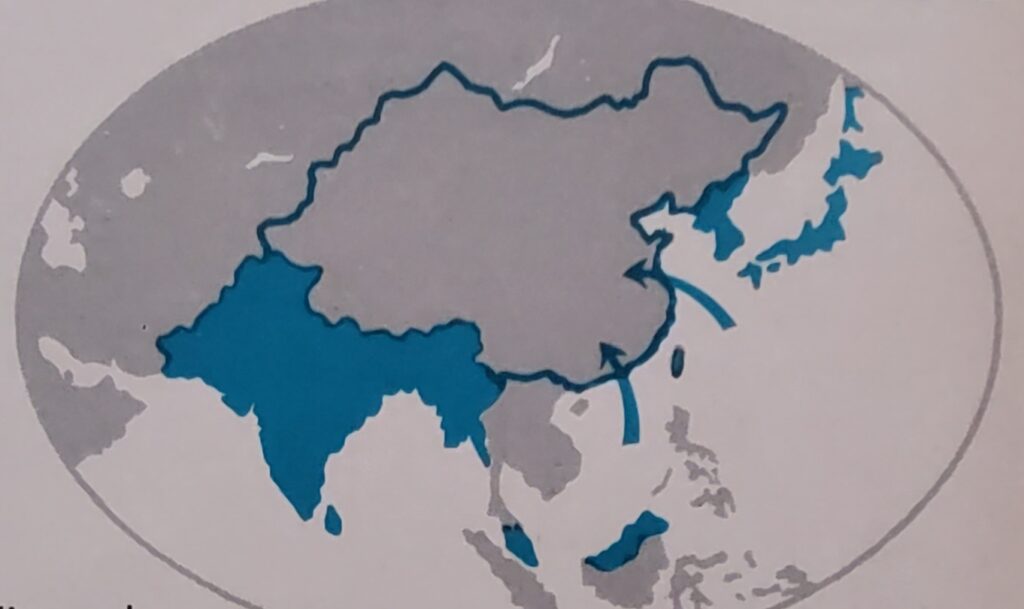
It is important to observe the different ways in which each country reacted to Western influences. The philosophy of each region, determined what aspects of the West would be readily accepted and what would be rejected. Asia was not static politically. Rulers changed, policies changed and as they changed, the attitude of a whole people toward the West changed: now favourable, now unfavourble. Historians have given more thought to Asian History now in the recent past, but still merely skimming the surface of that vast continent’s experiences. Asia hasn’t been given the detailed exacting attention, that the West have given their own history; one major theme emerges, which is the penetration of Western influences in India, China and Japan.
INDIA, “PEARL” OF THE BRITISH EMPIRE
The Portuguese opened India to European influences.
After his long trip around Africa and across the Indian Ocean, da Gama reached India in 1498. The eastward thrust of the Portuguese, was mainly directed at the fabulous Moluccas or Spice Islands. However, the Portuguese established a trading post at Goa in 1510.
The Portuguese dealt with the strong Mogul Empire which had recently been established by Baber, a descendant of Genghis Khan and Tamerlane. This Moslem Empire was ruled from 1556 to 1605, by the great administrator Akbar, who extended its territory and sought to extend toleration to the various religions of the peninsula.
The Dutch, Spanish, French and English, followed the Portuguese into Asia for trading purposes. Western influences emanating from the European trading posts, had their effect upon the Indians; and Mogul power sharply declined. The decline was sped-up by a fanatical Moslem ruler who closed Hindu schools, destroyed Hindu temples and waged war on Hindu princes, in his efforts to make all of India Moslem. Within fifty years after he died, the Hindu states had broken away from the Moguls and the Mogul Empire had crumbled.
Mogul political control In India was replaced by British control after 1763.
During the eighteenth century, English and French trading companies fought for trade supremacy in India. Between 1756 and 1763, France and England fought for political control of India, as part of the Seven Years War. (This was the French and Indian War in North America).
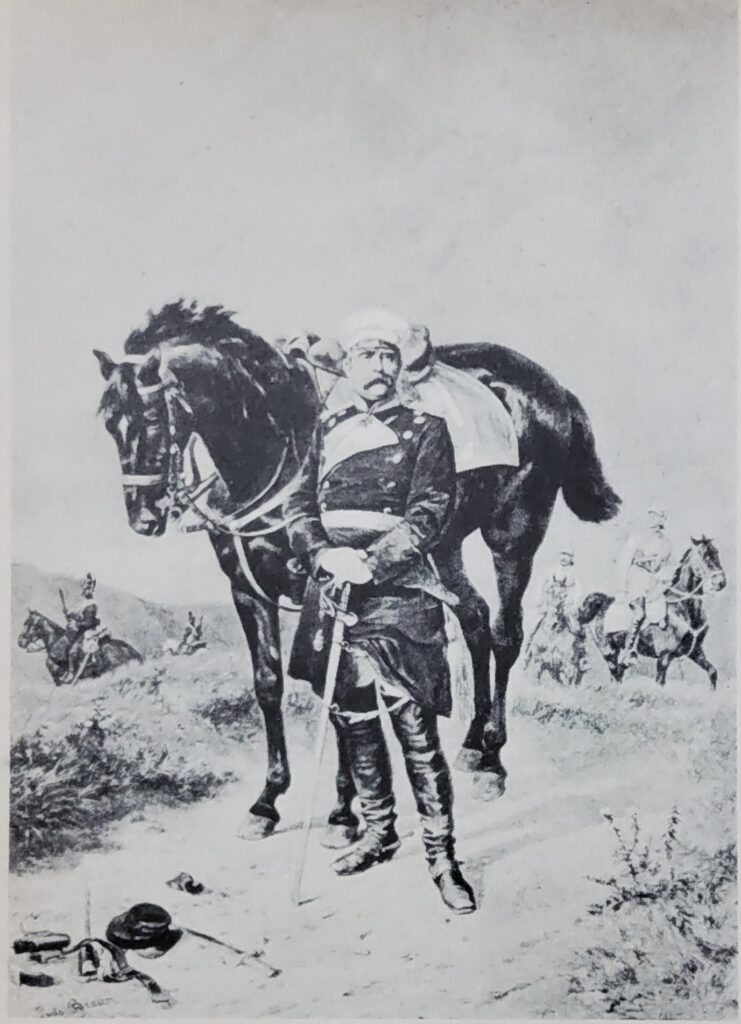
The ultimate success of the English in India was largely due to Robert Clive, a young man of 25 in the military service of the East India Company. Clive enlisted and trained a force of natives, called by the English as sepoys. In 1757, Clive learned that the Mogul viceroy in Bengal, had thrown 146 English prisoners into a small cell in Calcutta, where most of them had suffocated. To avenge the outrage, Clive hurried to the “Black Hole of Calcutta” and took Calcutta from the viceroy. Through this act and the batties he fought, Clive began the conquest of India and after the war, was made Baron Clive of Plassey.
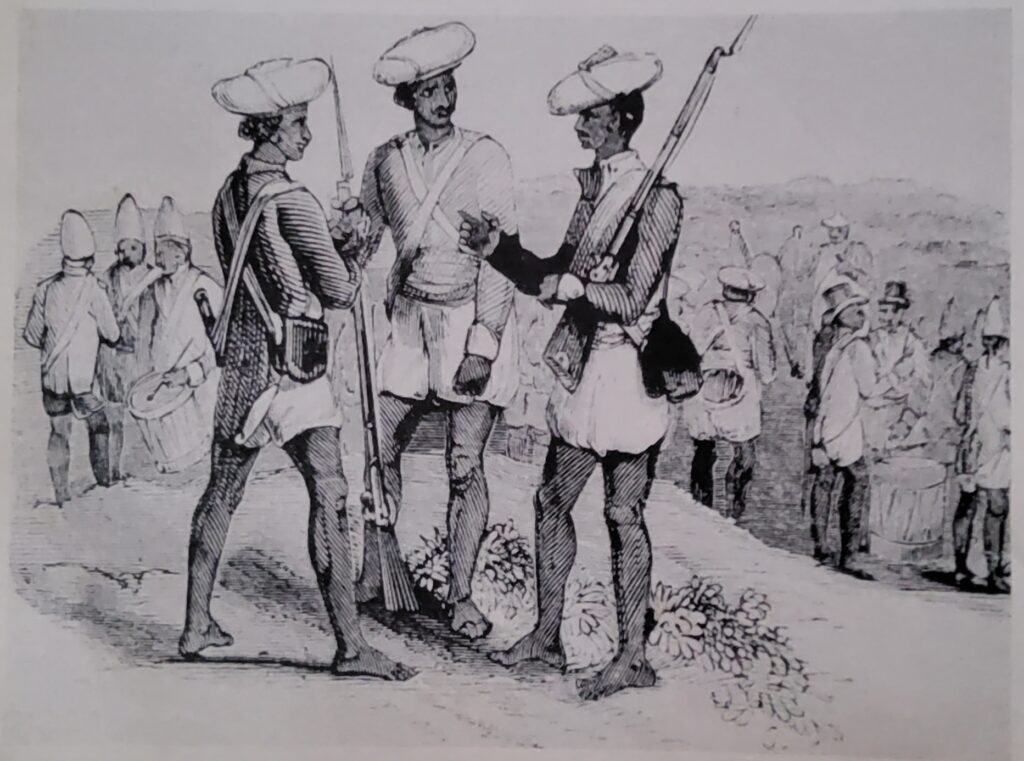
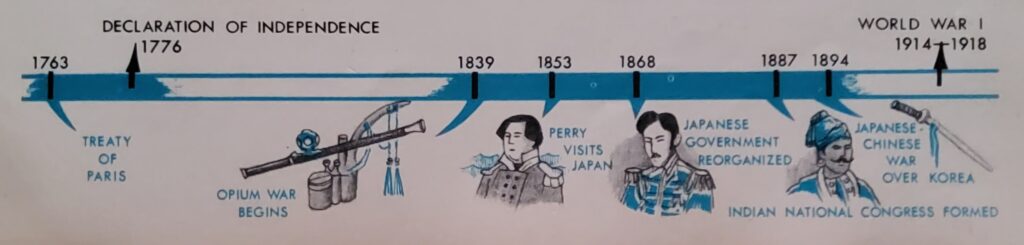
British political control in India became general, after the Treaty of Paris in 1763.
For many years, the British activities were in the hands of the East India Company. This extraordinary enterprise, was chartered by Queen Elizabeth I in 1600 and was allowed to monopolize trade with the Orient. As time went on, the East India Company maintained armed forces, waged war and annexed territories.
After 1763, as the Mogul emperor became little more than a puppet ruler, disorders forced the Company to police India, until the entire subcontinent was supervised by British officials. Parts of India were ruled directly by Englishmen and parts remained native states, ruled by native dynasties with various titles.
Between 1828 and 1835, while many social and economic reforms were sweeping across England, reforms were also introduced in India. A drive was started to stop the killing of girl babies. The custom of a Hindu widow throwing herself on her husband’s funeral pyre (so that her spirit could accompany him into another life) was prohibited. An educational system, with emphasis on English history, language and literature, was initiated.
Discontent with British rule boiled up in the Sepoy Mutiny.
British reform in India was abruptly stopped in 1857 when the sepoys mutinied. A story spread that cartridges issued to the native troops, were greased with animal fat. To hasten loading, troops were to put several cartridges into their mouths. Whether the fat came from pigs or cows, it was regarded as offensive; the Hindus regarded the cow as sacred and the Moslems regarded the hog as unclean.
The mutiny began with bloody massacres of British men, women and children. The British rushed forces to India and suppressed the rebellion with severity. However, they could not as easily erase the causes. Besides the reforms mentioned above, the British had been building railroads, telegraph lines and bringing other innovations to India. A deep, unreasoning fear had grown, that British ideas and customs were being imposed upon India; that Indian ways might be crushed out; that Hinduism might be threatened by Christian beliefs.
The Sepoy Mutiny led Parliament to make changes. In 1858, the government of India was placed in the hands of the British sovereign, the political powers of the Company were ended. A viceroy appointed in England would live in India, as active head of the government. Honour graduates of British universities were recruited, for the Indian civil service. Railroad building continued, a postal system was developed and steps were taken to reduce famine.
As Western Ideas and Technology spread, an interest in nationalism and self-rule developed.
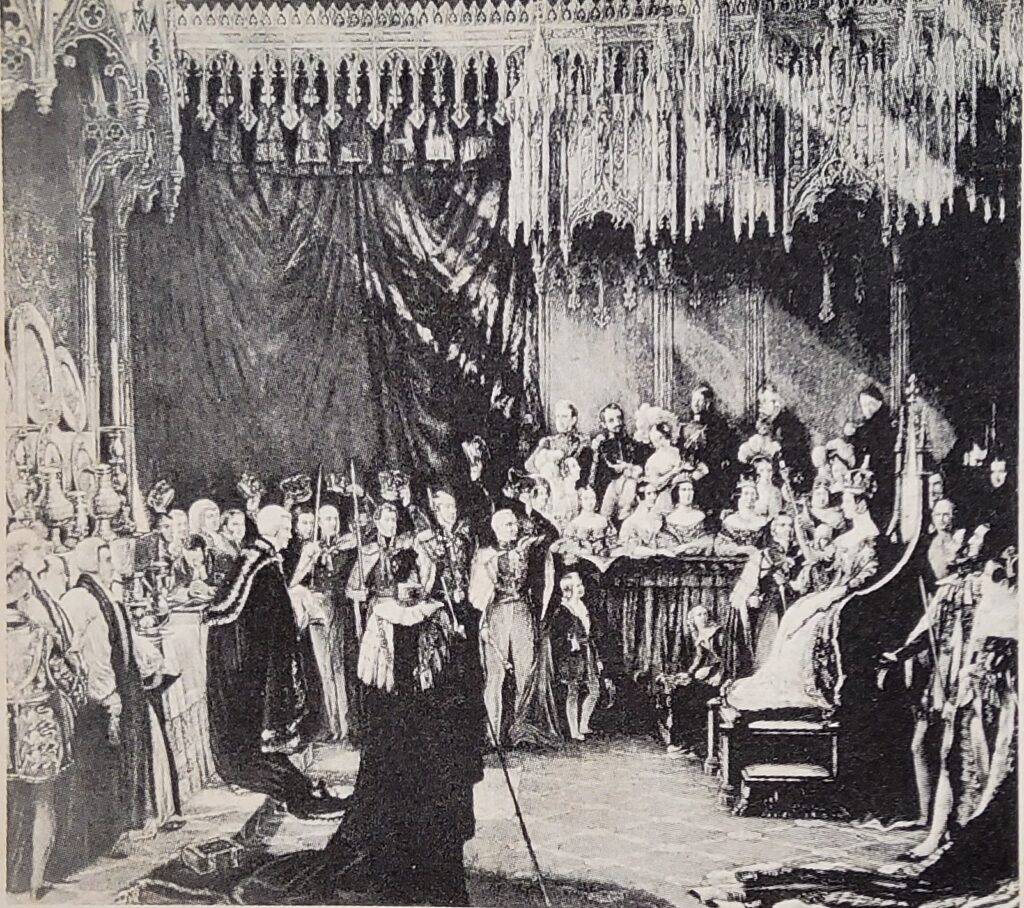
After England lost her American colonies, she looked upon India as her most prized possession. The value that India held in English eyes was symbolized in 1876, with the title Empress of India, which Queen Victoria assumed, when Disraeli became prime minister.
India was primarily an agricultural country that produced large crops of cotton, rice, wheat, indigo and tobacco. The mainstay of British-Indian trade was cotton. Indian cotton was shipped to England and made into cheap cloth. Much of the cloth was then shipped back to India, for use as clothing.
An able corps of administrators kept India relatively quiet after the Sepoy Mutiny, but formation of the Indian National Congress in 1887, indicated that Indian nationalism was growing rapidly. The doctrine of “India for the Indians”, was easily spread through: the free press, by the postal service and telegraph system the British had introduced. The schools did their part too for in them, young Indians read and talked about the rise of representative government in England and elsewhere.
In 1909, Indians were admitted to the advisory councils in the provinces and an Indian was given a seat in the executive council of the viceroy. The Indian nationalists were by no means satisfied and continued to work for complete independence.
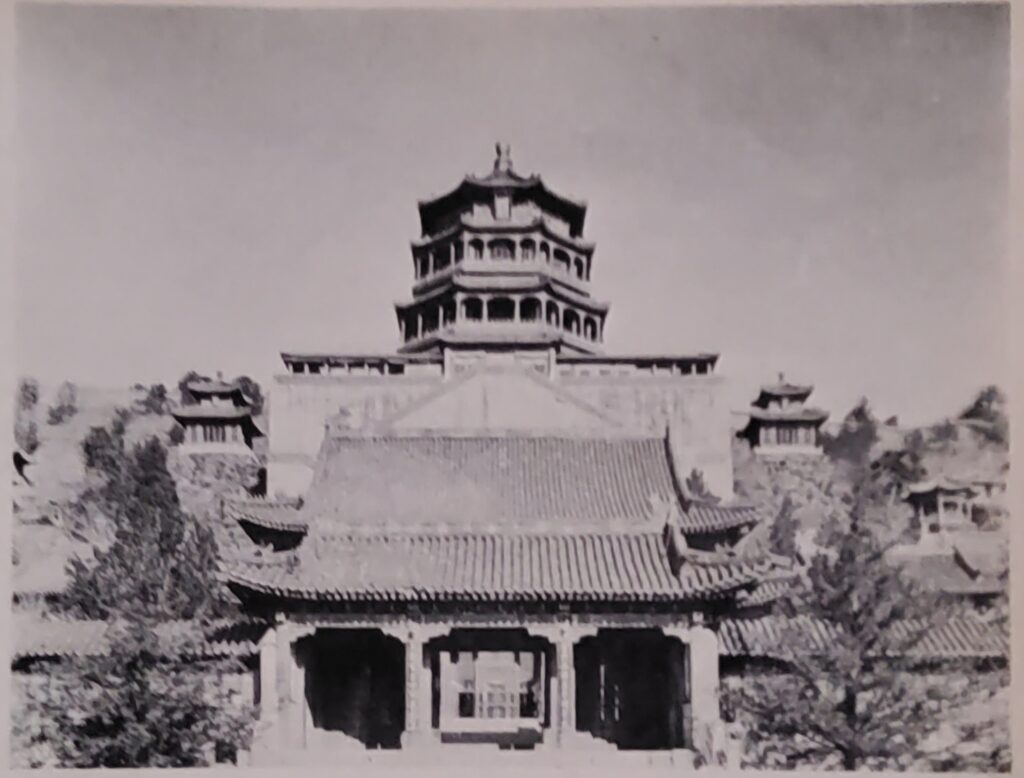
THE PARTITION OF CHINA
The Portuguese reached China in the days of the Ming Dynasty.
They soon developed a trading centre at Macao. For a time, the Chinese emperors welcomed Europeans and even sought to learn from them. A number of Jesuits brought the knowledge of astronomy and mathematics, taught the European style of painting and even built a “Chinese Versailles” – the Summer Palace. In turn, Chinese tea, silks, porcelain and lacquer, became popular in Europe and a profitable trade ensued.
The Ming Dynasty was followed by the Manchu in 1644. Descended from the Tatars of Manchuria, the Manchu appreciated the Chinese civilization they had conquered and made very few changes. They refused to permit intermarriage with the Chinese, lest they be assimilated by the Chinese. Then, to make the Chinese remember that they were a subject people, the Manchu made them shave the front part of the head and wear their hair in queues like Tatars. Under the Manchu, the Chinese remained very conservative and regarded their culture as superior to that of other peoples. They maintained no diplomatic relations with other countries, nor did they encourage foreign trade. They wanted none of the cultural or religious influences of outsiders, including the European.
The British were determined to open China to European trade.
Ignoring the Chinese wish to live isolated lives, merchants from western Europe and England came to trade in the eighteenth century. The first Americans arrived in 1784, one year after the American Revolution ended. The Manchu emperors tried to restrict traders to the seaport of Canton. There, foreign businessmen established offices and warehouses, but were subjected to rigid controls. Trade was carried on through a Chinese merchant guild, on its terms. The Chinese accepted some products, but gold and silver made up a large part of the transactions.
The British tried to negotiate with the government to open more ports to trade and to have a wider variety of goods traded. The emperor told one British mission that the majestic Chinese civilization, needed nothing from the outside world. Tribute would be accepted, of course; and presents would be given by the emperor. To their chagrin, the European diplomats were required to kowtow, or prostrate themselves on the floor in the presence of the emperor.
In 1800, the government forbade any importation of opium. This was a profitable market because many Chinese had become addicted to opium. The British East India Company had no intention of giving up this profitable trade. It continued to produce the drug in India and to let it be carried to Macao and Canton for sale. Americans were making fortunes in the opium trade, too. Like the British, they had learned how to bribe Manchu officials.
The so-called Opium War between Great Britain and China, began in 1839 when Chinese officials seized a large supply of opium and told the British they must stop the opium trade with Chinese. British military power soon gained an easy victory over the Chinese, who fought with outmoded weapons. The island of Hong Kong, lying off the mainland of China, was ceded to the British and other ports were opened to trade. The Chinese had to pay the cost of the war and an indemnity for the opium destroyed by customs officials.
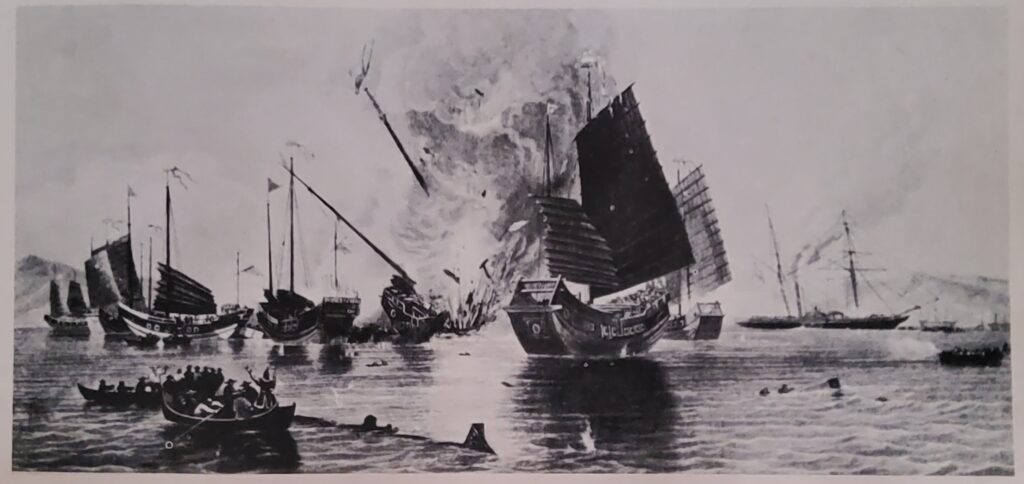
Trade produced results that were not wholly economic.
Within a few years, trading privileges were granted to France, Russia and the United States. Foreign traders continued to scheme for more ports and a larger trade. In 1856 and in 1860, foreign powers provoked war and forced more concessions from the weak Manchu rulers. Among the privileges gotten in this way by the “foreign devils”, were several that stirred the Chinese to hatred of the Western powers. Foreigners with passports could travel into the interior. Christians could spread their faith and hold property. Western nations had won the right of “extra-territoriality” for their citizens. That is, in any dispute over Chinese laws, a citizen of these nations could ask to be tried in a court of his country by its laws. Chinese felt that this privilege was insulting to them and humiliating. They also hated granting the right to station foreign-battleships in their waters. These foreign nations further injured Chinese pride, by stopping the immigration of Chinese to their shores.
The Westerners took over whole regions of China and handled them as though they were colonies — regions in which there were harbours, railroads, mines and raw materials. Western warships were present to “protect” Western interests. Each country thus had a “sphere of influence”, within which it made trade regulations and from which it could control some portion of China’s internal trade.
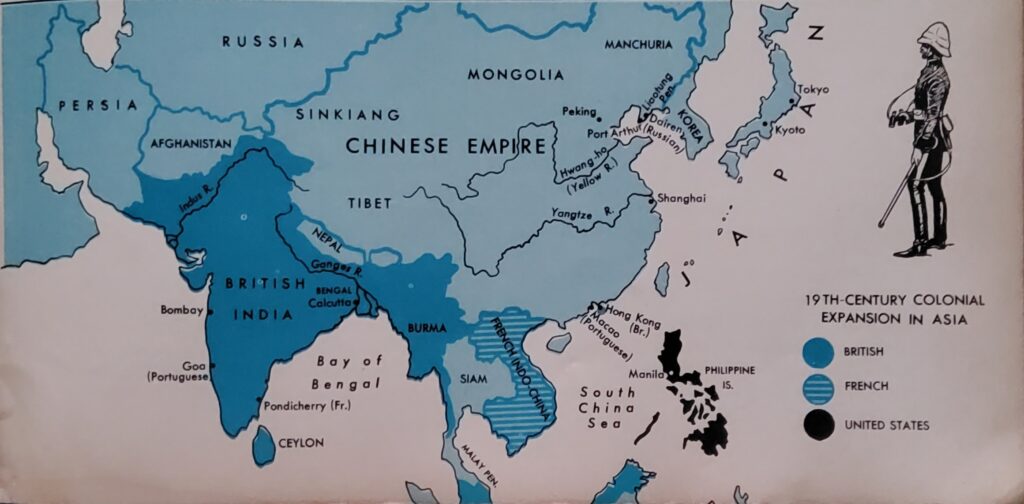
The Japanese too, secured Chinese territory.
For a number of years, Japan had observed foreigners taking over regions of China. Russia had taken the area north of the Amur River; France had taken Indo-China; Great Britain had taken Burma; Portugal had gained Macao. Not only was the central government too weak to stop these seizures, but between 1850 and 1864, a Taiping Rebellion had occurred, which had been put down only with foreign aid. The rebels had almost overthrown the dynasty, in their clamour for change and reform.
Japan had a large and growing population to support, with inadequate raw materials and foodstuffs. She therefore sought sources for raw materials and also markets for her manufactured goods. With an efficient army and with a weak neighbour just across the sea, Japan soon looked toward benefiting from China.
The greatest blow to Chinese pride and the prestige of the Manchu came from the Japanese, a people the Chinese had held in contempt for generations, as island barbarians. A dispute arose over Korea, a kingdom nominally independent, but culturally associated with China. The dispute led to war in 1894. The Chinese, with their old-fashioned methods and weapons, were quickly defeated. The Japanese forced China to pay an indemnity of 150 million dollars: to recognize the independence of Korea; to give them Port Arthur, the Liaotung Peninsula and Formosa.
The Western powers vigourously protested this situation and intervened to keep Japan from taking full advantage of her victory. They forced Japan to give up her claim to Port Arthur and to the rich Liaotung Peninsula, which is part of Manchuria. Russia had long wanted Manchuria. She now secured a long-term lease to Port Arthur and Dairen; and the right to build a railroad across Manchuria. Great Britain and France obtained long-term leases on naval bases in China. Germany obtained a hold on Kiaochow.
The conservative Chinese made a last futile move against the foreigners and their innovations.
In the early days of Western influence, even the rank and file of Chinese had resented the foreigners. As time went on, young Chinese attending universities abroad, were impressed by what they saw and returned to their homeland, full of ideas that were distinctly Western. Among these, was the belief that China must be industrialized and that her antiquated government must be modernized. Toward the end of the nineteenth century, there was enough interest in Western ideas to begin the building of railroad, telegraph lines and to open the rivers to steamships.
After China’s humiliating defeat by the Japanese, young Chinese intellectuals demanded reform of the government and the outmoded army, which had proved so helpless against the modern armies of the West. The sympathetic young emperor got a number of reforms in motion, such as reorganization of the schools along Western lines, modernization of the civil service examinations and encouragement of businesses to expand into industry.
The conservative “old-timers” were at once up in arms over such changes and bitterly resented the “foreign devils” who had inspired the will to reform. The Dowager Empress Tzu-hsi, imprisoned the young emperor, took over the government and had some of the reformers executed.
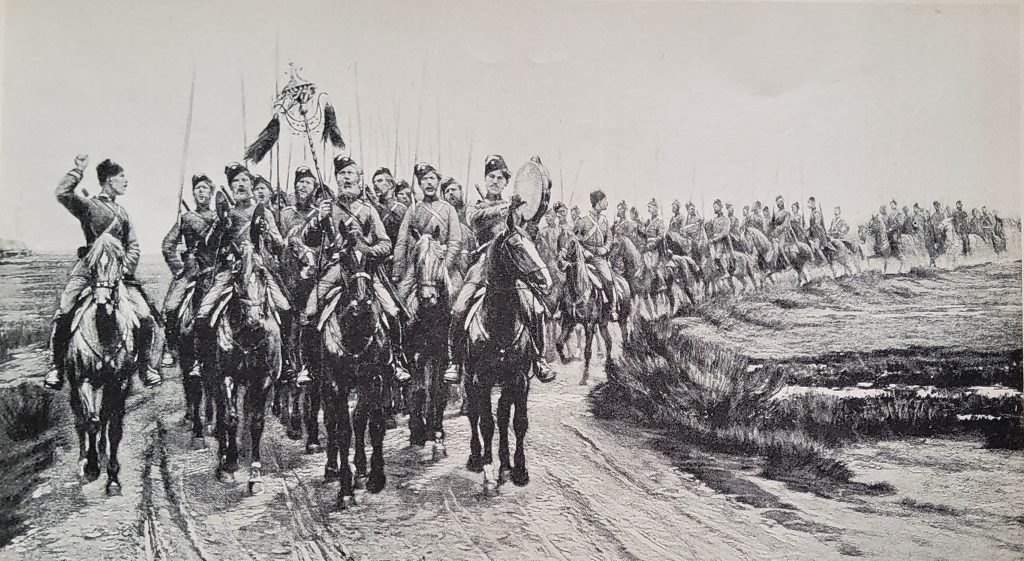
With the help of the Manchu empress, a secret “Order of Righteous Harmonious Fists” was formed, to combat Western innovations. (Westerners called them Boxers.) In their efforts to rid their country of Christians and “foreign devils”, the Boxers killed the German minister and other Europeans, laying seige to the legations at Peking. An international army was assembled to put down, what has since been called, the Boxer Rebellion.
The Chinese government was compelled to pay huge indemnities to the intervening governments. The United States share was approximately 25 million dollars. The American government later adjudged the amount too large and returned more than half of it to the Chinese government. In appreciation for this gesture, the Chinese used the money for educating Chinese students in America and for conducting educational and scientific work at home.
The United States stood almost alone, in opposing the final partition of China.
In 1899, United States Secretary of State John Hay, wrote a strong note to the larger European powers. He asked each power to agree that it would not interfere with trade passing in or out of Chinese ports, nor close its own “sphere of influence”, to the trade of any other nation by assessing harbour dues, raising railroad rates and so forth. This policy of permitting all nations to trade with China on an equal basis, was accepted in principle by the nations concerned and became known as the “Open Door” policy. Unfortunately, the policy was often ignored in practice.
LINKING THE PAST AND THE PRESENT
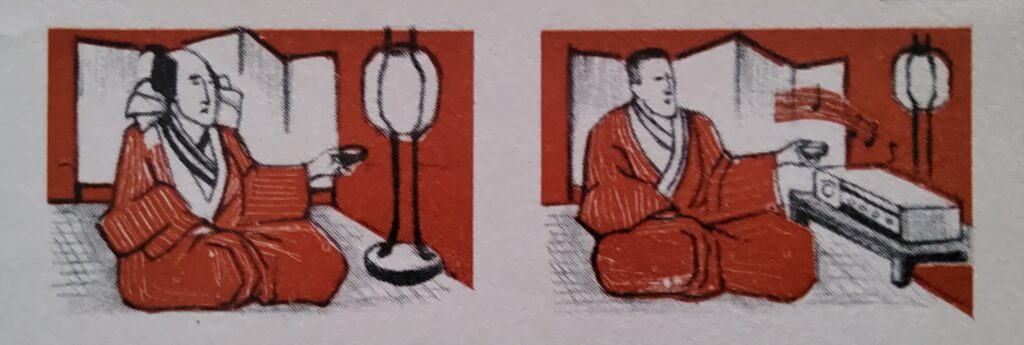
To the world, the Japanese are able to present a modern face, but they knew how to retain and enjoy their ancient heritage as well. We frequently see pictures of the emperor wearing a military uniform or dressed in the current fashion of the Western world. If it is a ceremonial occasion however, such as a marriage or an enthronement, the emperor will appear in age-old robes and observe ancient Shintoist forms.
A Japanese businessman may leave his skyscraper office and return to a home that is in many respects, like his great-grandfather’s. He puts on his kimono. His wife serves tea with a ritual unchanged for centuries. They may then relax in their garden of flowers, miniature trees, waterfalls and carefully arranged rocks. Perhaps in the midst of their reverence, the sounds of their neighbour’s or their daughter’s hi-fi, may recall them to modern times.
THE WESTERNIZATION OF JAPAN
Japan first welcomed Westerners, then shut them out for two centuries and received them again, in the eighieenth century.
Between 1542, when Portuguese came over from Macao and 1639, when a decree forbade any Christian to come to Japan, European merchants and missionaries entered the country and thousands of Japanese were converted to Christianity. The shoguns closed the doors only when they became weary of the Europeans quarrels and their exploitation of the natives.
Japan’s doors remained closed during that period, when the major powers of Europe were gaining and establishing their hold on China. An American ship arrived in China in 1784 and opened a period of trade with the Orient. Then the United States had the day of the whalers, when American vessels ranged the Pacific. In the 1850’s, the “China Clippers”, the fastest and most beautiful sailing vessels ever designed, were engaged in the tea trade. Ironically, this was at a time when steamships were already plying the oceans. Foreign vessels occasionally attempted to put into Japanese harbours when in need of water or repairs, but they found resistance.
In 1853, Commodore Matthew C. Perry came knocking at Japan’s door, bearing a message for the emperor, from President Fillmore of the United States. The two steam frigates and two sloops of war, frightened and angered the Japanese who witnessed their arrival near Tokyo. The American was finally received by a group of commissioners, while seamen from American ships stood in review. Perry left a letter for the emperor of Japan and sailed away to China. The next year, he came back with ten ships and some 2,000 men and a display of such Western inventions as rifles, clocks and a sewing machines. The Japanese were impressed and a few weeks later, agreed to open two ports to American trade, by entering into the first formal treaty they had ever made with a Western nation. Before long, additional ports were opened to both Americans and Europeans.
By adopting some Western ways, Japan was able to preserve her independence and to start imperial expansion.
The manner in which Japan responded to Western influence, saw that the Japanese were teachable. Their teachability led to their willingness to accept foreign ways and new ideas, provided these helped them to remain invincible in warfare.
The Japanese emphasis on good manners and the attention given to keeping face, meant that to be dishonoured or degraded, was enough to make a man commit suicide in shame. To lose face nationally was unthinkable. These traits of character showed up soon after Japan began trading with the Western world. The feudal chieftains persuaded the shogun to resign and restore the power to the mikado (emperor), again. The young mikado, left his palace in Kyoto and went to live in Tokyo, the new capital. There he reigned, from 1868 to 1912, while his sleepy feudal kingdom, was transformed in a wide-awake world power. Upon the advice of those about him, the mikado abolished feudalism and set out to develop a model government, based on foreign practices. The feudal lords gave up their privileges and the serfs were made free men.
After evaluating the institutions of the time, the Japanese imitated the British navy, the French army, later the German army and the public schools of the United States. They began patterning a government structure like the British, but after Bismarck’s success, they operated it in the spirit of the German Empire. The mikado granted a constitution which provided for a parliament, the Diet. A revival of the Shinto religion was accompanied by a reinstatement of the old concept of the emperor, as divine and descended from the sun-goddess. Army and navy officers exerted great power, great influence and were not responsible to the House of Peers, or to the House of Representatives, but to the emperor.
A relatively few men, all taxpayers, elected the delegates to the House of Representatives. The members of the House of Peers were hereditary nobles, or rich taxpayers; and were appointed by the mikado. The cabinet, responsible to the mikado, made most of the laws. It was frequently told how to do so by the Privy Council, a group of twenty-six men responsible only to the emperor. The Privy Council appointed and dismissed cabinets, made treaties and directed the government.
The Japanese instituted an efficient system of public education, modelled on that of the United States.
Elementary schooling was provided for all children and the Japanese became a literate people. As in most Oriental countries, a rather sharp distinction was made in the education of boys and girls. In general, beyond the elementary grades, the girls were taught the domestic arts — cooking, sewing and flower arrangement. In the higher schools for boys, much attention was given to military training. It was considered a privilege for a girl to be allowed to play with a boy and even in play, she was trained to obedience.
There were courses in ethics, or morals, in which such ideas as the divinity of the mikado, the superiority of the Japanese race and the glory of dying for one’s country were presented. These ideas formed the basis of the national morality.
Impressed by British industry and imperialism, the Japanese began to develop industry.
The Japanese saw that an island people like their own, had gained wealth and power through manufacturing and through control of colonies. They sought to follow this example. Theirs was a very thickly populated country, much of whose area was poorly adapted to agriculture. It was natural, therefore, that the people should turn to manufacturing. The Japanese were very skillful in the making of small articles, such as toys and bric-a-brac. Furthermore, they worked for low wages; the manufactured articles could be shipped to other countries, especially the United States and sold at very low prices. The Japanese also entered the textile industry and became a competitor of the British and the Americans. Whereas at the time of Perry’s visit to Japan in 1853, there was not a single steam-operated factory, by the beginning of the twentieth century, about one hundred large cotton factories were in operation.
By 1900, Japan was still a blending of the old and the new, but remarkable progress had been made.
A postal system, a system of national banks, a mint and a new system of currency, had been instituted. Railroads and telegraph lines crossed the islands. Universities and technical schools, had been added to the educational system. Foreign experts had been brought in to teach medicine, engineering and better farming methods. Many Japanese had been sent to study in other lands.
The transformation of this island kingdom within half a century – was without parallel at the time. Yet, beneath the veneer of modern ways, was a passionate devotion to ancient and medieval ideas and practices. Most Japanese continued in their Buddhist and Shintoist religious customs. They continued their complete devotion to the mikado and made much of obedience and respect for authority. They also continued their traditional forms in art, literature and in architecture, of their homes and furnishings. Women were held in a subordinate status.
As the Japanese continued to pursue a policy of militarism, colonial expansion and industrial growth, other Asian peoples were impressed. They felt that what the Japanese had done, they could do. Thus, Japan was in a very favourable position to influence the whole Asian continent.
MEIJI — (1852 – 1912)
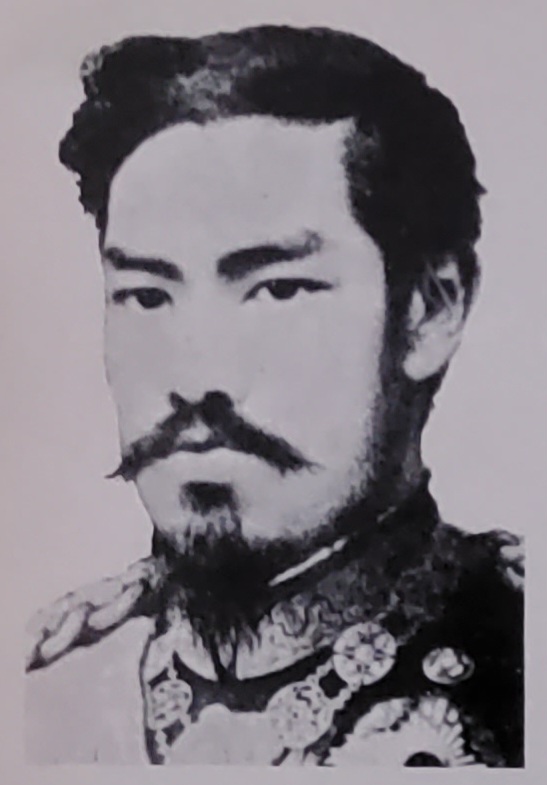
In the 1860’s, when the Japanese deposed the shogun and set about putting their house in order, they brought back the mikado, the revered descendant of the Sun Goddess. He happened to be a young boy named Mutsuhito. He took a more active part in Japanese government than his ancestors had done for centuries.
Mutsuhito was fortunate in being surrounded by a capable group of advisers, who visited Europe, the United States and made the blueprint for modernizing Japan. To the end of their lives, these “elder statesmen” were honoured and their counsel was sought. Japan was transformed and was victorious in two important wars, one with China and one with Russia.
In Japan, it was the custom to choose a term to designate a reign. For Mutsuhito the term was “Meiji”, which meant “enlightened rule.” It is by this apt term and not by his personal name, that he is recognized.