West Dominates the World (1763 – 1899 A. D.)
Western dominance, this category deals with the period from the Congress of Vienna in 1815 to the First World War in 1914, This span of the world’s history, stretching across most of the nineteenth century, was crowded with significant events. Some of those events, created by the development of the Machine Age and the spread of European imperialism, created problems which still are unsolved.
We read of man’s struggle to bring about change, you will find herein several episodes to challenge your interest. Paramount was the struggle for democratic government in England. There the power to rule shifted from a small aristocracy, to representatives of the people in Parliament. În this same period, England spread her web of imperialism until her empire included, one fourth of the world’s peoples. France also broadened her base of democracy, but not without revolution and bloodshed.
Guided by aggressive statesmen, Germany and Italy won unification as a result of victory in wars. On the fringe of Europe, Russia was less influenced by the currents of European culture and the liberal ideas of freedom. As the twentieth century dawned, Russia was still ruled by an autocratic czor.
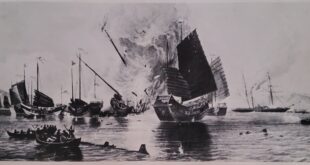
During the nineteenth century, the Orient was disturbed by European imperialists who sought to conquer China. Japan soon learned the material practices of the West and extended an imperialistic sway over China, who was trying vainly to free herself from European domination. The United States made a dramatic entrance upon the stage of world politics, by insisting upon an Open Door Policy in China; by it, many nations might share in the China Occident trade.
The United States came of age during this period and became a world power in the later 1800’s. Believing that it was her “manifest destiny,” she extended her domain to the Pacific, acquired overseas possessions and spread her wings over this hemisphere, by applying the Monroe Doctrine. The peoples of Latin America won their independence from Spain and Portugal and emerged with a number of republics, which could hardly be called democracies.
In this category we note that the strides which led to the Machine Age, were taken by inventors during the late nineteenth century. Discoveries were made in medicine which increased man’s life span. Man entered the twentieth century certain, that he was on the right road to the good life on earth.
Political rallies of the 19th century, brought out the enthusiasm of the American people. The festive atmosphere was indicative of their desire to strengthen the spirit and practices of democracy in their new nation.
1750
1763 – Treaty of Paris — France
1787 – Constitutional Convention meets in Independence Hall — Philadelphia
1789 – Constitution becomes the law of the land — United States
1800
1803 – Louisiana is purchased from France by the United States
1814 – The Congress of Vienna assembles
1823 – The Monroe Doctrine is stated — United States
1832 – Great Parliamentary Reform Bill in England
1848 – Karl Marx writes the Communist Manifesto
1850
1854 – Crimean War begins — Russia
1857 – The Sepoy Mutiny in India
1861 – Italy becomes a nation. Alexander II’s Emancipation Proclamation in Russia. The War Between the States begins — United States
1862 – American education aided by the Morrill Act
1869 – Opening of the first continental railroad in the United States
1871 – The German Empire is proclaimed
1878 – The Congress of Berlin meets — Germany
1889 – First Pan American Conference meets at Washington
1898 – The Spanish-American War
1899 – Open Door Policy for China is stated
West Dominates the World (1763 – 1899 A. D.)
3
Nations of Latin America ‐ this subject includes the Latin American independence, international relations and life in Latin America, during this period. The revolt of the Spanish colonists in Central and South America, was in some ways similar to the United States Revolution, which partly inspired it. It is important to understand the differences in background and motives, which led the southern neighbours in political and economic directions, unlike to those taken by American democracy in the 1800’s. The story of nineteenth-century Latin America is an unhappy one: of political disunity, economic weakness and interference by foreigners. It is important …
Read More »
West Dominates the World (1763 – 1899 A. D.)
23
Growth of democracy in America includes – the foundation of a great nation, American Foreign Policy, American territorial expansion, effects of the frontier on America, the war between the States and growth of American industry. The history of the United States has been followed with amazement by those who live in other parts of the world. Its rapid growth in area, in population and in the production of goods and services, has been unequalled. The statistics of the American material way of life, have become standards by which other nations may measure their progress, or goals which they seek to …
Read More »
West Dominates the World (1763 – 1899 A. D.)
58
Orient and Occident: India, “Pearl” of the British, the partition of China and the Westernization of Japan. China, Japan and India developed a distinctive culture. They were proud of their achievements and were satisfied to remain far removed from the developments in the west. Therefore, it is not strange that the Orient resisted the forceful penetration of their cultures by Western influences, nor that they resented the superior attitude of Occidentals. It is important to observe the different ways in which each country reacted to Western influences. The philosophy of each region, determined what aspects of the West would be …
Read More »
West Dominates the World (1763 – 1899 A. D.)
128
Imperial Russia: The land, the people, autocracy, Pan-Slavism, Alexander II, limited reform and the background for later revolutions. Russia’s relationship to European history was undoubtedly affected by the geographical fact that she has been more Asian, than European. Most of the world’s largest country is a vast plain broken by the Ural Mountains. The larger part which includes Siberia, is in Asia and looks away from western Europe. Russia’s government and her part in international affairs during the nineteenth century, saw the major powers of Europe blocking Russia’s attempts to gain a warm-water port and access to the Mediterranean. Autocratic …
Read More »
West Dominates the World (1763 – 1899 A. D.)
135
Nationalism and Union in Germany and Italy include: Metternich and European affairs, Bismarck and European affairs and the struggle to unite Italy. Histories of Germany and of Italy were long intertwined as components of the Holy Roman Empire; when Napoleon broke up the Empire, central Europe was left a patchwork of small states, each with its own government, tarifs and traditions. Austria and France wished to perpetuate this weakness for their own selfish ends and that made central Europe a battleground. Two remarkable men of the nineteenth century ended this disunity and altered the balance of power in Europe. Their …
Read More »
West Dominates the World (1763 – 1899 A. D.)
149
Democratic reform in England and France: British political reforms of the 1800, England’s relations with Ireland and the Bourbon rule in France, reviews developments in England and France between 1815 and 1900. In 1815 the Congress of Vienna wrote a peace treaty, which it was hoped, would prevent wars of conquest such as those engineered by Napoleon. As England and France tackled their domestic problems, arose the opportunity to contrast two methods of attaining the same objective: the establishment of more rights and freedom for the individual. Following their tradition, the British relied upon action by Parliament after debate. The …
Read More »