West Dominates the World (1763 – 1899 A. D.)
Growth of democracy in America includes – the foundation of a great nation, American Foreign Policy, American territorial expansion, effects of the frontier on America, the war between the States and growth of American industry.
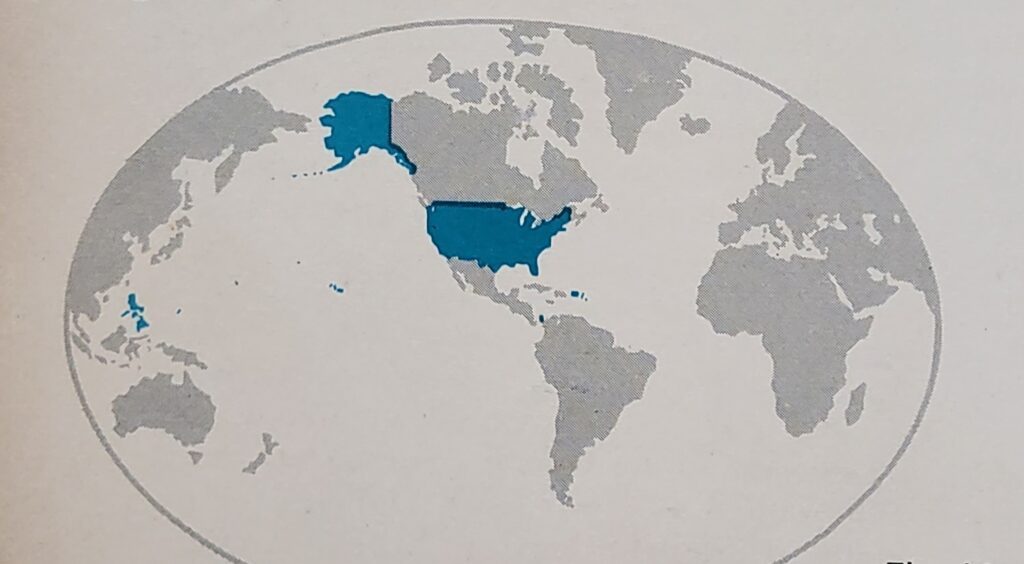
The history of the United States has been followed with amazement by those who live in other parts of the world. Its rapid growth in area, in population and in the production of goods and services, has been unequalled. The statistics of the American material way of life, have become standards by which other nations may measure their progress, or goals which they seek to attain.
In reviewing the history of America within the context of world history, we give particular attention to the development and establishment of American values and national ideals. These became known throughout the world as worthy of respect and emulation. To millions of people, the Statue of Liberty became a symbol of those ideals. As their ships steamed into New York Harbour, immigrants lined the rails, hoping to glimpse the statue of the lady holding the torch. Out of their meagre earnings, many had sacrificed to save enough money, so they could visit the statue and climb up inside the torch of “Liberty Enlightening the World”, before setting out for their new homes.
It is important that Americans appreciate their nation and its achievements in its relation to other nations. Note how often major events in their history were influenced by their ideals and by the goals which American Founding Fathers had set for the them.
FOUNDATION OF A GREAT NATION
An old saying states that a nation is as strong as its people and its leaders.
The study of American History has shown that the United States was especially fortunate in having an abundance of superlative leadership in its formative years. The men who drafted the Declaration of Independence, the Northwest Ordinance and the Constitution, were a remarkable galaxy.
The scholars who have studied this period of American history are agreed, that these were men of open and active minds, who had absorbed much of the world’s best writing from English, French and ancient sources. As active colonists, merchants and landowners, they generally enjoyed more liberty and democracy than Europeans. They had won their independence by a difficult and bitter struggle; they meant to keep and preserve it by developing a strong government.
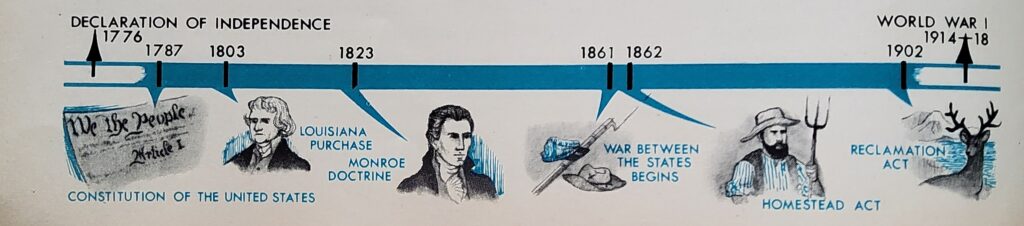
The Constitution of 1787 replaced the Articles of Confederation.
In 1787, four years after the American Revolution ended, a group of leaders met for what we now call the Constitutional Convention. They had come to improve the Articles of Confederation under which the new nation was trying to function. They soon saw that they needed a new and broader document as the foundation for the experiment in democracy, they had launched. Working together, they framed a constitution providing for a federal government, with power to raise and support an army, conduct foreign relations, regulate currency and have authority over foreign and interstate trade. The states retained powers over health, safety and welfare.
The American people did not accept the Constitution without question. In fact for a while, it was doubtful that enough states would approve or ratify it, to put it into effect. As the states approved the Constitution, they proposed that certain amendments should be made. After the Constitution was adopted, proposed amendments were considercd by the Congress. Ten amendments were accepted by the people, added to the Constitution in 1791 and came to be called, the Bill of Rights. They guaranteed civil rights such as religious liberty, trial by jury, freedom of assembly, freedom of speech and of the press.
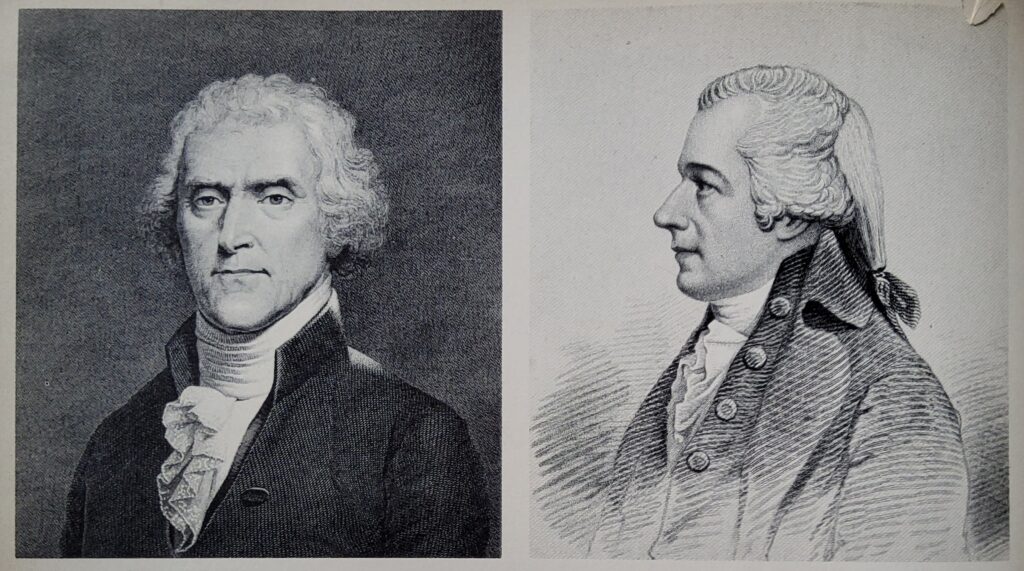
The American two-party political system developed about the followers of Alexander Hamilton and Thomas Jefferson.
Hamilton wanted to build a strong federal government; Jefferson wanted to leave much authority to the states. Those who lined up behind Hamilton were called Federalists. Those supporting Jefferson came to be spoken of as Republicans. Their main difference lay in the manner in which they interpreted Article I, Section 8, of the Constitution. After naming the special powers of Congress, Section 8 states that the Congress shall have power “to make all laws which shall be necessary and proper for carrying into execution the foregoing powers… .”
The Republicans interpreted this strictly. They believed that Congressional powers were limited to those mentioned in Article 8; that all other powers remained as rights of the states. The Federalists saw the Constitution as a general plan of government. In working out the details, Congress would make all laws necessary or proper for the country’s welfare. Hamilton, proceeding on this basis as the first Secretary of the Treasury, did much to establish the credit of the new nation by making it strong financially. In general, the Federal government has tended to follow his example and to assume more and more power, under the general welfare clause quoted above.
From Hamilton’s day on, a two-party system has been in effect, under various party labels, representing conservative and liberal points of view. For reasons that have developed through the years, neither major party at present is composed along these lines; each has a conservative and a liberal wing.
In 1789, the United States new Constitution was an inspiration to patriots everywhere. The democracy implied therein, influenced the thinking in France to the extent that the success of American democracy, is stated as one of the causes of the French Revolution, of 1789. We know that it encouraged the Spanish colonies in Latin America to start a revolution at a later time and to establish governments of their own.
AMERICAN FOREIGN POLICY
George Washington laid down the foundation of American foreign policy.
Two European powers were neighbours of the United States, in 1789. The British held Canada; the Spaniards held Florida and the lands west of the Mississippi River. Then, the year the American Constitution went into effect, the French Revolution broke out, leading to twenty-five years of intermittent warfare.
Many Americans believed that they should go to the aid of France in return for the help Americans had received during their revolution. Washington took a different view. In 1793, he issued a proclamation of neutrality, stating that the United States would not take sides in the European wars. In his farewel address, Washington further advised his countrymen to stay clear of foreign entanglements. He said:
Europe has a set of primary interests which to us have none or a very remote relation. .. . Our detached and distant situation invites and enables us to pursue a different course. Why forego the advantages of so peculiar a situation? Why quit our own to stand upon foreign ground? Why, by interweaving our destiny with that of any part of Europe, entangle our peace and prosperity in the toils of European ambition, rivalship, interest, humor or caprice?
Under her fourth President, James Madison, the United States did become involved in the Napoleonic Wars by fighting the War of 1812 against England, but Washington’s advice carried great weight and has had a powerful influence on American foreign policy.
The Monroe Doctrine, stated in 1823, has been the second cornerstone in American policy.
By 1823, many Latin American countries had established their independence. After 1815, when Napoleon’s defeat brought peace to Europe, there was danger that European powers would turn to the New World in their building of colonial empires. George Canning, the British foreign minister, suggested to President Monroe that the United States join Great Britain in declaring, that no nation might acquire any part of the New World not already in its possession. Though the two nations did not issue a joint statement, Monroe, in his message to Congress, stated the three principles which make up the Monroe Doctrine:
1. Any attempt on the part of European powers to interfere with the republics in the Western Hemisphere would be regarded by the United States as an unfriendly act. 2. The United States would not interfere in European affairs. 3. The Western Hemisphere was no longer open to colonization by the nations of Europe.
Monroe’s statement of policy, though it did not have the binding force of a law or a treaty, was accepted by the American people and by the Presidents who followed him.
AMERICAN TERRITORIAL EXPANSION
The American western boundary, leapt from the Mississippi River to the Rocky Mountains.
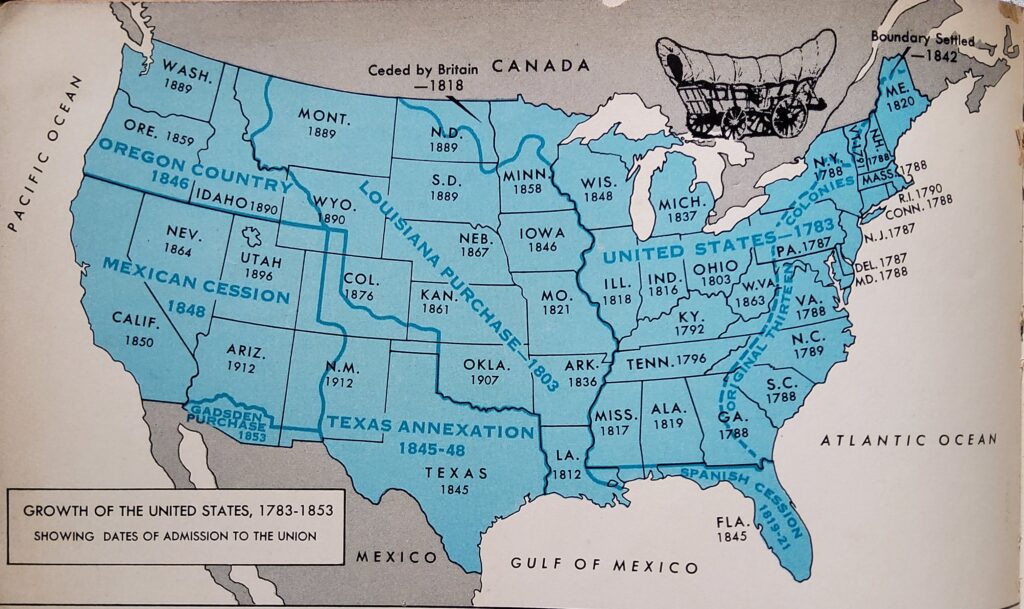
The Treaty of Paris (1783), set the Mississippi River as the western boundary, but reserved Florida and a strip along the Gulf of Mexico for Spain. The territory west of the river was then held by Spain, but she transferred it to France in 1800.
The port of New Orleans was needed by the growing West. Before the coming of the railroads, the vast river system of the Mississippi and its tributaries, was a major factor in developing the rich interior of the American continent. When Jefferson had the opportunity to buy New Orleans and the whole French claim in 1803, he faced a constitutional question. Nothing in the Constitution provided for the extension of the country. The problem was met sensibly, through buying the territory. For 15 million dollars, the area was increased from 892,000 to 1,720,000 square miles. The purchase of territory was in marked contrast to the European procedure, wherein bloody wars had been fought over and over, for the possession of provinces.
In 1818, General Andrew Jackson led American troops into Georgia, to stop Indian raids on Georgia and Alabama. He drove the Indians back to their homes in Florida, an act which led to an altercation with Spain, over her ability to keep order in Florida. The upshot was an offer to sell the United States all of Florida, which they accepted. The purchase gave the United States a continuous shore line, from Maine to Texas.
The acquisition of the Oregon country, extended the United States to the Pacific.
In the early 1800’s Oregon embraced the land from Alaska to California between the Rockies and the Pacific. Spain, Russia, Great Britain and the United States, all claimed parts of it. In 1819, Spain gave up her claims to territory north of latitude 42°. After the Monroe Doctrine was stated, Russia gave up her claims to territory south of 54° 40′.
By 1818, the many British and American trappers in the Oregon country had become such rivals, that Britain and the United States fearful of war over the region, agreed to joint occupancy for ten years. In 1828, they renewed the agreement indefinitely. By 1844, some 3,000 American immigrants had made Oregon their home and were demanding that Congress settle the boundary line, between Oregon and Canada. That year, the platform of the Democratic party called for the addition of Texas and Oregon, in these words: “All Oregon or none. Fifty-four forty or fight.”
The slogan helped elect the Democratic candidate for President, James K. Polk. In 1846, with the United States on the verge of war with Mexico, Polk was glad to have representatives from the United States and England divide Oregon, along the forty-ninth parallel. This was in line with America’s northern boundary, from the Great Lakes to the Rockies. Congress approved the decision and covered wagons continued to carry American pioneers over the Rockies, to Oregon. Out of this territory later came: Oregon, Washington, Idaho and parts of Wyoming and Montana.
The United States expanded southwestward into Mexican territory.
It all began innocently enough after Mexico won her independence from Spain, in 1821. To build up her northern states, Mexico encouraged Americans to settle in Texas. A flood of Americans moved from the southern state into Texas, bringing their families and their slaves. Frightened at the size of the influx, the Mexicans first tried to slow the immigration and then stop it. Discontented over this situation and with Mexican laws and customs, the American settlers in Texas rebelled in 1836. They won their war for independence and after a period, as an independent republic and were admitted to the Union, in 1845.
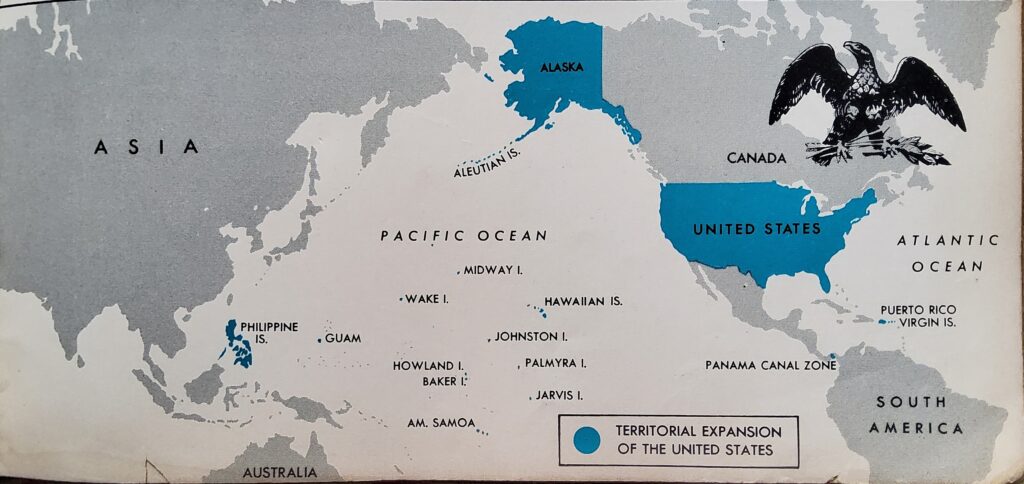
Mexico’s resentment over Texas’ admission to statehood and a quarrel over the boundary between Texas and Mexico, flamed into a war between the United States and Mexico, in 1846. Many Americans like Lincoln and Ulysses S. Grant, believed the war was unjustified, but the victory brought the United States the whole southwestern part of the country, by 1848. Mexico was paid 15 million dollars, although Americans could have claimed the land by right of conquest. In 1853, the United States bought from Mexico, in the Gadsden Purchase, a small strip of territory, what is now Arizona and New Mexico. In 1867, they bought Alaska from Russia, thus completing continental United States. Alaska was admitted to statehood in 1959.
Now that we live in a global age, Alaska is a vital link in the American national defense. It lies along the shortest air route, from the American Pacific Coast to the Far East.
The United States expanded to include islands in the Pacific and the Caribbean.
The poet’s saying, “Westward the course of empire takes its way,” may be applied to their expansion into the Pacific. American merchants began trading with the Orient, after the development of the fast sailing ships called Yankee Clippers, in the 1840’s. The shift from sailing craft to steamships in the second half of the nineteenth century, resulted in a search for coaling stations in the Pacific Ocean. In 1872, America acquired a coaling station at Pago Pago, on the island of Tutuila, in the Samoan group of islands. In 1900, the United States and Germany, divided the island group between themselves.
American ships engaged in the China trade, stopped regularly for supplies and fresh water in the islands which now comprise the American fiftieth state, Hawaii. American businessmen began investing in plantations for the raising of sugar cane and pineapples. The native king welcomed the expanding trade and granted the U.S., the exclusive right to make Pearl Harbour a naval base. The islands were annexed to the United States in 1898, but statehood was not granted until 1959.
The Spanish-American War arose because of a Cuban revolution against Spain. It resulted in a treaty of peace which ceded Puerto Rico in the Caribbean to the United States and gave the U. S., economic and political control over Cuba for some years. Spain also had to cede to U.S., Guam and the Philippines in the Pacific, but the Americans paid her 20 million dollars for her investments in the latter. Wake, on the direct route between Hawaii and Hong Kong, was acquired during this period too.
After the Spanish-American War, the U.S. announced, as a matter of policy, that they would not retain Cuba and the Philippines indefinitely. This announcement was received cynically in some parts of the world, but the promise was kept.
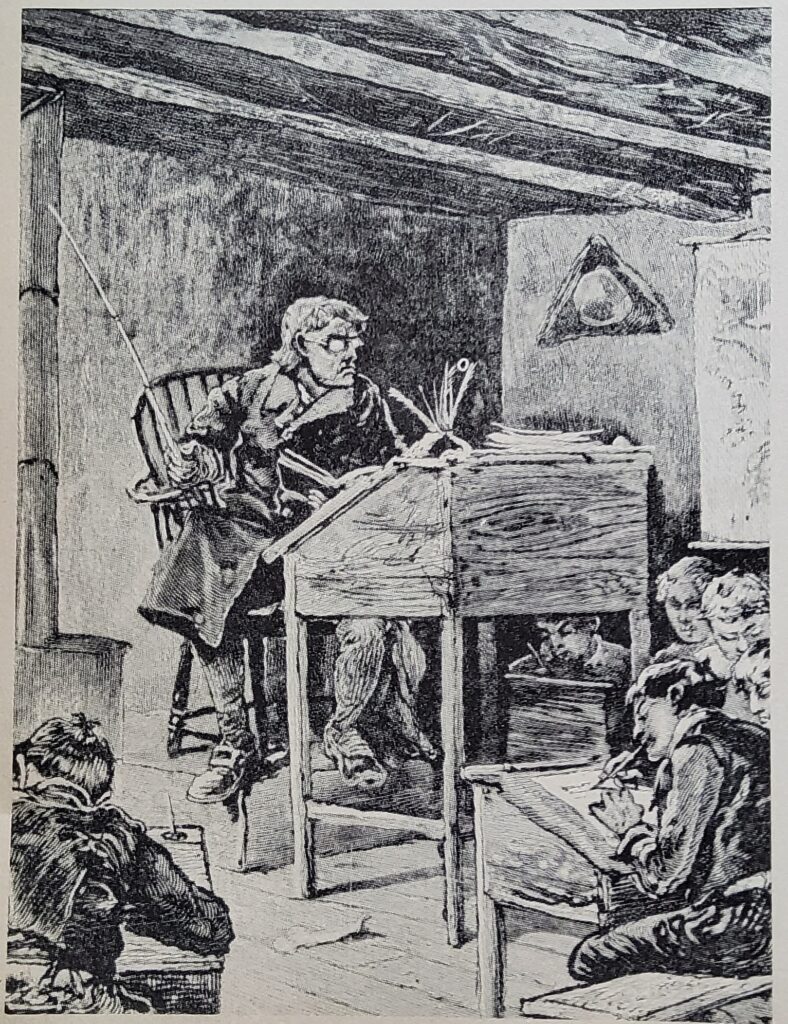
The physical expansion of the United States was accompanied by a vast increase in population.
The first census in 1790, listed fewer than 4 million residents; by 1900 the U. S. had more than 75 million. This rapid increase was attributed to (1) a liberal immigration policy; (2) abundant natural resources; (3) the rapid expansion of territory; and (4) the need to develop farms and factories, transportation and communication.
Many national strains came to make up the American people. The earliest colonists came chiefly from England and at the time of the census of 1800, the English element was still in the majority. There were also however, many persons of Irish, Dutch, German, Swedish, Scotch-Irish and French origin. In religion, the Protestants were overwhelmingly in the majority.
In the first few decades of the nineteenth century, most of the immigrants were still English. The Irish came in small groups until the 1840’s, when a potato famine brought such hardship, that half the population of Ireland left that island. Most of the Irish newcomers settled in cities along the Atlantic Coast. After the Revolution of 1848, the Germans also began to come to America in large numbers.
After 1890, a great change occurred in the source of European immigration to the United States. Between 1870 and 1880, only 7 per cent of the newcomers had come from southern and eastern Europe. The percentage increased to 18 per cent in the next decade and to 52 per cent between 1890 and 1900. In the ten years from 1900 to 1910, 71 per cent of the immigrants came from the eastern and southeastern countries of Europe and the percentage increased still further, after 1910.
Along with the growth of the country and of the population came two trends: the tendency to move westward and the growth of cities as population centres. In 1790 the United States was overwhelmingly rural. Philadelphia, the largest city, had only 42,000 people. There were few other cities to rival it. During the 1800’s, however, the movement toward the cities began, which has continued ever since. This urban development has gone hand in hand, with the development of mass manufacturing. Today the majority of American people live in cities or near them.
EFFECTS OF THE FRONTIER ON AMERICA
The development of the frontier is the major theme in American history.
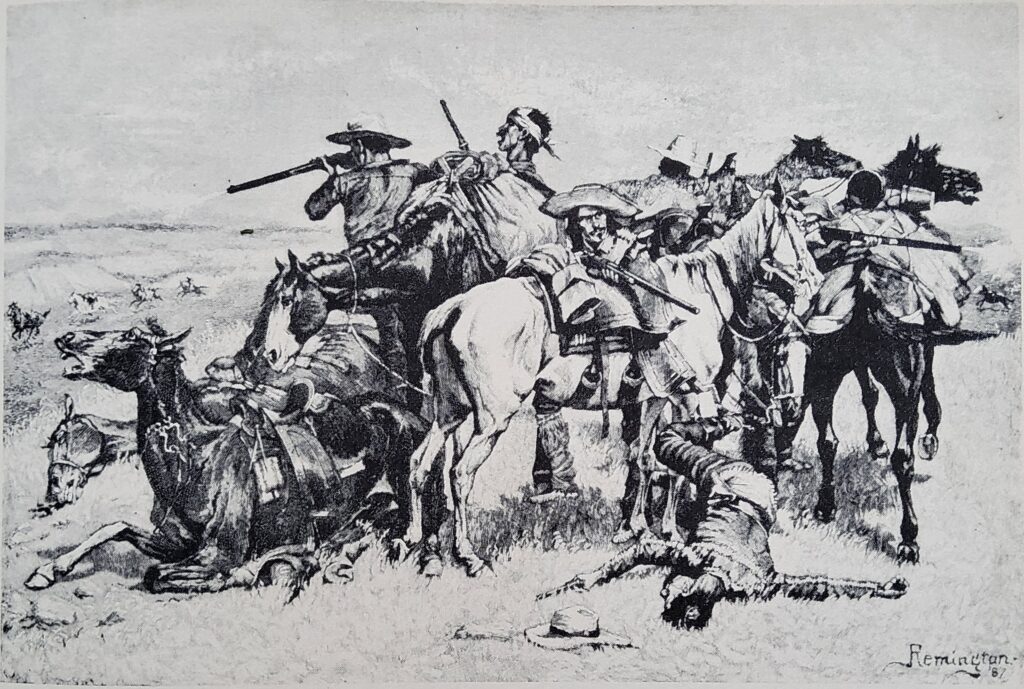
The frontier was that border of unsettled land which was open to pioneers. It was pushed westward year after year by an everincreasing tide of settlers until 1890, when the Federal government declared the frontier closed. There was still land for homesteading, but the great stretches of free, unbroken forests and prairies were gone.
The swift settlement of the West was made possible by the way in which railroads were spread across the plains and prairies, tying the new communities to the Eastern states. The development of vast industries accompanied the utilization of the rich resources of soil, forest, water and mines.
Many of the early pioneers had to buy their land from speculators, for Congress sold it only in large tracts. Free land became one of the major political issues of the nineteenth century. After a long struggle in Congress, the Homestead Act was passed in 1862. This law enabled any settler to have his share of public land, provided he pay a small fee and farm the land for five years. The Homestead Act played an important role, in the rapid settlement of the West, in the period which followed the war between the states.
Frontier life enlarged the American conception of democracy and left an indelible mark on the American character.
The rough manners of men in unsettled country, their contempt for culture and their disregard for many of the things the East considered important, were not wholly good and they shocked many travellers.
On the other hand, the day-by-day solution of the problems presented by the frontier was a builder of democratic procedures and attitudes. Since every man who remained believed that he had proved his worth, when a newly-settled area became a state, its people insisted upon a constitution which gave the ballot to every white man.
From the West too, came other features which have become part of the United States government. It was the Western states which first passed laws limiting the power of the railroads. It was the Western states which provided in their state constitutions for initiative, referendum and recall. Gradually, universal male suffrage, universal free education and the direct election of senators (originally they were elected by the state legislatures), came to be the rule.
The frontier was even more important in American economic life. It served as a safety valve, a vast reserve of free, unoccupied land which would accommodate large numbers of people, whenever financial panic brought unemployment and farm foreclosures. War veterans also moved west.
LINKING THE PAST AND THE PRESENT
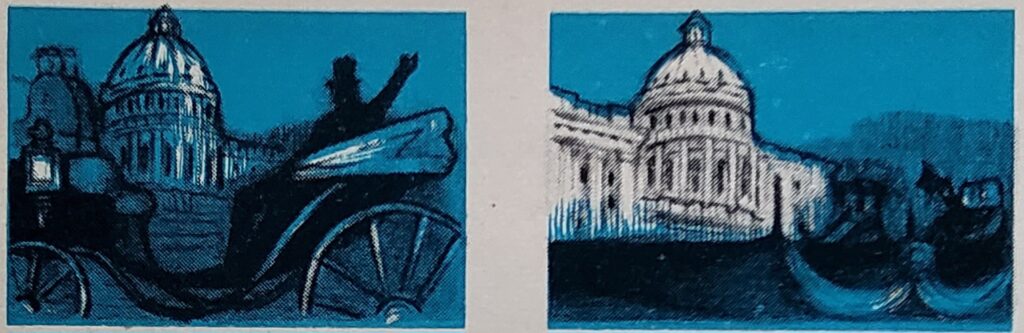
A fine national capital becomes a symbol of a nation. It is there that a people preserve and commemorate what they value and cherish in their national life. The capital of the United States was conceived and planned by the Founding Fathers and was named after the first President of the United States.
Today, visitors to Washington, D. C. want especially to see the White House and the Capitol. Every President except Washington, has lived in the White House and entertained there, the leaders and the famous folk of many lands. At the Capitol, we may visit the very rooms in which American statesmen, for a century and a half, have debated, made decisions and passed the laws which govern us.
lt may broaden our sympathies, if we reflect upon what an American feels, when they visit their capital; he feels what the Englishman feels about London, the Frenchman about Paris, or the Italian about Rome. Every centre of this kind, is hallowed by some peoples and their traditions.
THE WAR BETWEEN THE STATES
Sectional points of view and differences in economic need, troubled the federal government.
The East was industrial; it wanted a high tariff to protect its interests; it wanted a sound financial structure, which could only be provided by a strong central government. The Southern states were producers of raw materials and thus were not benefited by a high tariff. Indeed, if other nations could not sell to Americans, they could not buy from Americans; they would not buy the South’s tobacco and later, its cotton. The pioneers of the West at first joined with the South to favour the Democratic party. Later the free West, swung to the side of the North, destroying the balance between the two sections. By this time, the slavery issue had become all-important.
Most of the nations of the world had formally liberated their slaves, but the South could not see its way to do so. Its economic system was bound up with the large plantation. The North had shipyards, factories, industrial workers and large cities. Of course it had farms too, but these were chiefly small farms which produced a variety of crops. The South had more of a one-crop economy — cotton. An enormous market for raw cotton was created by the development of textile machinery in England.
The extension of slavery became a political stumbling block in Congress.
The question which divided the North and the South was not whether slavery should exist, but whether it should be extended to the new territories. Originally, there had been slaves in all the states. The Constitution had provided that in calculating the representation of the states in the House of Representatives, three-fifths of the slave population, should be added to the white. The North had not found slavery suited to its needs, hence the Northern states had, one by one, eliminated slavery.
Like tobacco, cotton wore out the land. Southern farmers who used slave labour, wanted new land onto which to move, when a plantation was worn out. From the beginning, the North opposed the extension of slavery to new territories and states. Slavery had been forbidden in the Northwest Territory by the Ordinance of 1787. Yet, were all new states to be free, the commercial North would soon outnumber the agricultural South in the Senate, as well as in the House of Representatives. This, the South would not accept and so, it insisted that free states be balanced in the Senate by slave states. Each time the issue arose, the difference between the two sections became deeper, the disagreement sharper, the argument more bitter.
During the first fifty years of the nineteenth century, one compromise after another was agreed upon by Congress. In 1818, Missouri wished to enter the Union as a slave state. The Northern states objected. Finally, the Missouri Compromise of 1820, resulted in the admission of two states: Missouri and Maine. Maine was admitted as a free state; Missouri, as a slave state. This kept the balance, with twelve slave and twelve free states in the Union.
More importantly, the Missouri Compromise attempted to solve the problem permanently. It provided that, of the new land in the Louisiana Purchase, all north of 36°30′ (the southern boundary of Missouri) should remain free, with the exception of Missouri. The compromise did not settle the question for very long. With clear foresight, John Quincy Adams said: “This present question is a mere preamble—a title page to a great tragic volume.”
Other events marked the deepening crisis. The admission of Texas was opposed by the free states. The Compromise of 1850 admitted California as a free state, in return for the enactment of a strong fugitive slave law. The Kansas-Nebraska Act of 1854, pushed in Congress by Senator Stephen A. Douglas of Illinois, provided that this region should be made into two territories, with the slavery question to be decided by popular vote. The law resulted in a race, to see whether South or North could send more settlers into Kansas. Bloody riots between the two groups of settlers gave the territory the nickname of “bleeding Kansas.”
The crisis of 1860, followed ten years of growing emotional tension.
Since the 1830’s William Lloyd Garrison’s newspaper, the Liberator, had been crusading fiercely for immediate and complete abolition of slavery. Another contribution to the bitterness of feeling between the two sections was Uncle Tom’s Cabin, a novel published in 1852. The author, Harriet Beecher Stowe, gave a vivid if one-sided picture, of slavery at its worst. The effect of this book was tremendous. Southerners, pictured as brutes and murderers, could hardly be expected to react with anything but anger. In the North, too, feelings rose high. Resenting the fugitive slave laws, Northerners declared that they would prevent their enforcement.
The election of Abraham Lincoln as President in 1860, brought about the final break between North and South. The Democratic party had divided on the question of slavery and the antislavery parties, joined the new Republican party, which nominated Lincoln as its candidate. Some of the Southern states declared that they would secede or withdraw from the Union, if Lincoln were elected.
Lincoln had made his position quite clear, that he opposed the extension of slavery to new territory. On the other hand, he understood the difficult position of the Southern states. He said:
“I surely will not blame them for not doing what I should not know how to do myself. If all earthly power were given to me, I should not know what do as to the existing situation.”
The secession of seven Southern states was followed by war.
Early in 1861, seven states organized themselves into a separate government, the Confederate States of America. At various times in American history, different states had made the claim that they had entered into the Union voluntarily and therefore had the right to leave it. As they had threatened, here were seven states testing their rights. The North answered that the Union, once formed, could not be dissolved.
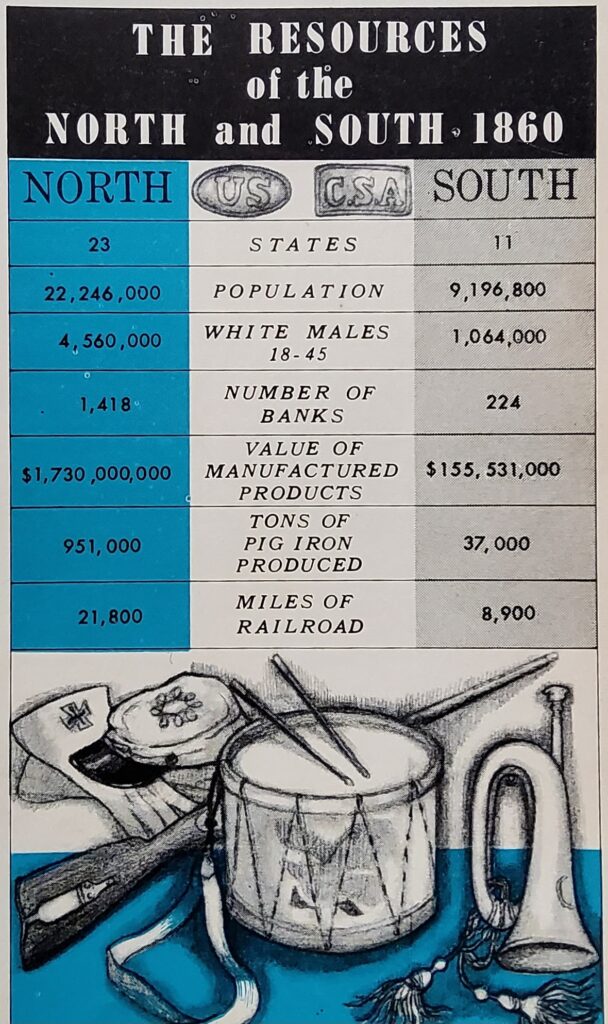
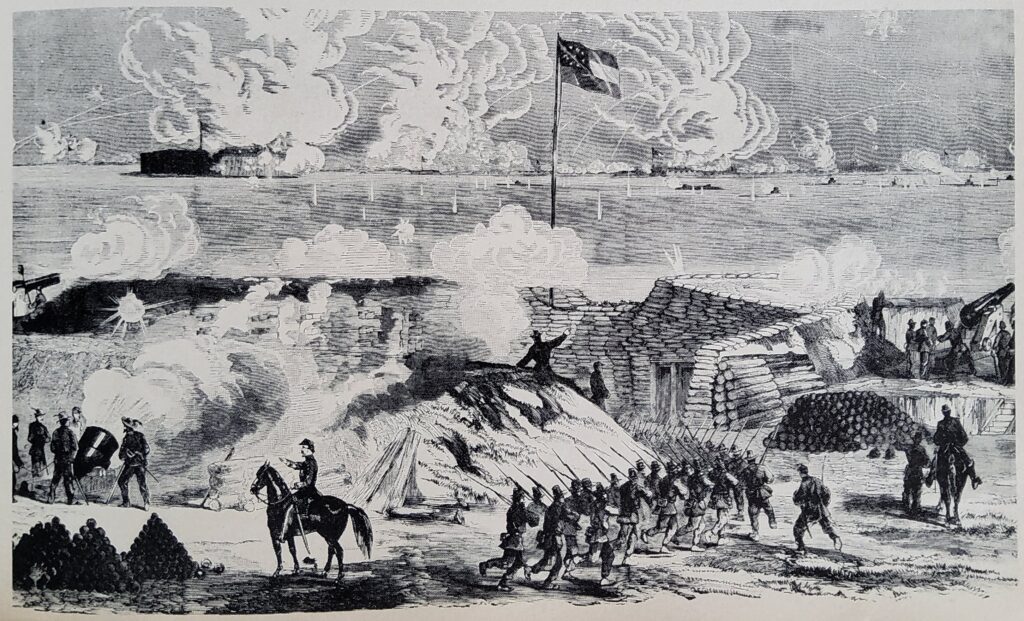
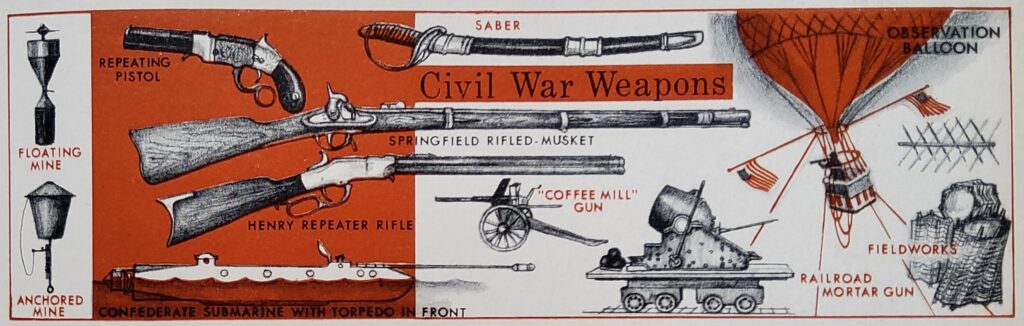
War between the two sections began at Charleston, South Carolina in April of 1861, when Southern forces fired on Fort Sumter and forced the garrison to surrender. Four border states later joined the Confederacy. The war went on until April of 1865, when General Robert E. Lee surrendered to General Ulysses S. Grant. The North won, because of superior resources of manpower, industrial strength and transportation.
The British and French governments favoured the South, but did not enter the war because the majority of English people, were in sympathy with the North. A war to save the Union meant little to them, but the freeing of the slaves meant much. This was the chief reason for Lincoln’s Emancipation Proclamation which stated that after January 1, 1863, all slaves in states or in parts of states still fighting against the United States, “shall be, thenceforward and forever, free.”
The Reconstruction Period left deep scars on Southern thought.
When the war ended, President Lincoln declared that the Southern states were still in the Union. He planned to administer them himself, until they could again elect representatives to Congress. Unfortunately, Lincoln was assassinated in 1865, by a crazed actor, John Wilkes Booth. Vice-President Andrew Johnson of Tennessee, who then became President, did his best to carry out Lincoln’s policy of conciliation, but the radical elements in Congress took reconstruction out of his hands. They formed a vindictive plan of “reconstruction.”
In order to be readmitted to the Union, each Southern state had to ratify the Fourteenth Amendment, which gave Negroes full rights of citizenship. Men who had fought for the Confederacy were excluded from voting. Meanwhile, the South was divided into districts which were administered by Federal occupation troops.
The Freedmen’s Bureau had been established, to help the Negroes until they could become adjusted to the new conditions. It became a part of a corrupt political system. This system was dominated by “carpetbaggers,” or Northern politicians who flocked to the South, to take advantage of conditions there and by “scalawags,” or Southern politicians of the same type.
Not until 1877, were the last Northern troops withdrawn from the South. By this time, the former masters in the South had regained their power. The Democratic party was solidly in control in the Southern states and remained so. The impoverished South, turned to the hard task of rebuilding.
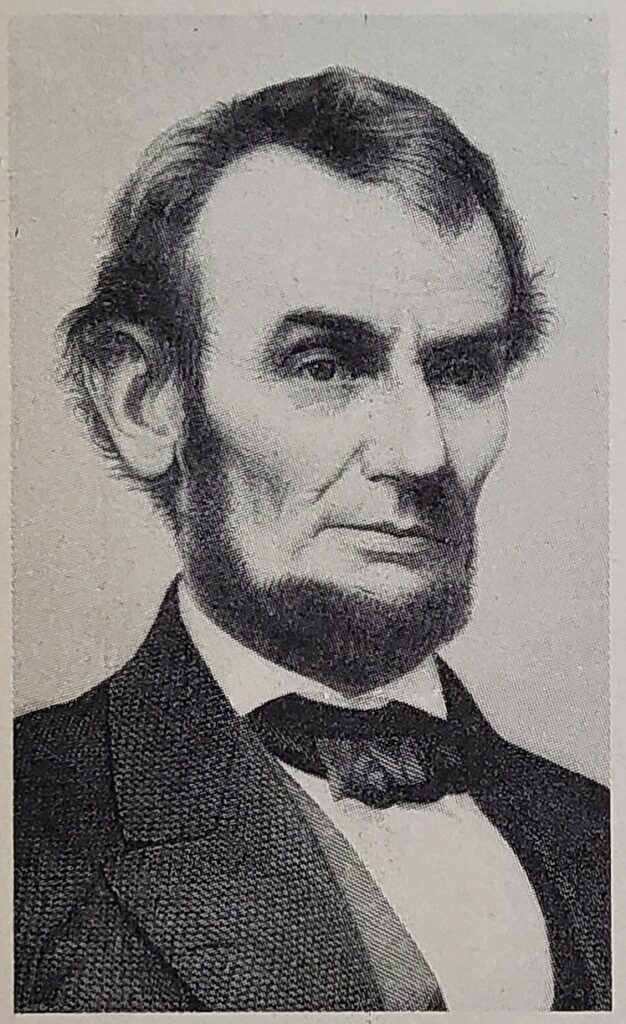
ABRAHAM LINCOLN — (1809 – 1869)
Americans cannot claim Lincoln exclusively: time has shown that he belongs to all men. His life and words are studied throughout the world, as those of a man in whom was summed up all that is good, in the American way of life. Underprivileged people everywhere can understand and appreciate the events of his youth and the opportunities which enabled him to rise above the austerity of the frontier and achieve the highest position, in the land. Today, when racial issues loom so large in many areas of the world, troubled folk can appreciate the fact that no other President, was exposed to the ordeal of a divided nation, or empowered by the force of circumstances, to emancipate a race.
Words and phrases from Lincoln’s lips and pen, have enriched our language and given us timeless quotations. The American national credo, could be composed of these utterances and be appreciated wherever they are read, in whatever language men thrill to: “With malice toward none; with charity for all; with firmness in the right, as God gives us to see the right, let us strive on to finish the work we are in; … to do all which may achieve and cherish a just and lasting peace among ourselves, and with all nations.”
GROWTH OF AMERICAN INDUSTRY
The United States made rapid growth in industrial greatness.
The Federal government made the land and natural resources available to private ownership and development. Patents were issued to encourage inventors. Heavy industry made phenomenal strides during the 1860’s and 1870’s. The steel industry grew until its production exceeded that of Great Britain, France and Germany combined. Petroleum was first produced, refineries established and a huge oil industry was fostered.
The growth of industrial power was aided by the combination of small companies, into big business organizations called trusts. In spite of their great political influence, Congress finally acted to curb their power in 1890, by passing the Sherman Antitrust Act. This law declared it illegal for companies to combine in restraint of trade: that is, they were not to prevent free competition by fixing prices and similar practices. The Interstate Commerce Act of 1887, curbed the power of the railroads to fix rates which at one time, Congress had pampered and aided.
Labour unions were formed early in the nation’s history.
Their declared aims were to shorten hours of work, improve working conditions and secure higher rates of pay, for their members. In 1886, the American Federation of Labor (AFL), was organized under the leadership of Samuel Gompers. It was a federation of craft unions, or unions to which skilled workers belonged. It was not until the twentieth century, that unskilled workers were organized into the unions of the Congress of Industrial Organizations (CIO), which later united with the AFL.
The growth of democracy and of industrialism was accompanied by demands for humanitarian reforms.
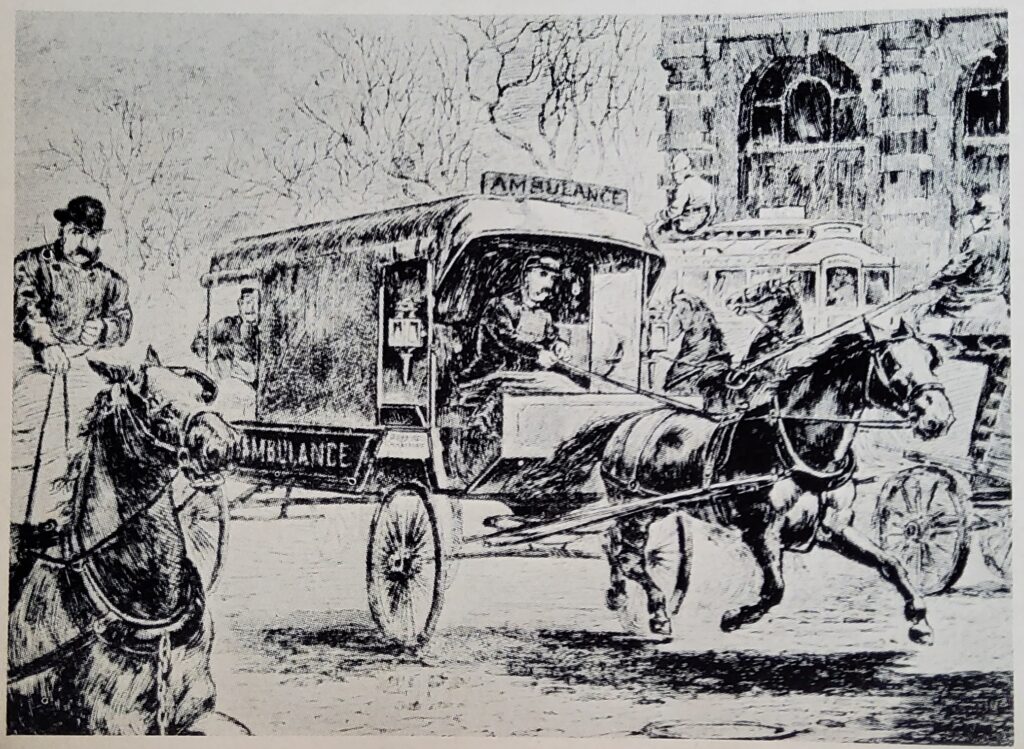
Reformers asked for better prison conditions, better treatment for the insane, adequate help for the poor and the unfortunate. Hospitals were built. Systems of free education were developed. Many states passed laws against child labour. Working conditions for women, were eventually regulated by state laws.
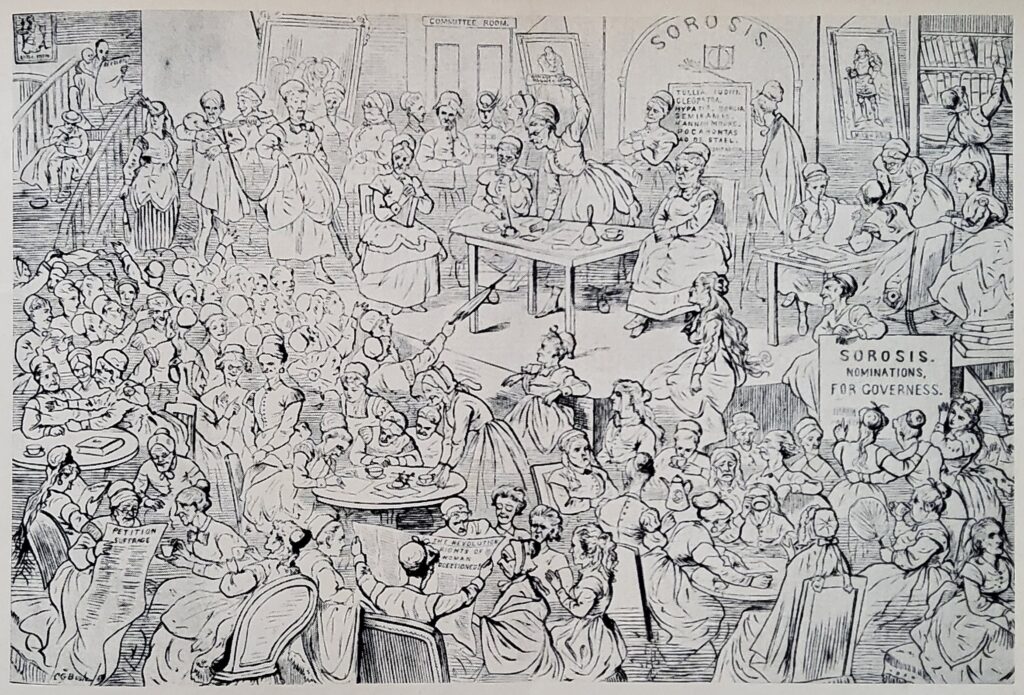
Women began to demand the right to hold property in their own names, to go to state-supported schools, to work wherever they chose and finally, to vote and hold office. In 1848, a Women’s Rights Convention was held at Seneca Falls, New York. The delegates declared that women must be free of man’s domination. Gradually, the various states began to pass legislation which improved the status of women. Some of the Western states gave women the right to vote; but not until 1920 was this right extended by a Constitutional amendment to all the women in the United States.
The demand for a merit system, by which government jobs would be given on the basis of competitive examinations, was a part of the reform movement of the 1880’s. It has long been customary for the party in power, to fill government positions with its friends. This system is known as patronage, or the “spoils system (from the saying “To the victors, belong the spoils”). After many abuses, Congress passed the Pendleton Civil Service Act in 1883, establishing the Civil Service Commission and placing a certain number of government jobs under its jurisdiction. State and city governments, set up their own civil service systems.
Americans of the 1800’s, were recklessly wasteful of natural resources. Their rapid depletion became so alarming, that the Federal government finally took action. In the 1890’s, President Cleveland set aside a large wooded area in California, as a national forest and withdrew 35 million acres of forest lands, from public sale. President Theodore Roosevelt, continued to work for the cause and during his presidency, established a conservation program. Its aim was the preservation or wise use of soil, forests, minerals, water and animal life. In 1902, Roosevelt urged Congress to pass the Reclamation Act. This step resulted in many dams being built, much electric power being generated and millions of acres of arid land, being turned into farm land.
The story of developments in the nineteenth century in America brings us into the twentieth century, for the story is a continuous one. The humanitarian ideas, the industrial development and the political struggles of the 1800’s, are still with us. Nineteenth-century Americans explored, invented, pioneered and built a strong nation. This nation over time, came to play an increasingly important part in world affairs during the twentieth century.