West Dominates the World (1763 – 1899 A. D.)
Imperial Russia: The land, the people, autocracy, Pan-Slavism, Alexander II, limited reform and the background for later revolutions. Russia’s relationship to European history was undoubtedly affected by the geographical fact that she has been more Asian, than European. Most of the world’s largest country is a vast plain broken by the Ural Mountains. The larger part which includes Siberia, is in Asia and looks away from western Europe.
Russia’s government and her part in international affairs during the nineteenth century, saw the major powers of Europe blocking Russia’s attempts to gain a warm-water port and access to the Mediterranean. Autocratic rulers, the effects of their individual personalities and abilities, influenced millions of people. Much of it sounds like a repetition of Russian history in the preceding century, for Russia lagged far behind the rest of Europe in achieving representative government and freedoms such as those of speech, press and religion.
Knowledge of the democratic reforms that were sweeping over Europe, penetrated the educated class. It is important to discover why these ideas could not find free and open discussion. Accounting for the fact, that no forum existed in Russia in a century, when even backward countries secured a shadowy elected assembly. Also accounting for the fact that in 1900, Russia was on the threshold of revolution.
THE LAND AND THE PEOPLE
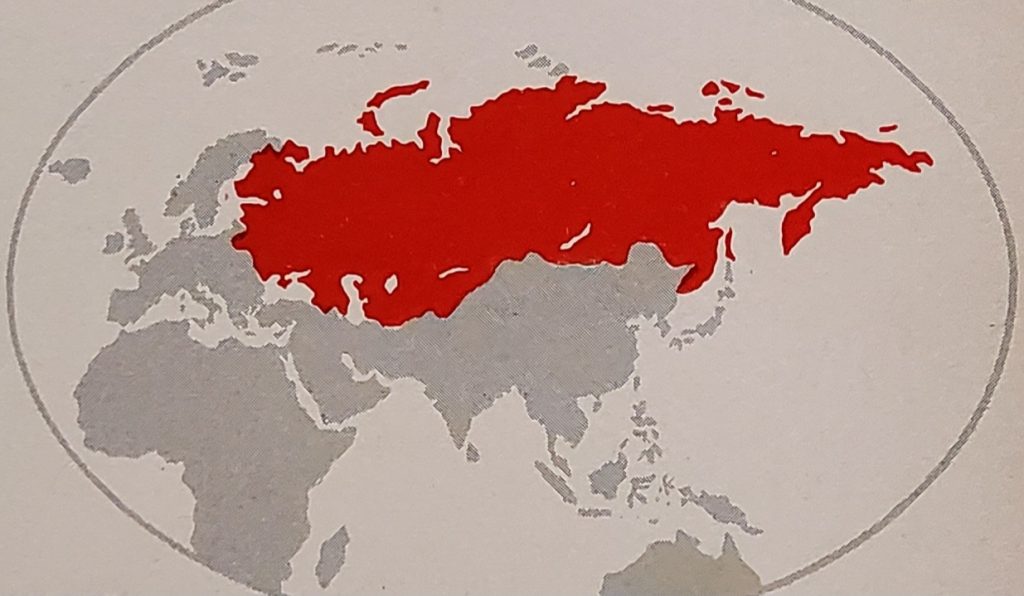
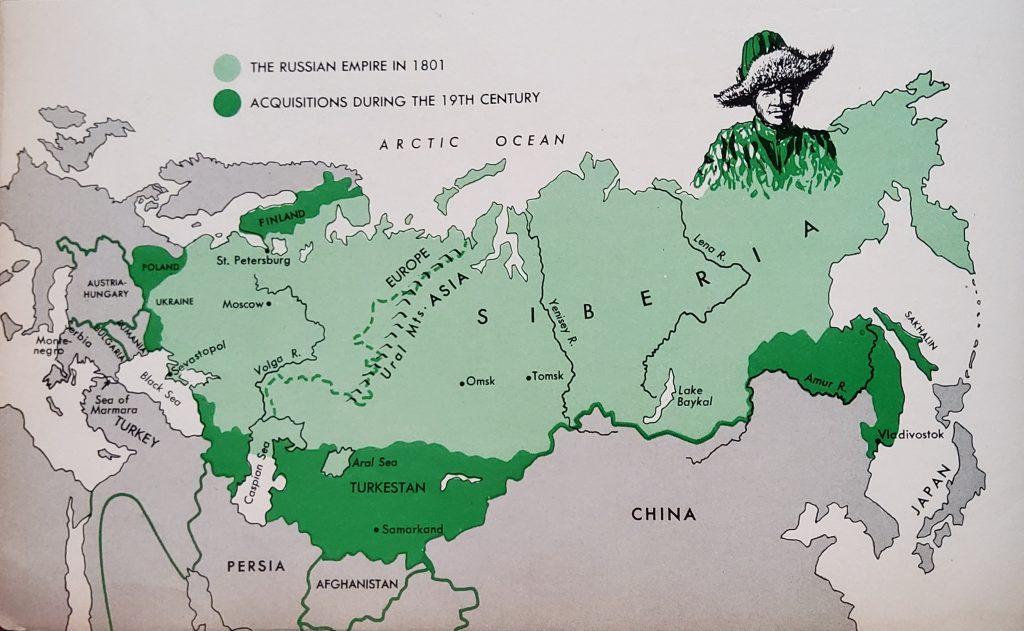
Geographically, Russia was the largest country in the world.
Russia occupied about one seventh the area of the globe, but very few people lived in such sections as the vast Siberian plains and the desolate tundra or treeless plains of the Arctic north. Russia was and is principally an Asian country, the largest part stretching from the Ural Mountains eastward to the Pacific Ocean. Only about a quarter of her millions of square miles, were within the continent of Europe.
Russia in Europe was essentially a great plain. When one crossed the relatively low Urals, he was on the West Siberian plain, the largest unbroken lowland in the world. Being mostly plain, Russia’s climate was continental over most of its area, with extremes of temperature, abrupt changes from summer to winter, low rainfall, violent windstorms. For nine months or more, dry still days, clear skys, low temperatures and light snowfall, were experienced over much of Russia. Summer days were warm or hot, broken by sudden storms and made unpleasant by clouds of mosquitoes.
This immense country, with its endless plains and continental climate, was inhabited by a peasant people, the majority of them serfs. Most of them were poor, ignorant and superstitious. Their chicf interest in life was to provide food, clothing and shelter, for themselves and their families.
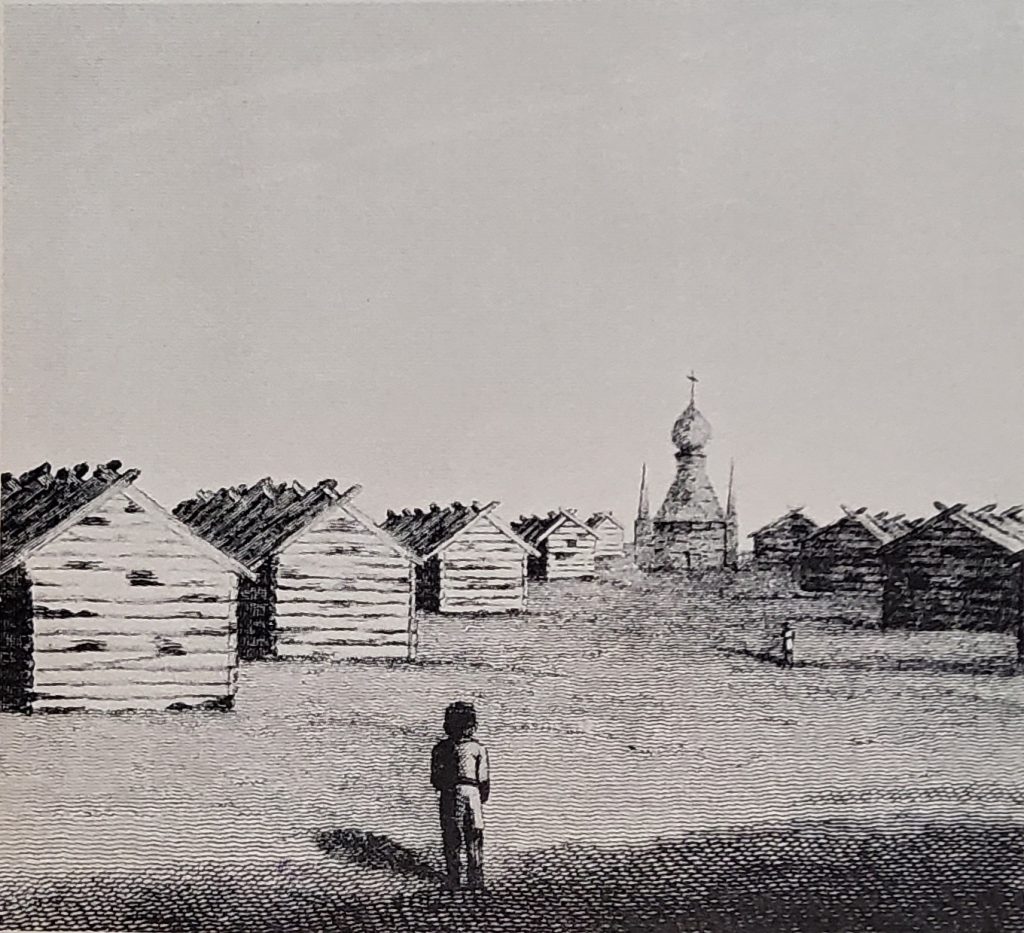
The Russian peoples included diverse linguistic and religious groups.
The Eastern Slavs moved into Russia from the West between 200 and 500 A. D.; the Vikings came by invitation around 862 A. D.; the Tatars invaded the land around 1240 A. D. By the nineteenth century, the Russian population embraced scores of different nationalities.
The Great Russians occupied the area which was once the grand duchy of Muscovy and the surrounding country of western Russia. They were Slavs, belonged to the Orthodox Church and spoke a language considered to be the literary, “official” language of the Russian Empire. To the south, in the Ukraine, one of the richest agricultural areas of Europe, were the Little Russians. They too, were a Slavic people, but their language was somewhat different from that of the Great Russians, they had different traditions and customs, too. To the northwest were the Lithuanians, many of whom were members of the Roman Catholic Church and the Finns and Letts, some of whom were Protestants.
Poland, had been divided in the eighteenth century among Prussia, Russia and Austria. In 1815, additional territory was added to Russian Poland, by the Congress of Vienna. Russian Poland was given a separate constitution and assembly, but this small degree of independence, did not last long.
In southern Russia, living in lands taken from the Turks, were the Cossacks and various peoples of Asian origin. Many of the latter were Moslems. In the northeast on the broad plains of Siberia, there was a wide mixture of Russian colonists, exiles and native tribesmen.
Perhaps five million Jewish people were scattered throughout Russia, especially in Lithuania. Poland, the Ukraine and Bessarabia. Many German farmers had settled on the fertile lands of central and southern Russia, while German artisans and businessmen lived in many Russian cities.
During the nineteenth century, when nationalism was the order of the day and great social gains were being made in various countries, Russia made almost no progress in unifying her people. The czars continued to develop autocracy and to persecute some of the racial and religious groups, who could have contributed much strength to nationalism.
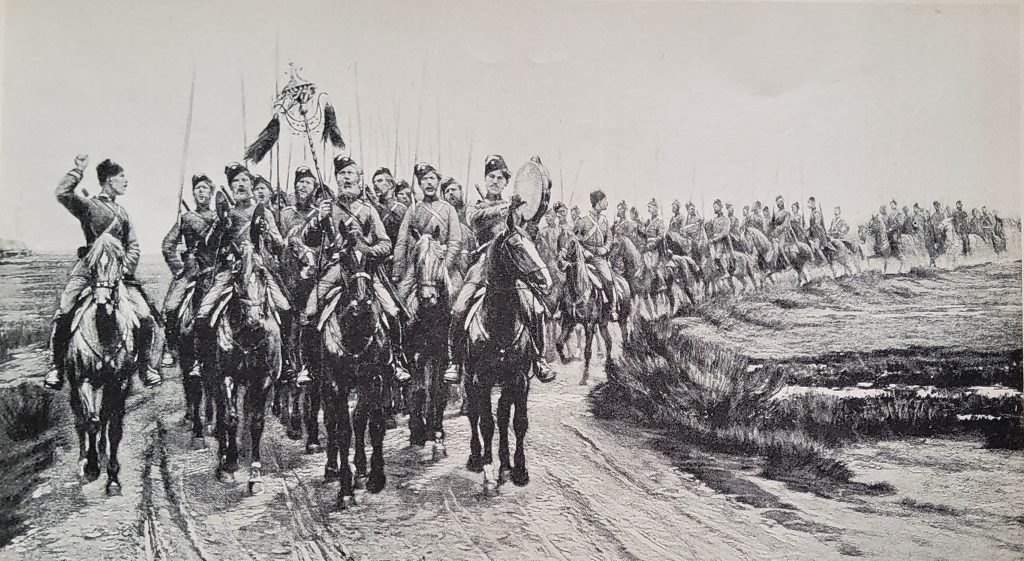
The Cossacks were colourful, daring horsemen, who served as special cavalry troops for Russian rulers. They were exempt from taxation and were among the few, who had some democracy in czar-ruled Russia.
AUTOCRACY AND PAN-SLAVISM
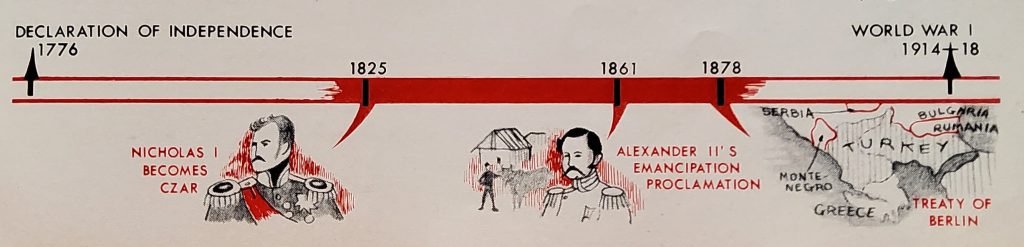
Nicholas I, who became czar in 1825, was opposed to any liberal movement in government.
This attitude was based in part upon the fact that he became czar against his will, by putting down a revolt. To understand this in general and Nicholas I in particular, consider the background of this revolt. In the late 1700’s, French philosophers had made an impression upon intellectuals at Catherine the Great’s court. From that time on, liberal political ideas had been studied in Russia by a small group and much had been written about the bad social and political conditions, in that country. The younger generation of Russian officers came back from the Napoleonic Wars with a conviction that their land must experience much reform. They had read newspapers and books while abroad and heard the debates in some representative assemblies. They were shocked by what they saw at home.
A small group of liberal nobles and of well-educated officers of high rank in St. Petersburg, formed a secret society in the hope of giving Russia a limited monarchy. They planned to achieve a whole group of reforms by peaceful means, but all at once a chance to force a change seemed to present itself. Czar Alexander I died in 1825, leaving no son. His older brother, Constantine, had already waived his rights to be czar in favour of his younger brother, Nicholas. The young revolutionaries decided to make Constantine czar and on December 26, 1825, the St. Petersburg garrison revolted against Nicholas. The revolt failed. Nicholas became czar, had five of the revolutionists (called Decembrists) executed and more than a hundred exiled to Siberia. These bright young men were the first of modern Russia’s long list of political martyrs.
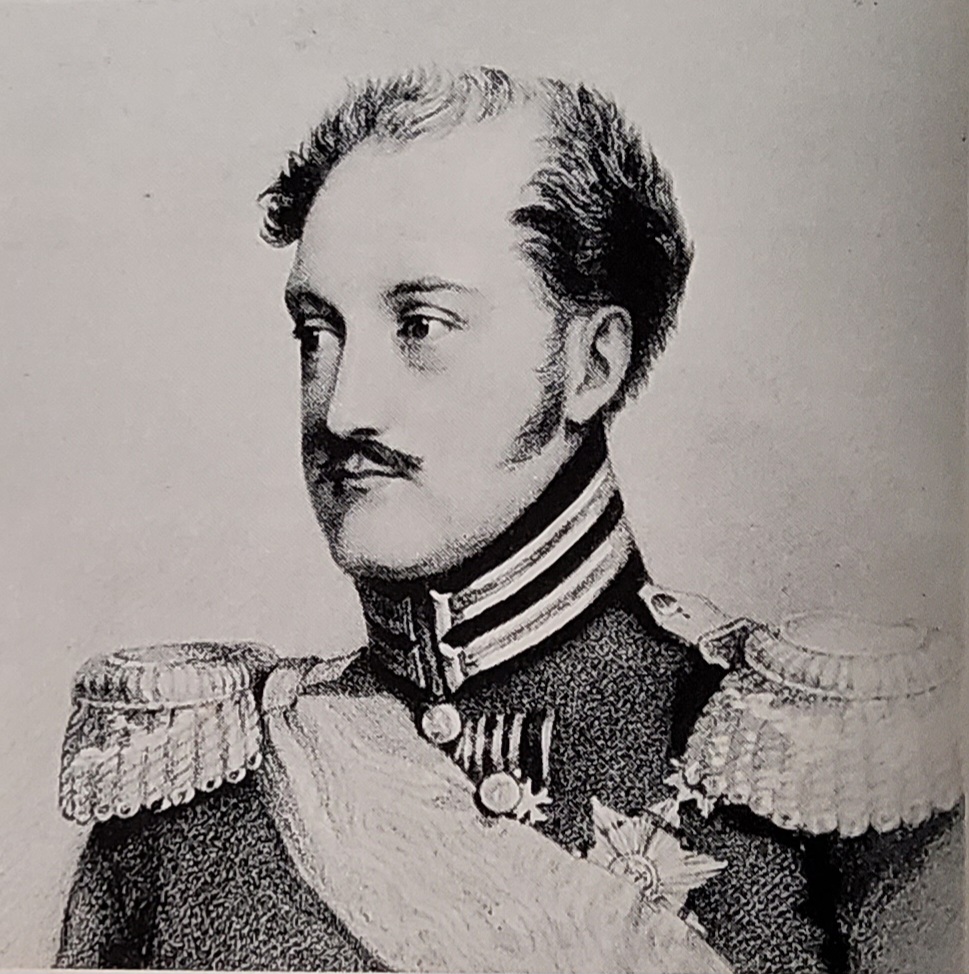
The Decembrist revolt frightened Nicholas and he became a complete autocrat. He believed that he was ordained by Providence to be an autocrat and that Providence would tell him what to do. Abroad, he co-operated with the Metternich system and won for himself the title “policeman of Europe” because of his willingness to suppress revolts. At home, under the “Nicholas System,” he tried to shut out all liberal foreign influence. Visitors were screened at the border and anyone with “dangerous ideas” was halted there. Censorship on all published books, articles and news stories was severe. A careless word, a single sentence containing a liberal idea, might lead to exile or death. The schools and universities, of which there were few, were forced to use textbooks approved by the government. The government supported a widespread system of secret police, to uncover any form of liberalism. Young people were forbidden to attend foreign universities. Religious freedom was unheard of.
The government of Russia was firmly in the hands of the czar and his secretariat. Some two percent of the people owned the wealth and controlled all Russian affairs. The masses had no political rights; there was no representative assembly; political offenses were handled by government police. Political offenders were given no trials, could make no pleas and were frequently sent to Siberia, to spend their lives in forced labour. It is estimated that 150,000 persons may have been exiled there between 1832 and 1852.
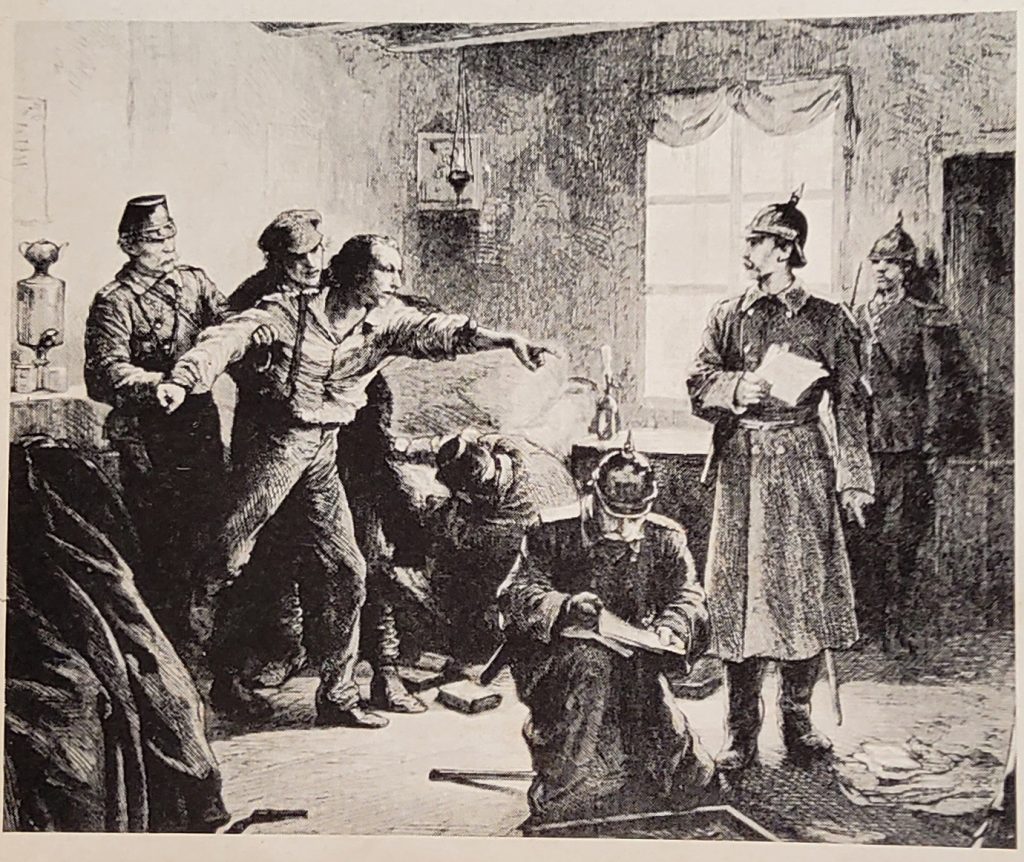
Russian serfs were tied to the land where they were born. They could not marry without permission, nor leave the estate on which they worked. They had no property rights and were often severely punished. Workers in factories, which had just begun to develop, laboured under similar conditions.
The revolutions of 1830 in Europe ended the first part of Nicholas I’s reign. In 1831 the Poles, inspired by events in Belgium and France, struck for national independence. The czar crushed the revolt by force of arms and then applied the Nicholas System. Poland was made a Russian province; Polish universities were closed; Polish soldiers were assigned to Russian regiments. Russian was made the language of administration and of the courts.
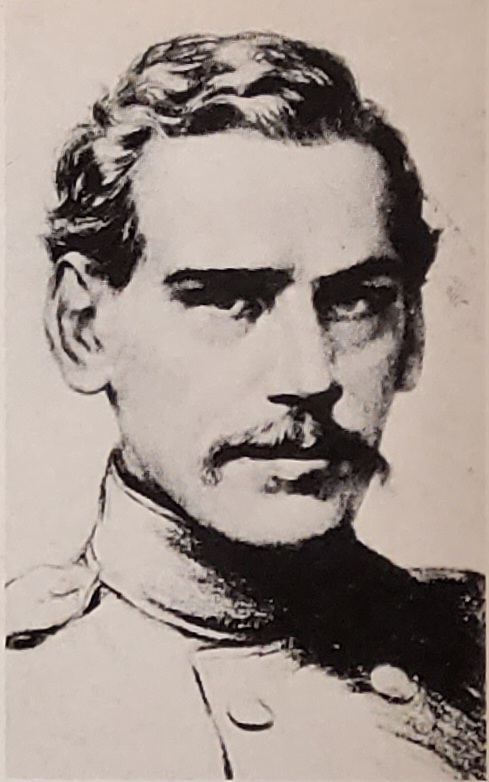
COUNT LEO TOLSTOY — (1828 – 1910)
The life of the greatest nineteenth-century Russian novelist was intimately linked with the events and movements of his day. He was a nobleman with a large estate worked by serfs. He served in the army and witnessed the events of the Crimean War. His thinking about military life led him to write War and Peace, a philosophical novel about people — both ordinary people and great personages — caught in Napoleon’s invasion of Russia in 1812.
The emancipation of the serfs in the 1860’s profoundly influenced his life. He worked to educate his ex-serfs and began to lead a peasant-like life of poverty and simplicity. Many of Tolstoy’s contemporaries were exiled for writing about political and social reform, but he was protected by his great reputation. He influenced thought at home and abroad, through his widely accepted writings.
Nicholas I struggled to gain a warm-water port.
In his desire to make Russia self-sufficient, Nicholas could not forget the long-felt Russian need for an outlet to the Mediterranean. The Baltic ports were subject to freezing during the winter. The Turks were able to close the way from the Black Sea to the Mediterranean.
When, in the 1820’s, Greece revolted against Turkish rule, Nicholas decided to aid the Greeks. He secured the Treaty of Adrianople, which gave Russia some Turkish lands in the Caucasus region. More important, the Greeks’ example inspired other peoples of the Balkans to seek freedom. The Rumanians, the Serbs and later the Bulgars, began to hope for independence. Since many of these people were Slavs and belonged to the Orthodox faith, it seemed to Nicholas that he was their natural protector. Pan-Slavism is the term applied to this Russian plan, to control all the Slavic peoples.
When in 1832, the ruler of Egypt revolted against Turkey, Nicholas decided to help the Turks. For his help he was rewarded with a treaty which gave him the right to station battleships in the Straits (the Bosporus, the Sea of Marmara and the Dardanelles).
England and France were displeased and worked for years to get the treaty broken. Russia finally lost the concession, but being a determined man, Nicholas regarded this setback to Russian control of the Straits as temporary. He suggested to the British that Turkey was a “sick man” and about to die; a division of his estate was in order. The British did not listen to the proposal, for they did not want to see Nicholas get Constantinople.
Nicholas I’s Turkish ambitions led to war with Britain and France.
In 1853, Russia found an excuse to go to war and her armies invaded Turkish territory. France, England and the Italian kingdom of Sardinia, joined Turkey against Russia to stop Russian expansion and to keep Russia from gaining free access to the Mediterranean.
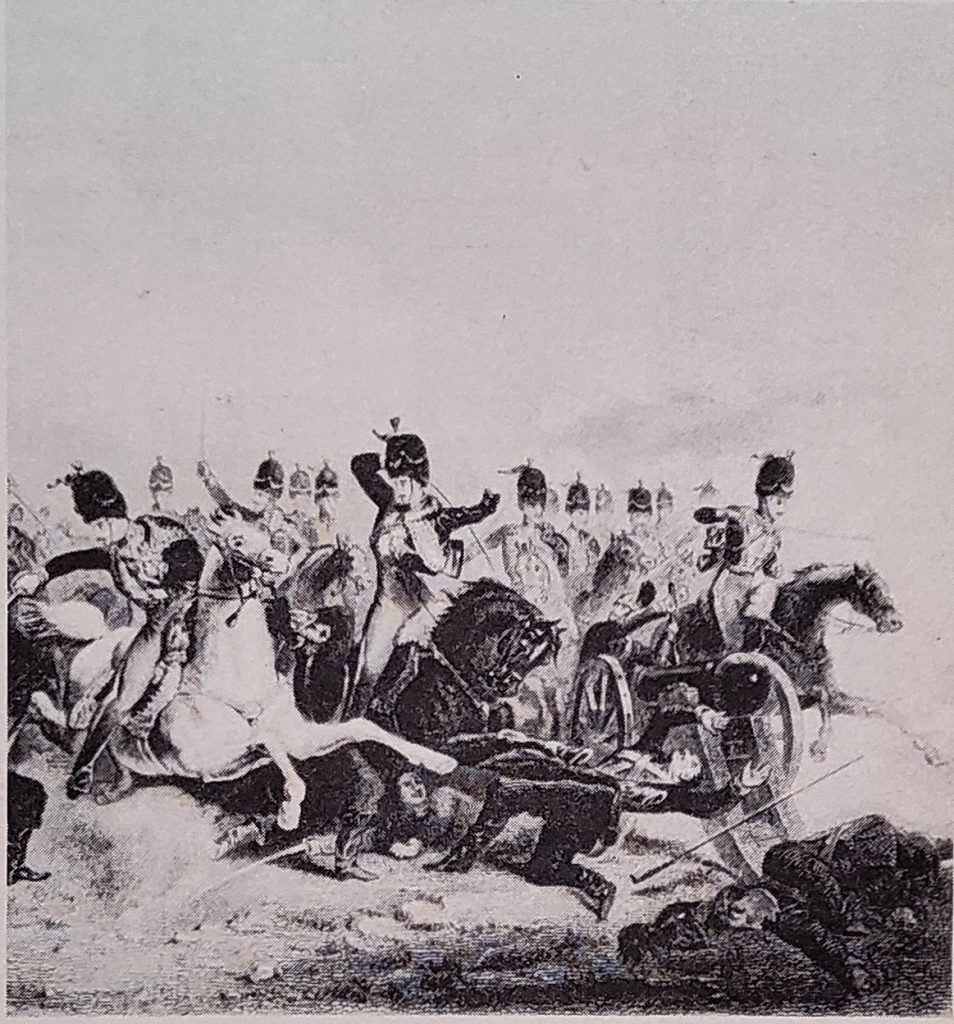
The Crimean War lasted until the siege and fall of the Russian fortress of Sevastopol, in 1856. The war caused great suffering and many lives were lost in hard-fought battles. Cold and disease weakened the battling armies. It was during this war that an English nurse, Florence Nightingale, became famous for her hospital work among soldiers. A thrilling poem by Alfred, Lord Tennyson immortalized a battle of this war: The Charge of the Light Brigade.
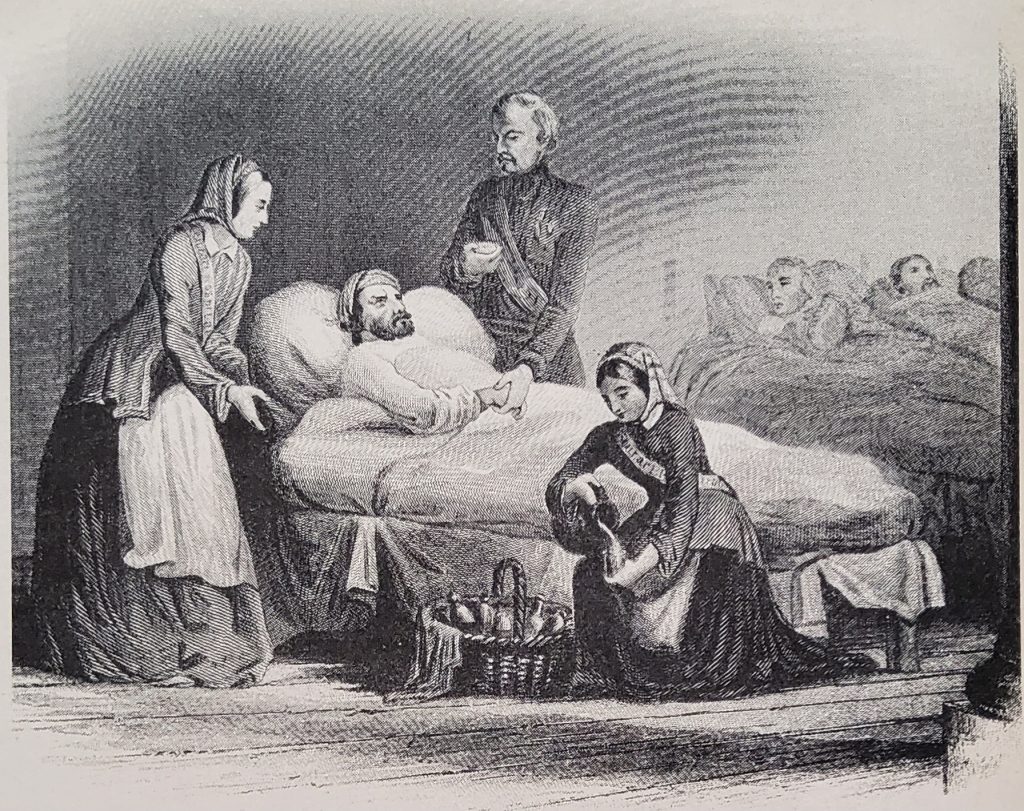
During the siege of Sevastopol, Nicholas I died, much grieved at the failure of his efforts. In the peace that followed, the nations of Europe showed again that they wanted no Russian expansion to the south or to the west. Further, Russia was forbidden to use the Black Sea for the development of her navy and she lost control of the lands she had taken from Turkey during the war. The Russians left the war with a deep hatred of Austria, which had not in this crisis returned the help Russia had given her, during a Hungarian revolt in 1848-49. As for England, it was clear that she would oppose Russian advance as a threat to her control of the Mediterranean sea routes.
The Crimean War convinced many Russians that their country could no longer remain backward or feudal. They felt that Russia’s greatness depended upon change and progress.
ALEXANDER II AND LIMITED REFORM
The most important event in Russia in the 1800’s, was the emancipation of the serfs.
Alexander II came to the throne at a time when there was a clamour for reform. Serfdom had been labelled a national disgrace, so the new czar attacked that first. He knew that about nine-tenths of the good land in Russia, belonged to about 100,000 leading families. Each family estate, many of which covered hundreds of square miles of land, depended upon the labour of the serfs, of whom there were more than 23 million.
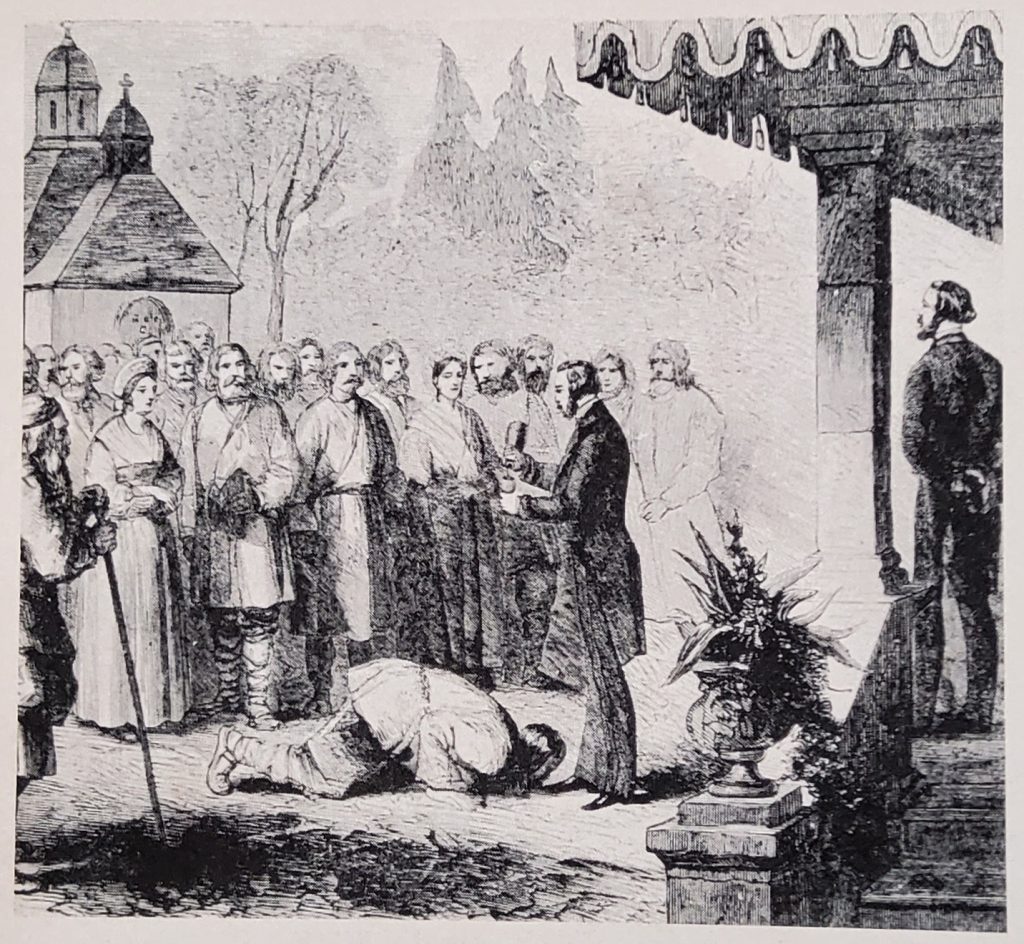
A committee studied the matter and drew up an Emancipation Proclamation. This was issued as an edict of Alexander II in 1861, shortly before the beginning of the War Between the States in America. It freed the serfs on the landed estates. Within five years, other laws freed the domestic serfs and those on crown lands. The peasants became citizens subject to the government, instead of being subject to their masters. Many received land, houses and domestic animals with their freedom, all of which were paid for by the government. In turn, the peasants now had to pay the government a special tax, for forty-nine years. The government also paid the landlords for the lands, the serfs had received. In effect, the serfs purchased their freedom through the payment of taxes, for forty-nine years.
Even with this freedom, individual ownership of property was not established in Russia. Instead, the lands allotted to the peasants were held collectively by the village community, or mir. The mir divided the land among the peasants and supervised it. If a newly freed serf decided to leave his community, his possessions went to the mir.
As it worked out, many peasants resented the tax they must pay annually and claimed that the nobles had kept the best land for themselves. Many peasants prospered, but others could not make a living on their land and moved to the cities. There they became factory workers, but did not improve their lot.
With the serfs’ emancipation behind him, Alexander II turned to other reforms.
A new code of laws was established. Trial by jury was introduced in criminal cases. Justices of the peace were elected by local citizens. A supreme court of appeals was set up. All these reforms were helpful as far as they went. They did not, however, apply to political offenders.
Local and city governments were improved. Russia had for a long time been divided into thirty-odd provinces or “governments.” In 1864, Alexander II decreed that each district of the provinces, was to have its own local board or assembly (zemstvo), made up of landowners and indirectly elected delegates. The zemstvos could collect taxes for hospitals, roads and schools.
In spite of the reforms mentioned, Russia still had a despotic government. There was no representative assembly, for the czar appointed the legislative body or the Council of the Empire. The ministers were responsible only to the czar. There were secret police; torture and imprisonment without trial were still common. When in 1863, the Polish people again revolted against Russia, Alexander put down the rebellion and began to feel, that perhaps liberal reforms encouraged rebellion. Censorship of the press was again set up and the universities were closely supervised, in the hope of stamping out revolutionary ideas.
Alexander II won a war with Turkey but lost the peace.
Bulgaria revolted against Turkey in 1877 and the sultan suppressed the rebellion with great cruelty. All Europe protested the slaughter and bloodshed; and the Russians demanded war. Russia’s armies were successful and the sultan of Turkey, begged for peace. By the Treaty of San Stefano, signed in March of 1878, Serbia, Rumania and Montenegro, were to become independent states and “Greater Bulgaria” was created, as a new state. Constantinople, with some adjoining territory, remained under Turkey’s control.
This situation was highly displeasing to other European nations. England did not want to see Russian influence expand toward the Mediterranean. Austria resented the creation of “Greater Bulgaria”, because it interfered with her ambitions to control the Aegean port of Salonika. Greece and Serbia resented its creation, because they each wanted much of the territory that had been given to this new country.
Alexander reluctantly agreed to a general European conference for settlement of the Balkan question. It met at Berlin in 1878. Bismarck, who served as president, said that he would be the “honest broker” in adjusting the claims of the various nations. Many important diplomats, including Disraeli, took part in undoing the Russian treaty and writing a new one, the Treaty of Berlin.
If you weary reading of the many wars, conferences, treaties and divisions of territory in Europe, remember that all of these nineteenth-century agreements were to influence affairs in the twentieth century; and be part of the root causes of world wars.
The Treaty of Berlin recognized the freedom of Montenegro, Serbia and Rumania. It did not recognize “Greater Bulgaria,” but again divided that country. Turkey kept about one third of her European territory. Austria made small territorial gains. England secured rights to the island of Cyprus, giving her added power in the Mediterranean. Russian expansion was thus prevented, chiefly by England and Austria.
Bismarck, who had once hoped for an alliance of all the sovereigns of eastern Europe, settled for the Triple Alliance of Germany, Austria-Hungary and Italy. When the existence of this agreement became known, France and Russia, both isolated by Bismarck’s diplomacy, began what diplomats call a rapprochment or establishment of cordial relations.
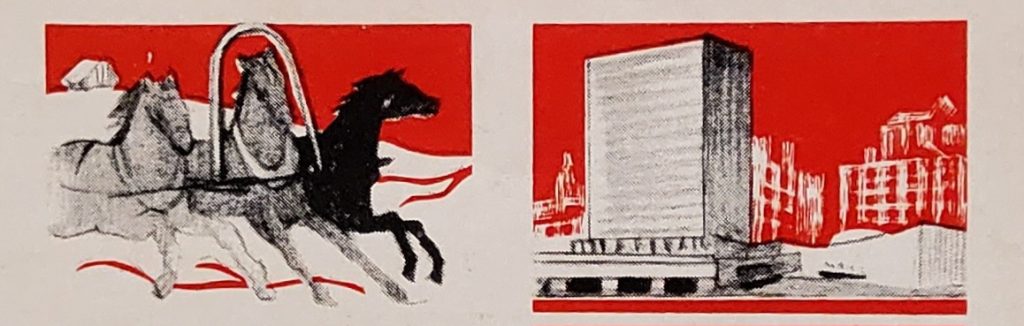
LINKING THE PAST AND THE PRESENT
For centuries, the Russians have loved sleigh rides over their icy winter roads. The exhilaration of the ride and the rhythm of the horses’ hoofbeats were caught by a composer in the sleighride song we hear so frequently on TV and radio. To draw the sleighs, the Russians developed a unique way of harnessing horses three abreast called the troika.
In the 1960’s a Russian official became irritated at the Secretary-General of the United Nations. He said that there should be three secretaries, one each to represent the democratic, the Communist and the neutralist blocs. Someone pointed out the obvious, that the scheme would prevent any effective action.
“Oh, no!” he replied ingenuously, “they would work together like a troika.”
BACKGROUND FOR LATER REVOLUTIONS
Alexander III, like Nicholas I, was an open enemy of social progress.
He was like his grandfather in physique, in temperament and in his dislike of democracy, parliamentary government and freedom of the press. He proceeded to rule harshly, relying upon a secret police system and a strong army.
The Nihilists, a group of radical reformers, had warned Alexander that revolutionists are the creation of circumstances; of the general discontent of the people; of the striving of Russians after a new social framework; that … discontent only grows all the more, when it is repressed. In spite of this warning, the new czar believed that Russia must keep out the liberal ideas of western Europe. Censorship was applied, even to the universities. Terrorists were hunted and so were those, who did not accept the teachings of the Orthodox Church. The Jews, for instance, had to live in certain provinces, referred to as the Jewish Pale. They were made the scapegoats for Alexander II’s assassination and subjected to pogroms, or organized massacres. Many emigrated to the United States. Others, led by Theodor Herzl, became supporters of a plan he called Zionism. Herzl said that, Jews were a nationality and should create an independent state for themselves in Palestine.
Unable to publish their ideas at home, a number of Russian revolutionists lived abroad.
There they wrote, plotted to overthrow the czar and maintained contacts with the “underground” revolutionary movements in Russia. Aside from the Nihilists, most of them were Socialists. Socialism as a philosophy and as a political activity, had developed along with the Industrial Revolution and was rapidly gaining followers in many countries.
It had been noted that the Industrial Revolution was producing more wealth than had ever been known before, yet in many instances its benefits had not come down to the workers. Socialists believed that this situation would be corrected only when the means of producing and distributing goods, were owned by the people; that is, by the state. They would have all industries which produced or distributed goods (such as factories, mines, railways) owned and managed, by government instead of by individuals.
Like Plato in his Republic and More in his Utopia, Socialists of the early nineteenth century dreamed of an ideal state, where men would live by the Golden Rule and work for the good of all. Karl Marx (1818 – 1883), one of the most influential of Socialist writers, called these men dreamers and Utopian Socialists. An editor in Germany, Marx came into conflict with the authorities because of his beliefs and moved to Paris. There he met Friedrich Engels, son of a German manufacturer. Together they published in 1848, the Communist Manifesto, a document which became the rallying cry of the Communist party. The Manifesto urged the world’s workers to unite and rebel against the capitalists, who were identified as the workers’ oppressors.
Marx’s most important work, Das Kapital (Capital), was written later while he lived in poverty in London. It is a study of economics based on his theories of work and wealth, becoming one of the most influential books, especially in Russia.
Nicholas II, inherited a shaky throne when C he became czar in 1894.
Nicholas was a weak and handsome man of limited ability, surrounded by courtiers and bureaucrats, who kept him ignorant of conditions as they really were. He announced his attitude toward reform by saying:
“It has been brought to my knowledge that during the last months there have been heard in some zemstvos the voices of those who indulged in .. . senseless dreams with respect to the participation of the zemstovs in the general direction of the internal affairs of the State. Let it be known by all that I shall devote my whole power to the best service of the people, but that the principle of autocracy shall be maintained by me as firmly and unswervingly as by my lamented father.”
Nicholas had no intention of granting the people a voice in the internal affairs of Russia. However, many organized groups were demanding the sort of reforms, that other European nations had already achieved. Many Russians would have supported him in establishing a limited monarchy and parliamentary procedures, for by 1894, various political parties were working both openly and underground, for just such a change.
Russia was ready too, for increasing the prosperity of the nation by developing industry and transportation. Count Sergei Witte, minister of finance and commerce when Nicholas II came to the throne, advocated such internal development and got some of it underway. He found that foreign capitalists were ready to invest money in Russian industries and railroads.
Blindly set in his way, Nicholas fought the wish for change by the very methods the people wanted discarded. His weakness and his outdated ideas prevented his seeing that the Industrial Revolution had created forces both within and without his country, that were moving like a Greek drama toward a climax of revolution and destruction. Next came, his overthrow and the revolution which brought communism into power; because of this climax, the majority of Russians have never known the civilized rights and freedoms, which have been the traditional privilege of Americans, for instance.