
West Dominates the World (1763 – 1899 A. D.)
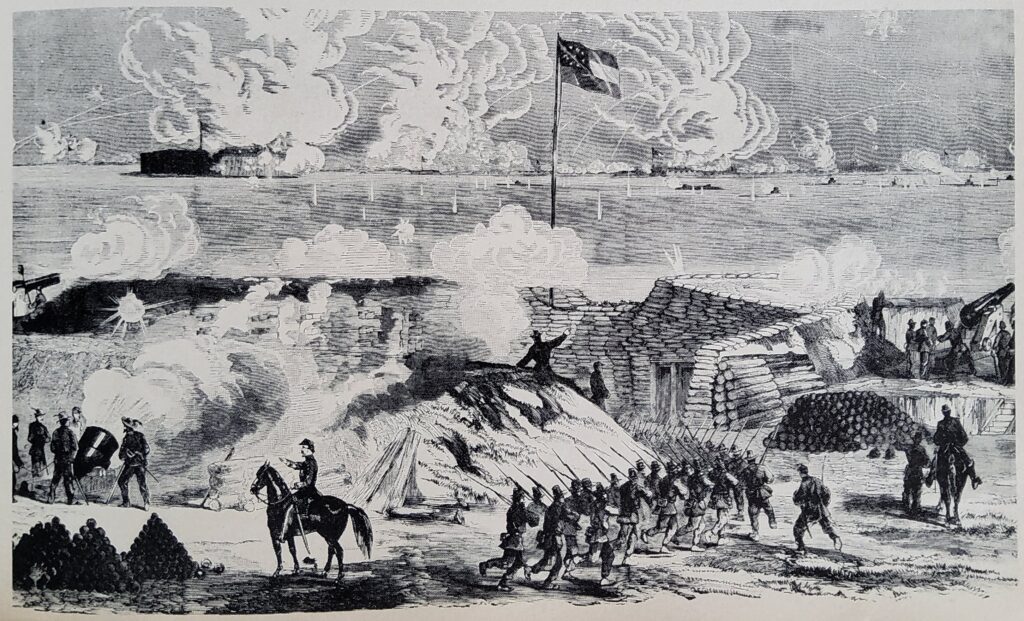
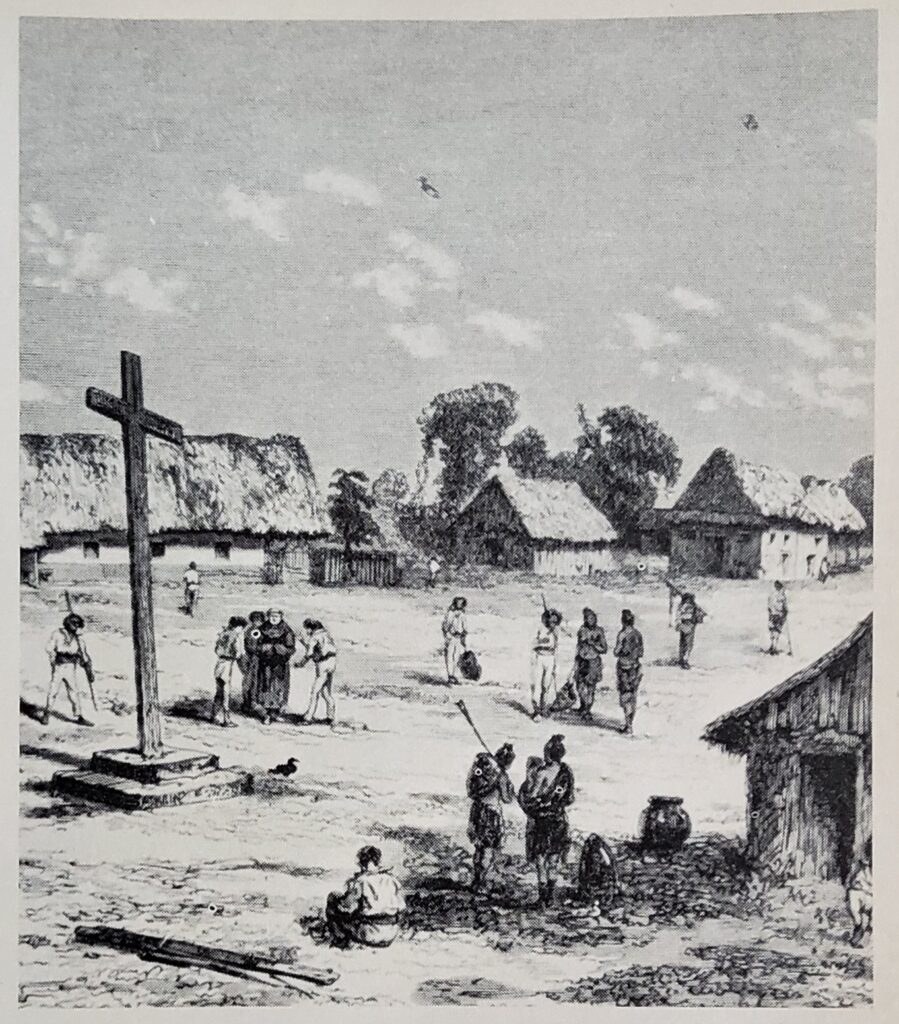
Achievements of the nineteenth century: Industry and Invention, Nineteenth-century Education, Romanticism and Realism in the Arts, the Nineteenth Century and the Common Man. The century before our own was a great one in many senses of the word “great.” It was remarkable for advances upon several cultural fronts; it was remarkable that so many parts of the world were involved.
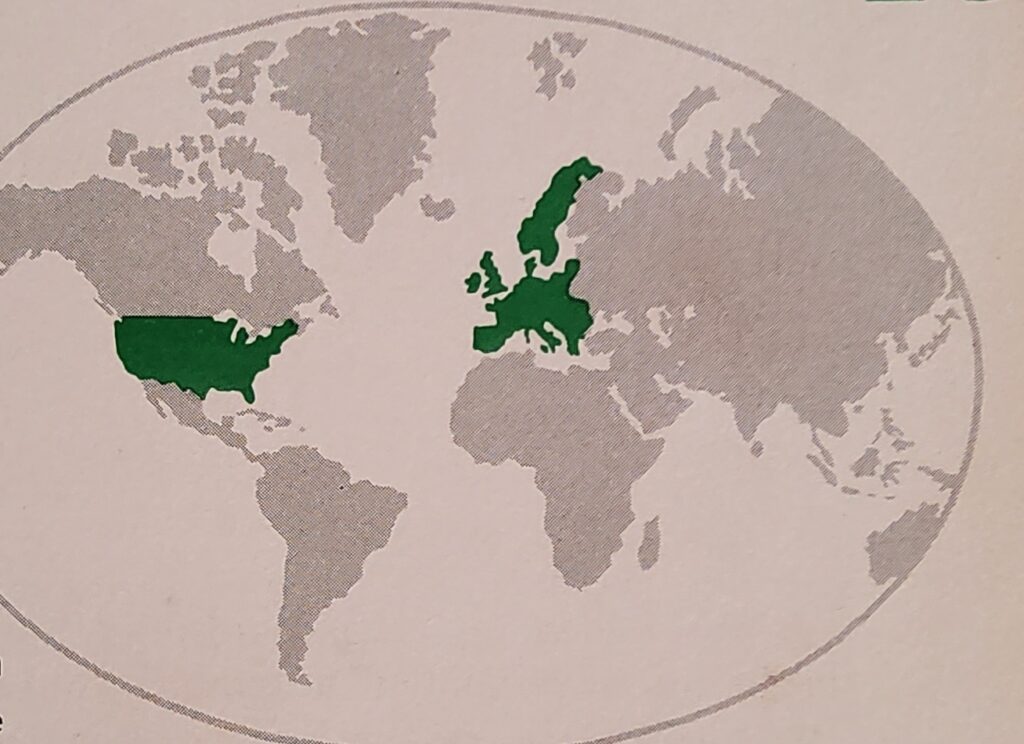
This period chronicles achievements in the expansion of industry, sometimes called the Industrial Revolution. It points out that as men moved into the cities to work in the new factories and other industrial jobs, a country such as England needed other countries to import foodstuffs, or exchange her industrial products for them. This international exchange of agricultural and manufactured products made the nations of the world more dependent upon each other.
The United States came of age in the 1800’s. They were quick to accept the findings of the developing sciences and to utilize them. They made definite contributions to the arts, to industry and to trade; this period brings us closest to our own time. We are alerted to note the appearance of new inventions, discoveries and ideas, which are now very much a part of our own lives, but which were unknown to George Washington when he died in 1799. Notice too, that the world came down to the end of the century, convinced that the cornerstone of nineteenth-century democracy, had been individualism.
INDUSTRY AND INVENTION
The nineteenth century was a time of colossal industrial change; an age of coal, steam and iron.
It was an age of factory building and increased mass production, in which transportation was improved in order to haul raw materials to the hungry mills and to distribute the goods of industry.
The most needed item in an age of industry is power, with which to drive machines and vehicles. Between 1815 and 1870, the water wheel and the steam engine provided power. The water wheel was inexpensive, for it utilized the energy of falling water, but mills and factories using it must be located near streams, which sometimes were far removed from raw materials and markets. The steam engine ate coal in vast, unheard of quantities.
England well endowed with coal, so well met the demand for the new fuel, that her production went from 10 million to 265 million tons a year, during the course of the century. Enormous quantities of coal were likewise produced in the United States, Germany, France and Belgium. A nation that lacked coal, as Italy did, was confronted with an economic problem of the first order.
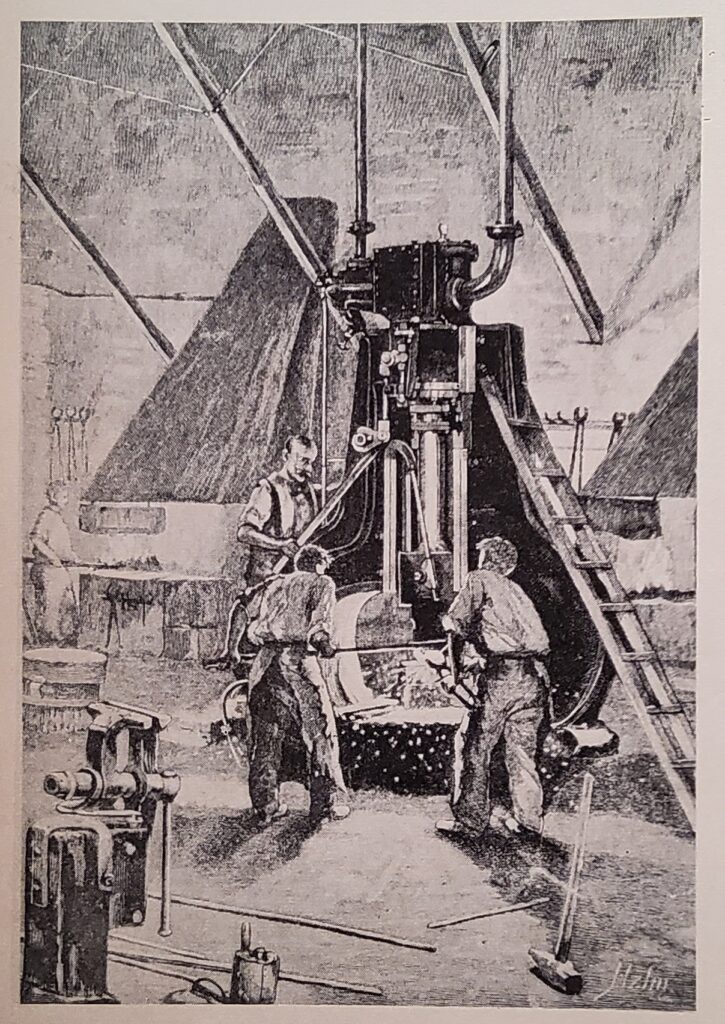
The mechanization of manufacturing evolved in the late eighteenth century. This evolution, which for lack of a better term we call the Industrial Revolution, may be divided into several phases. In the first phase, a series of machines was invented which (1) could be turned out by hand faster than they could be made by hand and (2) utilized better sources of power. Textile-making in England, was the first area to be industrialized in a big way.
Better machines were made after a better system of refining iron was invented. The cast iron of the day was too brittle to withstand heavy strain, because it still contained impurities. The new method, called puddling, involved burning out the impurities and then, stirring the molten iron with a long rod. This process gave England cheap malleable wrought iron, enabling her to use the rich iron deposits in northern England to advantage. During a later phase (shortly after 1850), Henry Bessemer, an Englishman whose process of making steel you may study in high school chemistry, enabled his country to make steel so quickly and cheaply, that its price fell to 50 per cent of the cost of the best iron.
The story of coal and iron production is in a way, the story of steamboats and railroads. During the nineteenth century, these became commonplace and with their widespread use, people depended much less on local markets for their goods and much more on national and world markets.
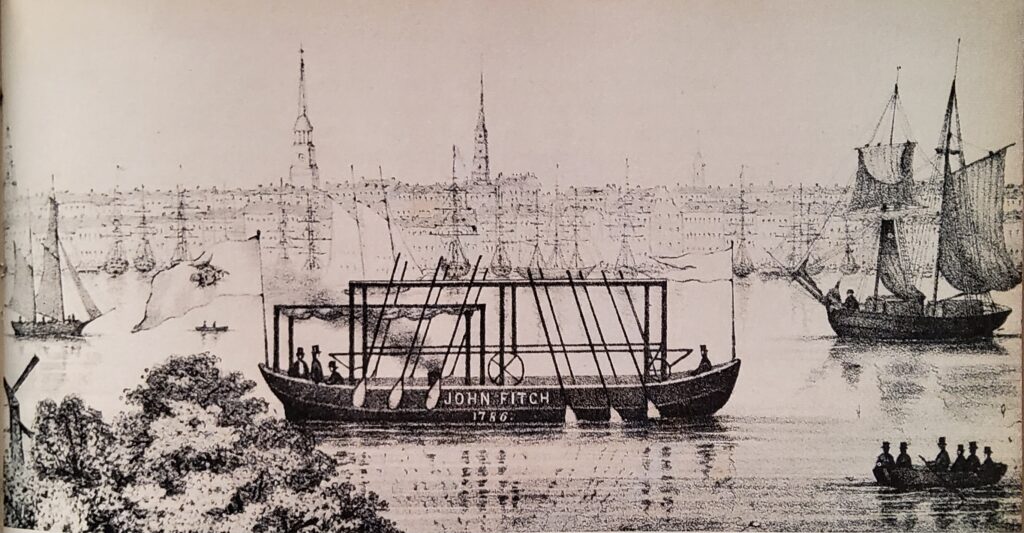
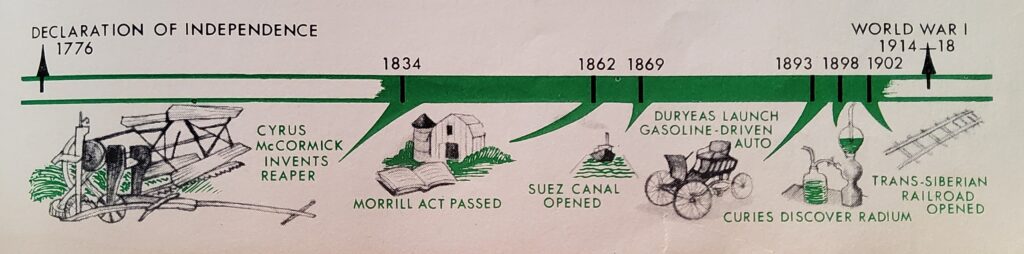
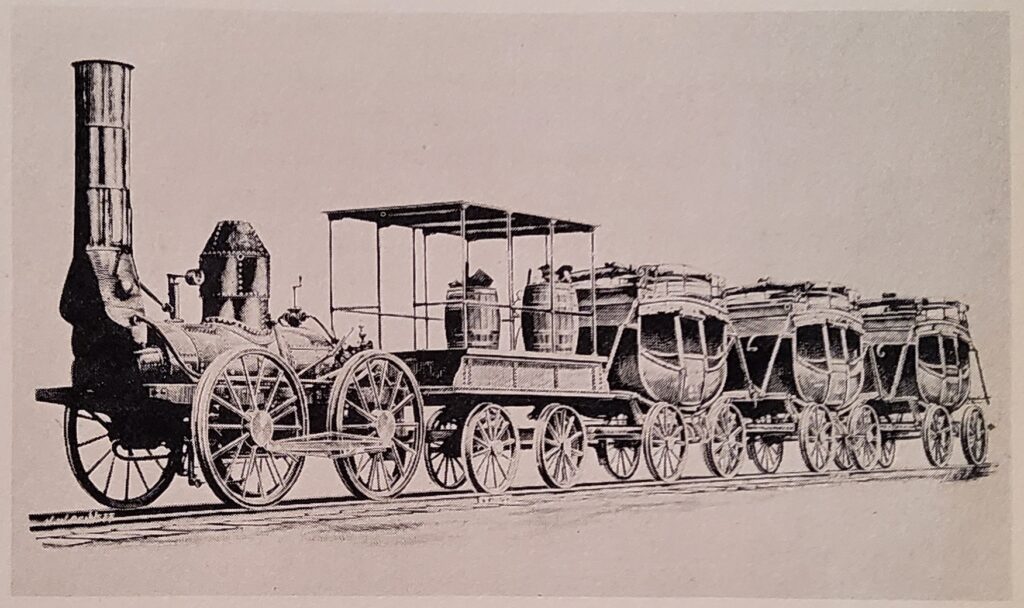
In the early 1800’s, Robert Fulton launched a steamboat on the Hudson River. Within twenty years, steamships were crossing the oceans, though pessimistically furnished with masts, in event the steam engine failed. Railroads got underway after 1825, when George Stephenson demonstrated to Englishmen, that his locomotive could pull a train carrying freight. When the Union Pacific and the Central Pacific met at Ogden, Utah, in 1869, the United States had its first transcontinental railroad. The completion of the Trans-Siberian Railroad in 1902, linked the Atlantic and the Pacific by rail. A railroad map, complex or simple, became an easy means for determining the progress of any region.
Both the speed and safety of transport were steadily improved. The propeller replaced the paddle wheel. Turbines used steam energy of steam, more efficiently than steam engines. Inventors greatly improved brakes and signal devices and made fortunes on their ideas. Harbours were improved, lighthouses built and steamship lines, vied with each other in the building of transatlantic liners, that were virtual floating hotels. International trade, commerce and empire building, went hand in hand with the improved water transport and the spreading networks of railroad lines.
Huge canals were built to shorten world distances and shipping.
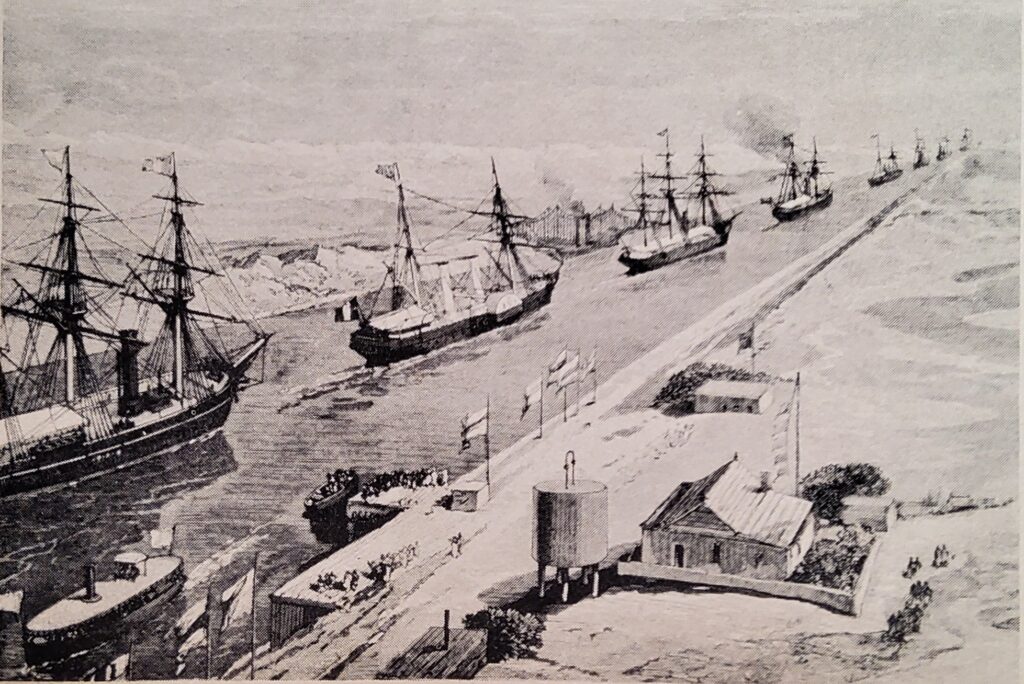
For awhile both Europe and America, went through a period of canal building that linked lake and river transportation systems. [The Erie Canal, which made water transportation possible from New York inland, helped to build the harbour of New York into America’s leading port of the day.] Then engineers turned their skill to the ocean highways. The Suez Canal, constructed by the French engineer de Lesseps, was opened to traffic in 1869. This provided a shorter waterway from Europe to Asia, by connecting the Mediterranean with the Red Sea, an event so important, that Verdi was commissioned to write the opera Aida for the occasion.
De Lesseps attempted to repeat his success in Panama, but failed. That project was delayed until the following century, when the United States reduced the threats of malaria and yellow fever in the Canal Zone and completed the canal. The Sault Ste. Marie Canal (the Soo), jointly controlled by Canada and the United States, has come to handle vast tonnage; and was very important during the world wars as a means of moving iron ore to the smelters.
The basic principles of electricity were developed by inventors in the nineteenth century.
Faraday’s discovery, that a wire passing through a magnetic field induced a current, led to the invention of the electric generator and motor. James Clerk-Maxwell, a Scottish scientist, conducted research in electromagnetic fields and set scientists to thinking of light, heat and ultraviolet radiation; and to the ultimate invention of such things as the wireless, radio, telephone and x rays. Electricity made possible the telegraph and telephone, thus revolutionizing the communications industry.
The invention of the internal-combustion engine led to a revolution in the field of transportation.
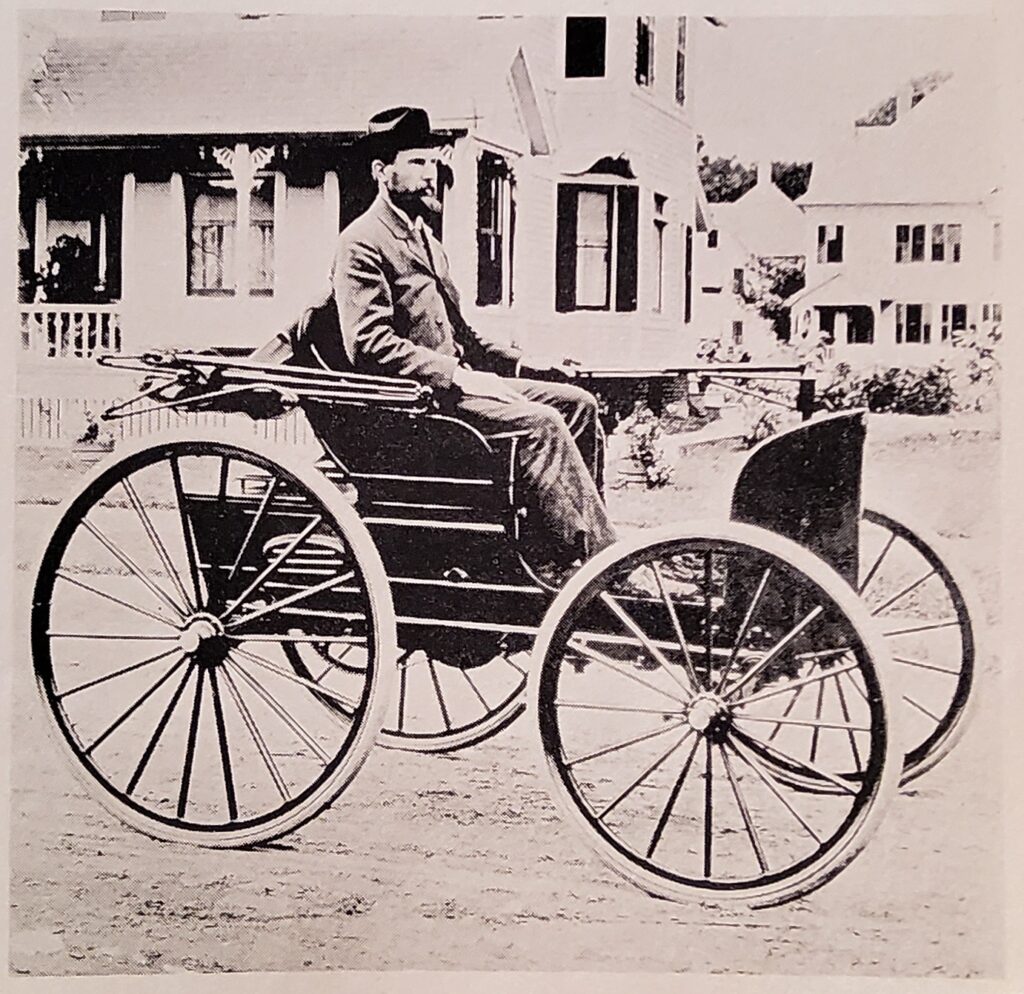
The gasoline-powered automobile was developed in France and Germany. Charles E. and J. Frank Duryea studied in 1893, a German-made “horseless carriage” and in 1893, surprised residents of Springfield, Massachusetts, with their gasoline powered car, the first built in America. Other cars soon followed and in 1895, was the first automobile race in this country. Won by a driver who took his machine over a ninety-mile course near Chicago, in eight hours and forty-five minutes! An early automobile builder, Henry Ford, standardized his parts, used mass-production methods and an assembly line. He reduced the price of autos so greatly, that millions of people could buy them. The steam-driven and electric automobiles of former days gradually became outmoded.
The growing demand for automobiles stimulated other industries. Huge amounts of steel and copper were used. The production and refining of petroleum grew into a major industry. Petroleum had come into use in the 1860’s when kerosene supplanted whale oil, for lighting. In refining petroleum as a kerosene, gasoline had remained a useless nuisance, liable to cause spectacular fires. In 1860, the peoples of the world, used only a half million barrels of crude oil. With the new engines in use, this figure had leaped to 325 million barrels a year by 1910.
Another practical use of oil as a fuel energy was made by Rudolf Diesel, a German engineer. In 1892, he took out a patent on an engine which burned crude oil, or fuels cheaper and less volatile than gasoline. The Diesel engine became popular for driving electric generators, marine pumps, locomotives and large trucks.
Charles Goodyear’s discovery of how to vulcanize (chemically treat) rubber, came at the right time to meet the need for tyres. Rubber was growing in use too, for electrical insulation. There was a boom in the sales of natural rubber from the Amazon Valley. Businessmen in Europe saw an opportunity to make money and developed plantations in British Malaya and the Netherlands Indies, whose rubber soon became the world’s chief source.
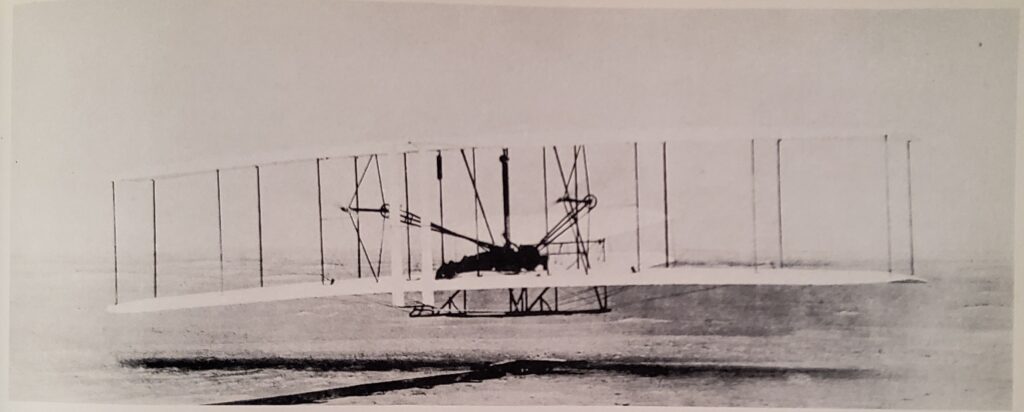
The lightweight internal-combustion engine made the airplane possible.
Long ago, Leonardo da Vinci had been frustrated because no engine was available to power the planes he designed. Later inventors had experimented with balloons, with gliders and in 1896 an American, S. P. Langley, made a small airplane, that used steam for power and naphtha as fuel. The government gave him $50,000, with which to build a larger machine, but it was not successful. Meanwhile, the Wright Brothers had begun their work, which was to result in the conquest of the air, with gasoline-powered heavier-than-air craft.
The industrial changes of the nineteenth century revolutionized farm life in the more advanced countries.
In the first half of the century, wheat and cotton was king; in the latter half, wheat and corn took the throne.
In 1834, Cyrus B. McCormick invented the reaper and built a factory in Chicago, where he was close to the farmers who needed it most. As a result of this invention, the states of the Middle West, entered upon a new era of prosperity. Inventors soon followed with such machines as corn planters, grain binders, threshing machines and cream separators.
Between 1840 and 1850, Justus von Liebeg, a German chemist, discovered that land could be enriched by fertilizers. Later, another German chemist discovered that clover, peas and other legumes, add nitrogen to the soil and enrich it. Experiments by plant breeders resulted in new and better varieties of food plants. Luther Burbank, experimented with selective breeding and crossbreeding. At his nursery in California, he learned to grow white blackberries, new kinds of plums, better sugar corn, thornless cactus; in all, he created more than 100 varieties of fruits and vegetables. George Washington Carver, learned to make more than 100 different products from the sweet potato and more than 300 from the peanut.
Fewer people and using machines, could meet the demand for farm products. This fact, coupled with industrial shifts from country to city, led to population shifts from country to city. England, Belgium and Germany, for example, soon had larger urban, than rural populations. France too, lost many of her peasants and small farmers to the factories and mills.
In effect, the exchange of agricultural and industrial products, was making the peoples of the world dependent upon one another and was creating a kind of economy and a kind of industry, which can exist only when supported by international trade and commerce. By 1900, no great nation could be prosperous and exist apart from other nations.
NINETEENTH-CENTURY EDUCATION
Education became general, in the advanced countries of the world after 1860.
Before 1860, most of the people in Europe were unschooled and illiterate. As more and more people had a voice in choosing officials, it became increasingly clear, that continued progress depended upon an informed and intelligent body of voters. Gradually, the demand for skilled workers also indicated the desirability of training them in schools.This was a need of both the factory and of the farm.
Building on what had gone before, several leaders greatly influenced people’s ideas about education. Among them were Pestalozzi of Switzerland, Froebel and Herbart of Germany and Horace Mann of the United States. Although Horace Mann of the United States differed, the writings and teachings of these men helped change people’s views about educational methods and the value of education.
Prussia was the first country to establish general education, but by 1900, free and compulsory elementary education in some form had become the order of the day, in western Europe. It was controlled largely by the national governments and the schools of each country, were uniform in standards and methods. A study of legislation in England, France, Germany, Italy and the Scandinavian countries, indicates that at various times during the last century, more and more money was appropriated for maintaining schools, for paying teachers, for establishing training schools for teachers and for setting up systems of compulsory education, for the young.
The move to secure free public schools met with much resistance in the United States.
Well into the nineteenth century, free education had been looked upon as pauper schools. Church groups were already supporting their own private schools. Taxpayers argued that parents should pay for their children’s education.
New England was the leader in establishing schools for all children. Massachusetts had the first state board of education in America and in 1837, this board appointed Horace Mann as secretary. Mann visited schools in Europe, published reports on what he saw, started a normal school for the training of teachers and generally stirred up interest, in public schools. By 1850, it had been generally established that a state has a right to tax for education and to require local communities to raise funds, to match state grants if they expect state aid. The various states and cities soon organized their own school systems, which though not identical, were similar in purpose.
A federal policy of encouragement, aided public education in the United States. For example, the Morrill Act of 1862, provided public lands for the support of state secondary schools in which agriculture and mechanics, would be taught. Many excellent American institutions of learning resulted from this farsighted legislation.
In 1870, the total enrollment in all public schools was about seven million. By 1900, this enrollment had been doubled and the total expenditures for education had been increased more than 400 per cent. A public high school had been started in Boston in 1821 and other cities had followed suit, but as late as the century ended, only one teenager in ten, went to high school. The total number attending college, had risen to about 100,000.
Higher education for women, came to be accepted in principle.
In 1837, Mary Lyon founded at South Hadley, Massachusetts, a school where girls could get a higher education. Emma Willard, founded two schools for girls in the 1840’s and promoted the idea of education for all women. Oberlin College in Ohio, opened its doors to both men and women, thus becoming the first “co-educational” college. Abroad, Queen’s College in London, was dedicated to the training of women in 1848. These beginnings were followed in other nations and have led to far-reaching changes in modern society.
The school curriculum changed immensely, between 1800 and 1900.
The sciences, scarcely recognized even as late as 1850, were among the important subjects added. Vocational education was introduced. Nineteenth-century schools were much more formal than are our schools today. Discipline was rigid and corporal punishment was commonly practiced. The United States looked to Europe, for many of its educational methods and theories, particularly at the university level. By 1900, universities were developing laboratories and were teaching the various branches of science, to their students.
When examining the curriculums of the nineteenth century, one finds that each nation tended to teach nationalism. Both German and English pupils, were taught that theirs was the greatest nation in the world; French pupils were led to believe that France, was Europe’s leader. The United States too, had a unique and vigorous role in world history. Such nationalistic tendencies in education, produced a wholesome respect for national institutions, ideas and achievements, but they also did much to set one nation against another, in the race to control world resources and to build powerful armies.
Learning was promoted by mechanical inventions such as, the printing press and the camera.
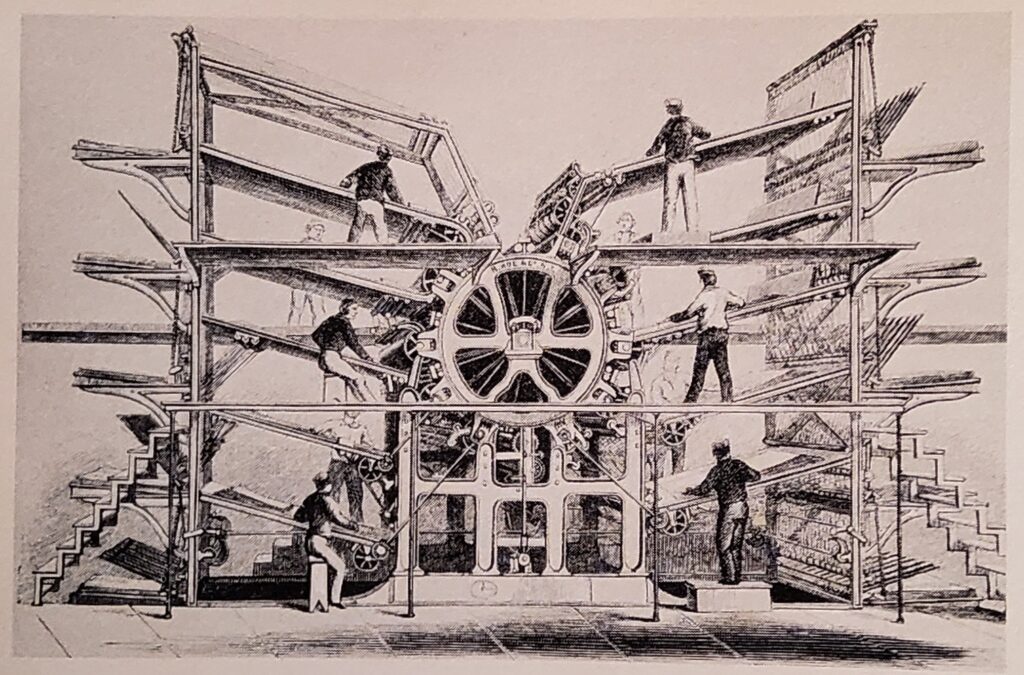
The presses of the nineteenth century were powered first by steam and later, by electricity. They were increased in size, until a press could print thousands of newspapers an hour. Mergenthaler’s linotype machine, made it possible to cast a line of type, by pressing keys like those of a typewriter. The new telephone, the telegraph and the cable, carried information swiftly from place to place; helped to make newspapers a powerful influence in molding public opinion.
The better facilities and the demand for information and knowledge, resulted in the starting of hundreds of new magazines after the – War Between the States. More books had been published between 1850 and 1900, than in all man’s previous history. Until then, books had been a luxury confined chiefly to a few private libraries. Now, possession of them became commonplace. Public libraries rapidly increased in number and in size.
With the development of the press, came the development of the camera and with it, man can preserve intimate, truthful accounts, of many of his achievements. A Frenchman, Daguerre and an Englishman, Talbot, made instantaneous photography possible between 1839 and 1849. Two Americans, Thomas Edison and George Eastman, contributed greatly to the development of commercial photography. With photography came the invention of the motion picture, which at first had to be viewed through a special device called a kinetoscope.
Significant advances in the field of medicine were made during the latter half of the century.
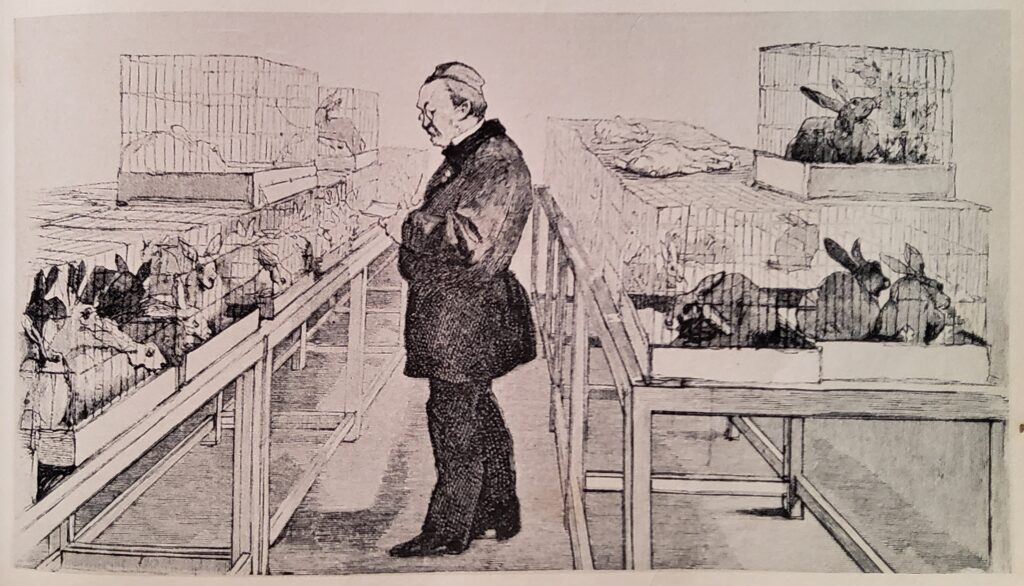
In fact, modern medicine hardly existed before 1850. Among the men who paved the way for modern medicine, was Louis Pasteur of France, often called the Father of Preventive Medicine. The existence of disease-producing bacteria had been discovered in the 1700’s, but Pasteur’s work provided the foundation of modern bacteriology. Today inoculations, vaccination and pasteurization, save thousands of lives each year and prevent epidemics; which were once the plague of entire nations.
A scientist of exceptional importance to modern bacteriology was a German, Robert Koch. Koch isolated the bacilli of tuberculosis and of Asiatic cholera. He developed theories and techniques which are fundamental to present-day research.
The use of anesthetics by surgeons was a step forward in medical practice. This innovation is credited to a surgeon and a dentist, both Americans. The surgeon, Crawford W. Long, used ether to anesthetize a patient before an operation. The dentist, William Morton, used ether to ease the pain of tooth-pulling. As the practice became common, better anesthetics were developed.
An English surgeon, Joseph Lister, was responsible for a revolution in hospital practice. Before his time, many patients died from infections following surgery. (Doctors and nurses made no special effort to disinfect their hands or their instruments.) Lister, considering Pasteur’s discovery that bacteria caused decomposition, decided that infection was caused by bacterial decomposition. He used a solution of carbolic acid, to disinfect the wound itself. Later, it was learned that a better way to prevent infection, was to disinfect everything which touched the wound.
In 1895, Wilhelm von Roentgen of Germany, discovered x-ray. The x-ray picture, made possible the early detection and treatment, of internal diseases and structural disorders, of the human body. In 1898, Pierre and Marie Curie isolated a radioactive metal called radium, which was of importance in the treatment of certain diseases and in modern atomic research.
An Austrian physician, Sigmund Freud advanced new views about human behaviour and mental illness; these have influenced modern medicine. He believed that most of the things that trouble people, have their origin in childhood experiences. Freud’s theories brought the realization, that mental or emotional conflicts are often responsible for physical ailments and even organic diseases. Though his ideas and those of his pupils produced much controversy, they led to a greater understanding of and consideration for, the mentally ill.
An English naturalist, Charles Darwin, revolutionized the thinking of many people – about man and his world. Darwin advanced the theory that all plants and animals as we know them, have developed from lower and simpler forms of life and that this process, has been going on for millions of years. His views aroused much controversy and opposition, but the study of biology as a science is in large part, the outgrowth of Darwin’s work and influence. His theories were also partly responsible for, new developments in the fields of anthropology, geology and archaeology.
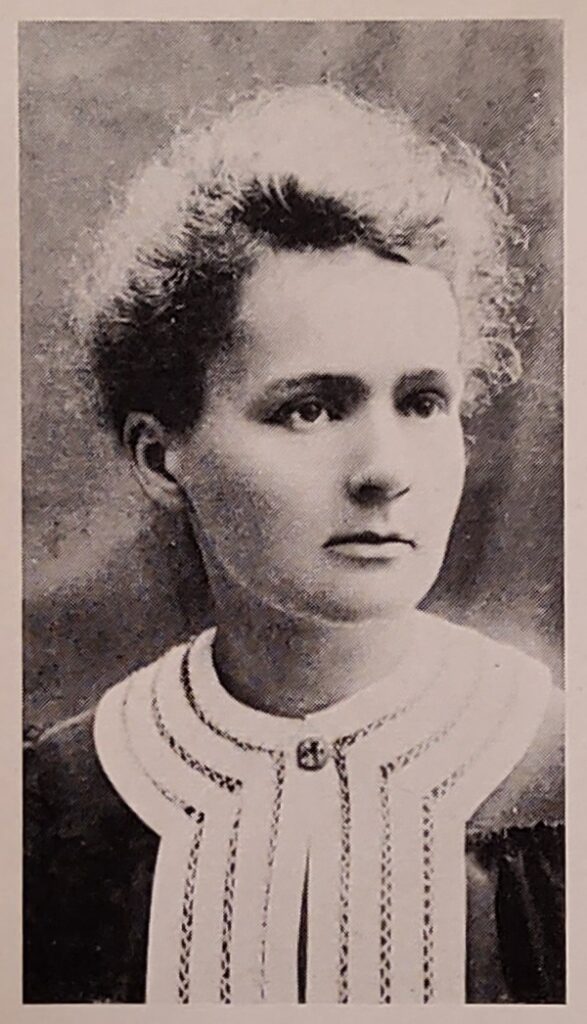
MADAME CURIE — (1867 – 1934)
Marie Sklodowska, was born in Warsaw at a time when Poland was controlled by Russia. She experienced the suppression by which the Russians were attempting to stamp out the Polish language, traditions and culture. She received her early scientific training from her father and took a degree in science at the University of Paris. It was in Paris that she met Pierre Curie, who became her husband and co-worker in physics.
A professor named Becquerel, wondered why substances containing uranium affected photographic slides. With the help of the Curies, he set out to investigate radioactivity. In their processing of huge quantities of pitchblende, they discovered two new elements which they named radium and polonium. Their work opened the way for much of the later research in nuclear physics and chemistry.
The Curies and Becquerel were awarded the Nobel Prize for physics in 1903. Pierre was accidentally killed in 1906, but Marie continued their work. In 1911 she won the Nobel Prize for discovering radium and studying its properties.
The century’s developments stimulated man’s imagination and aroused his hopes.
Many sincere and honest people believed that a great new age was being born, wherein peace, tolerance, kindliness and brotherly love, would reign supreme. Mark Twain in a letter to Walt Whitman wrote:
You have lived just the seventy years which are greatest in the world’s history and richest in benefit and advancement to its peoples. These seventy years have done much more to widen the interval between man and the other animals than was accomplished by any of the five centuries which preceded them. What great births you have witnessed! The steam press, the steamship, the steel ship, the railroad, the perfect cotton gin, the telegraph, the phonograph, the photogravure, the electrotype, the gaslight, the electric light, the sewing machine, and the amazing, infinitely varied and innumerable products of coal tar, those latest and strangest marvels of a marvelous age. . . . Yes, you have indeed seen much—but tarry for a while, for the greatest is yet to come. Wait thirty years, and then look out over the earth! You shall see marvels upon marvels added to those whose nativity you have witnessed; and conspicuous about them you shall see their formidable result—man at almost his full stature at last!—and still growing, visibly growing while you look.
ROMANTICISM AND REALISM IN THE ARTS
A movement we call romanticism characterized the arts from the French Revolution to mid-century.
To the romanticist, man was a thinking being, but he was also a creature of feeling. Stirred by the events and strivings of the day, composers and writers looked for new ways to express their feelings. Form and structure then, became less important to the romanticist than the expression of individual moods, feelings, sufferings and beliefs.
Nineteenth-century music forms a large portion of our musical heritage.
Ludwig von Beethoven’s symphonies, are credited with breaking away from the classical form in music, enough to unleash emotions and feelings in music not previously heard; and to enlarge the orchestra sufficiently to express these emotions. As a result, other composers poured out romantic overtures, concertos and symphonies, which enabled the enlarged orchestras to get a variety of new effects. Among the German composers were Franz Schubert, Felix Mendelssohn and Robert Schumann. Richard Wagner, created a new form of music drama, taking his material from old Germanic tales of the gods.
Among the other romantic composers were Frédéric Chopin, a Pole and Franz Liszt, a Hungarian, who composed much music for the newly perfected piano. Johannes Brahms, a German, turned away from romanticism, to emphasize form as well as emotion, in his music. His symphonies, composed in the last half of the century, are often played today, as are his other instrumental pieces and his songs (of which the “Lullaby” is probably the most familiar).
The nineteenth century, a time of rising nationalism in Europe, was also a time of nationalism in music. Composers expressed their feelings of patriotism by making use of folk songs and national themes in their music. Anton Dvořák, the composer of the famous New World Symphony and Bedrich Smetana, who composed the equally familiar Moldau, were Czechs. Russian composers of the middle and late nineteenth century included Musorgski, Rimski-Korsakov and Tchaikovsky. Edvard Grieg in Norway and Jean Sibelius in Finland, also made use of folk themes and national material.
French music did not come into its own until late in the nineteenth century. One of the greatest of French musicians, a Belgian by birth, was César Franck, who lived and worked in Paris. He remained virtually unknown until shortly before his death in 1890. Claude Debussy, another French composer, is in some ways considered the founder of modern contemporary music. In England, the only composer of note until late in the century was Sir Arthur Sullivan, whose gay tunes for W. S. Gilbert’s operettas, are very familiar. In the late 1800’s, Sir Edward Elgar and Frederick Delius began to create a more serious type of music.
In Italy, the chief musical form was the opera. Giuseppe Verdi brought a new power and beauty to Italian opera. He was the composer of Il Trovatore, Rigoletto, Otello, Aida and many other operas, which are still standard in the repertoire of every opera company. Puccini, another Italian, wrote many popular operas, among them La Bohème and Madame Butterfly.
America was not without its distinctive composers in the nineteenth century.
Edward MacDowell received most of his training in Europe and was at first touched by German romanticism. He wrote many charming songs, tone poems and varied compositions for piano and orchestra. The colour of American life is felt when listening to the music of George W. Chadwick. Also distinctively American was Stephen Foster, a Pennsylvania-born composer who drew his inspiration from the folk songs of the Negroes. Victor Herbert, made a name for himself with his light operas and John Philip Sousa’s march tunes, are still popular.
The nineteenth century was characterized by the growth of music education and music appreciation. Music societies developed early in such cities as Charleston, Cincinnati and New York. The New York Philharmonic Society, founded in 1842, claims to be the oldest orchestra in the country. In the schools too, much was done to foster an interest in and around the enjoyment of good music. In United States, as in Europe, the middle class gave increasing support to symphony orchestras, concerts, recitals, music festivals and public opera houses. The famous musicians of other lands, found Americans ready to listen to their performances and to welcome them to their hearts, when they were good.
Nineteenth-century literature reflected the life of the times.
There were so many important writers in Europe and the United States, that one can only mention a few of them. Many writers promoted nationalism and patriotism. Many turned to their environment for inspiration and wrote realistic stories and dramas. Many interpreted social movements, with which they were familiar. The romantic poets, particularly Shelley and Byron, were strongly moved by the great events of their time. Shelley pointed out that “the majority of the people of England are destitute and miserable, ill fed, ill clothed, ill educated.”
The mid-nineteenth century was for England, an especially favourable time. The right to vote was steadily being extended to the people, the British Empire and its trade were expanding; and material prosperity and scientific knowledge seemed to be progressing hand in hand. The improved living conditions that were becoming evident, brought a happier and more optimistic note to English writing. The major poets of the period, Tennyson and Browning, seem often to express the buoyancy and hopefulness of a time, when many people believed wholeheartedly that the new science would bring about a better world. In “Locksley Hall,” Tennyson expressed this idea almost prophetically:
For I dipt into the future, far as human eye could see,
Saw the Vision of the world, and all the wonder that would be;
Saw the heavens fill with commerce, argosies of magic sails,
Pilots of the purple twilight, dropping down with costly bales;
Heard the heavens fill with shouting, and there rain’d a ghastly dew
From the nations’ airy navies grappling in the central blue;
Till the war-drum throbb’d no longer, and the battle-flags were furl’d
In the Parliament of man, the Federation of the world.
On the Continent, writers in general showed less optimism. The struggle for democracy was a long one in France; it failed in Germany. The greatest of the French romantic poets, Victor Hugo, expressed both nationalism and a desire for social justice.
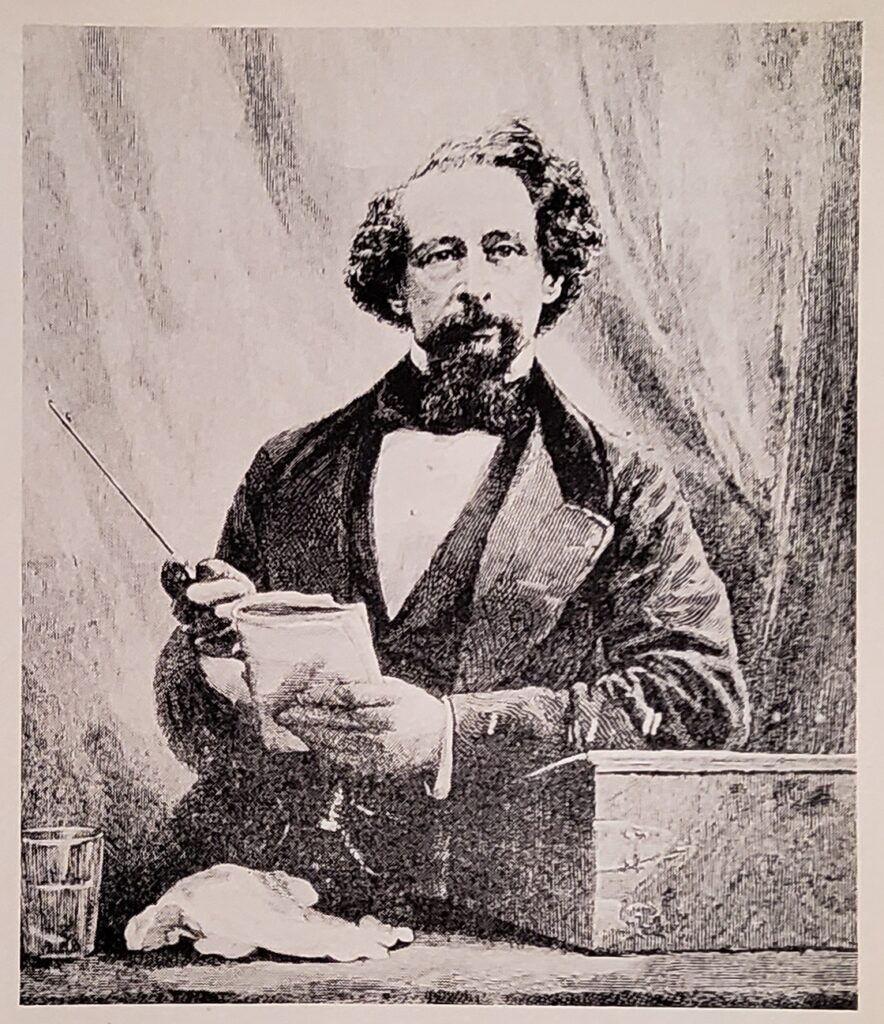
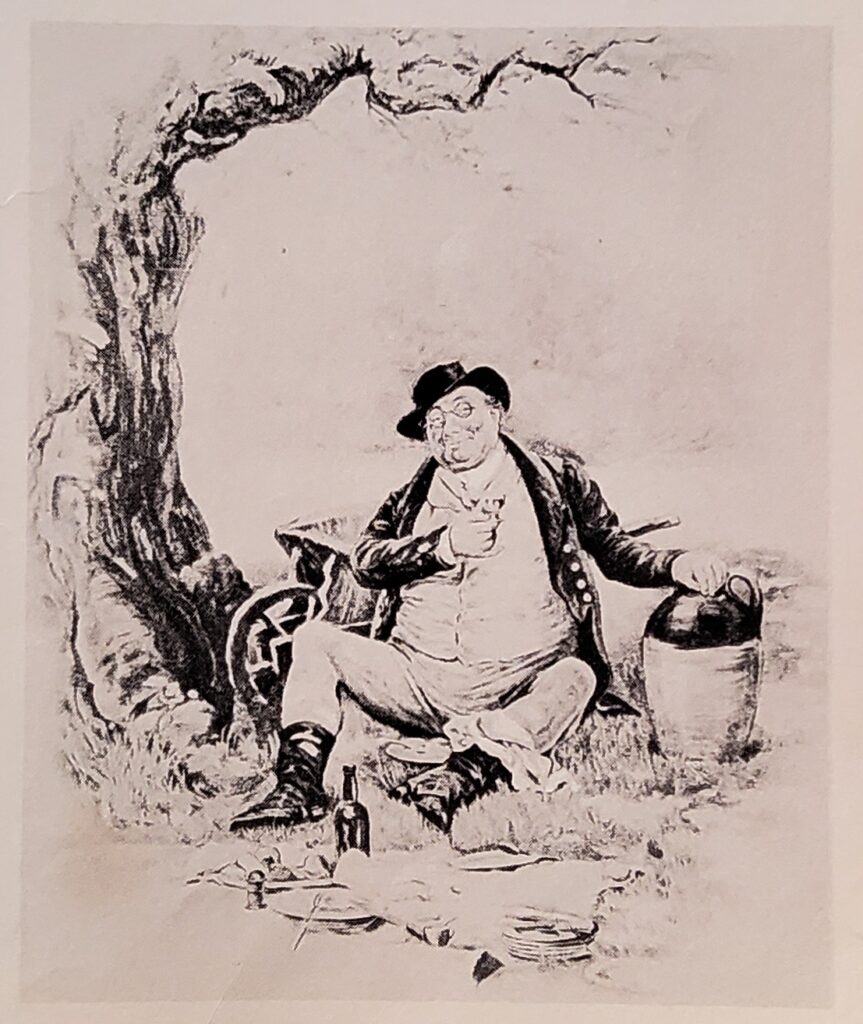
An important literary trend of the nineteenth century was realism, which took the place of romanticism, of the early 1800’s. Interested in social conditions and in people as individuals, writers looked at the life around them closely and tried to write down exactly what they saw. More than ever before, they portrayed the fears, hopes and trials of ordinary men and women. The novel became the favourite literary form of the realistic writers, among the greatest of whom were William Makepeace Thackeray, Charles Dickens, George Eliot and Thomas Hardy. Dickens’ novels pointed out certain evils of English life and were influential in bringing about specific reforms. Gustave Flaubert, Honore de Balzac and Emile Zola were the greatest of the French realistic novelists. In Russia: Tolstoy, Turgenev and Dostoevski, wrote novels which many critics believe were the most powerful of the entire period. The plays of the Norwegian dramatist Henrik Ibsen had much influence upon the development of realistic drama, in many countries. Ibsen criticized many of the moral conditions of his time.
Few significant American writers appeared in the early part of the century.
Washington Irving gives us in his Sketch Book some of our finest American tales. James Fenimore Cooper is famous for the exciting stories and frontier romances, of the Leather-stocking series. William Cullen Bryant occupies a place in poetry, comparable to that of Irving and Cooper in prose.
In the mid-nineteenth century, most of the important literary work was done by a small group of New England writers. Among them, was the essayist-philosopher-poet Ralph Waldo Emerson, the leader of the group of writers, who called themselves transcendentalists. To Emerson, both men and nature are the works of God and
All are needed by each one;
Nothing is fair or good alone.
Among other American writers of the nineteenth century were Henry David Thoreau, the naturalist-philosopher whose Walden is still widely read; Nathaniel Hawthorne, one of America’s greatest novelists; Herman Melville, whose Moby Dick is a classic on whaling; John Greenleaf Whittier, the Quaker poet; Henry Wadsworth Longfellow, Oliver Wendell Holmes and James Russell Lowell, the Cambridge poets.
Later in the century, certain new tendencies were observable in American literature. The poems of Edgar Allan Poe illustrated his theory that poems should be brief and musical. His short stories were the inspiration for later stories of mystery and of horror. He has been called the originator of the modern detective story. His work had a strong influence upon European writers.
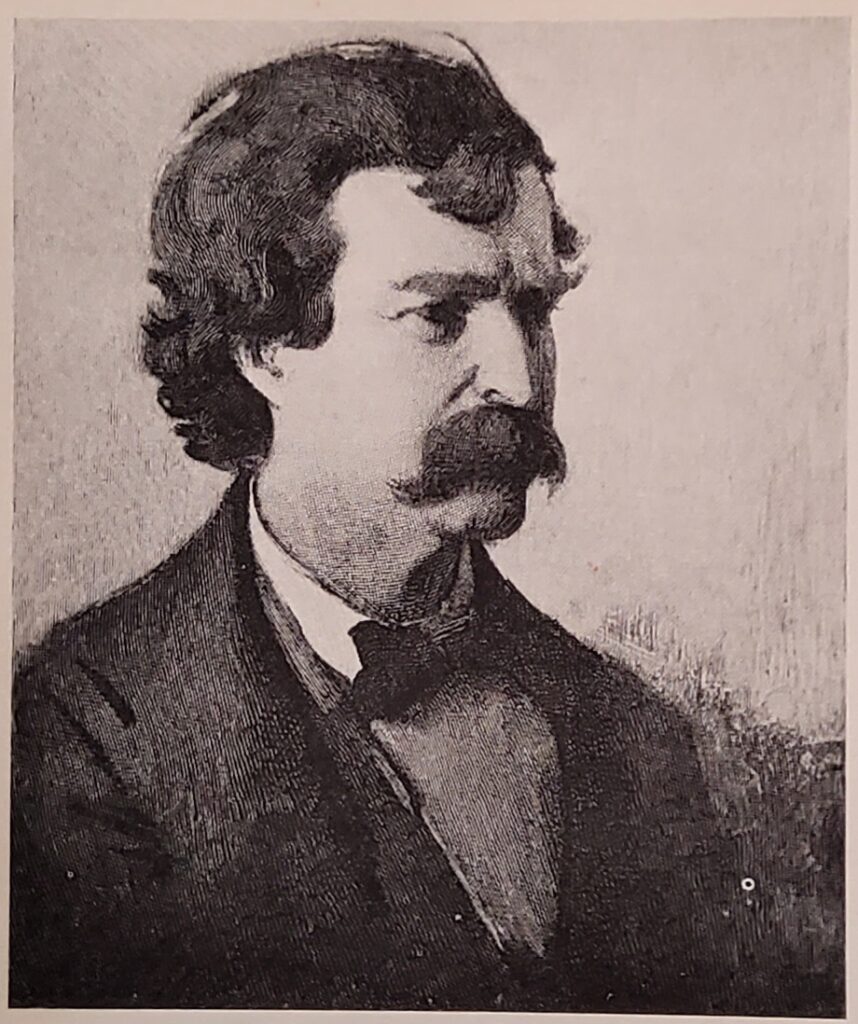
Mark Twain, who by some critics, is considered the most distinctive of American writers, was representative of the new era, with its taste for romance, local colour and social criticism. In his Life on the Mississippi, Tom Sawyer and Huckleberry Finn, he caught the romance and the humour of the growing West. Other writers using frontier scenes and characters included Bret Harte, Jack London, Hamlin Garland and Edward Eggleston. The Southern scene was depicted by Thomas Nelson Page, Joel Chandler Harris (creator of Uncle Remus) and Sidney Lanier, one of the South’s best-loved poets.
Perhaps the two most important American novelists of the later nineteenth century were William Dean Howells and Henry James. Both men forecast new tendencies that the twentieth-century novel was to develop. Other Eastern writers were Harriet Beecher Stowe, best known for her Uncle Tom’s Cabin and Louisa May Alcott, author of Little Women.
Walt Whitman, the “good gray poet,” created a distinctly American type of poetry. His chief subject was American democracy. “O Captain! My Captain!” and “When Lilacs Last in the Dooryard Bloom’d” are poems about Lincoln.
French painting was in the ascendancy during the nineteenth century.
Many young Americans went to Paris to learn the ideals and methods of French art and to study the collections in the Louvre and other museums. German and English schools of painting were less influential.
French landscape art was very popular. The artists involved had studied the earlier French painters and such Englishmen as Turner and Constable; and produced colourful and naturalistic paintings. Corot and a group called the Barbizon School, worked in the beautiful forests near Paris. Millet liked to paint pictures of peasant life, although peasants were regarded as revolutionary subject matter, by persons who had grown accustomed to thinking of painting as a mirror of the majestic and the aristocratic. His The Gleaners and The Man with the Hoe are doubtless known to you through reproductions.
A group of French painters became fascinated with the effects of light and studied scientific books on optics. They used the most brilliant colours obtainable, (including some made from the new aniline dyes) with little mixing of the pigments. The ideas of Manet, Monet, Pissarro and others, led into “Impressionist” painting. These artists and the landscape painters previously mentioned, were not well received by Napoleon III and well-to-do art patrons who brought academic, classical works; resembling those of an earlier period.
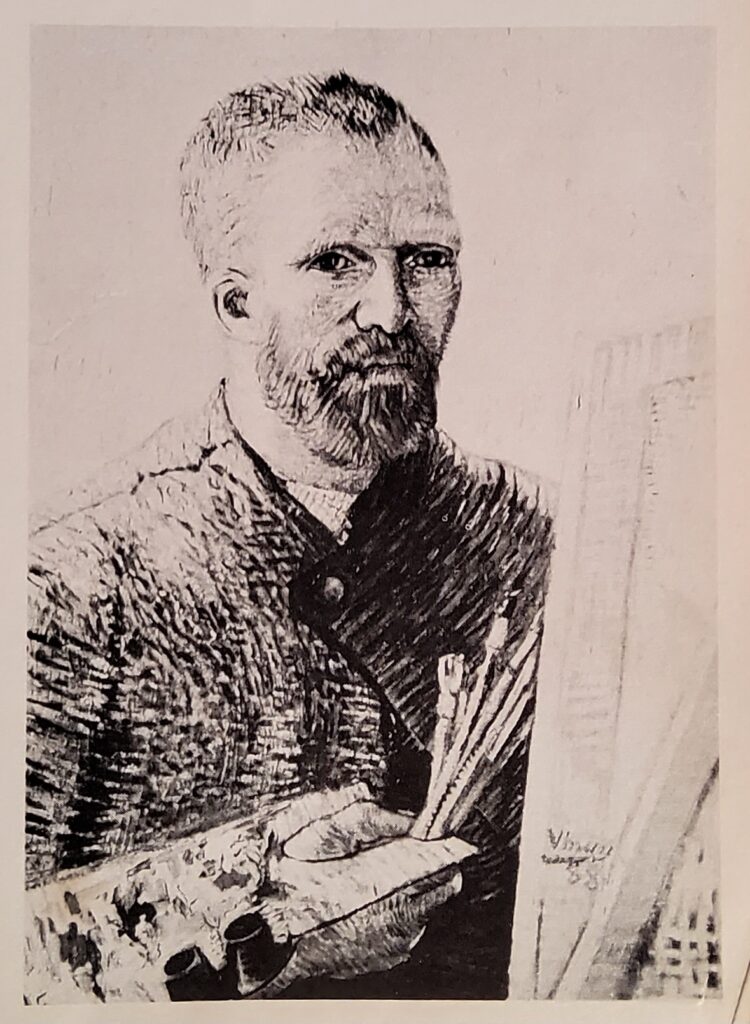
Toward the end of the century, the “Post Impressionists” added new themes and objectives to painting. Van Gogh, Cezanne, Gauguin, Renoir and Toulouse-Lautrec, were among the artists of that period, whose works are studied by art students of today.
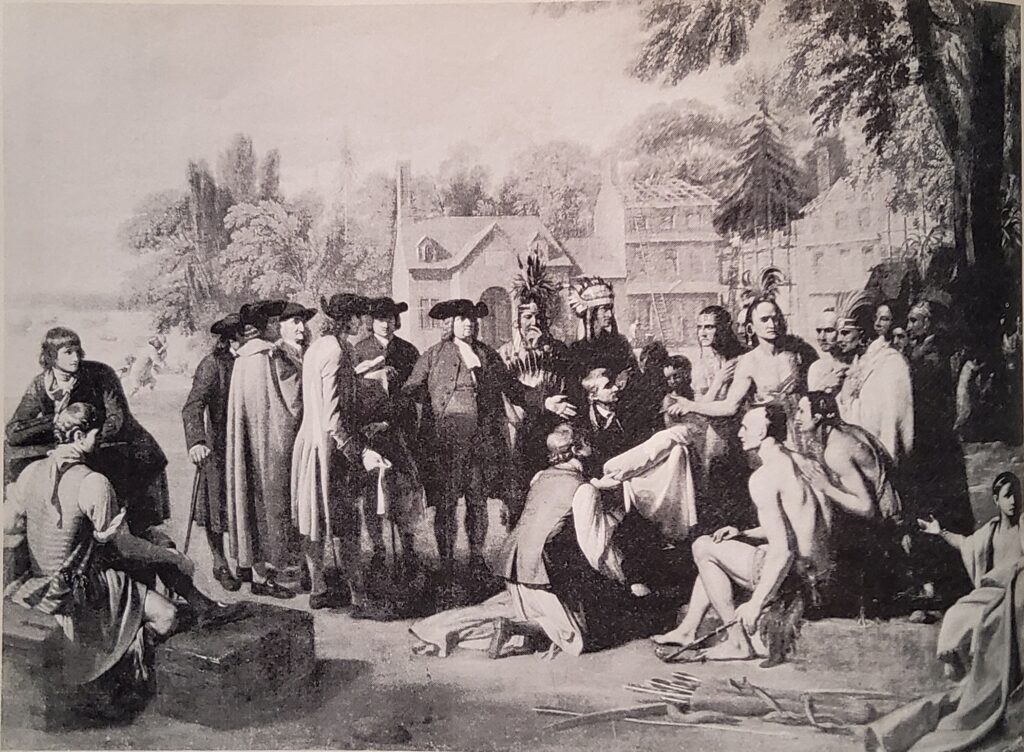
An American school of painting began in the 1700’s with Benjamin West and John Singleton Copley, continues into the following century. Born in Pennsylvania, West settled in London. There he taught such promising American painters as Gilbert Stuart, John Trumbull and Charles Willson Peale. Portraiture was much admired in the United States and these men did some excellent portraits that have hung in American classrooms for generations. Certainly you know one of Gilbert Stuart’s portraits of Washington. Peale and Trumbull liked to paint historic scenes on a grand scale such as “The Signing of the Declaration of Independence,” which you have often seen. Copley was a fine portrayer of character.
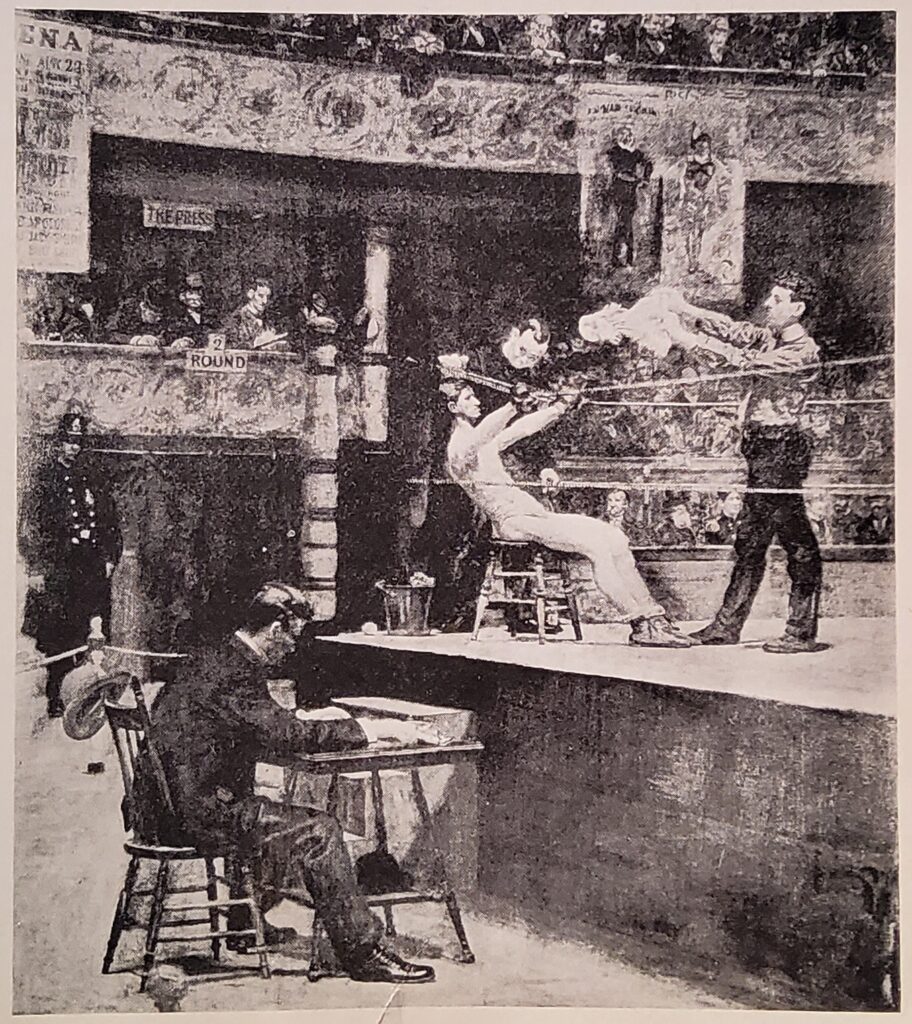
By the middle of the century, American painters were finding inspiration in the beauties of their native landscape. Particularly skilled at this kind of painting was George Inness. Other Realists turned to the everyday life and home life. Thomas Eakins’ works included pictures of cowboys, sports and home life. Winslow Homer, achieved fame for his drawings of battles in the War Between the States, then became a fine marine painter. George Bellows, packed much action into some of his oils, lithographs and etchings – so much so, that you have probably seen reproductions of his prizefight pictures.
James A. M. Whistler and John Singer Sargent, who spent most of their lives in Europe, were among the great American portrait painters. Sargent painted handsome, vivid portraits of prominent people such as Theodore Roosevelt and Woodrow Wilson. Whistler, though best known by the general public for the portrait of his mother, produced many etchings and water colours of delicate and surpassing beauty.
Nineteenth-century sculpture and architecture achieved less originality than the other arts.
Critics regard these works as less creative, than the work in literature and painting. Many of the famous statues cut or cast in the 1800’s, were intended to be national monuments. Some sculptors of the period were excellent craftsmen, but for the most part, their themes and techniques followed closely, the work of Renaissance men like Michelangelo and the ancient Greeks and Romans. Augustus Saint-Gaudens’ statue of Lincoln has become America’s conception of the Great Emancipator, just as Gilbert Stuart’s painting of Washington has become everyone’s mental picture of the Father of the United States. Daniel Chester French’s, huge bronze statue of Lincoln in the Lincoln Memorial at Washington, is also well known.
In the latter part of the century, Auguste Rodin brought realism to the sculptor’s art in France. His work was not appreciated until he had reached middle age, but later sculptors were strongly influenced by him. You have likely seen pictures of his famed “The Kiss” and “The Thinker.”
Architects too, followed old and often hackneyed themes. Classical, Gothic and Romanesque structures, were reproduced or their elements used in the Capitol of the United States, in Washington and in state capitols and county court houses, from coast to coast. Prosperous merchants built large and ornate houses in these styles and many of them survive in American cities, though outmoded.
Toward the close of the century, Americans such as Louis Sullivan and Frank Lloyd Wright, began to introduce cleaner and simpler lines, which greatly changed the skylines of cities and the design of homes. Development of the electric elevator in 1887 and the production of cheap structural stee,l did much to speed the construction of skyscrapers. This form became the distinctive contribution of the United States to world architecture, after 1900.
THE NINETEENTH CENTURY AND THE COMMON MAN
The average citizen came into his own between 1800 and 1900.
It was the average citizen who benefited most from the expansion of industry and world markets in Europe and North America. The new forms of beauty created by artists and musicians became available to an increasing number of people. Inventions and mass production introduced comforts and conveniences undreamed of before. The coming of machines to the textile industry brought inexpensive clothing to the common man. Improvements in farm production, canning and refrigeration, brought variety to his diet. Improved transportation and travel facilities, enabled an average person to travel occasionally. Improved communications brought newspapers and magazines within his reach. National education and public libraries brought knowledge and learning within his grasp.
The expansion of industry brought new wealth for all by opening new jobs, new industries and new professions. Exploration carried Western civilization to remote regions. All of Africa and much of Asia, were brought within the orbit of European affairs. South America and Australia, became increasingly important as sources of food and needed raw materials.
Individualism was the cornerstone of nineteenth-century democracy.
The nineteenth century brought the average man more of the “good things of life” than he had ever known before, but more important was the recognition of the individual! The individual citizen entered the century as a relatively weak man before the law and government. He left it with the conviction, that government should exist for the benefit of the citizen. This view was still almost unknown in Russia, but it was strong in the United States, England and France; and less strong, in Germany.
LINKING THE PAST AND THE PRESENT
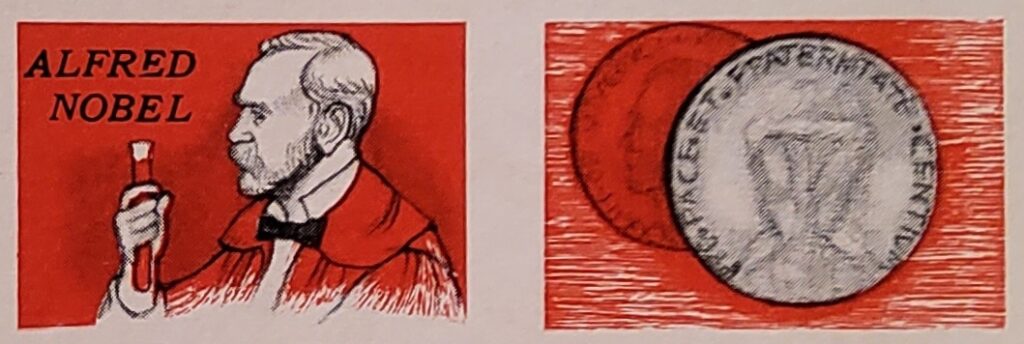
Alfred Nobel, a Swede, was interested in the chemistry of explosives. He experimented with nitroglycerine until he invented dynamite, then went on to produce other explosives and safer ways of detonating them. Explosives were in great demand in engineering, mining and for military use; Nobel became very wealthy.
Nobel’s will created a foundation. An endowment provided money prizes that could be awarded each year for outstanding achievements in chemistry, literature, peace, physics and physiology or medicine.
The first prize was awarded in 1901. It went to Wilhelm K. Roentgen, a German physicist best known for the discovery of x-rays. Since then, the list of recipients makes up a marvelous “Who’s Who” of distinguished men and women. Nations feel honoured when their citizens “make the grade” and win Nobel Prizes, much as ancient Greek city-states were honoured, when their citizens won awards at the Olympic Games.